 Semiahmoo Siding
 Windows Built for the Cherry Point Stretch of Whatcom County
Cherry Point sits right where the Strait of Georgia weather meets the everyday grind of coastal living — salt-laden air off the water, driving rain that comes in sideways more often than straight down, and a moss season that seems to stretch longer every year. Windows out here don't fail the way they do in drier inland climates. They fail at the seals, at the frame corners, and at the sightline where old glazing compound has finally given up. If you've noticed fogging between panes, drafts that show up only when the wind shifts off the water, or sashes that stick every winter and swell every spring, that's not bad luck — that's what this climate does to windows that were never really matched to it.
We work Cherry Point and the surrounding Semiahmoo area regularly, which means we're not guessing at what holds up here. We've seen which window details survive a Whatcom County winter and which ones start failing in year three.
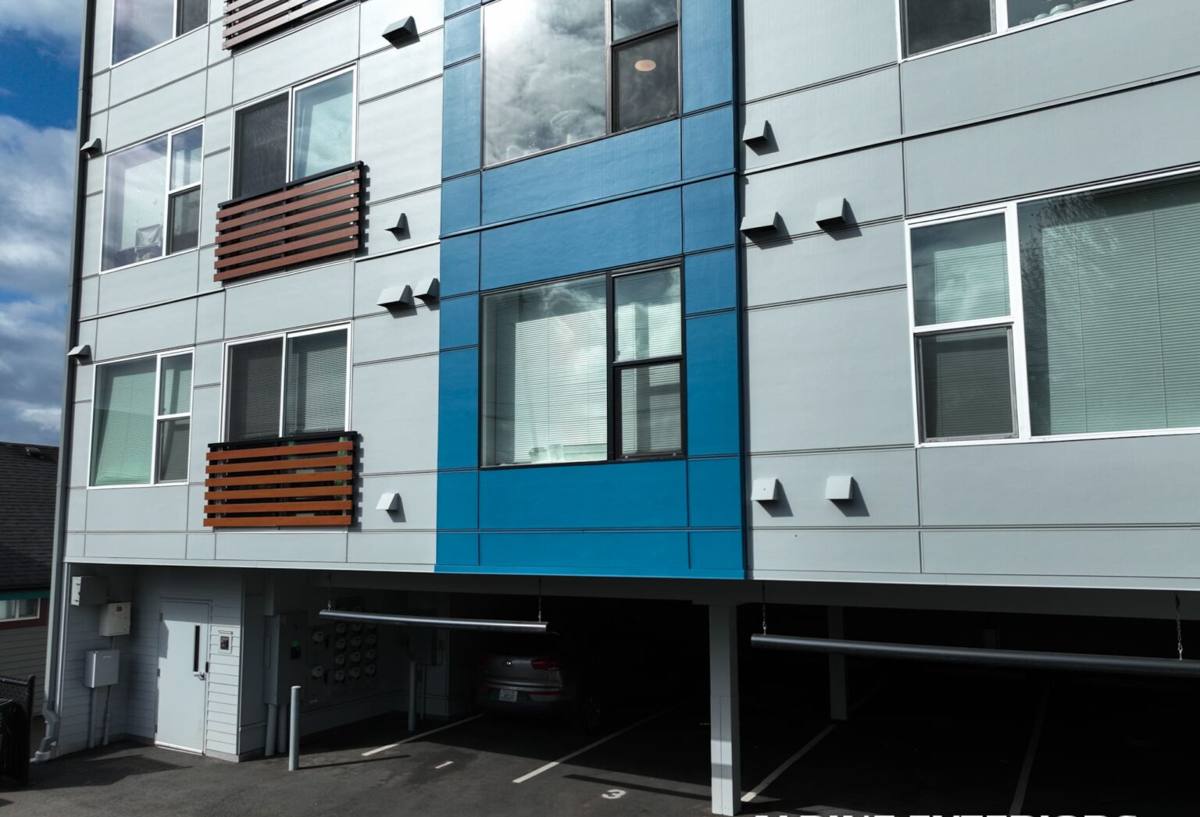
What This Climate Actually Does to a Window
Salt Air and Metal Components
Proximity to the water means airborne salt settles on everything, including window hardware. Cheaper aluminum cladding and mild-steel fasteners corrode faster here than they would twenty miles inland. Over a few seasons that shows up as pitted hardware, stiff locks, and cladding that stains at the corners.
Driving Rain and Wind-Driven Wetting
Rain here rarely falls straight down. Wind off the water pushes it sideways into wall assemblies and window openings, which puts far more stress on flashing and sealant details than a calm, vertical rain would. A window that's watertight in a lab test can still leak on a house here if the flashing and sill pan weren't installed correctly for wind-driven conditions.
Moss, Shade, and Trapped Moisture
A long moss season means extended periods where wood trim, sills, and lower sash rails stay damp longer than they should. Moss and algae hold moisture against the surface, which accelerates rot in any wood component that isn't properly primed, sealed, or clad.
Temperature Swings and Condensation
Cool, damp Puget Sound winters combined with indoor heating create the conditions for interior condensation on underperforming glass. Fogging between the panes of an insulated glass unit means the seal has failed and the argon fill (if there was one) is gone — that's a sign of age and exposure, not something you can fix with better weatherstripping.
What "Energy-Efficient" Actually Means for a Cherry Point Home
Energy-efficient windows aren't just about a lower heating bill, though that matters. In this climate, efficiency and durability are the same conversation — a window that manages moisture and air infiltration well is also the window that isn't feeding heat loss through gaps and cold spots.
- U-factor: measures how well the window resists heat flow. Lower is better for our heating-dominated climate. Look for U-factor around 0.30 or lower for most replacement projects here.
- Solar heat gain coefficient (SHGC): how much solar heat passes through the glass. Moderate SHGC works well in the Pacific Northwest since we're not fighting extreme summer heat, but south- and west-facing rooms still benefit from some control.
- Air leakage rating: lower numbers mean a tighter window, which matters more here than in calmer climates because of the wind-driven exposure.
- Condensation resistance: a higher rating means the interior glass surface stays warmer, which cuts down on the fogging and moisture problems damp coastal winters create.
Frame Material: What Holds Up Here vs. What Struggles
| Frame Material | How It Handles This Climate | Trade-Offs |
|---|---|---|
| Vinyl | Good moisture and salt resistance, no corrosion risk, low maintenance | Limited color/finish options; quality varies a lot between manufacturers |
| Fiberglass | Excellent dimensional stability, handles wet-dry cycling and temperature swings well | Higher upfront cost than vinyl |
| Wood (clad exterior) | Warm interior appearance; exterior cladding protects the wood from direct wetting | Any exposed wood or failed cladding seam becomes a rot risk in a moss-prone, wet climate |
| Aluminum | Strong and slim sightlines | Poor thermal performance unless thermally broken; more prone to salt-air corrosion and condensation |
For most Cherry Point homes, we steer people toward vinyl or fiberglass for the exterior-facing performance, sometimes with wood or wood-look interiors where the homeowner wants that look. We're honest about why we don't push unclad wood or standard aluminum in this location — it's not that those materials are bad products everywhere, it's that they demand more maintenance than this climate rewards, and a missed maintenance cycle here shows up fast as rot or corrosion.
What a Correct Installation Looks Like Out Here
The window unit itself is maybe half the job. The other half is how it gets tied into the wall, and that's where wind-driven rain either gets managed or gets a way in.
Sill Pan and Flashing
A sloped sill pan directs any water that gets past the window to the exterior instead of letting it pool at the sill. Flashing needs to be integrated with the house wrap or building paper in the correct shingle-lap order — done wrong, flashing can actually funnel water into the wall instead of away from it.
Sealant Selection and Placement
Not every gap should be sealed solid. Modern window installation uses a "drain and back-vent" approach at the sill so any moisture that does get in has a way back out, while the sides and top get sealed tight against air and water intrusion. This is one of the most commonly rushed steps, and it's the one that determines whether a window leaks in year one or year ten.
Shimming and Squaring
A window that isn't shimmed level and square will bind, won't seal against its weatherstripping evenly, and will show air leaks at the corners no matter how good the window itself is.
Interior and Exterior Trim Detailing
Trim needs to be back-primed and sealed on all sides before installation, especially on wood trim, so it isn't absorbing moisture from behind where you can't see it.
Our Process for a Cherry Point Window Project
- On-site assessment: we look at existing frame condition, sill and flashing details, and any signs of rot or past water intrusion before recommending anything.
- Product selection: we walk through frame material and glass package options based on your home's exposure — a west-facing wall catching prevailing wind gets a different recommendation than a sheltered side.
- Written estimate: clear scope, materials, and timeline before any work starts.
- Removal and prep: old units come out carefully, and we inspect the rough opening for hidden rot or damage before anything new goes in — this is often where problems from decades-old installations get found.
- Installation: sill pan, flashing, shimming, and sealant done in the correct sequence for wind-driven rain conditions.
- Final check and walkthrough: operation, locks, and sightlines confirmed before we call the job done.
Signs Your Cherry Point Home Needs Window Attention
- Fogging or haze between the panes of double- or triple-glazed units
- Drafts you can feel near the frame, especially during windy weather off the water
- Sashes that stick in cold, damp months or swell and stop closing properly
- Visible wood rot, soft spots, or paint failure at the sill or lower frame corners
- Moss or persistent green staining building up on sills or exterior trim
- Rising heating bills without a clear cause elsewhere in the house
- Corroded, stiff, or pitted hardware and locks
Why a Local Crew Matters for This Job
Window installation is unforgiving of shortcuts, and this climate exposes shortcuts faster than most. A crew that works Cherry Point and the broader Semiahmoo area regularly already knows which wall assemblies are common in local homes, how prevailing weather hits different sides of a house here, and what a flashing detail needs to look like to actually hold up through a Whatcom County winter. That's not something you get from a crew passing through from out of the area doing a one-off job. We stand behind our installation work, and because we're local, that's not an empty promise — we're still here if something needs a look after the fact.
Get a Straightforward Estimate
If your windows are drafty, fogged, or just past their working life, we're glad to come take a look and give you an honest read on what's going on — no pressure, no upsell. Reach out using the form below to schedule a free estimate for your Cherry Point home.