 Semiahmoo Siding
 Building a Deck That Actually Holds Up in Cherry Point
Cherry Point sits right where the marine air off the Strait of Georgia meets the everyday reality of Whatcom County weather: salt-laden wind, long stretches of driving rain, and a moss season that can run from October clear through April. A deck built here isn't just outdoor furniture — it's a structure that has to shed water, resist corrosion, and stay stable through freeze-thaw swings and constant dampness. A design that works fine in a dry inland climate can fail early out here if the materials, fasteners, and drainage details aren't matched to the site.
We build custom decks for homes in Cherry Point and the surrounding Semiahmoo area with that climate as the starting point, not an afterthought. That means picking decking and hardware rated for coastal exposure, framing with drainage in mind from day one, and detailing the connections that homeowners never see but that determine whether a deck lasts 10 years or 30.
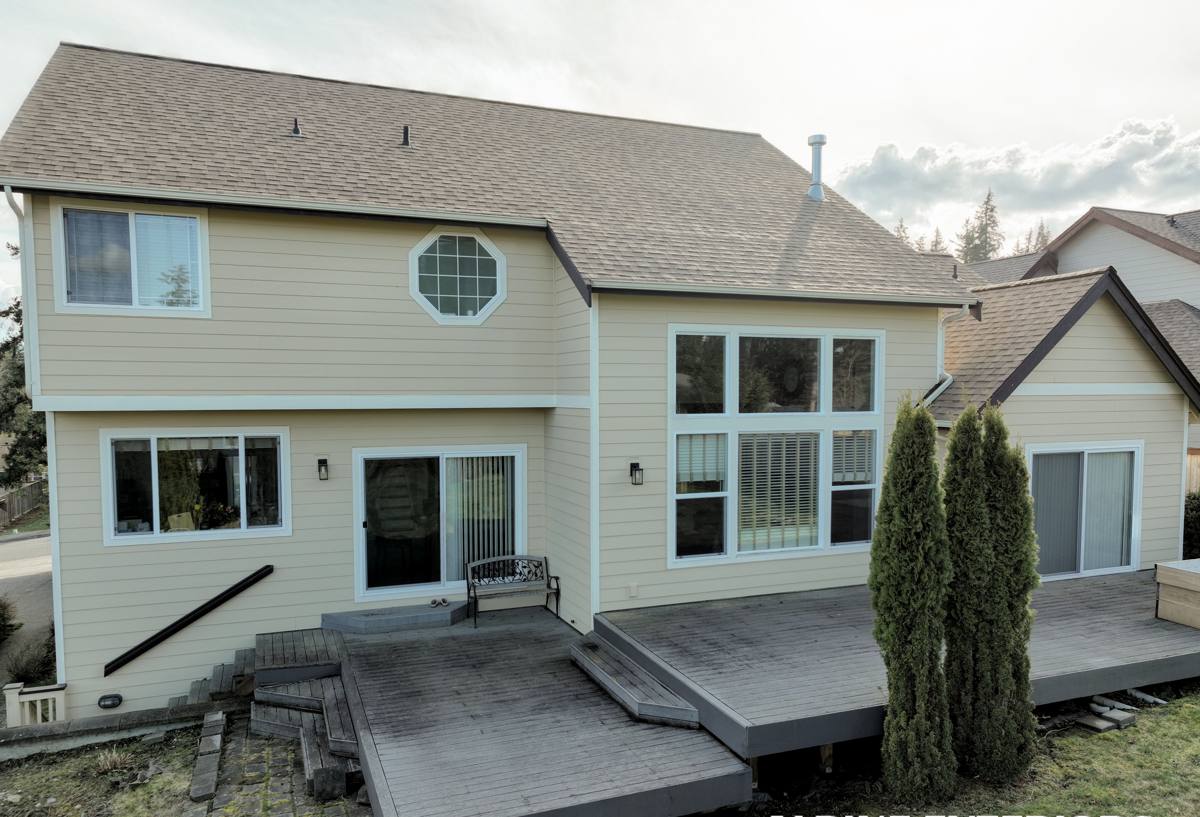
What Salt Air and Driving Rain Do to a Deck Over Time
Two forces do most of the damage to decks in this part of Whatcom County, and they work together, not separately.
Salt Air and Corrosion
Airborne salt from the Strait accelerates corrosion on any metal that isn't properly rated for coastal use. Standard electro-galvanized screws, brackets, and joist hangers can start showing rust streaks within a season or two out here. Once a fastener starts corroding, it weakens exactly where you need strength the most — at structural connections.
Driving Rain and Water Intrusion
Wind-driven rain doesn't fall straight down — it gets pushed sideways into ledger boards, under flashing, and into any gap where two deck components meet. Combined with our long wet season, that means wood framing and any exposed end grain stay damp far longer than they would in a drier climate. Damp wood that never gets a real chance to dry out is where rot starts, usually invisibly, under the decking boards where nobody looks until there's a soft spot.
Decking Material Options for a Marine Climate
There's no single "best" decking material — the right choice depends on budget, maintenance tolerance, and how exposed the deck is to weather. Here's how the common options stack up for a coastal Whatcom County property.
| Material | Moisture/Salt Performance | Maintenance | Typical Lifespan Here |
|---|---|---|---|
| Pressure-treated fir/pine | Good if sealed regularly; end grain is the weak point | Annual cleaning and re-sealing recommended | 10-15 years |
| Cedar | Naturally rot-resistant, but surface graying and moss growth are common in shade | Periodic cleaning, occasional oil or stain | 15-20 years |
| Composite decking | Excellent — doesn't absorb moisture or support rot | Occasional washing to prevent surface mildew/algae | 25-30+ years |
| PVC/capped polymer | Best moisture and salt resistance of any decking surface | Low — soap and water washing | 25-30+ years |
We're honest with clients that composite and capped polymer boards cost more up front but ask the least of you over time, which matters in a climate that never really gives wood a break to dry out. Cedar remains a solid choice for homeowners who want a natural look and are willing to maintain it. Pressure-treated lumber is the budget-friendly option, but it's the one that needs the most attentive upkeep here.
A Note on Composite and Product Standards
Not every composite board is built the same. Older, uncapped composite products absorb some moisture at the core and can be prone to surface mildew in shaded, damp spots — a real concern for lots shaded by trees or facing away from direct sun, which is common around Cherry Point. We favor fully capped composite or PVC boards for anything installed in a low-sun or heavily shaded area, specifically because the cap layer resists moisture uptake and moss/algae staining far better than uncapped products.
Framing and Structural Details That Matter on This Site
The decking surface gets all the attention, but the framing underneath is what determines whether a deck stays safe and level for decades. In a wet, salt-exposed climate, three framing decisions matter more than they would elsewhere:
- Ledger flashing: Where the deck attaches to the house, proper flashing keeps wind-driven rain from tracking behind the siding and into the rim joist — one of the most common failure points we find on older decks.
- Joist tape or capping: Sealing the tops of joists prevents standing water from soaking into cut lumber, which is where rot typically starts first, well before it's visible from above.
- Corrosion-rated hardware: Hot-dip galvanized or stainless steel hangers, screws, and post bases are worth the modest upcharge in a marine environment — the alternative is hardware that visibly rusts within a few seasons.
Post footings also deserve attention on sites with heavier clay or seasonal saturation, which shows up in parts of Whatcom County after a wet winter. Footings poured below frost depth and sized to the actual load — not just "what's always been done" — keep a deck from shifting or heaving over time.
Designing Against Moss and Standing Water
Whatcom County's moss season is long, and a deck with poor airflow or inadequate drainage will grow it faster than most homeowners expect. Moss on a walking surface isn't just cosmetic — it holds moisture against the boards and gets slick when wet, which is a real slip hazard on stairs and low-traffic areas.
What Reduces Moss and Standing Water
- Proper board spacing so water drains through rather than pooling on the surface
- Adequate slope away from the house (typically a slight pitch built into the framing)
- Ventilation underneath the deck so the substructure can actually dry between rain events
- Decking material chosen with the site's sun exposure in mind — shaded, north-facing decks need moisture-resistant materials more than sun-exposed ones
- Keeping overhanging vegetation trimmed back so the deck surface gets some sun and airflow
Our Process, Start to Finish
Every custom deck we build in the Semiahmoo area follows the same basic sequence, adjusted for the specific site conditions in Cherry Point:
- Site visit and design: We look at sun exposure, drainage patterns, existing grade, and how the deck will tie into the house before drawing up a plan.
- Material selection: We walk through the trade-offs above with you — there's rarely a single "right" answer, just the right answer for your budget and how much upkeep you want to do.
- Permitting: Deck permits in Whatcom County depend on size, height, and attachment to the structure — we handle the paperwork and inspections.
- Framing: Footings, posts, ledger flashing, and joists go in with corrosion-rated hardware and moisture protection built into every connection.
- Decking and finish work: Boards, railings, stairs, and any fascia or skirting are installed and finished.
- Final walkthrough: We go over basic maintenance with you so the deck performs the way it's designed to.
Permits and Local Considerations
Most decks attached to a house, or built above a certain height, require a building permit in Whatcom County, and decks near shoreline or critical areas can involve additional review depending on the parcel. We pull the necessary permits and coordinate inspections as part of the job, so you're not left figuring out county requirements on your own. If your property is close to the water or in an area with shoreline setback considerations, that gets factored into the design conversation up front — not discovered partway through construction.
Cost Factors to Expect
Deck pricing depends on size, decking material, railing style, and site complexity (like grade changes or difficult access). Rather than quote a number that doesn't mean much without seeing your property, here's what actually drives the cost up or down:
| Factor | Effect on Cost |
|---|---|
| Decking material (treated wood vs. composite/PVC) | Composite/PVC typically costs more upfront, less over the deck's life |
| Height and grade change | Taller decks need more substantial footings, posts, and stairs |
| Railing style | Cable, glass, or custom rail designs cost more than standard baluster rail |
| Site access | Difficult equipment or material access adds labor time |
| Roof or cover addition | A covered deck adds framing and roofing cost but cuts weather exposure significantly |
Maintaining a Deck in This Climate
Whatever material you choose, a little seasonal attention goes a long way toward getting the full lifespan out of a deck built for this climate:
- Clear leaves and debris from between boards before they hold moisture through the wet season
- Rinse off moss and algae buildup, especially on shaded sections, before it gets a foothold
- Check and re-seal wood decking on the manufacturer's recommended schedule, not just when it looks faded
- Inspect railing posts and stair connections annually for any looseness or corrosion at the hardware
- Keep gutters and downspouts clear so runoff isn't draining directly onto or under the deck
Why Local Experience in Cherry Point Matters
A deck design that works in a dry climate doesn't automatically work here. Crews without regular experience in this specific stretch of Whatcom County sometimes spec standard hardware, skip extra flashing details, or choose decking without accounting for shade and moss exposure — and the homeowner doesn't find out until years later, when it's a repair instead of a design choice. Working regularly in Cherry Point and the wider Semiahmoo area means we've already seen how salt air, rain, and moss behave on real decks in this exact environment, and we build accordingly from the first drawing.
If you're planning a new custom deck or replacing one that didn't hold up as well as it should have, we're happy to take a look at your property and talk through what makes sense for your site and budget. There's a free, no-pressure estimate form below — reach out and we'll go from there.