 Semiahmoo Siding
 Blaine Harbor Roofs Work Harder Than Most
Blaine Harbor sits close enough to the water that salt air is part of daily life for every roof in the neighborhood, whether the home is a block from the marina or up the hill with a water view. Combine that salt exposure with the driving, wind-blown rain that rolls in off the Strait of Georgia and a moss season that can run eight months or longer in a typical Whatcom County winter, and you get a roofing environment that's noticeably tougher on materials than what you'd find twenty miles inland. A roof that's rated fine for a dry-side climate can start showing granule loss, fastener corrosion, and moss colonization years ahead of schedule out here.
That's the backdrop for every new roof installation we do in Blaine Harbor. We're not selling a generic replacement — we're building a roof system meant to hold up to salt-laden air, sustained wet weather, and moss pressure that never fully lets up, even in July.
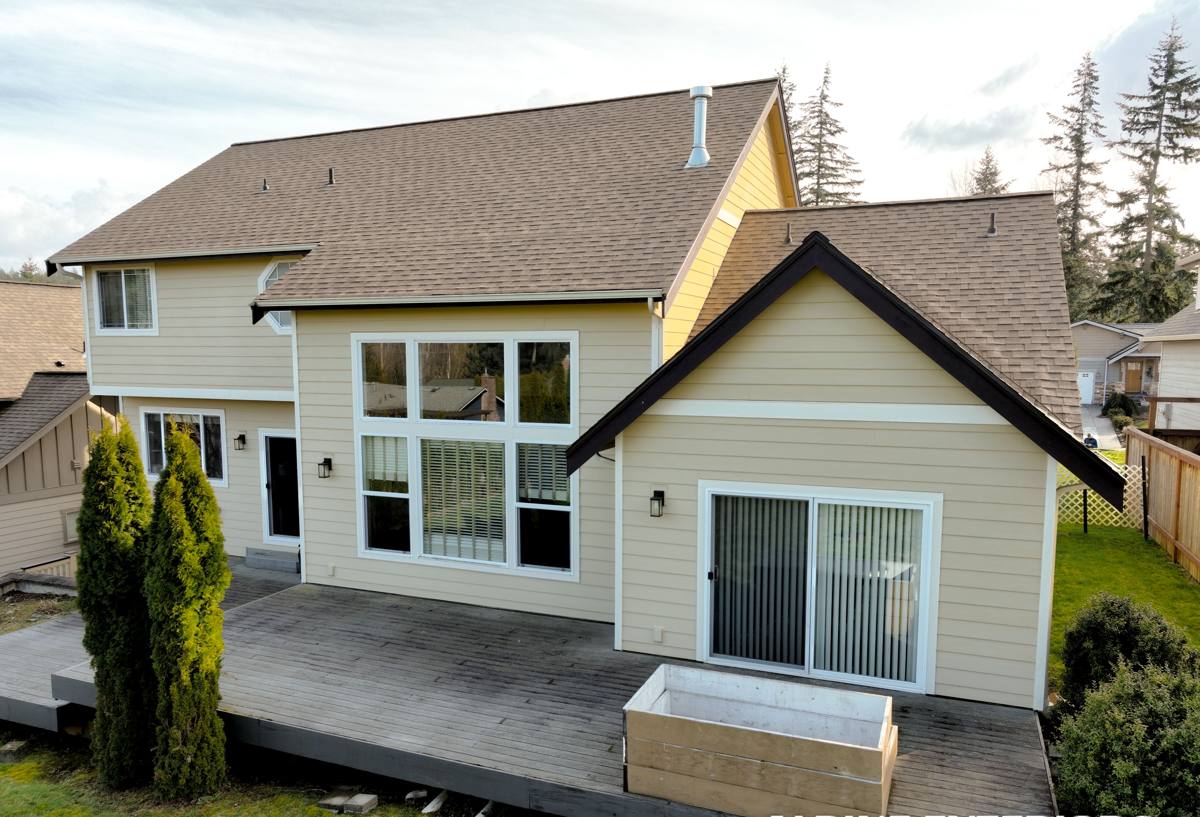
What Salt Air, Rain, and Moss Actually Do to a Roof
Salt Air and Metal Components
Salt in the air accelerates corrosion on any exposed metal — nail heads, flashing, vent boots, gutter hardware. Cheap or improperly coated fasteners can start rusting and staining a roof within a few years this close to the water. It's one of the reasons material and fastener selection matters more in Blaine Harbor than it would for the same house sitting fifteen miles east.
Driving Rain and Wind-Driven Water
Rain that comes in sideways doesn't behave like rain falling straight down. It finds its way under poorly lapped shingles, around loose flashing, and into any gap in the underlayment. A roof built for calm, vertical rainfall can leak here even when every shingle looks intact, because the water is being pushed uphill by wind rather than draining down by gravity alone.
Moss Season
Shaded, north-facing, and tree-covered sections of Blaine Harbor roofs stay damp for most of the year, which is exactly what moss needs to establish. Once moss gets a foothold, it lifts shingle edges, holds moisture against the roof deck, and speeds up granule loss. Left unchecked for a few seasons, moss growth can shorten a roof's usable life significantly.
What a Correct Installation Involves Out Here
A new roof installation done right for this area isn't just "the same job with better shingles." Several details get more attention because of the local conditions.
Underlayment and Water Protection
We install a full synthetic underlayment across the deck, with self-adhered ice-and-water membrane at the eaves, valleys, and any low-slope transitions — the spots most likely to take on wind-driven rain. This is the layer that protects the house if wind ever pushes water past the shingles themselves.
Ventilation
Balanced intake and exhaust ventilation keeps the underside of the roof deck dry and close to outside temperature. In a humid, marine climate, poor ventilation traps moisture in the attic, which shows up later as deck rot, mold, or premature shingle failure from underneath — problems that have nothing to do with the shingles themselves and everything to do with airflow.
Flashing and Penetrations
Chimneys, vent pipes, skylights, and roof-to-wall transitions are where most roof leaks actually start, not in the open field of shingles. We use corrosion-resistant flashing and proper step-and-counter-flashing details at every penetration and wall intersection, sized and lapped to shed wind-driven rain rather than just vertical rainfall.
Fastening and Wind Resistance
Storm gusts off the water can exceed what a standard nailing pattern is rated for. We follow manufacturer high-wind fastening specs — correct nail count, placement, and depth — rather than a minimum-code shortcut, because under-fastened shingles are one of the most common causes of early wind damage we see on replacement jobs.
Material Options for Blaine Harbor Homes
There's no single "best" roofing material for every house — it depends on budget, roof pitch, sun/shade exposure, and how the home looks architecturally. Here's how the common options stack up against this area's specific conditions.
| Material | Salt Air Behavior | Moss Resistance | Typical Lifespan Here |
|---|---|---|---|
| Standard asphalt composition | Fine with corrosion-resistant fasteners | Moderate — benefits from algae-resistant granules | 18-25 years |
| Algae-resistant architectural asphalt | Good, especially with coated fasteners | Better — copper-infused granules slow moss/algae growth | 25-30 years |
| Standing seam metal | Very good with marine-grade coatings and stainless fasteners | Strong — smooth surface sheds moss more easily | 40-50+ years |
| Cedar shake | Requires diligent maintenance near salt air | Weak — porous surface holds moisture, needs regular treatment | 20-30 years with upkeep |
For most Blaine Harbor homes, we lean toward algae-resistant architectural asphalt as the default recommendation — it balances upfront cost with real moss resistance. Standing seam metal is worth the added investment for homes with heavy shade, steep pitches, or owners planning to stay long-term and want to minimize future maintenance. We'll walk through the honest trade-offs for your specific roof rather than pushing one product across the board.
Our Installation Process
- On-site assessment — we inspect the existing roof, deck condition, ventilation, and any problem areas like valleys or chimney flashing before quoting anything.
- Material selection — we go over options based on your budget, the roof's exposure, and how long you plan to stay in the home.
- Tear-off and deck inspection — old roofing is removed down to the deck so we can check for rot or soft spots before anything new goes down, not after.
- Deck repair if needed — any compromised sheathing gets replaced; we don't install new roofing over a deck that won't support it long-term.
- Underlayment and flashing installation — synthetic underlayment, ice-and-water membrane, and new flashing at every penetration and transition.
- Roofing material installation — installed to manufacturer wind-rated specs, not just minimum code.
- Ventilation check — intake and exhaust confirmed balanced before we call the job done.
- Final walk-through — we go over the finished roof with you and answer questions before wrapping up.
Signs a Blaine Harbor Roof Needs Replacement, Not Just Repair
Not every roof problem calls for a full tear-off. But a few signs typically mean repair is no longer the cost-effective option:
- Granule loss heavy enough that shingles look bald or patchy in sun-exposed areas
- Moss growth that returns within a season or two of cleaning, even in shaded sections
- Soft or spongy spots on the roof deck, felt when walking it or seen from the attic
- Multiple layers of prior roofing already in place, limiting repair options
- Recurring leaks in different locations rather than one isolated spot
- Roof age past 20-25 years for asphalt materials in this climate
- Visible flashing corrosion or rust staining around chimneys and vents
If you're only seeing one or two of these, a repair or targeted maintenance visit may still make sense. We'll tell you honestly if replacement isn't necessary yet — a full new roof isn't the right answer for every problem.
Why Local Experience in Blaine Harbor Matters
A crew that already works in this specific neighborhood has a practical advantage over one coming from further inland: they've already seen how the local wind patterns, shade cover, and salt exposure affect roofs on this stretch of coastline. That translates into better decisions on things like which side of a roof needs extra moss-resistant treatment, how much ice-and-water membrane a particular valley needs, or which fastener grade actually holds up here instead of failing in five years.
It also means faster response if something needs a follow-up look after a storm, and a crew that understands Whatcom County permitting and inspection requirements without extra back-and-forth. Roofing here isn't the same job as roofing on the dry side of the state, and experience in this exact climate shows up in how long the roof actually lasts.
Keeping a New Roof Performing After Installation
A correctly installed roof still benefits from basic upkeep in this climate. A few habits go a long way toward protecting the investment:
- Have moss growth addressed at the first sign of it, rather than waiting for a full season of buildup
- Keep gutters clear so water isn't backing up under the eaves during heavy rain
- Trim back overhanging branches to reduce shade and debris buildup on the roof surface
- Have flashing and penetrations visually checked every couple of years, especially after major windstorms
- Avoid pressure washing shingles directly — it can strip granules and shorten the roof's life
Timeline and What to Expect
Most residential roof replacements in Blaine Harbor take one to three days on-site, depending on roof size, pitch, and whether deck repairs are needed. Weather windows matter here — we schedule around forecasted dry stretches rather than pushing a tear-off into an active rain system, since an open roof deck needs to stay protected. Whatcom County permitting is factored into the project timeline before work starts, so there are no surprises once the crew is on the roof.
If you're weighing a new roof for a Blaine Harbor home, we're happy to take a look and give you a straight assessment — no pressure, no upsell, just an honest read on your roof's condition and what it would take to do the job right. Use the form below to request a free estimate.