 Semiahmoo Siding
 Sumas Roofs Work Harder Than the Brochure Says
Every asphalt shingle roof sold in the Pacific Northwest is rated for "average" weather. Sumas doesn't get average weather. Homes here sit under a mix of salt-laden air moving in off the water, long stretches of driving rain that comes in sideways more often than straight down, and a shoulder season every fall and spring where moss and algae get a real foothold before anyone notices. A shingle roof that would last two decades in a dry inland climate can start showing granule loss, curling edges, or moss ridges in half that time if it wasn't installed with this specific climate in mind.
That's the gap we work in. We're not selling a generic roofing package — we're building and maintaining asphalt shingle roofs specifically for what Sumas throws at them, and we've been doing it long enough in Whatcom County to know which shortcuts show up as callbacks three winters later.
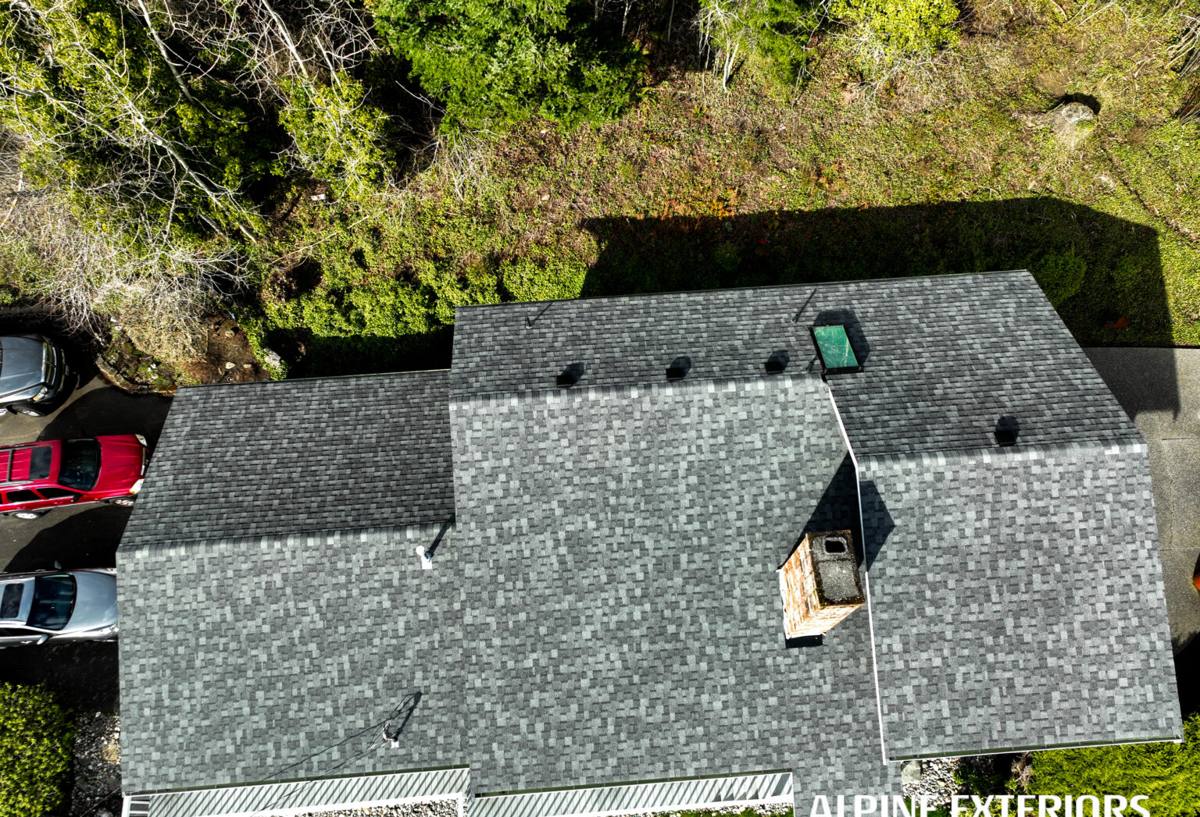
What Local Homes Actually Need From a Shingle Roof
Three climate factors drive almost every decision we make on a Sumas roofing job:
- Salt air: Metal flashing, fasteners, and vent components corrode faster this close to saltwater. Cheap galvanized hardware can start rusting at the edges within a few years; it needs to be substituted with corrosion-resistant material from the start, not patched later.
- Driving rain: Wind-blown rain doesn't just land on the shingle field — it gets pushed sideways under tabs, into valleys, and around anything that penetrates the roof (vents, chimneys, skylights). Underlayment and flashing quality matter more here than in calmer climates.
- Moss and algae season: Shaded, north-facing, and low-slope sections of roof stay damp for days at a time in fall and winter. Moss doesn't just sit on top of shingles — its root structure works into the granule layer and lifts tab edges, which is where leaks usually start.
A roof designed around these three things looks different from a standard install in the details, even if the shingles on top look the same from the street.
What a Correct Installation Involves
Underlayment and water barriers
Given how much wind-driven rain Sumas sees, we don't treat underlayment as a formality. Self-adhered ice-and-water barrier belongs at eaves, valleys, and around every roof penetration — the places where wind can force water backward under the shingle field. Synthetic underlayment across the rest of the deck holds up better than old felt paper in damp, humid conditions and doesn't sag or tear as easily during install.
Ventilation
A shingle roof that can't breathe traps moisture in the attic, and trapped moisture works against the underside of the roof deck year-round — not just during storms. Balanced intake at the eaves and exhaust at the ridge keeps air moving, which matters even more in a climate where the air outside is often nearly as damp as the air you're trying to vent out.
Flashing and transitions
Chimneys, skylights, sidewalls, and valleys are where the vast majority of roof leaks actually start — not in the open shingle field. Step flashing, counter-flashing, and valley metal need to be sized and layered correctly for the amount of water this area sees, using corrosion-resistant metal given the salt air. This is also where rushed installs cut the most corners, because it's slower work than laying shingles in a straight field.
Fastening and wind resistance
Shingles rated for high wind still fail if they're under-nailed or nailed in the wrong spot. We follow manufacturer nailing patterns exactly, especially at rakes and ridges where wind uplift is strongest during winter storms.
Shingle Options and How They Hold Up Locally
| Shingle Type | Typical Lifespan Here | How It Handles Moss & Damp | Best Fit |
|---|---|---|---|
| 3-Tab (standard) | 15–20 years | Lower profile sheds moss easier, but thinner mat means faster granule loss in driving rain | Budget-conscious re-roofs, rentals |
| Architectural / Laminate | 25–30 years | Heavier mat and better sealant strip resist wind-driven rain intrusion; algae-resistant granule options available | Most Sumas homes — best balance of cost and durability |
| Impact-Resistant | 25–30 years | Same weather performance as architectural, added resistance to debris impact | Homes with overhanging trees or storm exposure |
| Premium / Designer | 30+ years | Thickest mat, best sealant performance, longest warranty on algae resistance | Homeowners planning to stay long-term |
For most homes in this area, we point people toward an architectural shingle with algae-resistant (AR) granules built in. It costs more up front than a basic 3-tab, but the difference in how long it stays clean and watertight in this climate usually justifies it — especially on north-facing slopes that never fully dry out.
The Moss Problem Deserves Its Own Section
Moss is the single most common reason we get called out to a shingle roof in this area that isn't actually leaking yet — but is about to. Here's what we tell every homeowner:
- Moss growth is a symptom of moisture retention, not just an appearance issue. Where you see moss, you have a section of roof that stays wet longer than it should.
- Physically scraping moss off without treating the cause just removes granules along with it and speeds up wear.
- Zinc or copper control strips installed at the ridge during a re-roof reduce regrowth over time as rain washes trace metal down the slope — this is a one-time install decision, not an ongoing maintenance task.
- Trees overhanging the roof keep shaded sections damp longer; trimming back canopy that shades the roof helps more than any chemical treatment.
How Our Process Works
- Free on-site inspection. We walk the roof (or use a drone where pitch or access makes that safer) and check the deck, flashing, ventilation, and shingle condition — not just count how old the shingles are.
- Straightforward written estimate. You get a clear scope of work and price before anything is scheduled — no vague allowances that turn into surprise add-ons.
- Material selection. We walk through shingle options and where they fit your roof's exposure, not just your budget.
- Install and daily cleanup. Tear-off, deck inspection and repair as needed, underlayment, flashing, shingles, ventilation — and the yard gets cleaned of nails and debris at the end of each day, not just at the end of the job.
- Final walkthrough. We go over the finished roof with you before we consider the job done.
Repair or Full Replacement? What Actually Drives That Decision
| Factor | Leans Toward Repair | Leans Toward Replacement |
|---|---|---|
| Age of roof | Under 12–15 years | Approaching or past manufacturer lifespan |
| Extent of damage | Isolated to one slope, valley, or penetration | Granule loss, curling, or moss spread across multiple slopes |
| Deck condition | Deck is sound underneath | Soft spots or rot found during inspection |
| Underlayment/flashing | Still intact and correctly installed | Old felt paper, undersized or corroded flashing |
| Storm/impact damage | Localized, insurance-covered section | Widespread wind or impact damage |
We'll tell you honestly when a repair makes more sense than a sales pitch for a full replacement — and just as honestly when patching an aging roof is throwing money at a problem that's going to reopen somewhere else next season.
Why It Matters That We Already Work in This Area
Roofing companies that cover a huge multi-county territory tend to treat every job with the same generic spec sheet. Working this specific stretch of Whatcom County regularly means we already know which roof orientations take the worst of the wind-driven rain, which sections of a property tend to hold moss longest, and which flashing details fail first in salt air — because we've seen it, not because it's in a manual. That translates into fewer callbacks and a roof that's actually built for where it sits, not just built to code minimums.
It also means we're not disappearing after the invoice clears. If a question comes up two years into a roof's life, you're calling a crew that's still working in the neighborhood, not chasing down a call center for a company that did one job here and moved on.
Simple Maintenance Checklist for Sumas Homeowners
- Clear gutters and downspouts before the fall rains start — clogged gutters back water up under the shingle edge.
- Look for moss lines along ridges and north-facing slopes each spring, before it spreads.
- Trim back tree limbs that shade or touch the roof surface.
- Check attic ventilation isn't blocked by insulation at the eaves.
- Have flashing around chimneys, skylights, and vents inspected every few years, not just when a leak shows up.
- Address small leaks immediately — in this climate, a small entry point stays wet long enough to spread rot quickly.
If your roof is showing moss, granule loss, or you're just not sure how much life is left in it, we're happy to take a look and give you a straight answer — no pressure, no obligation. Use the form below to request a free estimate.