 Semiahmoo Siding
 Birch Bay's Shoreline Climate Is Hard on Exterior Walls
Birch Bay sits right on the water, and that location is exactly what makes siding decisions here different from a house fifteen miles inland. Homes along this stretch of Whatcom County take on salt-laden air, wind-driven rain that hits walls sideways instead of falling straight down, and a long stretch of the year where shade, moisture, and cool temperatures combine to grow moss and algae on anything that stays damp too long. None of that is unusual for a Pacific Northwest coastal community, but it adds up over the years on a house's exterior in ways that inland siding jobs never have to deal with.
Salt air is corrosive to exposed metal fasteners and trim. Driving rain finds every gap in flashing and butt joints that a calmer climate would never expose. And moss doesn't just look bad — it holds moisture against a wall surface for weeks at a time, which is a problem for any siding material that isn't built to handle sustained dampness. A siding job done right in Birch Bay accounts for all three of these factors from the start, not as an afterthought.
Why James Hardie Fits This Exposure
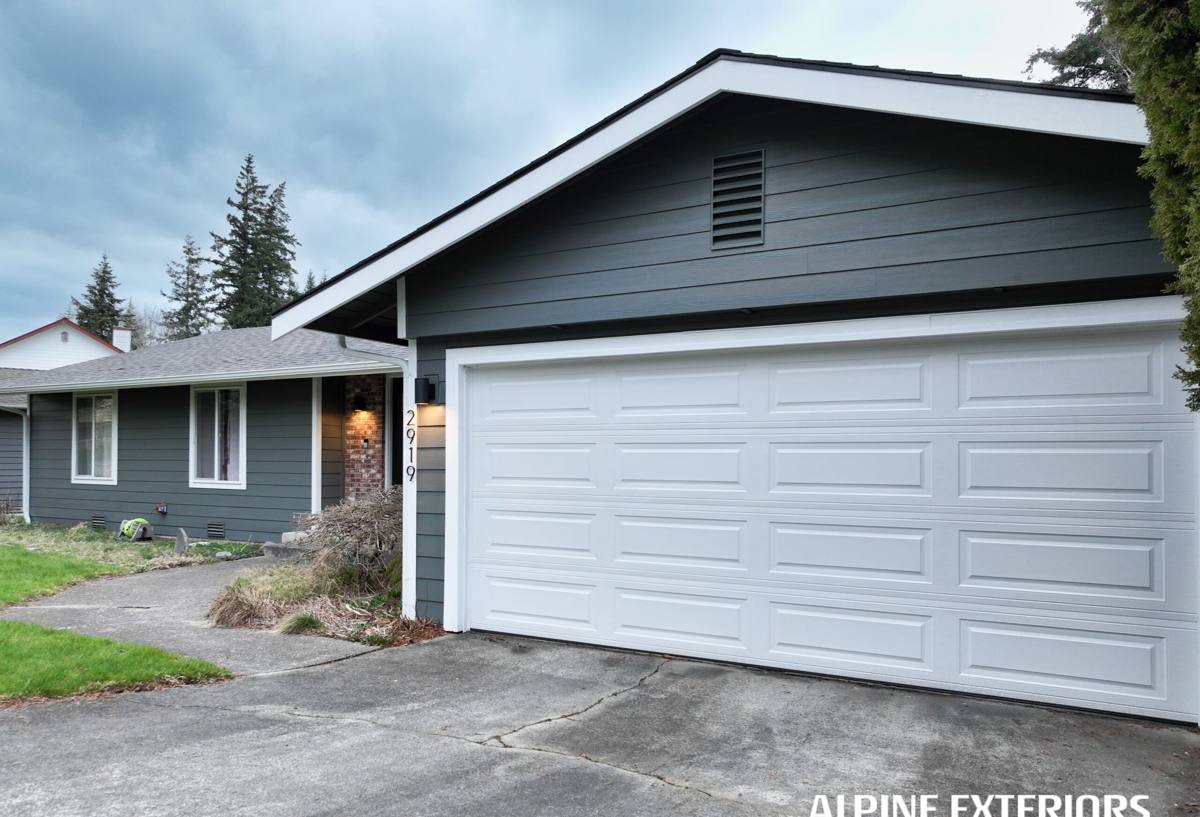
We install James Hardie fiber cement exclusively, and on a shoreline property like the ones common in Birch Bay, the reasoning is straightforward. Fiber cement doesn't rot, it doesn't feed moss and mildew the way wood fibers do, and it holds up to repeated wet-dry cycling without swelling, cupping, or delaminating. It's also non-combustible, which matters less for salt air specifically but is part of why we standardized on the product across every home we side.
The factory-applied ColorPlus finish is a real advantage in a marine environment. Field-applied paint on any siding material is the first thing to fail when it's exposed to salt air and constant moisture — it chalks, peels, and needs recoating on a schedule that gets shorter the closer a house sits to the water. ColorPlus is baked on under controlled conditions and backed by its own finish warranty, so the color and coating are engineered to hold up rather than hoping a field coat survives the exposure.
What We Don't Install, and Why It Matters Here Specifically
We don't install vinyl, cedar, primed spruce, LP SmartSide, Cemplank, or Allura. Each of those products has legitimate uses somewhere, but on a shoreline property they carry trade-offs we're not willing to build a home's exterior around. Vinyl can warp and become brittle with UV and temperature swings, and its seams are a weak point against wind-driven rain. Wood and wood-based composites need consistent, disciplined maintenance to resist the rot and moss growth that this climate practically guarantees if a coating is neglected even one season. We'd rather tell a homeowner honestly why we don't install those products than sell a job we don't believe will hold up on this stretch of coastline.
The HZ5 Product Line and What It Means for This Region
James Hardie engineers its siding by climate zone, and the Pacific Northwest falls into the HZ5 category — the line built specifically for regions with sustained moisture exposure, freeze-thaw cycling, and higher humidity than the drier zones of the country. HZ5 products are formulated and tested for exactly the conditions Birch Bay sees: extended damp periods, moss and mildew pressure, and rain that comes from the water as much as from the sky.
Using the correct climate-zone product isn't a marketing detail. A siding product engineered for a dry desert climate can perform noticeably worse in a shoreline installation than the HZ5 formulation designed for this region. Part of our job is making sure every board that goes on a Birch Bay home is the version actually built for this exposure, not a generic option that happens to be in stock.
What Correct Installation Looks Like on a Shoreline Home
Fiber cement siding is only as good as the installation behind it. Most of the siding failures we get called out to inspect on older homes in this area weren't caused by the siding material itself — they were caused by water getting behind it. On a property exposed to driving rain and salt air, a few details matter more than they would on a calmer inland lot.
Drainage and Weather Barrier
Every installation starts with a weather-resistant barrier and a drainage plane behind the siding, not directly against the sheathing. In a climate where wind pushes rain sideways against the wall, that drainage gap is what lets any moisture that does get past the siding surface find its way back out instead of sitting against the wall assembly.
Flashing at Every Penetration
Windows, doors, hose bibs, vents, and any other penetration through the siding are places where water finds a way in if flashing is skipped or done casually. On a shoreline home, we treat flashing detail as non-negotiable — it's the single most common point of failure we see when we're asked to look at a problem installation.
Fastening and Gapping
James Hardie specifies exact fastener types, spacing, and gap tolerances between boards and at trim, and those specs aren't arbitrary. Correct gapping allows the material to handle seasonal movement without cracking caulk lines, and corrosion-resistant fasteners matter more here than almost anywhere else in the county because of the salt content in the air.
Starter Strip and Bottom Clearance
The bottom course of siding needs proper starter strip and clearance from grade, decks, and roof lines. Siding installed too close to the ground or to a horizontal surface holds moisture against the bottom edge and is one of the most common places we find early deterioration on homes that weren't sided to spec.
A Practical Comparison for Homeowners Weighing Options
Homeowners in Birch Bay often ask us to walk through why fiber cement costs more up front than some alternatives. The honest answer is in how each material behaves over time in this specific climate, not just at installation.
| Factor | James Hardie Fiber Cement | Vinyl | Wood / Primed Spruce |
|---|---|---|---|
| Upfront cost | Moderate-high | Low | Low-moderate |
| Moisture and moss resistance | Strong when installed to spec | Seams vulnerable to wind-driven rain | Requires constant maintenance to resist rot |
| Finish durability in salt air | Factory ColorPlus finish, warrantied | Can fade and become brittle with UV/temperature swings | Field-applied paint fails fastest in this exposure |
| Maintenance burden | Periodic washing, caulk checks | Low, but seams and panels can fail without notice | Regular recoating and rot inspection |
| Expected service life here | Decades when installed correctly | Variable, shorter in coastal exposure | Shorter without disciplined upkeep |
The pattern in that table is consistent with what we see on service calls across the area: the products that cost less up front tend to demand more attention, sooner, in a climate this consistently wet and salty.
Our Installation Process
Every job starts with a walk-around of the existing exterior, not just a measurement for new siding. We're looking at what's happening behind the current siding, checking for soft spots, moisture staining, and any signs the wall assembly has already taken on water. That inspection changes the scope of the job more often than homeowners expect — sometimes sheathing repair is needed before a single new board goes up.
From there, the sequence is tear-off, sheathing assessment and repair as needed, installation of the weather-resistant barrier and drainage components, flashing at every penetration, and then the Hardie boards themselves, fastened and gapped to manufacturer spec. Trim, caulking, and touch-up finish work close out the job, followed by a final walk-through with the homeowner before we consider it done.
Living With Hardie Siding Through Birch Bay's Moss Season
Fiber cement is low-maintenance compared to wood, but "low-maintenance" doesn't mean "no maintenance," especially in a climate that grows moss on shaded, damp surfaces for a good part of the year. A little routine attention keeps the siding looking and performing the way it should for the long haul.
- Rinse siding down at least once a year, more often on shaded or north-facing walls where moss and algae tend to establish first
- Keep gutters clear so overflow isn't running down wall surfaces during heavy rain events
- Trim back vegetation and shrubs that hold moisture against the siding or block sun and airflow
- Check caulk lines at trim and penetrations annually and re-caulk any that have cracked or pulled away
- Watch for any staining or soft spots near the bottom courses, which can signal a drainage or clearance issue worth catching early
Why Hiring a Crew That Already Works Birch Bay Matters
A siding installation is only as good as the crew's familiarity with the specific conditions a house will face. Crews who work this shoreline regularly already know where wind-driven rain hits hardest on a given exposure, how far back moss pressure typically extends from the water, and which flashing details tend to get overlooked by installers who normally work drier, less exposed sites inland. That local pattern recognition shows up in the quality of the finished job, not just in the sales pitch.
It also matters for something more basic: showing up. A crew based near Birch Bay isn't juggling long drive times or treating the job as an outlier on their route, which tends to show in scheduling reliability and follow-up if any punch-list items come up after the job is complete.
If you're weighing a siding replacement or new install in Birch Bay, we're happy to walk your property, look at what's actually happening behind your current siding, and give you a straightforward, no-pressure estimate for a James Hardie installation built for this exposure. There's a form below to get that started.