 Semiahmoo Siding
 Custer's Climate Is Harder on Siding Than Most Homeowners Realize
Custer sits close enough to Semiahmoo Bay and the Strait of Georgia that homes here take on a combination of weather stress you don't see further inland: salt-laden air moving off the water, long stretches of driving, wind-blown rain, and a wet season that can stretch from October well into spring. Add Whatcom County's tree cover and the shaded, damp conditions it creates, and you get a moss and algae season that outlasts what most siding products are designed to shrug off.
None of this is dramatic, day-to-day damage. It's cumulative. Salt air accelerates the breakdown of fasteners, caulking, and lower-grade finishes. Wind-driven rain finds every gap in flashing and trim. Moss holds moisture against the wall assembly long after a storm has passed. Individually, minor. Over 10-15 years, this is exactly the combination that causes siding to fail early on Custer homes — regardless of what brand name is on the product.
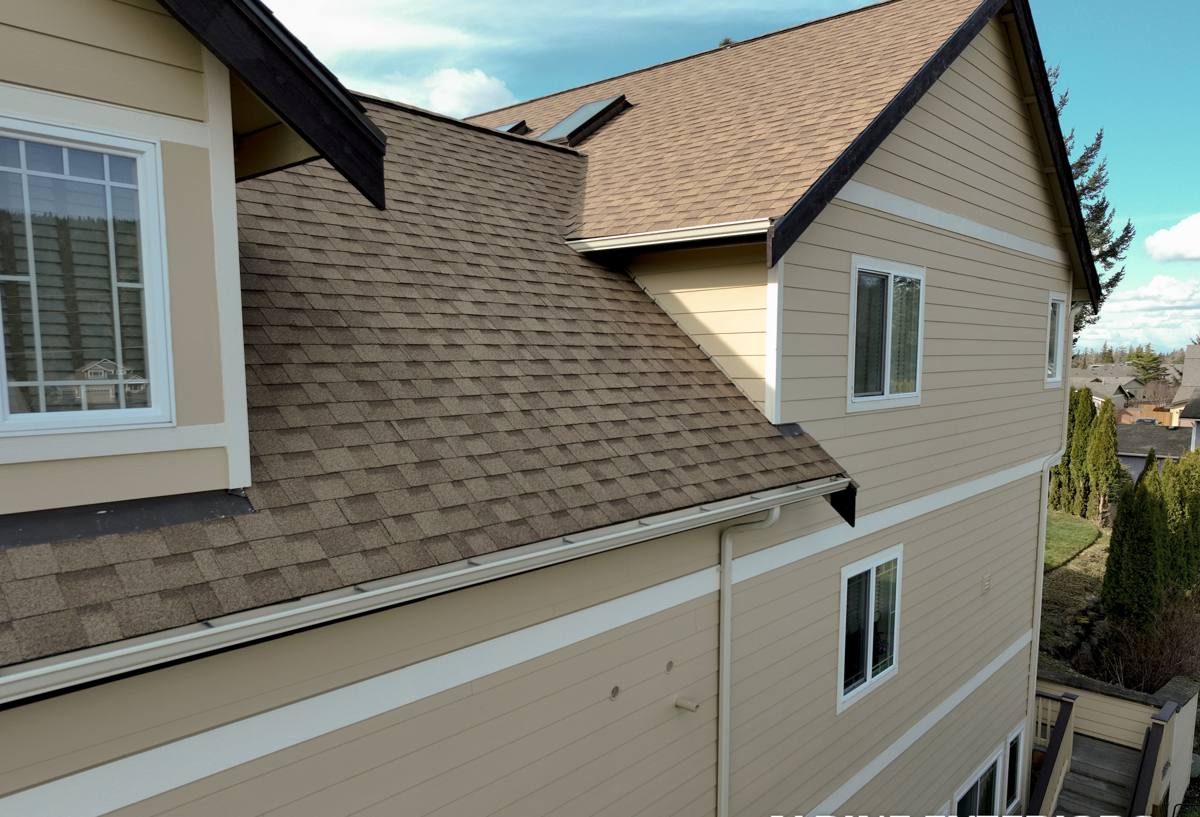
What Correct Siding Replacement Actually Requires
Siding replacement is not just removing old panels and nailing up new ones. In a climate like this, most of what determines whether a job lasts happens underneath the visible surface. A correct replacement on a Custer home involves:
- Full tear-off of old siding and trim, not an overlay — installing new siding over old hides rot and doesn't fix the underlying moisture problem
- Inspection of the sheathing for water damage, soft spots, or rot once the old siding is off
- A continuous, properly lapped water-resistive barrier installed shingle-style so water sheds outward, never inward
- Correct flashing at every window, door, deck ledger, and roof-to-wall intersection — the majority of siding failures we see start at these transitions, not in the field of the wall
- Proper fastener selection and placement to manufacturer spec, not shortcuts that void warranty coverage
- Rain screen or drainage gap detailing appropriate to the wall assembly, so incidental moisture has somewhere to go
- Factory-finished siding and trim installed to the manufacturer's specific climate zone requirements
Skip any one of these steps and the siding may look fine for a few years while the real problem builds behind it. This is where a lot of siding jobs quietly go wrong — not with the product choice, but with what did or didn't happen during installation.
Why We Install Only James Hardie Fiber Cement
We made a decision as a company to install one siding system: James Hardie fiber cement. We don't install vinyl, LP SmartSide, cedar, primed spruce, Cemplank, or Allura. That's not a marketing position — it's a standard we hold because of what we've seen happen to other materials in exactly this kind of coastal, wet-winter climate.
Fiber cement is non-combustible, which matters given Washington's wildfire seasons even on the wetter west side of the state. It doesn't absorb water the way wood-based products can, so it doesn't swell, delaminate, or invite rot at cut edges and butt joints the way engineered wood siding sometimes does when a seal is compromised. It holds paint and factory finish far longer than vinyl, which tends to fade, warp, or go brittle in UV and salt exposure over time. And Hardie's ColorPlus factory finish is baked on under controlled conditions — more consistent and more durable than field-applied paint, which matters when your siding is fighting salt air and moss growth for a decade or more.
We're not saying every other product is unusable everywhere. We're saying that for the specific combination of salt air, wind-driven rain, and moss exposure that Custer homes deal with, fiber cement installed correctly is the product we're willing to put our name behind.
James Hardie's HZ5 Climate Engineering
James Hardie engineers its siding by climate zone, and Whatcom County falls into the HZ5 category — their formulation for cold, wet regions. That means the product is built with this specific weather pattern in mind rather than a one-size-fits-all national spec.
Siding Materials Compared for Custer's Climate
| Factor | Vinyl | Wood / LP SmartSide | James Hardie Fiber Cement |
|---|---|---|---|
| Moisture resistance | Fair — can warp, doesn't rot but gaps let water behind it | Moderate — engineered wood is treated, but cut edges and seal failures invite rot | Strong — cement-based, doesn't absorb and swell |
| Salt air / coastal durability | Fades and becomes brittle over time | Finish and treated layer degrade faster near salt exposure | Holds factory finish well in coastal conditions |
| Moss / algae resistance | Moss grows on surface, hard to fully clean without damage | Trapped moisture behind moss accelerates rot risk | Surface tolerates cleaning; material itself doesn't rot from moss contact |
| Fire rating | Combustible | Combustible | Non-combustible |
| Typical lifespan when installed to spec | 20-30 years, finish fades sooner | 20-30 years, sensitive to installation quality | 30-50+ years with factory finish |
| Warranty structure | Varies by manufacturer, often prorated | Varies, often prorated after early years | Long-term, transferable non-prorated coverage from James Hardie |
Signs a Custer Home Needs Siding Replacement Now
Not every siding issue means a full replacement, but these are the signals worth taking seriously before another wet season passes:
- Soft, spongy, or bubbling siding when pressed — usually a sign of trapped moisture or rot underneath
- Visible gaps, warping, or buckling panels, especially on the sides of the house facing prevailing wind and rain
- Persistent moss or algae growth that comes back within weeks of cleaning
- Peeling or chalking paint, or finish that's noticeably faded compared to when it was installed
- Cracks around window and door trim, or staining that suggests water is getting behind the siding at those points
- Higher-than-expected heating bills, which can point to compromised wall insulation from long-term moisture intrusion
- Siding that's original to a home built more than 20-25 years ago, particularly older wood or early-generation composite products
Our Process for a Custer Siding Replacement
1. On-Site Assessment
We walk the exterior with you, check the current siding condition, look for signs of moisture intrusion, and talk through what your home's exposure to wind, rain, and salt air actually looks like given its orientation and surroundings.
2. Scope and Estimate
You get a clear, written scope — what's being torn off, what the wall assembly will include, which James Hardie product line and color fit the home, and an honest estimate. No pressure, no inflated first number to "negotiate down" from.
3. Tear-Off and Inspection
Old siding and trim come off completely. We inspect the sheathing underneath before anything new goes up — this is the point where hidden rot or water damage gets caught and addressed, not covered over.
4. Weather Barrier and Flashing
This is the step that determines whether the job lasts. Water-resistive barrier, proper laps, and flashing at every penetration and transition point are installed to spec before a single piece of siding goes on.
5. James Hardie Installation
Siding, trim, and accessories go up per James Hardie's installation guidelines for our climate zone — correct fastener spacing, gapping, and clearances that protect the manufacturer's warranty.
6. Final Walkthrough
We walk the finished job with you, cover care and maintenance specific to a coastal, moss-prone property, and make sure you know what the warranty covers going forward.
Why a Crew That Already Works in Custer Matters
Siding installation quality varies more by crew than by product. A contractor who's worked a handful of homes in and around Custer already understands which sides of a house take the worst of the wind and rain, how moss behaves on shaded north- and west-facing walls in this specific pocket of Whatcom County, and where drainage and grading tend to push moisture against a foundation. That's knowledge you don't get from a general regional install crew that's never had to account for this particular mix of salt air and coastal rain patterns.
Local familiarity also matters for permitting, working with Whatcom County requirements, and scheduling around the reality of a long wet season — knowing which weeks are workable and which aren't wastes less of your time and avoids installing critical moisture barriers in bad conditions.
Maintenance After Installation
Even with the right product installed correctly, coastal homes benefit from a little seasonal attention:
- Rinse siding periodically to clear salt residue and slow moss/algae buildup, especially on shaded sides
- Keep gutters clear so overflow doesn't run down the wall assembly
- Trim back vegetation that keeps siding shaded and damp longer than it needs to be
- Have caulking and trim joints inspected every few years, since sealant is the first line of defense against wind-driven rain
James Hardie's factory finish reduces how much of this falls on you compared to field-painted siding, but no product is entirely maintenance-free in this climate.
Get a Straight Answer for Your Home
If your Custer home's siding is showing its age, or you just want an honest read on whether it's holding up the way it should against the salt air and rain, we're happy to take a look. The estimate is free, there's no pressure, and you'll get a straightforward answer about what your home actually needs — fill out the form below to get started.