 Semiahmoo Siding
 Building New in Wiser Lake Means Getting the Windows Right Before the Siding Ever Goes On
When a house is going up in Wiser Lake, the window package is one of the few building decisions that's genuinely hard to fix later. Once siding, trim, and interior finish work close in around a rough opening, correcting a bad flashing job or an undersized unit means tearing back finished work. That's a different problem than replacing an old window in a house that's already standing. New construction gives you one clean shot to get the opening, the flashing sequence, and the window itself matched to what this part of Whatcom County actually throws at a house year-round: salt-laden air moving in off the water, driving rain that hits walls sideways during winter storms, and a moss season that can run most of the year on north- and west-facing exposures.
We install new-construction windows on builds around Wiser Lake and the broader Semiahmoo area with that climate in mind from the start — not as an afterthought once the framing crew has already moved on.
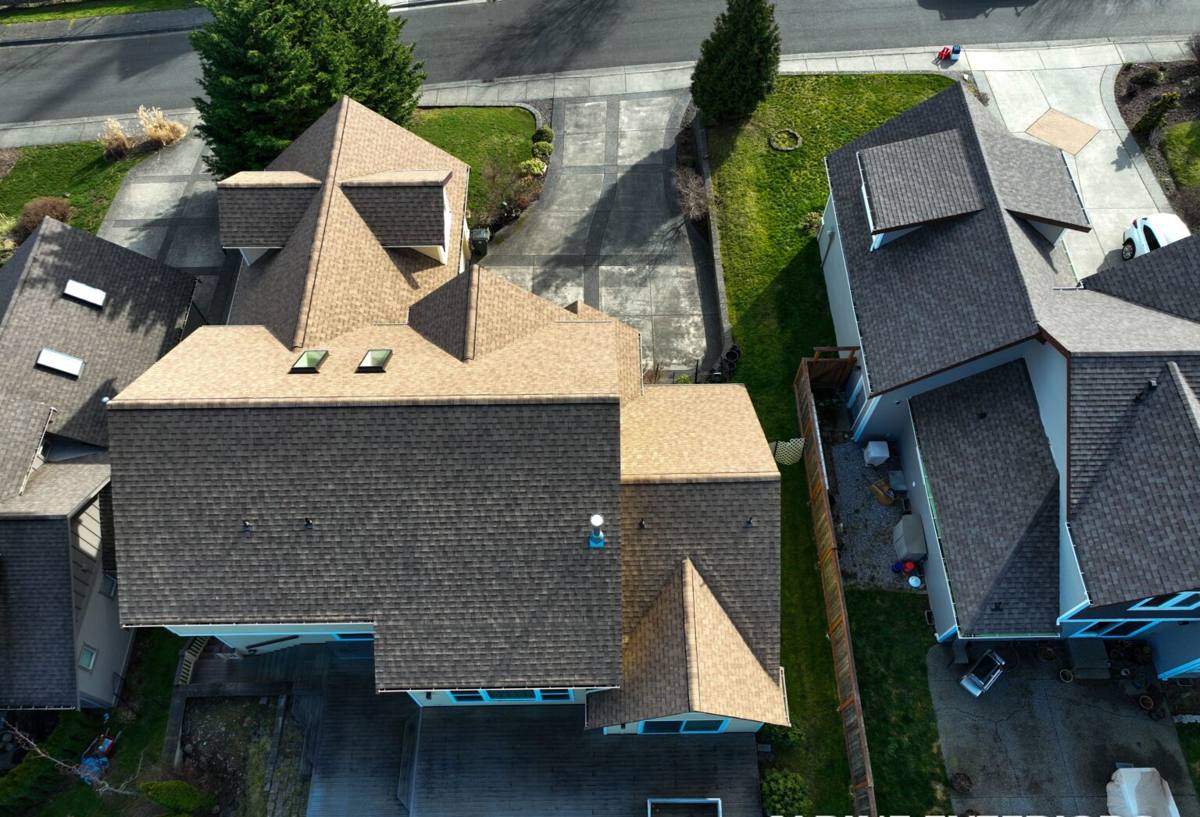
New-Construction vs. Replacement: Why the Window Stage Is Different
A replacement window gets set into an existing, already-flashed opening — the work is largely about fitting a new unit into old framing without disturbing the wall around it. A new-construction window is installed into open framing, before the weather-resistive barrier, flashing, and siding are in place. That means the window and the wall assembly around it get built together, as one system, rather than one being retrofitted to the other.
This matters more in a wet, wind-driven climate than people usually expect. On a new build, we control the entire drainage path: how the housewrap laps over the flange, how the sill pan is formed, how the head flashing sheds water past the window and down the face of the wall. Get that sequence right once during framing and it works for the life of the house. Get it wrong, and it's the kind of failure that stays hidden behind siding for years before it shows up as rot or interior staining.
What a Marine Climate Does to a New Window Opening
Wiser Lake sits inland from the water at Semiahmoo, but it's still squarely in the same Whatcom County weather pattern — persistent moisture, salt-carrying air working its way inland on wind off the Strait, and long stretches of overcast, damp conditions that keep exterior surfaces wet far more of the year than a drier climate would. Three things matter most for a new-construction window package here:
Driving Rain
Wind-driven rain doesn't just hit a wall — it gets pushed sideways and upward into any gap it can find. A new-construction opening needs a sloped sill pan and properly lapped flashing so that any water that does get past the window sheds back out, rather than pooling at the sill or working into the wall cavity.
Salt Air
Airborne salt accelerates corrosion on hardware, fasteners, and unprotected metal flashing. It's a bigger factor on homes closer to the water, but it doesn't stop at a hard line — homes further inland around Wiser Lake still see it on windier days. We factor it into fastener and flashing material choices rather than assuming standard hardware will hold up the same way it would in a dry inland climate.
Moss and Persistent Moisture
A long moss season means exterior surfaces around windows stay damp longer, especially on shaded or north-facing walls. That doesn't damage a properly flashed window directly, but it does mean caulking, trim, and any exposed wood components need to be chosen and detailed knowing they'll spend a lot of the year wet, not just during storms.
Choosing a Frame Material for a Wiser Lake Build
There's no single "correct" frame material for every new build — it depends on the home's design, budget, and exposure. What we won't do is recommend a material or installation shortcut that looks fine at final walkthrough but creates a maintenance burden once the house has been through a few wet seasons. Here's how the common options compare for this climate:
| Frame Material | Moisture / Salt Air Behavior | Maintenance | Typical Fit | Relative Cost |
|---|---|---|---|---|
| Vinyl | Won't rot or corrode; performs well in wet climates | Low — occasional cleaning | Most new-construction budgets | $ |
| Fiberglass | Excellent dimensional stability in temperature swings and damp conditions | Low | Larger openings, higher-end builds | $$$ |
| Wood-Clad | Good if cladding and flashing details are correct; exposed wood needs protection | Moderate — finish and sealant checks over time | Homes prioritizing a wood interior look | $$$ |
| Aluminum | Strong but prone to corrosion near salt air unless properly coated | Moderate — coating condition matters | Modern designs, larger glass areas | $$ |
Whatever material a homeowner chooses, the frame is only half the equation. A high-end window installed with a poor flashing sequence will underperform a mid-range window installed correctly — that's true anywhere, but it's magnified in a climate that gives water this many chances to find a way in.
Getting the Rough Opening, Housewrap, and Flashing Sequence Right
This is the part of a new-construction window job that doesn't show once the house is finished — and it's the part that determines whether the window performs for twenty years or starts causing problems in five. The sequence we follow on every opening:
- Confirm the rough opening is square, level, and sized correctly before the window ever arrives on site.
- Form a sloped sill pan so incidental water drains back out and away from the sheathing.
- Lap the weather-resistive barrier correctly at the sill, jambs, and head — water always needs to move downward and outward over the next layer, never behind it.
- Set the window plumb, level, and square, and fasten it per the manufacturer's specification — this affects both performance and warranty coverage.
- Install head flashing that laps over the housewrap above the window, directing water past the opening rather than into it.
- Seal and insulate the perimeter gap correctly — over-sealing an opening can trap moisture just as easily as under-sealing it can let moisture in.
Every one of those steps interacts with the next. Skipping or rushing one — a common issue when window installation gets treated as a quick task squeezed into a tight framing schedule — is how a house ends up with a window that looks fine for years and then fails quietly behind the siding.
Energy Code, Comfort, and Egress on a New Build
New-construction windows in Washington need to meet current state energy code requirements for U-factor and, depending on glazing area, solar heat gain coefficient. Those numbers affect how much heat the house loses through the glass in winter and how much it gains in summer — a real comfort and heating-cost factor in a climate with as many cold, damp months as Whatcom County has. Bedroom windows also have to meet egress requirements for size and sill height, which needs to be planned at the framing stage, not discovered after drywall.
We work from the home's plans and the local code requirements to confirm each window's specifications match what's required for its location in the house — not just what looks right in a showroom.
Our New-Construction Window Process
Working directly during the framing phase means we're coordinating with the builder's schedule, not working around a finished house. Our process on a Wiser Lake new-construction job typically looks like this:
Plan Review and Ordering
We review the architectural plans, confirm window sizes, egress requirements, and energy code targets, and place orders with enough lead time to match the framing schedule — window lead times can run several weeks, so this step happens early.
Rough Opening Verification
Before installation day, we check that framed openings match the ordered window sizes and are square and plumb, catching framing discrepancies before they become installation problems.
Installation and Flashing
Windows are set, flashed, and sealed following the sequence above, coordinated with whoever is installing the housewrap and siding so the layers lap correctly rather than getting installed out of order.
Final Walkthrough
We check operation, seals, and hardware on every unit before handoff, so nothing gets discovered after the homeowner has moved in.
Pre-Install Checklist We Run on Every New-Construction Job
These are the items we confirm before a single window goes into the opening:
- Rough openings match ordered window dimensions, with allowance for shimming
- All openings are square, level, and plumb
- Sill pans are formed with a slope toward the exterior
- Weather-resistive barrier is in place and properly sequenced at each opening
- Fastener and flashing materials are appropriate for a salt-air environment
- Egress-required openings meet code minimums for size and sill height
- Window specifications match the energy code targets for that elevation
- Manufacturer installation instructions are on hand and followed for warranty compliance
Why Hire a Crew That Already Works Wiser Lake
A window installed to a generic national standard will function in Wiser Lake — but "will function" and "will perform well for decades in this specific climate" aren't the same bar. A crew that regularly works new construction around Semiahmoo and the rest of Whatcom County already knows how far salt air travels inland on a windy day, how aggressively driving rain hits a west-facing wall in a winter storm, and how long moss and damp conditions linger on shaded elevations. That local pattern recognition shows up in small decisions — flashing laps, fastener choices, sealant selection — that a crew unfamiliar with this climate might not think twice about.
It also means fewer surprises for the builder. Coordinating window installation with framing, housewrap, and siding schedules goes smoother when the window crew has done it on other Whatcom County builds and knows how the pieces need to come together.
If you're planning a new build in Wiser Lake and want the window package handled right from the framing stage forward, we're glad to walk through the plans with you. Use the form below to request a free, no-pressure estimate — no obligation, just a straight assessment of what your build needs.