 Semiahmoo Siding
 Asphalt Shingle Roofing Built for Wiser Lake's Climate
Wiser Lake sits inside a part of Whatcom County that doesn't get much sympathy from national roofing guides. The manufacturer's spec sheet assumes a dry attic, moderate wind, and a roof that dries out fully between rains. That's not what a shingle roof gets out here. Between the salt-tinged air that moves inland off the Strait, the driving rain that comes sideways more often than straight down, and a moss season that can run eight months or longer under shaded, tree-lined lots, an asphalt shingle roof in this area is working harder than the same roof would in most of the country.
None of that means asphalt shingles are the wrong choice — they're still the most practical, cost-effective roofing material for the vast majority of homes here. It means the installation and the maintenance schedule have to account for the conditions, not just follow a generic checklist. That's the difference between a shingle roof that makes it to 25-30 years and one that starts showing granule loss and soft spots at year twelve.
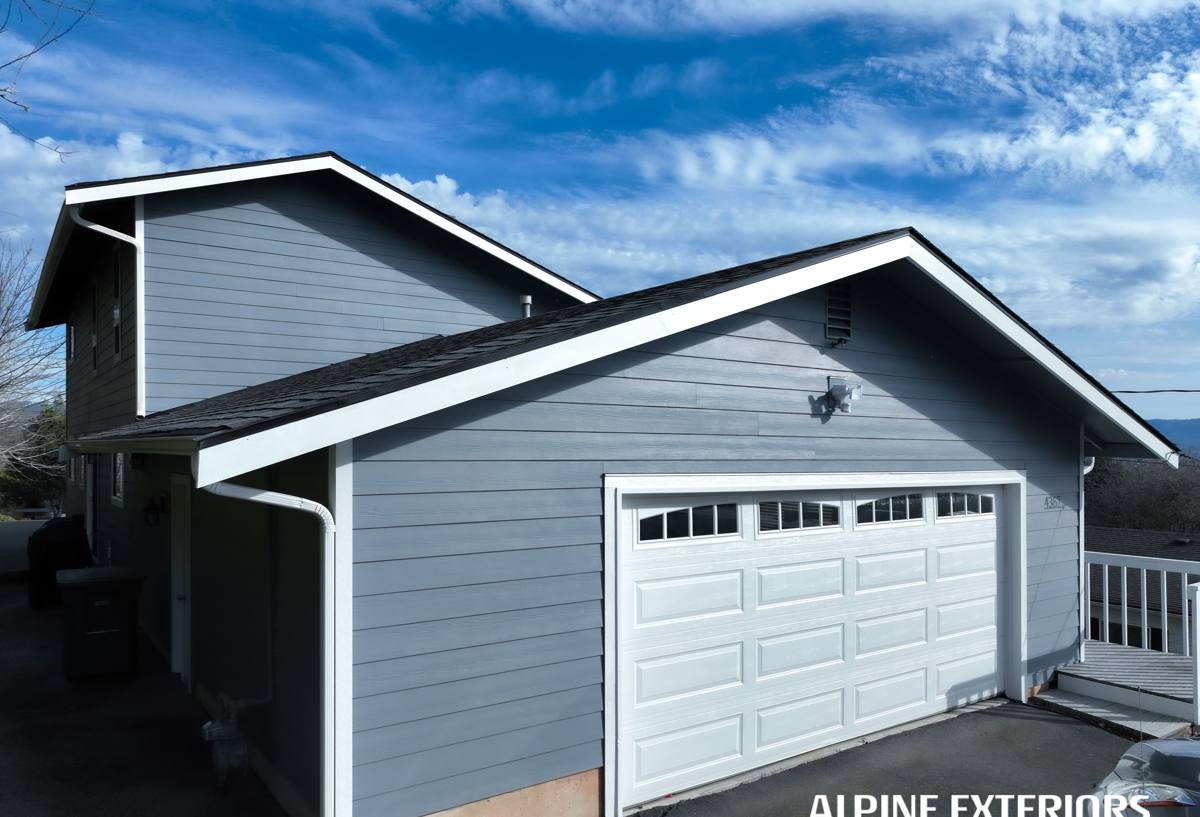
What Whatcom County Weather Actually Does to a Shingle Roof
Moss and Algae
Moss doesn't just sit on top of shingles looking bad — it lifts the shingle tabs as it grows, holds moisture against the roof deck, and works its roots into the granule surface. On lake-adjacent lots with heavy tree cover and less direct sun, moss gets a longer growing window than it would on an open, south-facing roof. Left alone, a moss mat can shorten the usable life of a shingle roof by years, not months.
Wind-Driven Rain
Rain that comes in at an angle, rather than straight down, finds every weak point in a roof system — nail lines, valleys, the edges around vents and chimneys. A roof that would shed water fine in a calm downpour can leak in a sideways storm if the underlayment and flashing weren't installed with that in mind.
Salt Air and Metal Fatigue
Salt-laden air travels farther inland than most homeowners assume, especially with the wind patterns common to this part of the Sound. It doesn't damage the shingles themselves much, but it accelerates corrosion on exposed metal — flashing, drip edge, roofing nails, and vent stacks — which is exactly where roof leaks tend to start.
Freeze-Thaw Cycling
Whatcom County doesn't get brutal winters, but it gets enough freeze-thaw swings to matter. Water that's trapped under a lifted shingle or worn flashing can freeze, expand, and pry things apart a little more with every cycle.
What a Correct Installation Actually Involves
A shingle roof is a system, not a single layer of material. Skipping or shortcutting any one part of that system is where most premature failures come from.
- Deck inspection and repair — any soft, delaminated, or water-stained sheathing gets replaced before anything else goes down, not covered up.
- Ice and water shield at eaves, valleys, and roof penetrations — the areas where wind-driven rain and ice damming cause the most damage.
- Synthetic underlayment across the full deck, properly lapped and fastened, as the roof's actual waterproofing layer beneath the shingles.
- Corrosion-resistant flashing at chimneys, walls, and valleys — cheap flashing is a false economy in air with any salt content.
- Balanced ventilation — intake at the eaves, exhaust at the ridge — so moisture doesn't get trapped in the attic and condense against the underside of the deck.
- Correct nailing pattern — proper nail count and placement per shingle, matched to the wind exposure of the roof, not just "enough to hold it down."
- Starter strip and ridge cap installed as actual roofing components, not as an afterthought — these are common failure points when rushed.
Any one of these done wrong won't necessarily show up as a leak in year one. It shows up as a leak in year eight, after the warranty conversation has already happened and the homeowner has forgotten who installed the roof.
Choosing the Right Shingle for This Area
Shingle selection matters more here than in a drier climate, mainly because of moss and algae resistance and how the shingle handles sustained wind. Here's how the common options compare for a property like this:
| Shingle Type | Wind Rating | Moss/Algae Resistance | Typical Lifespan Here |
|---|---|---|---|
| 3-Tab (standard) | Lower | Only with algae-resistant (AR) granules added | 15-20 years |
| Architectural / Dimensional | Higher | Usually includes AR granules standard | 25-30 years |
| Premium/Designer Architectural | Highest of the three | AR granules plus heavier mat construction | 30+ years |
We generally steer homeowners in this area toward architectural shingles with algae-resistant granules as the practical baseline, not because 3-tab shingles are a bad product outright, but because the extra wind rating and moss resistance matter more here than they would in a drier, calmer climate. The cost difference over the life of the roof is usually smaller than people expect once you account for how much sooner a lower-grade shingle needs replacing in these conditions.
Our Process, Start to Finish
1. On-Site Assessment
We look at the roof itself, not just from the ground — deck condition, existing ventilation, flashing condition, and how much moss or granule loss is already present. We also look at tree cover and sun exposure, since that tells us how aggressive the moss maintenance plan needs to be going forward.
2. Written Estimate
You get a clear, itemized estimate — materials, labor, tear-off, disposal, and any deck repair contingency spelled out, not a vague lump sum.
3. Scheduling Around the Weather
Shingle roofs need a reasonably dry window to install correctly. We plan around the forecast rather than pushing through a job in the rain, which is exactly the kind of shortcut that leads to trapped moisture under new shingles.
4. Tear-Off and Deck Inspection
Old roofing comes off down to the deck so we can actually see what's underneath, rather than laying new shingles over hidden problems.
5. Installation
Underlayment, flashing, ventilation, and shingles go in as a complete system, in the sequence that actually keeps water out — not just the fastest sequence.
6. Cleanup and Walkthrough
Site cleanup includes a magnetic sweep for stray nails, and we walk the finished roof with you so you know what was done and what to watch for.
Signs Your Roof Needs Attention Now
Most shingle roof failures don't happen suddenly — they build up over a season or two of small warning signs. If you're seeing any of the following, it's worth a look before the next round of fall rain:
- Visible moss growth, especially in shaded valleys or north-facing slopes
- Granules collecting in gutters or at downspout outlets
- Shingles that look cupped, curled, or lifted at the edges
- Dark streaking that doesn't wash off with rain (algae staining)
- Soft spots or sagging when walked on (deck damage — inspect from the attic first if possible)
- Rust staining or visible corrosion around flashing, vents, or nail heads
- Daylight visible through the roof deck from inside the attic
- A roof that's 18+ years old and has never had a full inspection
Maintenance for a Long Moss Season
A correctly installed shingle roof still needs periodic attention in this climate — that's not a defect, it's just what maritime, tree-covered lake properties require. A basic maintenance rhythm looks like:
| Task | Frequency | Why It Matters |
|---|---|---|
| Gutter and valley clearing | 2x per year (spring/fall) | Trapped debris holds moisture against shingles and decking |
| Moss treatment | Annually, or as growth appears | Stops moss before it lifts shingle tabs |
| Visual roof inspection | Annually | Catches flashing and granule issues early, while they're cheap to fix |
| Post-storm check | After major wind events | Wind-driven rain finds weak points fast — worth confirming nothing shifted |
We recommend against pressure washing moss off shingles — it strips granules and shortens the roof's life faster than the moss itself would. Proper moss treatment and physical clearing with the right tools protects the shingle surface instead of stripping it.
Why Hire a Crew That Already Works This Area
A roofing crew that mostly works drier, inland climates will often under-spec ventilation, skip the ice and water shield in places that don't technically require it by code but do need it given local wind and rain patterns, or use standard fasteners where corrosion-resistant hardware would hold up better near the water. None of that shows up on the invoice — it shows up three to five years later.
Working this part of Whatcom County regularly means knowing which roofs need extra attention to moss-prone valleys, which older neighborhoods commonly have deck issues under the existing shingles, and how to schedule a tear-off around a weather pattern that can turn on short notice. It's not a different skill set — it's the same trade, applied with the judgment that comes from doing it here repeatedly rather than occasionally.
Cost Factors for a Wiser Lake Roof Replacement
Every roof is different, so we don't quote pricing sight-unseen, but these are the main factors that move the number up or down:
| Factor | Effect on Cost |
|---|---|
| Roof size (square footage) | Largest single driver of total cost |
| Roof pitch and complexity | Steeper, more cut-up roofs take longer and require more safety setup |
| Number of existing layers to remove | More tear-off labor and disposal cost |
| Deck repair needed | Priced separately once the old roofing is off and the deck is visible |
| Shingle tier selected | 3-tab vs. architectural vs. premium changes material cost per square |
| Ventilation upgrades | Adding proper intake/exhaust venting where none currently exists |
We'd rather walk your roof and give you real numbers than throw out a broad range that doesn't mean much until we've actually seen the deck condition and layer count.
If your roof is showing moss, granule loss, or you just haven't had it looked at in a while, we're happy to come out, walk it with you, and give you an honest read on what it needs — no pressure, no obligation. Use the form below to request a free estimate.