 Semiahmoo Siding
 Sumas Roofs Face a Specific Kind of Wear
Sumas sits at the edge of Whatcom County, close enough to the Salish Sea that the same weather systems soaking Semiahmoo and the rest of the coastline push inland and settle over Sumas too. That means long stretches of driving rain, wind that shifts direction fast during winter storms, and a wet season that never quite dries out. Homes closer to the water pick up salt-laden air that accelerates corrosion on fasteners and flashing; Sumas gets a lighter version of that same moisture load, plus its own share of standing damp air trapped against the foothills. The practical result for roofs is the same story played out slightly differently: constant moisture exposure, a moss season that runs longer than most homeowners expect, and storm events that find every weak point in a roof system.
None of this means Sumas roofs fail faster than anywhere else in the region. It means the margin for sloppy work is smaller. A repair that would hold up fine in a drier climate can fail here within a season or two if flashing isn't sealed correctly, if underlayment gets skipped, or if moss is left to do its slow damage under new shingles. Storm damage repair in this area isn't just about putting a roof back together — it's about putting it back together in a way that survives the next wet winter.
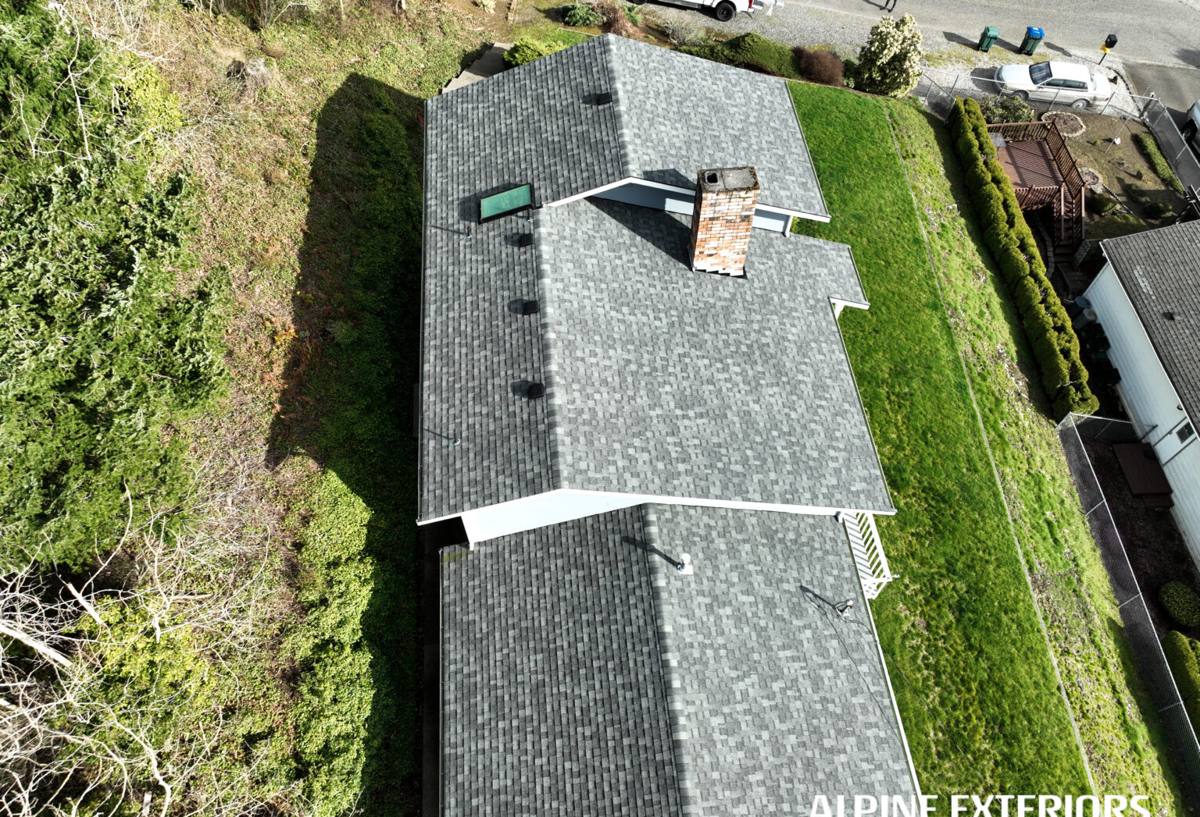
What Actually Counts as Storm Damage
Not every roof problem after a storm is storm damage, and not every storm leaves visible damage right away. Knowing the difference matters for both the repair plan and, if it applies, an insurance claim.
Common storm-related issues
- Shingles lifted, creased, or torn loose by wind gusts
- Shingles or tabs blown off completely, exposing underlayment or decking
- Flashing pulled away from chimneys, vents, or wall intersections
- Impact damage from falling branches or debris
- Granule loss concentrated in one area rather than spread evenly across the roof
- Water stains on interior ceilings appearing shortly after a storm
Issues that look storm-related but usually aren't
- Widespread granule loss and curling from age, not wind
- Moss buildup that's been developing for seasons, not weeks
- Nail pops and minor cracking from normal thermal movement
- Rust staining on old flashing that predates the storm
The distinction matters because storm damage repair should target the actual failure point, not turn into an excuse to sell a homeowner a full re-roof they don't need. It also matters because pre-existing wear (like moss-related rot) can complicate an insurance claim if it's not identified honestly up front.
What a Correct Repair Actually Involves
A storm damage repair that's done right goes well beyond nailing down loose shingles. Here's what should happen, in order, on a properly handled job.
1. A full-roof inspection, not just the damaged spot
Wind damage rarely stays contained to one obvious area. A gust strong enough to lift shingles on one slope often stresses fasteners and flashing elsewhere on the roof that hasn't failed yet. A correct inspection covers every slope, all flashing points, and the condition of the decking underneath any exposed area — not just the spot the homeowner noticed from the ground.
2. Emergency protection when needed
If decking is exposed, the first priority is keeping water out until the permanent repair can happen — tarping or temporary sealing, done properly so it doesn't create its own leak path.
3. Decking assessment
Any time shingles have been missing for more than a short window, the decking underneath needs to be checked for soft spots, delamination, or rot before new material goes down. Installing new shingles over compromised decking is one of the most common ways a "repaired" roof fails again within a year.
4. Correct flashing work
Flashing failure is behind more roof leaks than shingle failure. Repairs need to reseat or replace flashing at chimneys, valleys, vent stacks, and wall transitions with proper laps and sealant — not just a bead of caulk over the old metal.
5. Matching materials where it matters
Shingle color and profile matching isn't just cosmetic — mismatched or incompatible shingles can create uneven wear patterns and, on some roofs, void manufacturer warranties on the surrounding material. A good repair crew sources shingles that match the existing roof as closely as possible, or is upfront when an exact match isn't available.
6. Moss and debris clearing as part of the job
Given how long moss season runs in this part of Whatcom County, any storm repair is a natural point to clear moss and debris from valleys and gutters nearby, since trapped moisture in those areas is often what turns a small leak into decking rot.
Our Process, Start to Finish
- Call or estimate request — tell us what you noticed (missing shingles, a leak, debris on the roof) and roughly when the damage appeared.
- On-site inspection — we walk the full roof, document damage with photos, and check decking condition wherever shingles are missing or lifted.
- Written estimate — a clear breakdown of what needs repair, what materials are involved, and an honest read on whether a patch repair or larger work is the right call.
- Insurance documentation — if you're filing a claim, we provide the photos and scope notes your adjuster will need.
- Scheduling — repair timing depends on weather windows; we're upfront about how current conditions affect scheduling rather than overpromising a date.
- Repair work — decking, flashing, and shingle work done to match the rest of the roof, with cleanup of debris and old material when finished.
- Final walkthrough — we show you the completed repair area and flag anything else on the roof worth keeping an eye on.
Patch Repair, Slope Repair, or Something Bigger
Storm damage doesn't always call for the same scope of work. Part of an honest estimate is telling you which category your roof actually falls into.
| Repair Type | When It Fits | What to Expect |
|---|---|---|
| Spot patch repair | Isolated shingle loss or a single flashing failure, decking underneath is sound | Fastest turnaround, lowest cost, targeted to the damaged area only |
| Full slope repair | Damage spread across one roof plane, or decking issues found under part of a slope | Involves stripping and rebuilding one section rather than patching around it |
| Full or partial re-roof | Roof was already near the end of its service life, or storm damage is widespread across multiple slopes | Larger project, but sometimes more cost-effective than repeated patch repairs on an aging roof |
A contractor who pushes straight to full replacement without walking through why a patch or slope repair wouldn't work isn't doing you any favors — and neither is one who patches over decking damage just to keep the price low. The right scope depends on what the inspection actually finds.
What Affects the Cost of a Repair
We don't quote prices without seeing the roof, but the following factors are what actually drive cost up or down on a storm repair.
| Factor | Why It Matters |
|---|---|
| Size of the damaged area | A single missing shingle costs far less to fix than a full slope that needs stripping |
| Decking condition | Rotted or soft decking has to be replaced before new roofing goes down, which adds material and labor |
| Roofing material | Standard architectural shingles are the most straightforward to match and repair; specialty materials take more time to source |
| Roof pitch and access | Steep slopes or roofs with limited access take longer and require more safety setup |
| Flashing scope | Repairing flashing at a chimney or valley involves more precision than a straight shingle swap |
| Insurance involvement | Claims paperwork and adjuster coordination don't add much cost, but do affect timeline |
A quick pre-call checklist for homeowners
- Note when you first noticed the damage or the storm that likely caused it
- Take photos from the ground if it's safe to do so — don't get on the roof yourself
- Check ceilings and attic spaces for water stains or damp spots
- Check gutters and downspouts for shingle granules, which can indicate wind stripping
- Have your insurance policy information handy if you think you'll file a claim
Storm Damage and Insurance Claims
Many storm repairs in this area go through homeowner's insurance, since wind and impact damage are typically covered perils. What helps a claim go smoothly is documentation that happened close to when the damage occurred, rather than weeks later once a small leak has caused secondary damage. We provide dated photos and a written scope of the repair that adjusters can work from. We don't inflate estimates to pad a claim, and we're straightforward if we find pre-existing wear mixed in with storm damage — that honesty protects you if the claim gets questioned later.
Why a Crew That Already Works Sumas Matters
Storm repair work in Whatcom County isn't identical to storm repair work in a drier inland climate. A crew that already works this area knows how long moss season actually runs here, how quickly a small flashing gap turns into a real leak during a wet winter, and which materials hold up under the mix of driving rain and lingering damp that Sumas and the surrounding area deal with year-round. That local knowledge shows up in small decisions — how flashing gets lapped, whether moss removal gets factored into the repair, how a temporary tarp is set so it doesn't trap moisture underneath — that don't show up on an estimate sheet but matter a lot to how long the repair actually lasts.
It also matters for scheduling and follow-up. A crew working regularly in this area can respond faster after a storm event that's hit the whole region, and is easier to reach again later if a question comes up about the repair.
After the Repair: Keeping It From Happening Again
A storm repair is a good moment to put a few basic maintenance habits in place, since the same conditions that caused the damage don't go away once the repair is done.
- Have gutters cleared before the wet season builds, especially near valleys where debris collects
- Keep overhanging branches trimmed back from the roofline to reduce impact risk in future storms
- Watch for moss regrowth and address it early rather than letting it sit through another wet season
- Do a visual check after any major wind event, from the ground, for lifted or missing shingles
- Keep a record of any repair work done, including photos and dates, in case of future claims
If you've got storm damage on your roof, or you're just not sure whether what you're seeing needs attention, we're happy to come take a look. The estimate is free, there's no pressure to move forward, and you'll get a straight answer about what's actually going on with your roof.