 Semiahmoo Siding
 Why Metal Roofing Works Differently in Sumas
Sumas sits in a part of Whatcom County where the weather doesn't let up for long stretches of the year. Homes here deal with a steady mix of salt-laden marine air moving in off the water, wind-driven rain that gets pushed sideways under poorly flashed edges, and a moss season that can run from early fall through late spring. A roof that would hold up fine in a drier inland climate can start showing problems within a few years out here if it wasn't detailed correctly for these conditions.
Metal roofing has become a popular answer to that problem, and for good reason — done right, it sheds water fast, doesn't give moss much to grab onto, and holds paint and coatings well against salt exposure. But "metal roofing" covers a wide range of products and installation quality, and the difference between a roof that performs for decades and one that fails early almost always comes down to the details: fastening method, underlayment choice, flashing at penetrations, and how the panels handle the specific rain and wind patterns of this area.
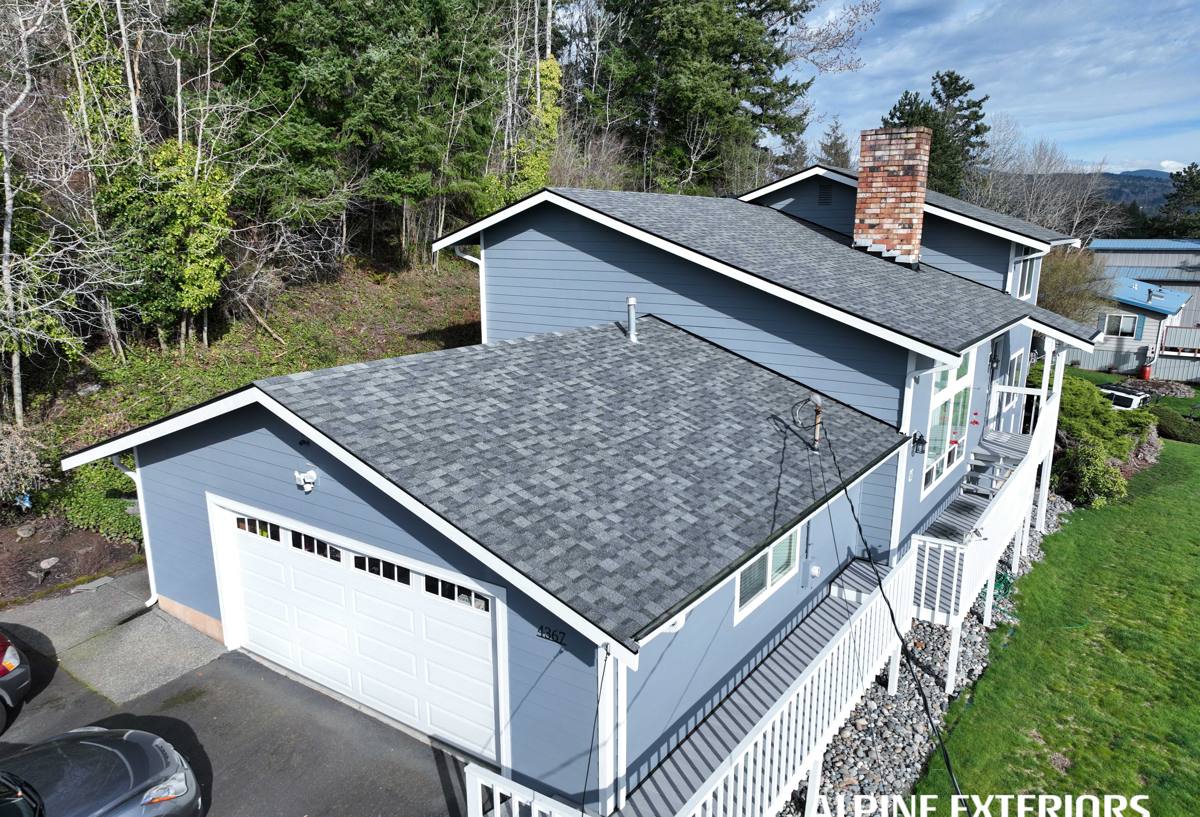
What Sumas Homes Are Actually Up Against
Salt Air
Even a few miles inland, homes in this part of Whatcom County get enough marine air exposure that untreated or poorly coated metal fasteners and trim can start corroding well before a manufacturer's stated lifespan. This isn't a reason to avoid metal roofing — it's a reason to be picky about which alloys, coatings, and fastener grades go on the roof in the first place.
Driving Rain
Rain here rarely falls straight down. Wind pushes it sideways and up under eaves, around chimneys, and along valleys. A roofing system that relies on gravity alone to shed water — without proper underlayment, ice-and-water membrane at vulnerable points, and correctly lapped flashing — will eventually let moisture in, even if the panels themselves are watertight.
Moss and Algae
Shaded, north-facing slopes and areas under overhanging trees stay damp for long stretches of the year, which is exactly what moss and algae need to establish. On asphalt shingles, moss roots into the granule surface and lifts it over time. Metal doesn't give moss the same foothold, but debris buildup in valleys and around fasteners still needs to be managed, or moisture gets trapped against the panel surface anyway.
What a Correct Metal Roof Installation Involves
A metal roof is only as good as what's underneath it and how it's fastened down. For Sumas conditions, that means paying close attention to a handful of details that are easy to skip on a rushed job:
- High-temp synthetic or self-adhered underlayment rated for the climate, not a basic felt that degrades under sustained moisture exposure
- Ice-and-water shield at eaves, valleys, and around every penetration — the spots where wind-driven rain is most likely to find a way in
- Corrosion-resistant fasteners matched to the panel material, since mismatched metals can trigger galvanic corrosion in a marine-influenced climate
- Properly lapped and sealed flashing at chimneys, skylights, vents, and wall transitions
- Correct panel fastening pattern for the wind exposure of the specific roof, not a generic spacing pulled from a manual written for calmer regions
- Adequate attic and roof ventilation so moisture from inside the home doesn't condense against the underside of the panels
Skipping any one of these doesn't usually cause an immediate problem — it shows up two, five, or ten years later as a leak, rust streaking, or a section of underlayment that failed early. That's the trade-off with metal roofing: the material itself is durable, but it has very little tolerance for shortcuts in the installation.
Panel Types: Which Ones Make Sense for Sumas
Not every metal roofing product is a good fit for every home or budget. Here's how the common options compare for this climate:
| Panel Type | Best For | Trade-offs |
|---|---|---|
| Standing seam | Homes wanting maximum weather-tightness and a clean, modern look | Higher upfront cost; fewer, more precise fasteners means installation quality matters even more |
| Exposed-fastener panels | Budget-conscious projects, outbuildings, simpler rooflines | Fasteners penetrate the panel face, so gasket condition and re-torquing over time matter for long-term watertightness |
| Stone-coated steel | Homeowners who want the look of shingles or tile with metal's durability | More installation steps and detailing than a plain panel; not the lowest-cost option |
We don't push one product on every home. The right choice depends on the roof's pitch, complexity, how visible it is from the street, and what the homeowner is trying to balance between upfront cost and long-term maintenance.
What Drives the Cost of a Metal Roof in This Area
| Factor | Why It Matters |
|---|---|
| Roof complexity | More valleys, dormers, and penetrations mean more flashing work and labor time |
| Tear-off vs. overlay | Removing old roofing adds cost but lets us inspect and repair the deck underneath — important on older Whatcom County homes with a history of moisture exposure |
| Panel type and gauge | Heavier-gauge panels and standing seam systems cost more than basic exposed-fastener panels |
| Access and pitch | Steep or hard-to-access roofs require more safety setup and slower, more careful work |
| Ventilation upgrades | Older homes sometimes need added intake or exhaust venting brought up to a standard that supports a metal roof properly |
We'll walk through these factors on-site before giving a number, rather than quoting a flat per-square-foot price that doesn't account for what your specific roof actually needs.
Our Process for a Sumas Metal Roofing Project
1. On-Site Assessment
We start by getting on the roof, not just looking at it from the ground. That means checking the deck condition, existing ventilation, flashing points, and any areas already showing moss, staining, or moisture damage.
2. Straightforward Recommendation
We'll tell you honestly whether your roof is a good candidate for an overlay or whether a tear-off makes more sense, and which panel type fits your budget and the roof's exposure to wind and rain.
3. Prep and Underlayment
Any deck repairs happen before anything goes down. Underlayment and ice-and-water membrane are installed at every eave, valley, and penetration — not just where code requires the minimum.
4. Panel Installation and Flashing
Panels are fastened according to the wind and exposure conditions of your specific roof, with flashing detailed and sealed at every transition point before we consider the job finished.
5. Final Walkthrough
We walk the roof and the ground with you, point out what was done, and make sure everything is cleaned up before we leave.
Living With a Metal Roof in a Moss-Prone Climate
Metal roofing resists moss far better than shingles, but it isn't maintenance-free in a climate like this. Overhanging branches should be trimmed back to reduce shade and debris buildup, and valleys and gutters need periodic clearing so water and organic material aren't sitting against the panel surface for weeks at a time. A little seasonal attention goes a long way toward getting the full lifespan out of the system.
Simple Maintenance Checklist
- Clear leaves and needles from valleys and gutters at least twice a year
- Trim back branches that overhang the roofline to reduce shade and debris
- Walk the roofline visually after major windstorms to check for lifted trim or flashing
- Watch for streaking or discoloration near fasteners, which can signal early corrosion
- Keep an eye on sealant at penetrations and re-seal if it starts to crack or shrink
Why Hiring a Crew That Already Works in Sumas Matters
A lot of roofing problems in this area aren't caused by bad materials — they're caused by installation details that were designed for a different climate. A crew that regularly works Whatcom County roofs already knows which slopes tend to hold moss, which fastening patterns actually hold up against the wind patterns coming off the water, and where driving rain typically finds its way into a poorly detailed roof. That local experience shows up in the small decisions made on-site, not just in the product brochure.
It also matters for accountability. A local crew is easy to reach if a question comes up after the job, and has a reputation in the community to stand behind, not just a name on an invoice.
Get a Straightforward Estimate
If you're weighing a metal roof for your Sumas home, we're happy to take a look, walk you through what your specific roof needs, and give you a clear, no-pressure estimate. No high-pressure sales tactics — just an honest assessment based on what we see on your roof.