 Semiahmoo Siding
 Deck Building in Sumas: Built for the Weather That's Actually Here
A deck in Sumas doesn't live an easy life. It sits outside year-round in a stretch of Whatcom County where salt-laden air off the water, long stretches of driving rain, and a moss season that can run half the year all work on the wood, fasteners, and framing at the same time. A deck built to a generic national spec — the kind you'll find in a big-box how-to guide — tends to show its age fast here: soft spots at the ledger, rust bleeding through fastener heads, boards that stay slick with moss from October through April. A deck built for this specific climate holds up differently, because every decision in the build accounts for moisture and salt from day one instead of trying to catch up on maintenance later.
This page is about that one job — building a deck correctly for a Sumas property near Semiahmoo — not a general overview of decks everywhere. If you're weighing whether to repair an aging deck or replace it, or you're planning a new one from scratch, the details below are what actually separates a deck that lasts from one that starts causing problems in year three or four.
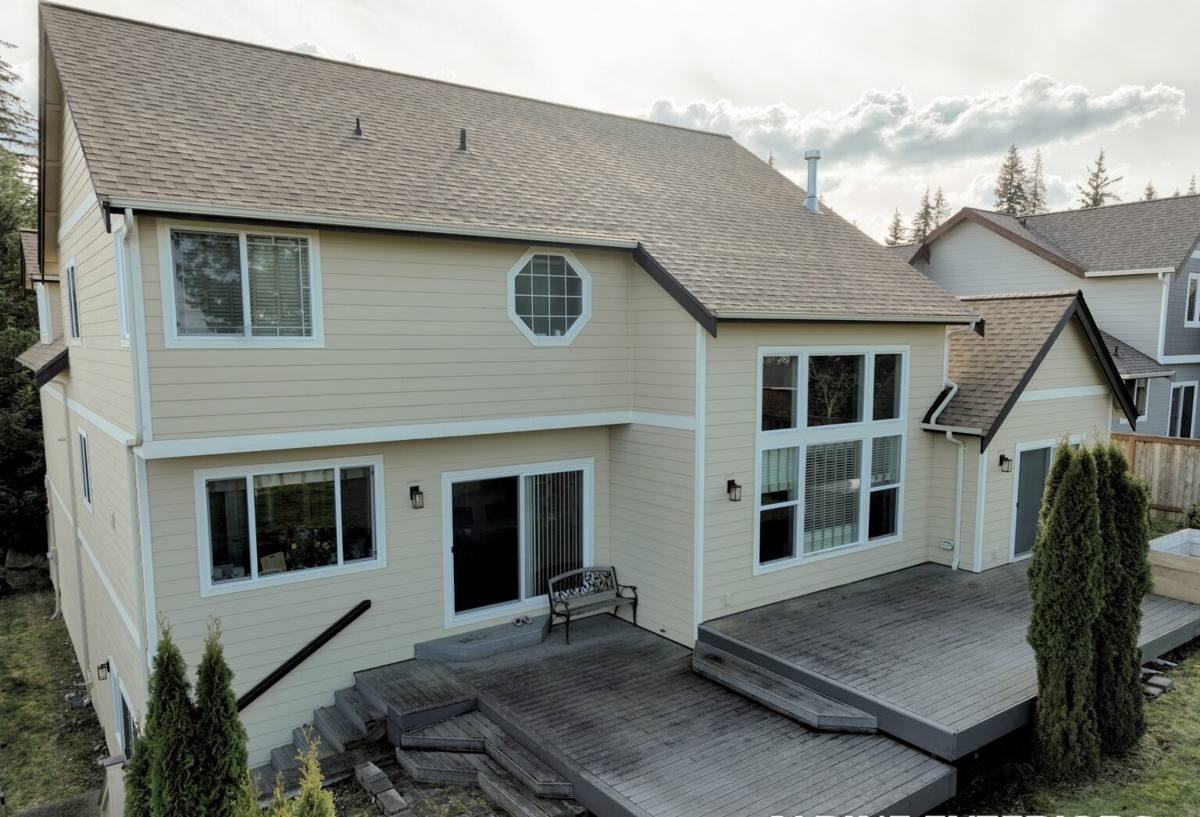
What Salt Air, Rain, and Moss Actually Do to a Deck
Salt Air and Metal Fasteners
Proximity to the water means airborne salt settles on every exterior surface, including deck hardware. Standard electroplated screws and nails corrode faster in this environment than they would inland — the coating is thin and wasn't designed for a marine-influenced climate. Once a fastener starts rusting, it weakens at the exact point where it's holding structural framing together, and the rust stain it leaves behind is a visible sign of a problem that's often worse underneath than it looks on top.
Driving Rain and the Ledger Board
The ledger board — where the deck attaches to the house — is the single most common failure point on decks in wet Pacific Northwest climates, and it's almost always a flashing problem, not a wood problem. Wind-driven rain pushes water sideways and upward under trim and siding in a way that vertical-only flashing details don't stop. Water that gets behind the ledger has nowhere to go and sits against the house's framing and the deck's structural connection at the same time.
Moss Season and Walking Surfaces
Long stretches of overcast, wet weather grow moss and algae on any deck surface that doesn't dry out quickly, and shaded or low-airflow decks are hit hardest. Beyond the cosmetic issue, a mossy deck surface is genuinely slick underfoot, and moss holds moisture against the board itself, which shortens the life of anything not built to shed water fast.
What a Correctly Built Deck Involves
None of the climate problems above are exotic — they're well understood, and there are established ways to build around each one. The issue is that they take extra steps that a rushed or inexperienced build skips. A deck built right for this area includes:
- Footings set to the required frost depth and bearing on solid soil, not just poured to a convenient depth
- Ledger flashing that layers correctly with the house's water-resistive barrier and siding, not just a bead of caulk behind the board
- Joist tape or a comparable membrane on the tops of framing members, so the joists themselves aren't absorbing standing water under the decking
- Fasteners rated for the exposure — hot-dip galvanized or stainless steel, matched to the decking material, not whatever is cheapest at the supply house
- Proper board spacing and airflow underneath so the deck can actually dry between rain events instead of staying damp
- Grading and drainage under and around the deck so water moves away from the house instead of pooling at the foundation
- Railings and stair connections built to code, since these take real load and are a safety item, not a finishing touch
Skip any one of these and the deck will probably still look fine the day it's finished. The difference shows up two, three, or five winters later.
Choosing a Decking Material for a Sumas Property
There's no single "best" decking material — it depends on how much maintenance you're willing to do, your budget, and how much you value low upkeep versus the look of real wood. Here's how the common options actually compare for a wet, salt-influenced climate:
| Material | Upfront Cost | Maintenance | How It Handles This Climate |
|---|---|---|---|
| Pressure-treated wood | Lowest | Annual cleaning, periodic sealing or staining | Affordable and repairable, but needs consistent upkeep to resist moisture and moss; skipped maintenance shortens lifespan noticeably |
| Cedar | Mid-range | Regular sealing to hold color and resist graying | Naturally more rot-resistant than most softwoods, but still an organic material that needs attention in a wet, mossy environment |
| Composite decking | Higher | Occasional washing, no sealing or staining | Doesn't absorb water the way wood does, resists rot, but can still develop surface moss or algae if airflow underneath is poor |
| PVC/capped composite | Highest | Minimal — periodic washing only | Fully synthetic, essentially immune to moisture damage; best long-term option for low-maintenance owners, at a higher upfront price |
We install real wood and composite/PVC systems, and we'll walk you through the honest trade-offs for your situation rather than pushing whatever has the best margin. If you want the look and feel of real wood and don't mind the upkeep, cedar or pressure-treated is a legitimate choice. If low maintenance matters more than the material being "real wood," composite or PVC earns its higher price tag over time.
How We Approach a Deck Build
The process is straightforward, but each step exists for a reason:
- On-site consultation. We look at the site, discuss how you'll actually use the deck, and talk through material and layout options honestly, including cost trade-offs.
- Design and permitting. We put together a plan that meets local building code, including footing depth, railing height, and structural connections, and handle permitting where it's required.
- Site prep and footings. Excavation and footings come first, set to proper depth and inspected before anything else is built on top of them.
- Framing and ledger attachment. This is where the flashing and waterproofing details at the house connection get done right, since it's the hardest part to fix after the fact.
- Decking, railing, and stairs. Boards, railings, and stairs go in with fasteners and hardware matched to the material and the exposure.
- Final inspection and walkthrough. We confirm everything meets code, walk you through the finished deck, and cover what maintenance it actually needs going forward.
Permits and Local Code Considerations
Most decks above a certain height, or attached to the house, require a permit and inspection under Whatcom County building code, and railings have specific height and spacing requirements that exist for safety, not bureaucracy. We handle the permitting and inspection process as part of the job rather than leaving it for the homeowner to sort out, and we build to pass inspection the first time rather than treating code minimums as optional.
Keeping a Sumas Deck Sound for the Long Run
A well-built deck still needs some seasonal attention in this climate. A simple yearly routine goes a long way:
- Sweep debris out of gaps between boards before it holds moisture against the wood
- Clean moss and algae off the surface before it gets slick, especially on shaded sections
- Check railings and stair connections for looseness once a year
- Inspect fasteners for early rust staining, especially near the ledger and stair stringers
- Confirm drainage under the deck isn't blocked by leaves, dirt, or plant growth
- Reseal or restain wood decking on the schedule the product calls for — don't wait until it looks bad
None of this is difficult, but it matters more here than it would in a drier climate, simply because the deck spends more of the year wet.
Why It Matters That We Already Work in Sumas
A crew that regularly works decks in and around Sumas and the wider Semiahmoo area has already seen how the local weather affects specific framing details, which ledger flashing approaches actually hold up, and which fastener grades are worth the extra cost versus which are overkill. That's different from a contractor who builds mostly in a drier region and treats coastal Whatcom County conditions as an afterthought. Local familiarity also means we're not guessing at permitting requirements or inspection expectations — we've been through the process here before.
If you're planning a new deck or trying to figure out whether an existing one is worth repairing or replacing, we're happy to take a look and give you a straightforward assessment. Reach out for a free, no-pressure estimate using the form below.