 Semiahmoo Siding
 Storm Damage Roof Repair for Custer Homes
Custer sits just inland from Semiahmoo Bay and the Strait of Georgia, close enough that the same weather systems that pound the coastline roll straight through town with plenty of force left in them. When a windstorm or heavy rain event moves through Whatcom County, Custer roofs take a real hit, and the repair work that follows isn't the same as patching a roof in a drier, more sheltered part of the state. We work on these roofs year-round, and we've built our storm repair process around what this specific climate does to a roof over time, not a generic checklist.
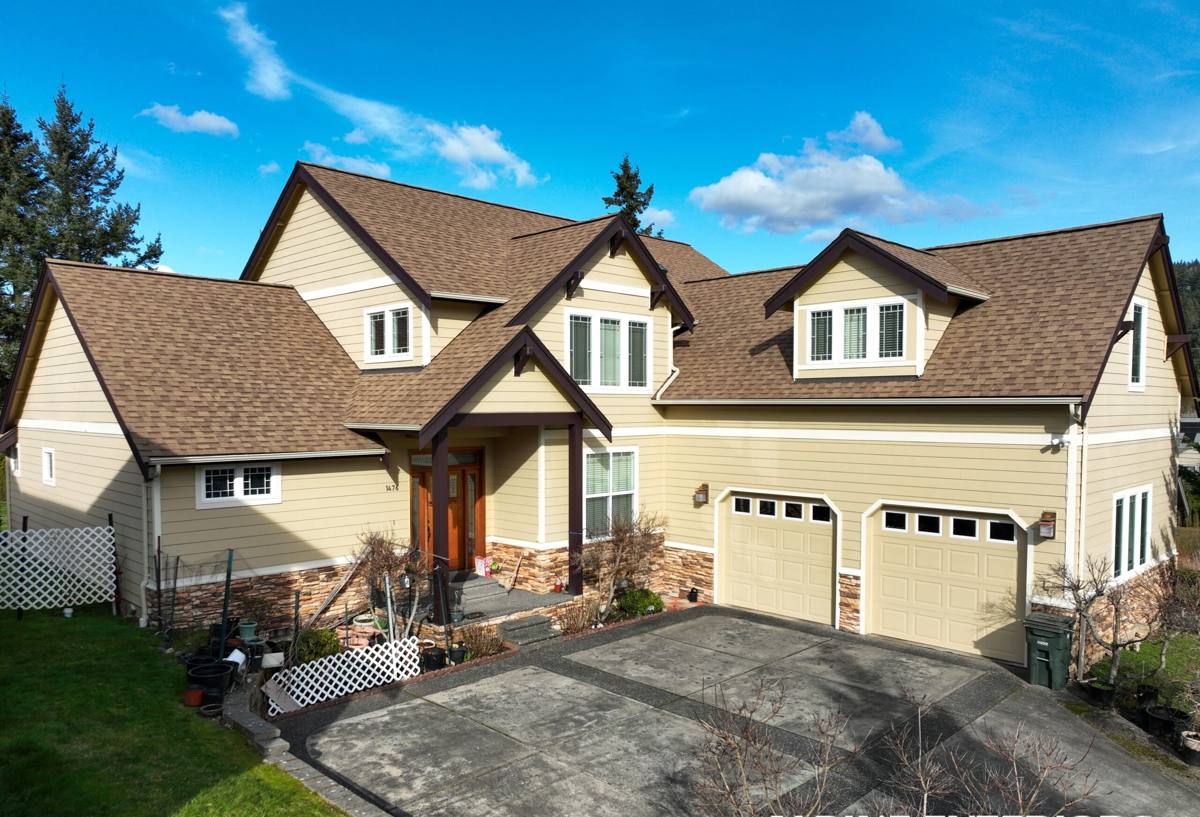
What Counts as Storm Damage on a PNW Roof
Storm damage isn't always a dramatic hole in the roof. Around here, it's more often subtle, and homeowners can miss it for months until a leak shows up on a ceiling. The common patterns we see after a storm include:
- Shingles lifted, torn, or creased by wind gusts, even when they don't blow off completely
- Ridge cap shingles loosened or missing, since they take the most direct wind load
- Wind-driven rain forced sideways under shingle laps and around flashing, with no visible shingle damage at all
- Punctures, cracked shingles, or dented flashing from falling branches and debris
- Exposed or backed-out nail heads that let water track down the shaft into the decking
That last category is the one that causes the most long-term trouble, because it doesn't look urgent. A homeowner sees a few raised nail heads or a curled shingle edge and figures it can wait. In a climate that gets as much sustained wet weather as ours, it usually can't.
Why Salt Air and a Long Moss Season Change the Job
Two things about this area make storm repairs behave differently than they would 50 miles inland: the salt air coming off Semiahmoo Bay and the length of the moss season.
Salt-laden air accelerates corrosion on anything metal — exposed fasteners, drip edge, step flashing, valley metal. A storm that dislodges a shingle or pulls a nail loose also exposes fresh metal edges to that salt air, and corrosion can start well before a homeowner notices the original damage. Repairs that don't account for this tend to fail at the fastener or flashing level first, long before the shingle itself wears out.
The moss season is the second factor. Western Whatcom County stays wet and shaded for a large part of the year, which is exactly what moss needs to establish. Any spot on a roof where water doesn't shed cleanly — a poorly matched patch, a flashing detail that traps debris, a repair with the wrong shingle exposure — becomes a starting point for moss growth. Moss holds moisture directly against the roofing material and, eventually, the decking underneath it. A storm repair done to a lower standard doesn't just risk failing on its own; it can seed a moss problem that spreads to the surrounding healthy roof.
What a Correct Repair Actually Involves
Beyond the Visible Damage
A proper storm repair starts by checking what's underneath the obvious damage, not just replacing what's visibly broken. That means pulling back shingles around the damaged area to check the underlayment and decking for moisture staining or soft spots. Water from a storm often travels sideways under the roofing material before it shows up as a stain inside the house, so the visible damage rarely marks the full extent of the problem.
Matching, Not Just Patching
Shingle color, profile, and exposure need to match the surrounding roof closely enough that the repair sheds water the same way the rest of the roof does. A patch that uses a slightly different shingle profile can create a small lip or gap that catches wind-driven rain or collects debris — which, given our wet season, is exactly the kind of spot that grows moss first.
Flashing and Fastener Standards
Given the salt air here, we don't cut corners on flashing and fastener material. Corroded or undersized flashing is a common weak point we find on older repairs, and it's cheap insurance to do it right the first time rather than reopening the same spot in a couple of years.
Patch Repair vs. Full Section Replacement
Not every storm-damaged roof needs a full replacement, and we don't push homeowners toward more work than the roof actually needs. The right call depends on a handful of factors:
| Factor | Targeted Patch Repair | Full Slope/Section Replacement |
|---|---|---|
| Extent of damage | Isolated to a small, defined area | Spread across a large section or multiple slopes |
| Roof age | Roof has significant remaining service life | Roof is already near the end of its expected lifespan |
| Material match | Existing shingles still available or a close match exists | Existing shingles discontinued or badly weathered/faded |
| Underlying decking condition | Decking is sound once damaged shingles are removed | Decking shows rot, soft spots, or widespread moisture damage |
| Typical cost range | Generally a few hundred to low thousands of dollars | Generally several thousand dollars and up, depending on size |
| Expected outcome | Restores the roof to full function at lower cost | Resets the clock on that section's lifespan and warranty |
We'll walk you through where your roof actually falls on that table before we recommend anything — with photos and a plain explanation, not a sales pitch.
Our Storm Damage Repair Process
- Inspection and documentation. We get on the roof (or use a pole camera where access is limited), photograph the damage, and check the surrounding area — not just the spot that's obviously broken.
- Honest assessment. We tell you what's actually damaged versus what's just aging, and whether a patch or larger repair makes sense.
- Written estimate. Clear scope of work and pricing before anything gets touched, including material specifics so you know what's going on your roof.
- Repair. We remove damaged material back to sound decking, address any moisture issues found underneath, and rebuild with matched shingles and corrosion-resistant flashing and fasteners.
- Cleanup and haul-away. All debris and old material off the property — nails and all.
- Follow-up. We're comfortable coming back to check the repair after the next significant rain event if you want that peace of mind.
Signs Custer Homeowners Should Watch For After a Storm
Most storm damage is easiest to catch right after a windstorm or heavy rain, while it's fresh in your mind and before it has time to spread. A quick visual check (from the ground, or from a window with a pair of binoculars) can catch a lot:
- Shingle pieces or granules in gutters, downspouts, or on the ground around the house
- Curled, cracked, or missing shingles, especially along the ridge and edges
- New staining on interior ceilings or in the attic after a storm
- Sagging or soft-feeling spots on the roof surface
- Flashing that looks bent, lifted, or separated around chimneys, vents, or valleys
- Visible daylight through the roof deck when viewed from inside the attic
If you see any of these, it's worth getting a professional look before the next system rolls through — small storm damage left alone through another round of wind-driven rain tends to get expensive fast.
Why a Local Custer Crew Matters
A crew that already works this area knows how exposed a given roof is likely to be — whether it sits in open ground that catches the full force of wind off the water, or is more sheltered by tree cover — and that shapes both the repair and what we watch for on future visits. Local also means faster response when a roof needs a tarp before the next storm arrives; a damaged roof left open to the weather for days while a contractor drives in from out of the area can turn a one-slope repair into a full deck replacement. We also keep working relationships with local material suppliers, which makes matching existing shingles more realistic than it would be for a crew unfamiliar with what's stocked in this part of Whatcom County.
Get a Free Storm Damage Assessment
If a recent storm has left your Custer home with damaged, lifted, or missing shingles — or you're just not sure whether what you're seeing needs attention — we're happy to take a look and give you a straight answer. The estimate is free, there's no pressure, and you'll get a clear explanation of what we find and what it would take to fix it right. Use the form below to get started.