 Semiahmoo Siding
 Windows Take a Different Kind of Beating in Blaine
Blaine and the Semiahmoo waterfront sit right where Boundary Bay meets the open air off the Strait of Georgia, and that location shapes how windows age here. Salt-laden air corrodes hardware and metal components faster than it would twenty miles inland. Wind-driven rain off the water pushes moisture sideways into gaps that would stay dry in a calmer setting. And Whatcom County's long, damp moss season keeps wood trim, sills, and low-quality seals wet for weeks at a stretch instead of drying out between storms. None of this means windows fail overnight. It means the slow problems — soft sills, fogged glass, hardware that won't latch right, drafts that show up every winter — tend to show up sooner in Blaine than they would in a drier climate.
A window replacement here isn't just a cosmetic upgrade. Done right, it's a chance to close off years of accumulated water and air intrusion at the one part of the wall assembly that's hardest to seal correctly: the rough opening.
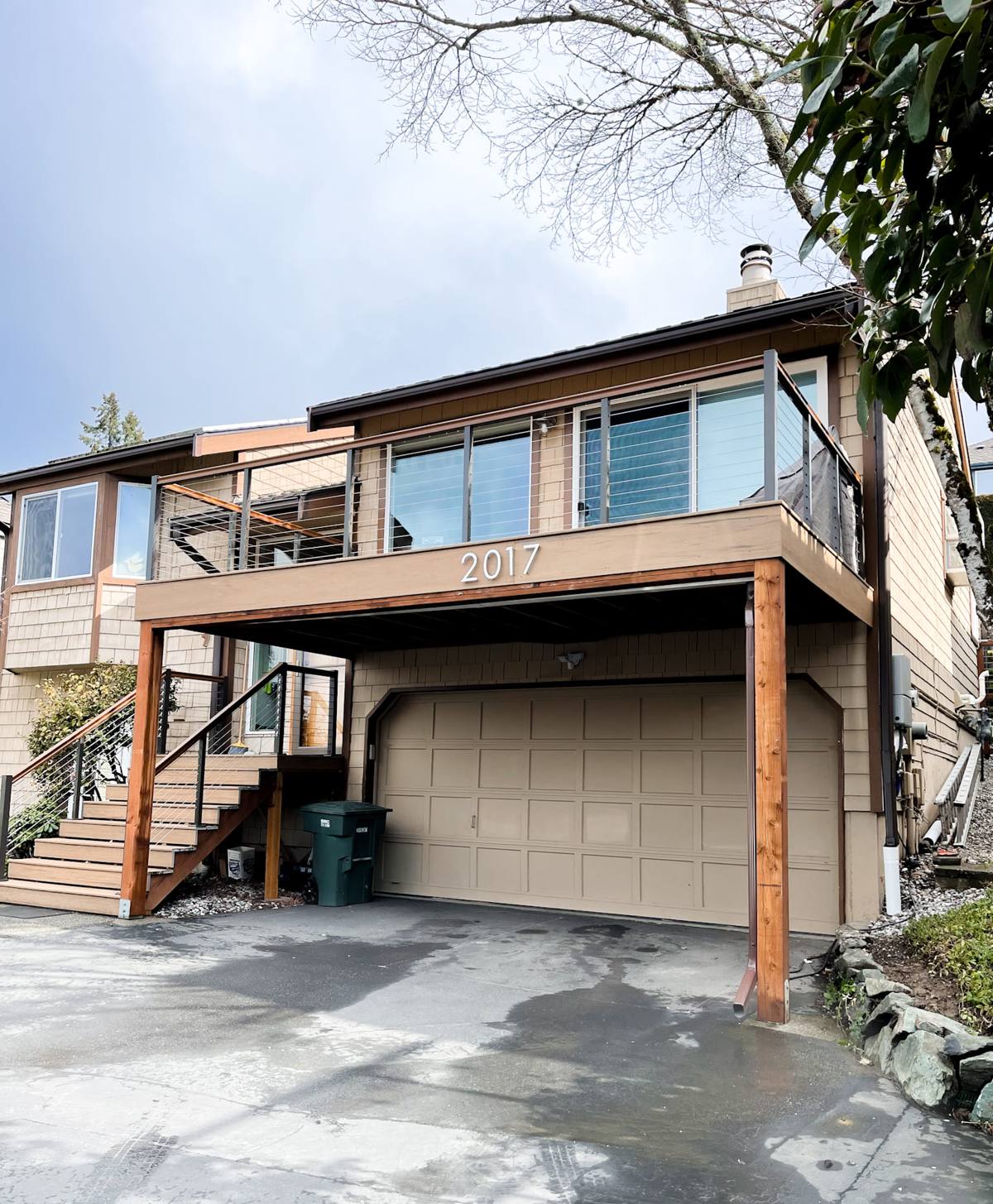
Signs a Blaine Home Actually Needs Replacement
Not every problem window needs full replacement — sometimes a re-glaze, new weatherstripping, or hardware repair solves it. But certain signs point specifically to failure that repair won't fix:
- Fogging or a milky haze between panes — the seal on the insulated glass unit has failed and moisture is trapped inside
- Soft, spongy, or visibly rotted wood at the sill or lower frame corners
- Windows that won't stay open, won't latch, or have become difficult to operate as the frame has racked or swollen
- A cold draft you can feel standing near the window on a windy day, even with it fully closed
- Paint or finish that keeps failing in the same spot no matter how often it's touched up — usually a sign of ongoing moisture underneath
- Visible gaps or daylight around the frame where the original sealant has shrunk or cracked
If you're seeing more than one or two of these on a window that's original to the house, replacement is usually the more honest answer than another round of caulk and touch-up paint.
What a Correct Installation Actually Involves
The window unit itself matters less than most homeowners expect. What actually determines whether a replacement lasts is the installation — specifically, how the opening is prepped, flashed, and sealed before the new window ever goes in. This is where corners get cut on rushed jobs, and it's exactly the step that determines how a window performs against driving rain off the bay.
Removal and Inspection
The old unit comes out carefully so we can see the actual condition of the rough opening — sheathing, framing, and any existing flashing. This is often the first real look anyone's had at that part of the wall in decades, and it's where hidden rot or old water damage gets caught before it's covered up again.
Flashing and Water Management
Proper flashing directs any water that gets past the exterior cladding back out, rather than letting it pool at the sill or track down into the wall cavity. On a site exposed to wind-driven rain the way Blaine and Semiahmoo are, this step is not optional — it's the difference between a window that stays dry for twenty years and one that starts rotting the framing around it within a few seasons.
Setting, Shimming, and Sealing
The new window gets set level and plumb, shimmed correctly so it isn't stressed or racked, and sealed with the right combination of flashing tape, sealant, and insulation — not just a bead of caulk around the outside trim. Interior air sealing matters as much as exterior weatherproofing for both comfort and preventing condensation inside the wall.
Trim and Finish
Exterior trim is reinstalled or replaced and finished to shed water, with attention to end grain and joints, which are the first places wood trim fails in a wet coastal climate.
Frame Materials: What Holds Up Near the Water
Every frame material has real trade-offs. None of them are wrong choices in every case — what matters is matching the material to the exposure and the maintenance the homeowner actually wants to keep up with.
| Material | How It Handles Salt Air & Moisture | Maintenance | General Cost Position |
|---|---|---|---|
| Vinyl | Won't corrode or rot; performs well in coastal exposure | Low — occasional cleaning | Lower to mid |
| Fiberglass | Very stable dimensionally, resists moisture and salt exposure well | Low | Mid to higher |
| Aluminum | Prone to corrosion pitting in salt air unless properly finished; conducts cold, which can worsen condensation | Moderate | Mid |
| Wood-clad | Attractive but exterior cladding must stay intact — any breach exposes wood to a climate that won't let it dry out | Higher — finish and joints need monitoring | Higher |
Our general standard for direct coastal exposure like Blaine and Semiahmoo is vinyl or fiberglass for most homes, with wood-clad reserved for homeowners who want that specific look and are prepared to keep up with the maintenance it requires. We're happy to walk through the honest trade-offs for your specific exposure and orientation rather than pushing one product line.
Glass and Performance Choices That Matter Here
Frame material gets the attention, but the glass package affects comfort and condensation just as much — arguably more in a climate as damp as ours.
- Low-E coatings reduce heat loss and help even out interior glass surface temperature, which cuts down on the interior condensation that shows up on cold, humid mornings
- Argon or krypton gas fill between panes improves insulating value without adding thickness
- Warm-edge spacer systems reduce the cold ring around the glass edge where condensation and eventual seal failure typically start first
- Tempered or laminated glass where code requires it — near grade, in doors, and in certain bathroom or stairway locations
For homes with a direct water view or exposed westerly orientation, we'll also talk through impact considerations and heavier-gauge hardware, since wind loading is a real factor on open stretches near the bay.
Our Process
- On-site assessment of existing windows, rough openings, and any visible water or rot damage
- Honest recommendation on repair versus replacement, window by window if needed
- Written estimate with material options and a clear scope — no vague allowances
- Careful removal, opening inspection, and proper flashing and sealing on install
- Final walkthrough so you can operate every window and see the finished trim before we call it done
We don't push whole-house replacement when a handful of windows are the actual problem, and we don't sell a premium glass package a modest, well-shaded window doesn't need. The recommendation should match the wall it's going into.
Why Local Experience in Blaine Matters
A crew that regularly works Semiahmoo and Blaine homes already knows how exposure varies block to block — waterfront-facing walls take a different amount of wind-driven rain than a home set back and shielded by trees, and that difference should show up in the flashing detail and sealant choice, not just the window brand. We've seen how moss and damp buildup behave on trim and siding through a full Whatcom County winter, which shapes how we finish and seal around a new window so it isn't fighting the same conditions that damaged the old one. That familiarity also means realistic scheduling around the wet months — timing exterior work when it can be sealed properly matters more here than it would somewhere drier.
Keeping New Windows Performing Long-Term
A correct install buys you a long service life, but a little homeowner maintenance extends it further:
- Rinse salt residue off frames and hardware a couple of times a year, especially on water-facing elevations
- Check exterior caulk lines annually and touch up before gaps open up, particularly after a hard winter
- Keep gutters and downspouts clear so roof runoff isn't dumping extra water against upper-story windows
- Wipe down interior sills if condensation forms on cold mornings, so moisture doesn't sit and eventually damage the sill finish
- Lubricate hardware and tracks yearly to keep locks and rollers working smoothly in damp weather
What Affects Your Project Cost
Every home is different, but a few factors consistently drive cost up or down on window replacement projects in this area:
| Factor | Why It Matters |
|---|---|
| Number and size of openings | More units and larger glass areas increase both material and labor cost |
| Frame material chosen | Vinyl, fiberglass, and wood-clad sit at different price points, as shown above |
| Extent of existing rot or damage | Openings with hidden water damage need framing repair before a new window can be properly set |
| Access and story height | Second-story or hard-to-reach windows require more setup and time |
| Glass package | Upgraded Low-E coatings, gas fills, or impact-rated glass add cost but pay off in comfort and durability near the water |
We'll always give you a broad, honest range up front and a firm written number once we've actually seen the openings — not a lowball estimate that grows once the crew shows up.
If you're seeing drafts, fogged glass, or soft trim on a Blaine or Semiahmoo home, we're glad to take a look and give you a straight assessment — no pressure, no obligation. Use the form below to request a free estimate.