 Semiahmoo Siding
 Why Decks Wear Out Faster in Marietta
Marietta sits right up against Semiahmoo Bay and Drayton Harbor, which means every deck here is exposed to a mix of conditions that inland Whatcom County homes don't deal with nearly as much. Salt-laden air moves in off the water and settles into fasteners, hardware, and any exposed end grain. Driving rain off the Strait comes in sideways during winter storms, working its way into joints and connections that would stay dry in a calmer climate. And the long, overcast wet season — often stretching from October well into spring — keeps deck surfaces damp long enough for moss and algae to take hold, especially on boards that sit in shade or under tree cover.
None of this means a deck in Marietta is doomed. It means the materials, fasteners, and construction details have to be chosen with this specific environment in mind. A deck built the same way you'd build one in a dry inland climate will show corrosion, soft spots, and slick moss growth years before it should. A deck built correctly for a marine, high-rainfall environment can hold up for decades.
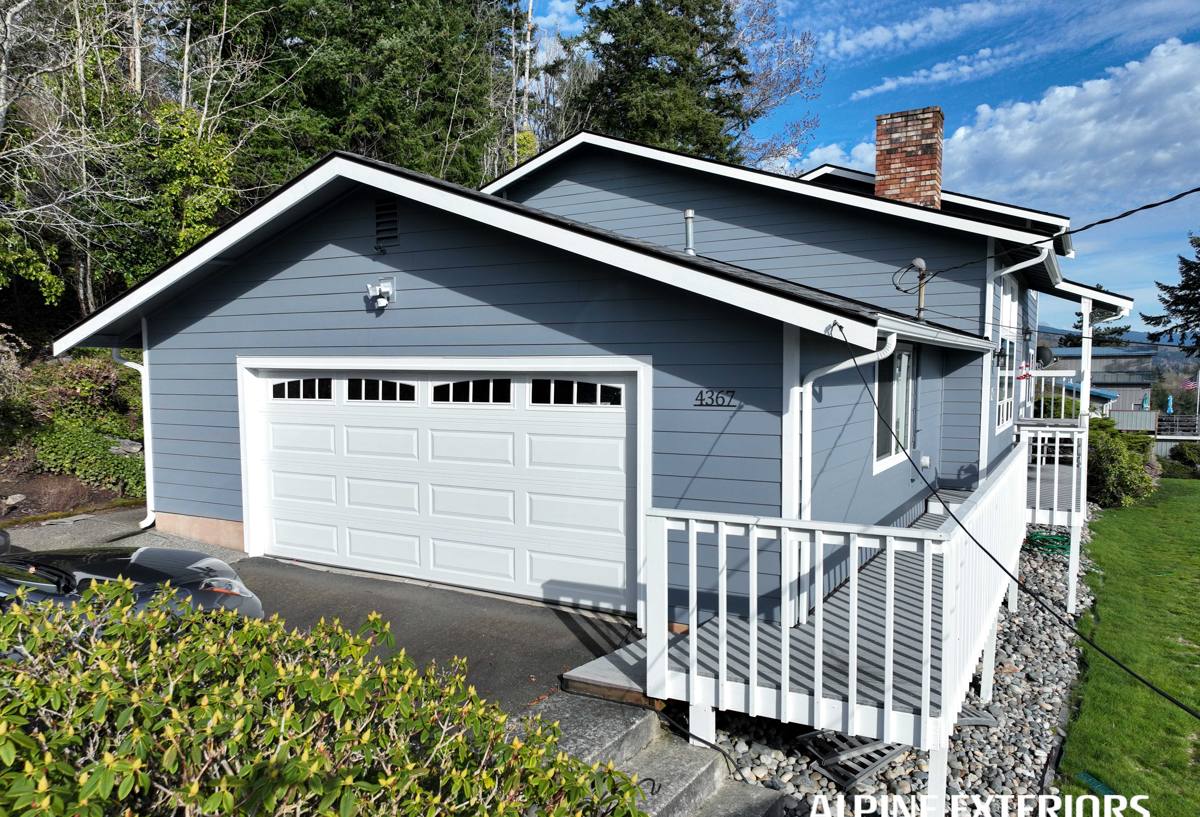
Repair or Full Replacement? How We Make the Call
Not every tired-looking deck needs to be torn out completely. But in a salt-air, high-moisture environment, the framing and connections underneath are usually further along in failure than the surface suggests. Before recommending replacement, we look at:
- The ledger board where the deck attaches to the house — the single most common source of hidden rot
- Joists and beams, checked for soft spots, splitting, and corrosion at hanger connections
- Footings and posts, checked for movement, rot at ground contact, and adequate bearing
- Railing posts and stair stringers, which take on water at end grain and fastener penetrations
- The decking surface itself — cupping, splintering, persistent moss staining, or soft spots underfoot
If the framing is sound and only the decking and railings have failed, a resurfacing job can make sense. If the ledger connection, joists, or footings are compromised, patching the surface just buys a year or two before the same problems resurface. We'll tell you honestly which situation you're in before any work starts.
What a Correct Deck Replacement Involves
The Ledger Connection
This is where most deck failures actually start, and it's invisible until the damage is done. The ledger board bolts to the house band joist, and if it isn't flashed correctly, rain and condensation get trapped behind it and rot the framing from the inside out. A correct install uses proper flashing that directs water away from the house structure, with a gap or drainage plane so moisture doesn't sit trapped against the wall. In a climate with as much driving rain as Marietta sees, this detail alone determines whether a deck lasts 10 years or 30.
Framing and Footings
Joists, beams, and posts need to be sized for the actual load and span, not just "what was there before." Footings need to reach adequate depth and bearing for the soil conditions on your lot, and posts should be set with proper standoff hardware so wood never sits directly in standing water or wet soil. We also make sure joist tape or equivalent flashing protects the tops of joists — an inexpensive step that prevents water from wicking into cut lumber for the life of the deck.
Railings and Stairs
Railings and stair stringers see more end-grain exposure than almost any other part of the deck, which makes them a common early failure point in wet climates. We build these with the same attention to fastening and water management as the deck frame itself, not as an afterthought once the decking is down.
Choosing Decking Material for Salt Air and Moss
There's no single "best" decking material for every home — it depends on your budget, how much maintenance you want to do, and how much shade and moisture your specific deck location deals with. Here's how the common options compare in a Marietta-style environment:
| Material | Moisture / Salt Air Behavior | Moss & Algae Resistance | Maintenance |
|---|---|---|---|
| Pressure-treated lumber | Good if properly sealed and maintained; end grain and fasteners are the weak points | Needs regular cleaning and re-sealing to resist growth | Annual cleaning, periodic re-staining/sealing |
| Cedar | Naturally decay-resistant but still needs sealing near salt air and standing water | Moderate — still needs cleaning in shaded, damp areas | Regular sealing to maintain appearance and resistance |
| Capped composite | Excellent — the cap layer resists moisture absorption and doesn't corrode | Good, though surface film can still form in deep shade and needs periodic washing | Occasional washing, no sealing or staining |
| PVC decking | Excellent — fully synthetic, unaffected by salt air or moisture absorption | Good with periodic washing | Occasional washing, no sealing or staining |
Wood decking can absolutely work well in Marietta, and plenty of homeowners prefer the look and lower upfront cost — but it needs a real maintenance commitment. Capped composite and PVC products cost more upfront but shed the maintenance burden that this climate otherwise demands. Brands like Trex and TimberTech are common capped-composite choices; we'll walk through samples and go over the real trade-offs for your specific deck rather than pushing one product line.
Fasteners and Hardware Matter More Here Than Almost Anywhere Else
Salt air accelerates corrosion on standard hardware, and a deck is only as strong as its weakest connection. We use stainless steel or hot-dip galvanized fasteners and structural hardware rated for exterior, corrosive-exposure use — not the coated fasteners that are fine for inland, drier climates but streak and weaken over time this close to the water. This applies to joist hangers, structural screws, post bases, and railing hardware, not just the visible decking screws.
Hidden fastener systems are popular with composite and PVC decking for a clean look, and they work well here too — but the clips and screws underneath still need to be corrosion-rated, since they're doing the structural work even though you don't see them.
Drainage, Airflow, and Keeping Moss Under Control
Moss and algae need three things to take hold on a deck: moisture, shade, and still air. In Marietta's long wet season, you can't eliminate moisture entirely, but you can design the deck so it dries out between rain events instead of staying damp for weeks at a time. That means:
- Proper gapping between deck boards so water drains through instead of pooling on the surface
- Adequate clearance and airflow underneath the deck, not framing buried in soil or vegetation
- Grading and drainage that carries water away from footings and posts instead of pooling around them
- Keeping overhanging branches and ground-level plant growth trimmed back from shaded sections
- Periodic washing of the deck surface, especially in permanently shaded areas, before growth gets established
These details cost little to nothing extra during a replacement but make a real difference in how much scrubbing you're doing every spring.
Our Deck Replacement Process
- On-site assessment — we inspect the ledger connection, framing, footings, and surface to determine what's actually failing and what a correct fix looks like
- Straightforward proposal — material options, structural scope, and pricing explained plainly, no pressure to upgrade beyond what your deck needs
- Tear-off — full removal of the old decking and any compromised framing, disposed of properly
- Structural work — ledger flashing, joist and beam replacement or reinforcement, footing work as needed, all built to current structural standards
- Decking, railings, and stairs installed — using corrosion-rated fasteners and hardware throughout
- Final walkthrough — we go over the finished deck with you and explain any maintenance specific to the material you chose
Permits and Local Code Considerations
Most attached deck replacements in Whatcom County require a permit, particularly when framing, footings, or railings are being rebuilt rather than just the surface boards. Guardrails, stair geometry, and structural connections all have to meet current code requirements — this isn't optional even on a straightforward replacement. We handle the permit process as part of the job so you're not left navigating county requirements on your own, and we build to code rather than to "what was there before," since older decks are often out of compliance with current guardrail and fastening standards.
Signs Your Marietta Deck Needs Replacing
- Soft, spongy, or spring-loaded feeling underfoot anywhere on the deck
- Visible gaps, rot, or discoloration at the ledger board where the deck meets the house
- Rust streaks running down from fasteners or hardware
- Persistent moss or algae that returns within weeks of cleaning
- Railing posts that wiggle or flex when pushed
- Boards that are cupping, splintering, or have soft, crumbling sections
- Visible movement or settling at the footings or posts
If you're seeing more than one of these, it's worth having the structure looked at before it becomes a safety issue rather than just a cosmetic one.
Why It Matters That We Already Work in Marietta
A crew that works Marietta and the surrounding Semiahmoo area regularly knows which fastener grades actually hold up this close to the water, which decking materials handle a full wet season without turning into a moss farm, and how the local soil and drainage patterns affect footing placement. That's not something you get from a crew that mostly works drier inland jobs and treats coastal Whatcom County as a one-off. We build every deck replacement here with the salt air, the rain, and the moss season factored in from the first structural decision, not patched in as an afterthought.
If your deck is showing its age, we're happy to take a look and give you an honest read on whether it needs a full replacement or targeted repair. Reach out for a free, no-pressure estimate using the form below.