 Semiahmoo Siding
 Siding Installation for Homes at Semiahmoo Resort
Semiahmoo Resort sits at the end of the Semiahmoo Spit in Blaine, a golf resort community of condominiums, townhomes, and single-family homes surrounded by water on more than one side. A lot of these properties are second homes or part-time residences, which changes what homeowners need from a siding job: it has to be done right the first time, because nobody wants a surprise moisture problem discovered on a visit six months later. The setting is also about as exposed as residential property gets in Whatcom County — open wind, salt-laden air, and driving rain with almost nothing between the house and the water to slow it down.
We install siding for homes throughout the resort, and on siding specifically we install James Hardie fiber cement and nothing else. That's not a brand we picked because it's convenient to sell — it's the standard we settled on after seeing, year after year, which materials actually hold up on exposed, salt-air properties like these and which ones start showing problems within a few years of installation.
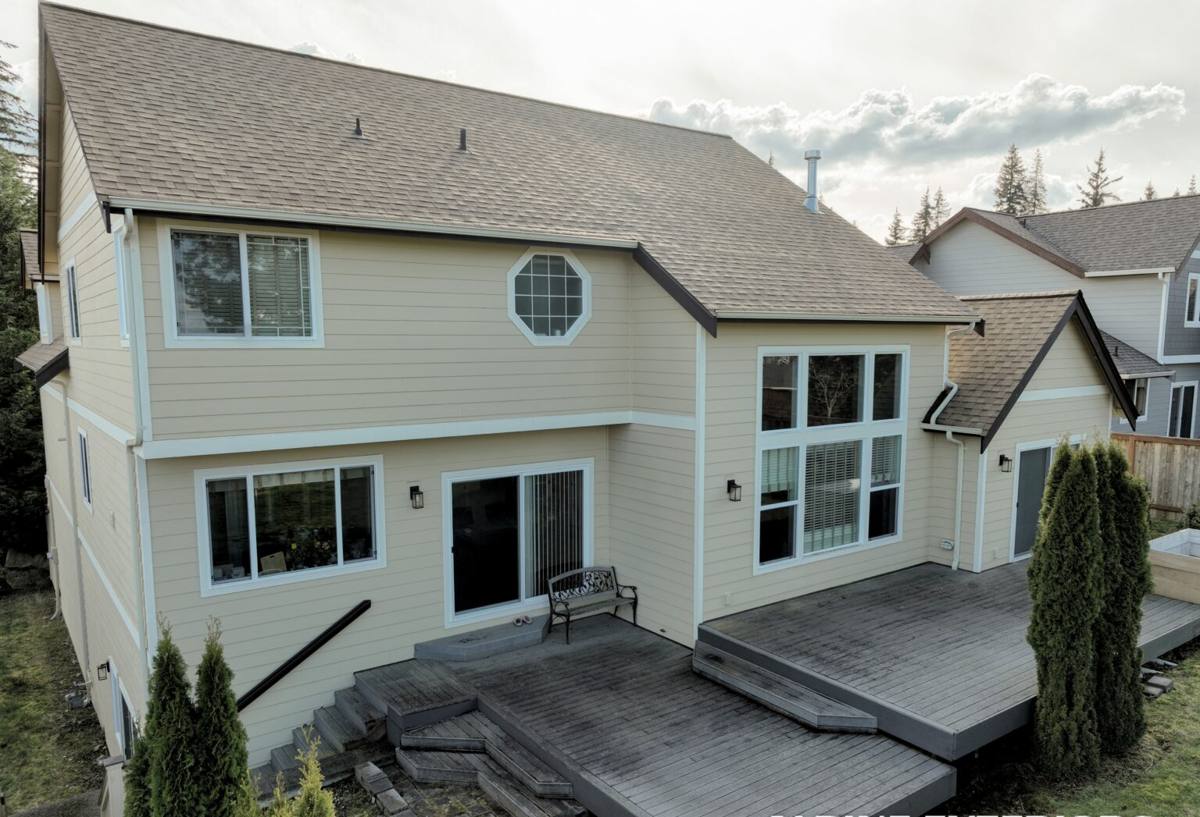
What This Climate Does to Siding on the Spit
Salt Air From More Than One Direction
Because the resort sits out on the spit with water on both sides, siding here takes salt-laden air from multiple directions instead of one prevailing exposure the way most inland homes do. Salt accelerates corrosion in fasteners and trim, and it breaks down lower-quality paints and factory finishes faster than a drier, more sheltered site would. Any siding material or hardware choice for a resort property needs to account for that corrosion load from day one, not after the first signs of rust or fading show up.
Driving Rain With Almost No Windbreak
With open water on multiple sides and little to interrupt the wind, rain at the resort doesn't just fall — it gets driven sideways into wall assemblies, window and door flashing, and roof-to-wall transitions with more force than a typical Whatcom County lot ever sees. Siding installations that hold up fine a few miles inland can fail here specifically because water is finding its way in sideways, through joints and laps that were never built to handle that kind of pressure.
A Moss and Mildew Season That Runs Most of the Year
Mild temperatures, near-constant humidity, and shaded north-facing walls add up to a long moss and mildew season across this part of Whatcom County, and the resort's waterfront position doesn't shorten it any. Porous or moisture-holding siding materials are usually the first place it takes hold, and it tends to show up worst on units and homes with tight lot spacing or mature landscaping that keeps a wall shaded and damp.
Why We Install Only James Hardie Fiber Cement Siding
We used to install a broader range of siding products. We stopped, and the change came directly from what we kept finding on tear-offs and service calls in exposed, waterfront settings like this one — not from a supplier relationship or a sales incentive.
- Non-combustible core: Fiber cement doesn't feed a fire the way wood-based siding products can, which matters for safety and often for insurance underwriting on a resort property.
- Factory-applied ColorPlus finish: The color is baked on under controlled factory conditions instead of brushed on in the field, and it holds up far longer against fading, chalking, and moisture intrusion — a real advantage for owners who aren't on-site to catch early wear.
- Climate-engineered HZ5 formulation: Hardie's HZ5 product line is built for regions with heavy, sustained moisture exposure and freeze-thaw cycling, which describes waterfront Whatcom County well.
- Dimensional stability: Fiber cement doesn't swell, cup, or warp the way engineered wood products can after repeated wetting over a long wet season.
- Strong transferable warranty: Hardie backs its product with one of the more substantial warranty structures in the industry, provided installation follows their published spec.
We won't install LP SmartSide, vinyl siding, Cemplank, Allura, primed spruce, or cedar. Each has a legitimate place in the market and homeowners elsewhere who are satisfied with them. But on an exposed spit property like this — especially one that may sit unoccupied for stretches at a time — we've made a professional call to stand fully behind one system rather than offer a cheaper option that quietly shifts long-term maintenance risk onto an owner who isn't around to catch it early.
What a Correct Siding Installation Involves Here
Tear-Off, Not Overlay
On resort properties we almost always recommend a full tear-off rather than installing new siding over the old. That's the only way to actually see the sheathing and framing underneath, which matters a great deal on a property that's taken years of salt air and driving rain — hidden moisture damage behind old siding is common on exposed waterfront lots, and it has to be found and repaired before new siding goes up, not sealed in behind it.
Weather-Resistive Barrier and Flashing
Every seam in the house wrap has to lap correctly, shingle-style, so water sheds down and out rather than working its way in. Flashing at every window, door, and roof-to-wall transition needs the same treatment — this is where wind-driven rain finds a way in first if it's rushed or done out of order.
Rain Screen Detailing
A drainage gap behind the siding gives any moisture that does get past the outer surface a way to drain and evaporate instead of sitting against the wall sheathing. In a climate that drives rain sideways as often as this one does, that gap is a meaningful part of how long the wall assembly lasts, not a nice-to-have upgrade.
Fastening and Clearances
Hardie specifies fastener type, length, and spacing for a reason, and corrosion-resistant fasteners matter more here than almost anywhere else in the county given the salt exposure. Correct clearance from grade, decks, and roof lines keeps water and debris from wicking into the bottom edge of the siding — a detail that's easy to shortcut and one of the more common causes of early failure we find on tear-offs.
Joints and Trim
Factory-mitered corners where possible, and properly caulked and painted field joints where they're not, close off the places salt-laden moisture would otherwise work its way behind the panels first.
Resort Living: HOA Guidelines and Site Logistics
Homes and condos at the resort commonly fall under homeowners' association or architectural review guidelines that govern approved colors and materials, which is worth sorting out before a project starts rather than after siding is already on the wall. James Hardie's ColorPlus lineup gives owners a wide, factory-finished palette to choose from, which usually makes it straightforward to land on something an association will approve.
Working at the resort also means working around resort logistics — gated access, limited staging and parking near attached units, and the fact that a good share of owners aren't local and may be reachable only by phone or email during the project. We plan around all of that as a matter of course: coordinating access ahead of time, keeping job sites tidy in a shared community, and keeping an absent owner informed with clear updates rather than leaving them to find out how things went after the fact.
Our Siding Installation Process
- On-site assessment: We walk the exterior, check for hidden moisture damage around trim, penetrations, and low-clearance areas, and talk through what the existing siding's condition tells us.
- Written scope and color selection: A clear, written scope and timeline before anything is signed, including help navigating HOA color and material approval where it applies.
- Tear-off and structural check: Old siding comes off, and any rot or damaged sheathing found underneath gets repaired before new siding goes on.
- Weather barrier and flashing: House wrap and flashing installed and lapped correctly at every seam, window, door, and roof-to-wall transition.
- Rain screen and Hardie installation: Drainage detailing where the assembly calls for it, then Hardie panels or lap siding installed to manufacturer spec with corrosion-resistant fasteners.
- Trim, joints, and final walk-through: Caulking limited to the joints that actually need it, a punch-list walk-through, and warranty documentation handed over.
Comparing Siding Materials for Resort Homes
| Material | Moisture & Salt Air Behavior | Upkeep for a Part-Time Owner | Typical Longevity Here |
|---|---|---|---|
| James Hardie fiber cement | Dimensionally stable, resists swelling and cupping | Low; factory finish resists fading and chalking between visits | 30+ years with correct installation |
| Vinyl siding | Can warp or distort with heat and lose fit over time | Low upfront, but seams and fasteners are early exposure points | Variable; shorter in high-wind waterfront settings |
| LP SmartSide / engineered wood | Wood-based core is moisture-sensitive at cut edges and joints | Moderate; edge sealing and caulk need regular attention | Depends heavily on installation and upkeep |
| Cedar / primed wood | Absorbs and releases moisture readily | High; needs refinishing on a schedule an absent owner may miss | Shorter without consistent maintenance |
Signs Your Siding at the Resort May Need Attention
- Soft or spongy spots when you press on siding near the base of a wall or below windows
- Persistent moss or mildew staining that returns soon after cleaning, especially on shaded or north-facing walls
- Visible cupping, warping, or gaps opening at seams and trim
- Peeling or chalking paint, particularly on older wood-based or vinyl siding
- Interior staining on walls near exterior corners or below windows after a windy storm off the water
Why a Crew That Already Works at Semiahmoo Resort Matters
A contractor who's done siding work at the resort before already knows the gate access process, how to stage materials without blocking shared drives or golf cart paths, and which colors tend to sail through architectural review versus which ones prompt questions. That familiarity saves an owner time and back-and-forth, and it matters even more when the owner isn't local and is relying on updates rather than being able to walk outside and check on progress. It also means the crew already understands, without being told, why the installation details on a spit property can't be treated the same as a job a few miles inland — the water is simply too close, and too present on every side, to leave any of them to chance.
If you're planning a siding project for a home or condo at Semiahmoo Resort, we're happy to walk the exterior with you and give a straightforward read on what it needs. Reach out below for a free, no-pressure estimate.