 Semiahmoo Siding
 Why Semiahmoo Resort Roofs Take a Different Kind of Beating
Homes in Semiahmoo Resort sit close to the bay and the open water beyond it, and that location changes what a roof has to deal with compared to a house ten or fifteen miles inland in Whatcom County. Up here in Washington's northwest corner, a roof isn't just shedding rain — it's fighting salt-laden air, wind that pushes rain sideways instead of straight down, and a moss season that in a wet year can run eight months or longer. Three things drive most of the roofing problems we see out here, and a correct replacement has to answer all three, not just the one that's most visible.
Salt Air and Slow Corrosion
Salt in the air doesn't only affect siding and outdoor metal — it accelerates corrosion on exposed fasteners, flashing, and any metal roofing components that aren't suited to coastal exposure. Standard fasteners and lightweight flashing can start showing rust streaks in just a few years this close to the water. On a shingle roof that shows up as staining and, eventually, fasteners that let go and allow shingles to lift in wind. We spec fastener and flashing materials with coastal exposure in mind — not because it's required everywhere in Whatcom County, but because it's needed here.
Wind-Driven Rain Off the Water
A roof a mile from the water mostly has to shed rain that falls straight down. A roof in Semiahmoo Resort regularly deals with rain pushed sideways off the bay, which means every lap, seam, and penetration needs to be built to resist water moving under it, not just running off it. Valleys, chimney flashing, and any low-slope transition are where wind-driven rain finds gaps that a calmer inland climate would never expose.
A Moss Season That Doesn't Really End
Whatcom County's wet, mild winters and the shaded, tree-lined lots common around Semiahmoo Resort are close to ideal moss-growing conditions. Moss holds moisture against the roof surface, lifts shingle edges as it grows, and works its way under laps over time. A section of roof shaded by mature trees or facing north can stay damp for days after a storm, and moss will colonize that dampness faster than most owners expect. Replacement is the point where we can build moss resistance into the roof, not just scrape and hope for the best afterward.
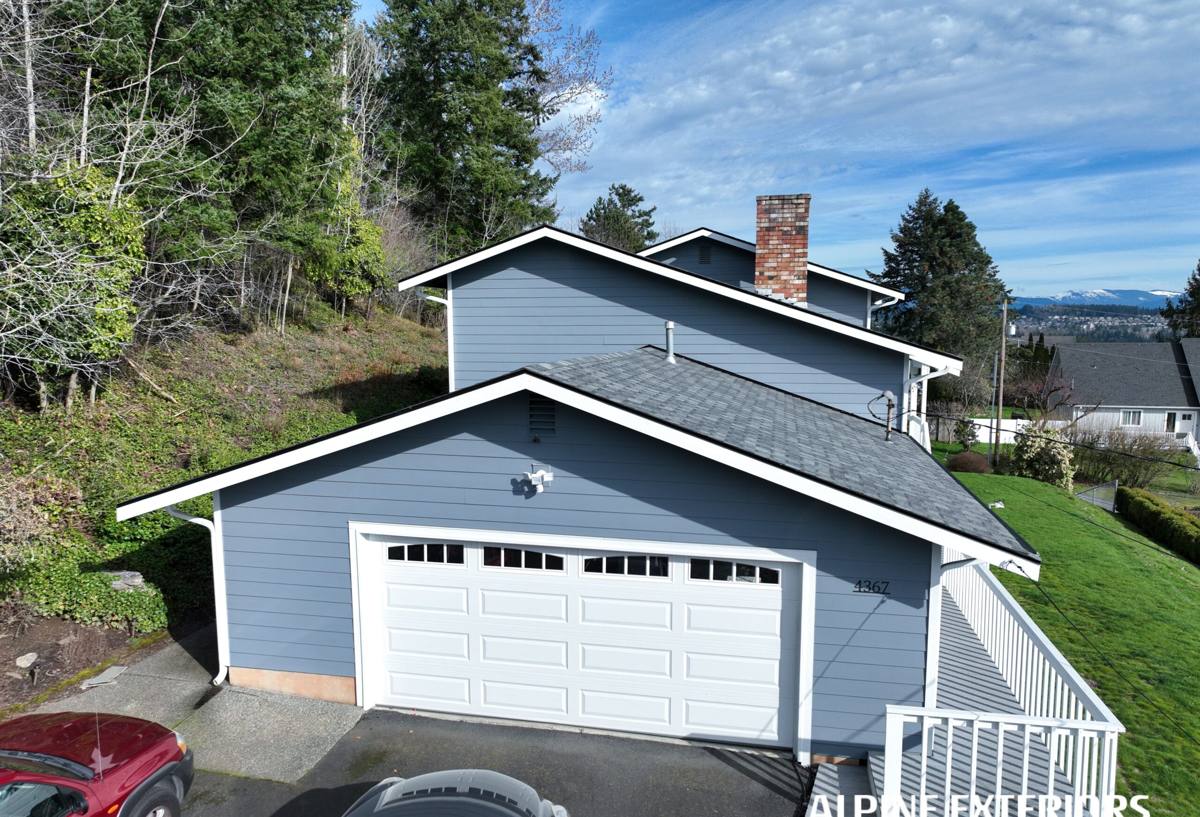
Signs a Semiahmoo Resort Roof Is Due for Replacement
Age is the starting point, but age alone doesn't tell the whole story on a coastal roof. We weigh several factors together before ever recommending full replacement over a targeted repair.
- Heavy granule loss — bare asphalt or shingle mat visible in spots
- Shingles cupping, curling, or cracking, especially on south- and west-facing slopes
- Moss or dark algae streaking that comes back within a season of cleaning
- Soft or spongy spots underfoot when the roof is walked
- Daylight visible through the roof deck from inside the attic
- Rusted, lifted, or missing flashing at valleys, chimneys, and vent penetrations
- Interior ceiling stains that appear after wind-driven storms off the water
- A roof approaching or past the material's expected service life for this climate
What a Correct Roof Replacement Actually Involves
A roof replacement is more than swapping old shingles for new ones. On a Semiahmoo Resort home, what goes on under the shingles matters as much as the shingles themselves.
Tear-Off and Deck Inspection
We remove the old roofing down to the bare deck rather than layering new material over it, because layering hides rot and traps moisture — a bad combination in a climate this wet. Once the deck is exposed, we check for soft spots, delamination, and any framing damage from long-term leaks, and repair or replace sheathing before anything new goes down.
Underlayment and Water Protection
Synthetic underlayment across the whole roof is the baseline, with self-adhered ice-and-water membrane at eaves, valleys, and any low-slope section — the same places wind-driven rain and ponding moss are most likely to cause a leak. This step is easy to skip and impossible to see once the roof is finished, which is exactly why it matters.
Flashing Built for Salt Air
New flashing goes in at every chimney, skylight, vent pipe, and wall intersection, in a metal chosen to hold up to coastal air rather than whatever's cheapest. Reused old flashing is one of the most common causes of early leaks on an otherwise brand-new roof, and it's an easy corner to cut if you're not looking for it.
Attic and Roof Ventilation
Balanced intake and exhaust ventilation keeps the underside of the deck dry and reduces the condensation that feeds moss and rot from below. It also protects the shingle warranty, since trapped heat and moisture will shorten a shingle's life regardless of how good the shingle itself is.
Matching the Material to This Climate
There's no single "best" roofing material for Semiahmoo Resort — the right choice depends on the home's exposure, roof pitch, and how much ongoing upkeep an owner actually wants to take on. Here's a straightforward comparison of how common options hold up against salt air, wind-driven rain, and moss.
| Material | Coastal / Salt-Air Performance | Moss Resistance | Upkeep |
|---|---|---|---|
| Architectural asphalt shingle | Good, with coastal-rated fasteners and flashing | Moderate — improves with zinc/copper strips and periodic cleaning | Low to moderate |
| Standing-seam metal | Very good with a coastal-rated finish and fasteners | High — smooth, sloped surface sheds moss better | Low |
| Cedar shake | Fair — needs consistent maintenance near salt air | Low without upkeep; moisture is cedar's main enemy | High |
| Synthetic/composite shingle | Good — not dependent on exposed metal fasteners at the surface | Moderate to high, depending on product | Low to moderate |
We're candid with homeowners that cedar shake, while attractive, asks for more upkeep in this climate than most people are prepared to keep up with over the long run. That's an honest trade-off conversation, not a knock on the material — it's simply what salt air and a long wet season do to any wood roof over time.
How We Replace a Roof in Semiahmoo Resort
- On-site inspection and an honest repair-vs-replace assessment, explained in plain language
- Written estimate that spells out materials, underlayment, flashing, and ventilation — not just one lump price
- Scheduling around Whatcom County's weather windows, since an open deck can't be left exposed to the next storm off the water
- Full tear-off, deck inspection, and any needed sheathing repair
- Underlayment, ice-and-water membrane, and new flashing installed to the standard described above
- New roofing material installed to manufacturer specification, including correct nailing pattern and exposure
- Ventilation check and adjustment
- Full cleanup, magnetic fastener sweep, and a final walkthrough with the homeowner
What Roof Replacement Costs Depend On
We don't publish a flat price, because two similarly sized roofs in Semiahmoo Resort can cost differently depending on the factors below. We'll walk through every one of these with you before anything is signed.
| Cost Factor | Why It Matters |
|---|---|
| Roof size and pitch | More surface area and steeper slopes mean more material and labor time |
| Number of layers to remove | Tear-off cost rises with each existing layer of roofing |
| Deck condition | Rotted or soft sheathing found during tear-off has to be repaired before new roofing goes down |
| Material choice | Asphalt, metal, and shake carry different material and labor costs |
| Roof complexity | Valleys, dormers, skylights, and chimneys add flashing detail and labor time |
| Site access | Steep lots, mature trees, or limited equipment access can add cost |
| Ventilation upgrades | Correcting intake/exhaust airflow is sometimes needed to meet code or warranty terms |
Why It Matters That We Already Work This Neighborhood
A crew that only sees Semiahmoo Resort once a year is guessing at how a roof here actually performs over time. Working this area season after season means we know which flashing details hold up to the salt air, which slopes collect moss first, and where wind-driven rain actually gets in versus where it just looks like it might. That pattern recognition is the difference between a generic install and a roof genuinely built for this spot on the map.
It also matters after the job is done. If a question comes up two or five years down the road, you're calling a Whatcom County contractor who's still working in the area — not tracking down a crew that's moved on somewhere else.
Keeping a New Roof Ahead of Moss and Salt
Replacement gives you a clean start, but a little upkeep keeps it that way. Clear debris off the roof and out of the gutters a couple of times a year, especially heading into the wet months. Keep overhanging branches trimmed back so shaded sections can dry out between storms instead of staying damp. If zinc or copper control strips are installed, leave them in place — they're doing ongoing work to slow moss regrowth. And after any major windstorm off the water, a quick visual check for lifted shingles or damaged flashing catches small problems before they turn into an interior leak.
If your roof is showing its age, or you'd just like an honest read on what shape it's in, we're glad to take a look. Estimates are free, there's no pressure to commit, and you'll get a straight answer on whether it's time to replace or whether a repair will still buy you a few more good years. Use the form below to get started.