 Semiahmoo Siding
 Building Decks for a Waterfront Resort Community
Semiahmoo Resort sits on a narrow spit with open water on multiple sides, which makes it one of the more demanding places in Whatcom County to build an outdoor structure. A deck here isn't just furniture for the yard — it's exposed to salt-laden wind coming off the water, long stretches of driving rain through fall and winter, and a moss season that can run eight months out of the year in shaded or north-facing spots. A deck built to a generic spec sheet, without accounting for that combination, tends to show its age fast: fasteners bleed rust, boards cup or crown, and railings loosen at the posts within a few years instead of a few decades.
We build and repair decks for homes in and around Semiahmoo Resort regularly enough to know which details matter here and which corners get cut on jobs that weren't planned for this environment. This page covers what actually goes into a deck that holds up on the Semiahmoo waterfront — material selection, framing and fastener choices, drainage, and the maintenance rhythm that keeps a good deck good.
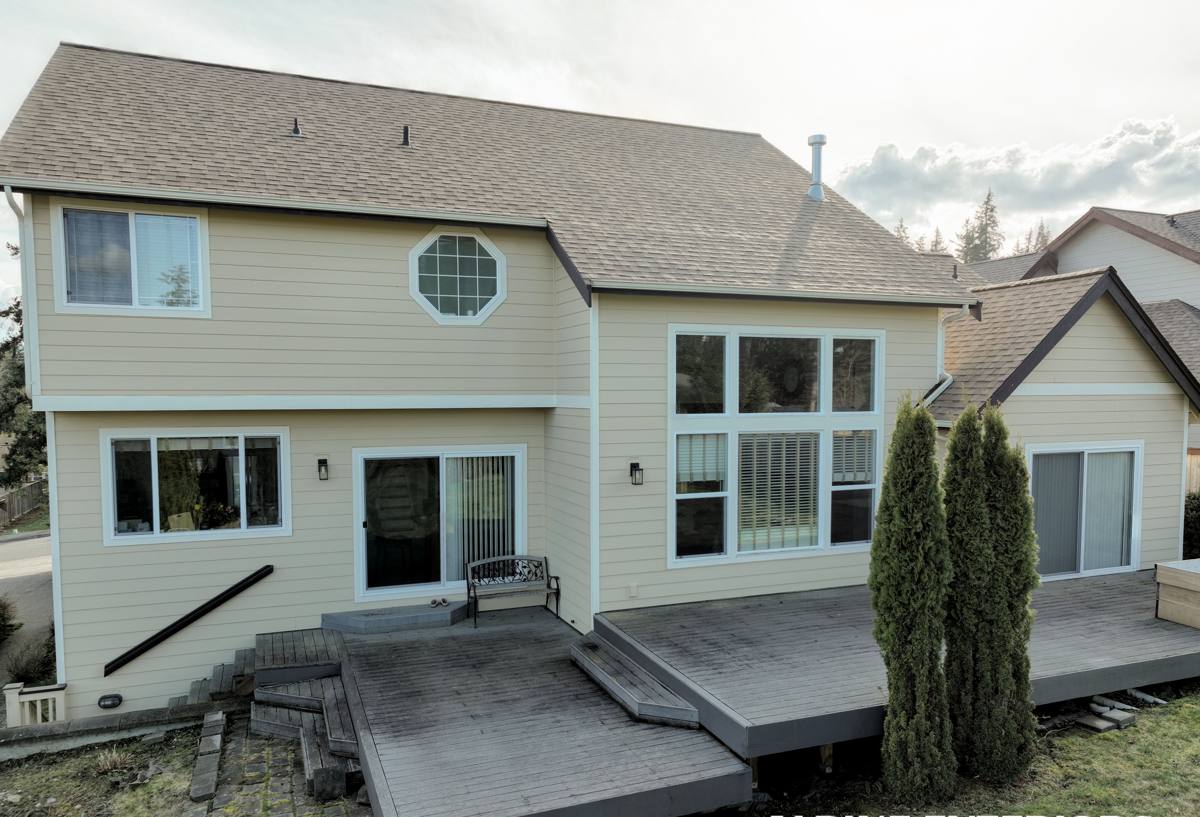
What Salt Air, Rain, and Moss Actually Do to a Deck
Each of these three factors attacks a deck differently, and understanding the mechanism is what separates a deck that lasts from one that doesn't.
Salt Air
Airborne salt is corrosive to metal. Standard hardware — nails, screws, joist hangers, bolts — will rust and weaken faster near the water than the same hardware would inland. Once a fastener starts to corrode, it loses holding strength long before the rust is visible from the surface, which is why railings and stair stringers on older waterfront decks sometimes fail without obvious warning.
Driving Rain
Whatcom County gets a lot of rain, but it's the wind-driven angle of it near the water that causes real damage. Rain that's pushed sideways gets into places a deck wasn't designed to shed water from — behind ledger boards, into end-grain cuts, under poorly flashed rail posts. Wood that stays wet for extended periods is what leads to rot, not rain itself.
Moss
Moss thrives in the cool, damp, shaded conditions common on this coast, especially on the north and east sides of a home or under overhangs. Beyond looking bad, moss holds moisture against the decking surface and makes boards slick and dangerous underfoot. Left untreated, it also accelerates surface breakdown on lower-grade wood decking.
Choosing a Decking Material for This Environment
There's no single "best" decking material for every home — the right choice depends on budget, how much upkeep you want to do, and how exposed the deck is to wind and salt spray. Here's how the common options compare for a Semiahmoo Resort setting specifically.
| Material | Salt Air Resistance | Moss Resistance | Maintenance | Typical Lifespan |
|---|---|---|---|---|
| Capped composite | Very good — doesn't absorb moisture or corrode | Good, especially textured/grooved styles; still needs occasional cleaning | Low — periodic washing | 25-30+ years |
| Cedar | Fair — naturally rot-resistant but still needs sealing | Fair — needs regular cleaning and treatment | Moderate to high — re-stain/seal every 1-3 years | 15-20 years with upkeep |
| Tropical hardwood (e.g. ipe) | Very good — dense, naturally durable | Good with regular oiling | Moderate — periodic oiling to maintain color and prevent surface checking | 25+ years |
| Pressure-treated pine | Fair — treatment resists rot but hardware corrosion risk is higher | Poor to fair without sealing | High — sealing every 1-2 years | 10-15 years with upkeep |
Our default recommendation for exposed Semiahmoo Resort lots is a quality capped composite board, because it doesn't absorb moisture the way wood does and it holds up to salt exposure with minimal intervention. That said, plenty of homeowners here want the look and feel of real wood, and cedar or a dense hardwood can be a solid choice if you're honestly willing to keep up with the sealing schedule. We'll walk through the real trade-offs with you rather than push one product — the wrong material for your maintenance habits is a bigger problem than the material itself.
Framing and Fasteners: The Part You Don't See but Matters Most
The decking boards are what you notice, but the framing and hardware underneath are what actually determine whether a deck is safe and long-lived. On a salt-exposed build, this is where we spend the most attention.
- Fastener grade: we use stainless steel or heavy hot-dip galvanized hardware rated for corrosive/coastal exposure, not standard interior-grade fasteners.
- Joist hangers and structural connectors: matched in corrosion rating to the fasteners — mixing metal types accelerates corrosion at the contact point.
- Ledger flashing: proper flashing where the deck attaches to the house is the single most common failure point we find on older decks near the water.
- Post bases: set above grade and away from standing water, with hardware rated for ground contact where the base does sit low.
- Framing lumber: ground-contact rated pressure-treated lumber for anything near soil or moisture pockets, even if it's not technically touching the ground.
None of this is visible once the deck is finished, which is exactly why it's the part most likely to get shortcut on a rushed or budget build. It's also the part that determines whether you're dealing with a squeaky, sagging deck in eight years or a solid one in twenty-five.
Railings, Elevation, and Wind Exposure
A lot of Semiahmoo Resort homes have decks positioned to take advantage of water or fairway views, which often means more elevation and more direct wind exposure than a typical inland deck. That changes a few things about how we build:
Railing Strength
Elevated decks need railing posts anchored into the structural framing, not just fastened to the rim joist with lag screws. Wind load on an exposed railing is higher than most people assume, and this is a code-driven requirement, not an optional upgrade.
Glass and Cable Rail Considerations
Glass panel and cable railings are popular for preserving a water view, but both have specific hardware and spacing requirements, and both need corrosion-resistant hardware in this environment. Cable rail in particular needs periodic tension checks, since cable can stretch slightly over time.
Overhangs and Shade
Decks tucked under roof overhangs get less direct rain but also less sun to dry out and less airflow to discourage moss — which means they sometimes need more attention, not less.
Our Process for a Semiahmoo Resort Deck Project
- On-site assessment: we look at sun/shade exposure, wind direction, drainage, and how close the deck sits to the water, since all of it affects material and hardware choices.
- Design and material selection: we walk through decking, railing, and framing options against your budget and how much maintenance you actually want to do.
- Permitting: most new decks and significant rebuilds require a permit through the local jurisdiction; we handle that process rather than leaving it to the homeowner.
- Demo and framing: old structure removed where needed, new framing built to current code with corrosion-rated hardware throughout.
- Decking, railing, and finish work: installed per manufacturer spec — this matters for keeping any material warranty valid.
- Final walkthrough: we cover care and maintenance specific to the material you chose before we consider the job done.
Deck Maintenance Checklist for This Climate
Whatever material you choose, a little seasonal attention goes a long way in this environment. Here's the baseline we recommend to Semiahmoo Resort homeowners:
- Rinse salt residue and debris off the deck surface periodically, especially after storms with strong onshore wind.
- Clear leaves and organic debris from between boards and in corners — trapped debris holds moisture and feeds moss growth.
- Check railing posts and stair stringers annually for looseness, which can signal fastener corrosion underneath.
- Treat moss-prone shaded areas before it establishes rather than after — it's much easier to prevent than remove.
- Inspect and re-seal wood decking on the manufacturer or industry-recommended schedule; don't wait for visible graying or checking.
- Confirm ledger flashing and any visible fastener heads aren't showing rust streaks, which is an early warning sign worth addressing quickly.
Why Local Experience with Semiahmoo Resort Matters
A crew that mostly works inland jobs in Whatcom County can still build a technically sound deck — but they may not think to spec marine-grade hardware, account for wind load on an elevated railing, or plan for a moss problem that doesn't show up until year two. Working this specific stretch of coastline regularly means we've already seen which shortcuts fail here and which details are worth the extra cost up front. That experience shows up in fewer callbacks and a deck that still looks and performs well after a decade of Pacific Northwest winters.
If you're planning a new deck, a rebuild, or want an honest opinion on whether your current deck's framing is still sound, we're happy to take a look. Reach out for a free, no-pressure estimate using the form below.