 Semiahmoo Siding
 Roofing in a Marine Climate Isn't Optional Guesswork
California Creek sits close enough to the water that homes here take on a different kind of weather load than roofs even a few miles inland. Salt-laden air off Semiahmoo Bay and Drayton Harbor works on metal fasteners and flashing year-round. Driving rain off Puget Sound doesn't just fall straight down — wind-driven storms push moisture sideways, up under shingle tabs and into gaps that a calm-weather roof would never have to deal with. And Whatcom County's long, wet, shaded moss season means organic growth gets a real head start on almost every roof plane that doesn't see direct afternoon sun.
None of that means a California Creek roof needs anything exotic. It means the ordinary steps of a roof replacement — tear-off, underlayment, flashing, ventilation, shingle or panel installation — have to be done correctly and in the right order, with materials and details chosen for this specific climate instead of a generic spec sheet. That's the whole difference between a roof that looks fine at year three and starts leaking at year eight, and one that's still doing its job at year twenty-five.
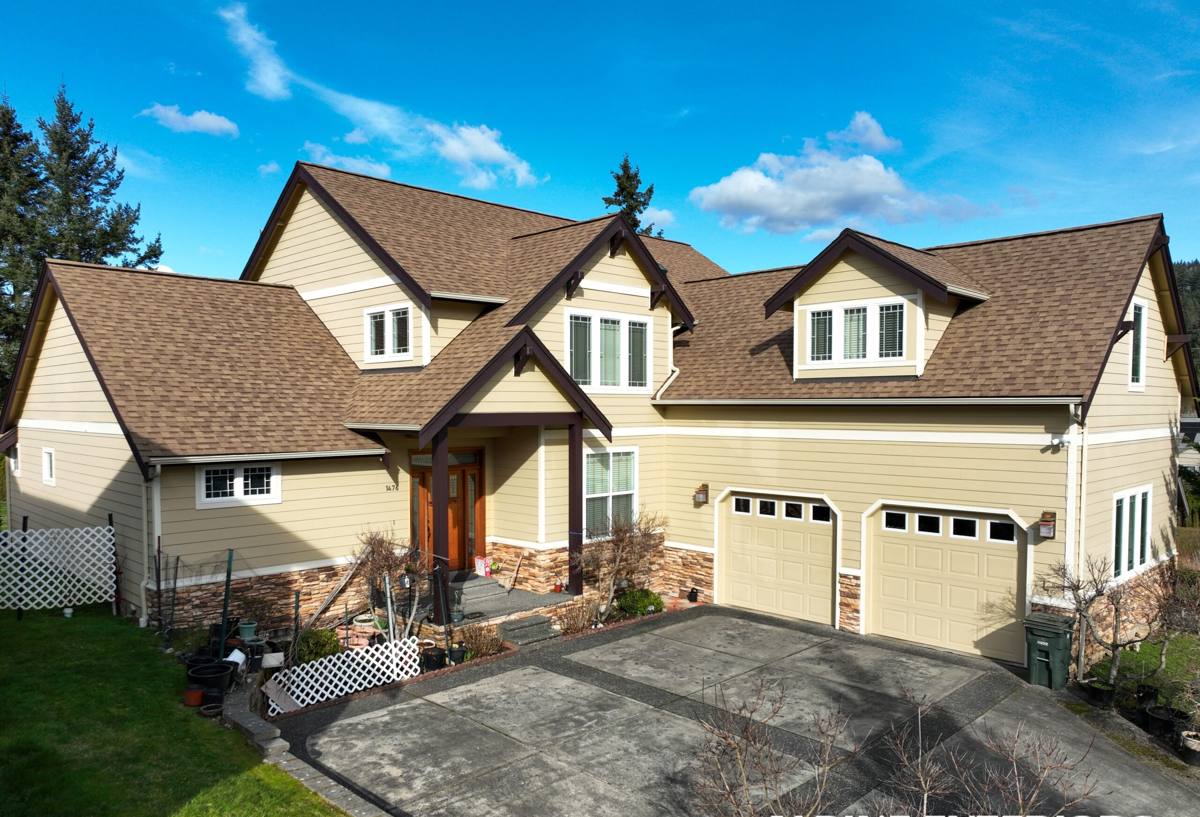
What Salt Air, Rain, and Moss Actually Do to a Roof
Salt Air
Airborne salt accelerates corrosion on anything metal — nail heads, flashing, drip edge, valley metal, roof vents. Once corrosion starts at a fastener, water finds a path along the shaft into the deck below, and that damage is invisible from the ground for years.
Driving Rain
Wind off the water routinely pushes rain at an angle instead of straight down. That means flashing details around chimneys, skylights, dormers, and roof-to-wall transitions take far more abuse here than on a sheltered inland roof, and any shortcut in those areas shows up as a leak much sooner.
Moss and Moisture
Shaded, north-facing, and low-slope sections of California Creek roofs stay damp longer through our wet season. Moss doesn't just sit on top of shingles — its root structure lifts shingle edges and holds moisture against the roofing material, which shortens the life of the shingle and can work moisture down into the deck over several seasons.
Signs a California Creek Roof Is Due for Replacement
Repair makes sense for isolated damage. Full replacement makes sense once the roofing system as a whole is past its useful life. Common signs we look for on local inspections:
- Granule loss heavy enough that shingles look patchy or bald in sun-exposed areas
- Curling, cupping, or cracked shingle tabs, especially on south- and west-facing slopes
- Moss or dark algae staining that keeps returning within a season of cleaning
- Soft spots or sagging when walked, which usually means deck damage underneath
- Rusted or lifting flashing around chimneys, vents, and roof-to-wall joints
- Daylight visible through the attic roof deck, or water staining on attic sheathing
- A roof approaching or past 20-25 years old, regardless of how it looks from the street
Age matters as much as appearance. A roof that still looks presentable at 22 years can have underlayment and flashing that are already failing quietly, particularly this close to the water.
Choosing the Right Material for This Climate
There's no single "best" roofing material for every California Creek home — it depends on roof pitch, shading, budget, and how the house is built. What matters is picking a material honestly, understanding its trade-offs in a wet, salt-exposed environment, and installing it correctly. Here's how the common options compare for this specific setting.
| Material | Typical Lifespan Here | Moss/Moisture Behavior | Maintenance Load | Relative Cost |
|---|---|---|---|---|
| Architectural asphalt shingle | 25-30 years | Good with proper ventilation and periodic cleaning; needs algae-resistant granules in shaded areas | Low to moderate | $ |
| Standing seam metal | 40-50+ years | Sheds moss and moisture very well; needs marine-grade or coated fasteners to resist salt corrosion | Low | $$$ |
| Synthetic/composite shingle | 30-40 years | Resists moisture absorption well; performance varies by manufacturer | Low | $$ |
| Cedar shake | 20-30 years with upkeep | Attractive but holds moisture and is highly susceptible to moss without regular maintenance | High | $$-$$$ |
We'll walk you through what actually fits your roof's exposure and pitch rather than pushing one product line. On heavily shaded or low-slope sections, for example, we may recommend a different material or added ventilation than we would on a wide-open, sun-exposed plane of the same house.
Our Roof Replacement Process
1. Inspection and Honest Assessment
We start on the roof, not just from the ground — checking deck condition, existing ventilation, flashing details, and how water has historically moved (or pooled) across the roof. If repair genuinely makes more sense than replacement, we'll say so.
2. A Written Scope You Can Read
You get a clear, itemized plan before any work starts: tear-off scope, deck repair allowance if needed, underlayment type, flashing details, material and color, ventilation changes, and cleanup terms. No vague line items.
3. Full Tear-Off and Deck Inspection
We remove the old roofing down to the deck rather than layering over it. That's the only way to actually see and fix hidden moisture damage, which is common on homes this close to the water.
4. Underlayment, Flashing, and Ventilation Done Right
This is where most of a roof's real performance in a marine climate is decided — covered in detail below.
5. Installation and Final Walkthrough
Material goes on per manufacturer specification and local code, with attention to nailing pattern, exposure, and sealing at every penetration. We walk the finished roof with you and the property before calling the job done.
The Parts of a Roof You Don't See — But Should Care About
A roof replacement that looks right from the street can still fail early if the details underneath were rushed. In a climate with this much wind-driven rain and moisture, three things matter more than the shingle brand:
Underlayment
Synthetic underlayment offers better tear resistance and water shedding than old-style felt paper, and we use self-adhered ice-and-water membrane in vulnerable zones — valleys, eaves, and around penetrations — where wind-driven rain is most likely to work its way underneath the primary roofing material.
Flashing
Every chimney, skylight, dormer wall, and roof-to-wall transition is a place where two different materials meet, and that's where leaks start. Flashing has to be layered correctly with the underlayment and roofing material — not just caulked — and should use corrosion-resistant metal given the salt exposure this close to the water.
Ventilation
Poor attic ventilation traps moisture, which speeds up deck rot and helps moss and algae get established from the underside as well as the top. Balanced intake and exhaust ventilation is part of a correct roof replacement, not an optional upgrade.
What Homeowners Can Do Between Replacements
A properly installed roof still benefits from basic upkeep, especially given our moss season. This is a general maintenance checklist we give California Creek homeowners after a replacement:
- Clear gutters and downspouts at least twice a year — more often under overhanging trees
- Have moss and debris gently removed before it establishes a root hold, rather than after
- Avoid pressure washing shingles, which can strip granules and shorten roof life
- Trim back branches that keep roof sections shaded and slow to dry
- Schedule a visual roof check after major windstorms, not just once a year
- Watch attic spaces for musty odors or staining, an early sign of a hidden leak
Why It Matters to Hire a Crew That Already Works This Area
Roofing crews that mostly work inland, drier neighborhoods sometimes underestimate what wind-driven rain and salt air do to fastener choice, flashing detail, and underlayment placement. A roof replacement that would hold up fine twenty miles from the water can underperform here within a handful of years. Working regularly in Semiahmoo and the surrounding Whatcom County waterfront means we're not guessing at how a roof needs to be built for this exposure — we're applying what we've already learned from the roofs around it.
We also believe in giving homeowners a straight answer, even when it's not the one that sells the most expensive material. If your roof genuinely needs another five years of life rather than a full tear-off, or if a mid-tier shingle is the right call for your budget and exposure, that's what we'll tell you.
Ready for a Straight Answer on Your Roof?
If your California Creek home's roof is showing its age, or you just want an honest read on how many years it has left, we're happy to take a look. Reach out for a free, no-pressure estimate — we'll inspect the roof, explain what we find in plain terms, and lay out your real options before you decide anything.