 Semiahmoo Siding
 Why Peace Arch Roofs Wear Differently Than Roofs Inland
Homes in the Peace Arch area sit close enough to Semiahmoo Bay and the Salish Sea that the roof over your head deals with a combination most inland Washington homes never see: salt-laden air, wind-driven rain that gets pushed sideways under flashing and shingle tabs, and a wet season that runs long enough to keep moss growing for most of the year. None of these factors alone is unusual for the Pacific Northwest. Together, on a roof that faces the water or sits under mature trees, they shorten the life of flashing, fasteners, and roofing material faster than a standard warranty or maintenance schedule assumes.
Salt air is the one homeowners underestimate most. It doesn't just affect siding and outdoor metal near the coast — it accelerates corrosion on exposed nails, drip edge, and flashing seams, especially on the windward side of a roof. Combine that with driving rain that finds its way under improperly lapped flashing, and small gaps that would stay dry in a calmer climate start to leak here within a season or two.
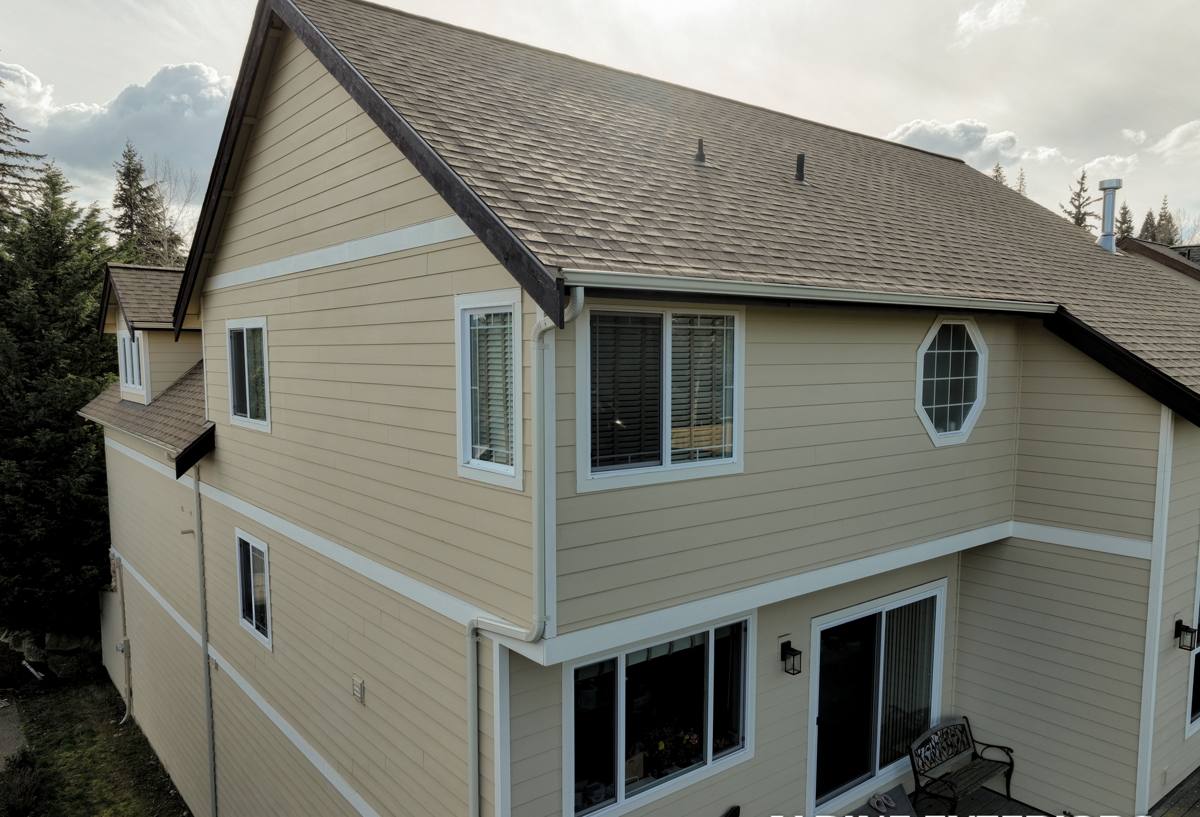
Signs a Peace Arch Roof Needs Repair, Not Just Watching
Most roof failures we get called out for didn't start as emergencies. They started as small, ignorable things that had months — sometimes a full wet season — to get worse. Worth checking for, especially after a stretch of driving rain:
- Water stains on interior ceilings or upper walls, particularly near chimneys, skylights, or where two roof planes meet
- Granules collecting in gutters or at downspout outlets, a sign shingles are wearing thin
- Curling, cracked, or lifted shingle tabs, especially on the side of the roof exposed to prevailing wind
- Rust streaks below metal flashing or fasteners
- Dark, spongy-looking patches of moss or algae, especially on north-facing or shaded slopes
- Sagging in the roof deck itself, which usually means moisture has been getting into the sheathing for a while
Any one of these on its own might just need monitoring. Two or three together, especially heading into another wet season, are worth having looked at before they turn into a deck repair instead of a roof repair.
What a Correct Roof Repair Actually Involves
Diagnosis Before Patching
A leak rarely shows up directly above where it enters. Water travels along the underlayment or rafters before it drips somewhere visible, so a repair that just seals the spot where the stain appeared often misses the actual entry point — usually a failed flashing seam, a cracked pipe boot, or nail pops that have backed out enough to let water track down the shaft. Proper diagnosis means getting on the roof, checking flashing at every penetration and roof-to-wall transition, and confirming where water is actually getting in before anything gets sealed or replaced.
Flashing and Transitions
Given how much of Peace Arch's roof damage traces back to wind-driven rain rather than straight-down rain, flashing quality matters more here than in drier parts of the state. Step flashing at wall intersections, counter-flashing at chimneys, and valley metal all need to be lapped and sealed correctly for water moving sideways under pressure — not just water falling straight down. A repair that replaces shingles but reuses old, undersized, or poorly lapped flashing will leak again.
Matching Materials
Repairs should use materials that match the existing roof in profile, color, and material type wherever possible, and fasteners rated for coastal exposure. Mismatched or under-rated hardware is often the reason a "fixed" spot fails again within a year or two, particularly on roofs facing the bay.
Roofing Materials Common in the Area
What a repair should look like depends heavily on what's already on the roof. Here's how the materials we most commonly repair around Semiahmoo and Whatcom County hold up to salt air, driving rain, and moss:
| Material | Common Coastal-Climate Issues | What a Proper Repair Involves | Typical Service Life Locally |
|---|---|---|---|
| Composition (asphalt) shingle | Granule loss, curling from wind exposure, moss holding moisture against tabs | Matching shingle profile/color, replacing damaged underlayment beneath, resealing flashing | 15-25 years, shorter on exposed or shaded slopes |
| Cedar shake/shingle | Moss and moisture retention, splitting, fastener corrosion in salt air | Selective shake replacement, addressing ventilation/moss buildup, matching butt exposure | 20-30 years with regular moss management |
| Standing seam or metal panel | Fastener and seam corrosion near the coast, sealant failure at penetrations | Reseating or replacing corroded fasteners, resealing seams and penetrations with coastal-rated sealant | 40+ years with periodic seam and fastener maintenance |
| Low-slope/torch-down or membrane | Seam separation from thermal movement, ponding after long rain events | Seam re-welding or patching, correcting drainage where water is pooling | 15-20 years depending on installation quality |
Our standard is to repair with materials built for this level of moisture and salt exposure, even when it costs a little more up front than the minimum-spec option — the maintenance and re-repair burden of undersized flashing or standard-grade fasteners shows up within a few wet seasons here.
How Our Roof Repair Process Works
- Inspection. We get on the roof, not just in the attic, and trace the actual leak path rather than guessing from the interior stain.
- Written scope and estimate. You get a clear explanation of what's failing, why, and what the repair involves — no vague "roof needs work" line items.
- Repair. Flashing, decking, and roofing material are addressed together where needed, not just the visible surface layer.
- Cleanup and debris check. Old material, nails, and moss debris are cleared from gutters and the ground before we leave.
- Follow-up guidance. We tell you honestly whether the repair should hold for years or whether it's a stopgap on a roof that's approaching replacement age.
Moss: A Maintenance Issue, Not a One-Time Fix
Whatcom County's long wet season means moss isn't a one-time cleanup around here — it's an ongoing maintenance item, especially on north-facing slopes and roofs shaded by trees. Moss holds moisture against the roof surface long after the rest of the roof has dried, which accelerates granule loss on shingles and rot risk on cedar. Left alone through a few wet seasons, moss can work under tabs and shakes enough to lift them, creating entry points for wind-driven rain.
Where moss is a recurring problem, we look at both removal and prevention — proper mechanical removal (not aggressive pressure-washing that strips granules), and options like zinc or copper strips near the ridge that reduce regrowth over time using normal rainfall. Trimming back overhanging branches to improve airflow and sun exposure also makes a real difference and costs nothing but a little yard work.
Why Local Experience in Peace Arch Matters
A roof repair crew that regularly works Semiahmoo and the surrounding Whatcom County coastline already knows which slopes on a given roof orientation tend to take the worst of the wind-driven rain, how aggressively moss comes back on shaded roofs in this specific microclimate, and which flashing details hold up versus which ones come back as callbacks. That's not something a crew coming from outside the region picks up on a single job — it's built from repeat visits to homes dealing with the same salt air and long wet seasons yours does.
Local presence also matters for something more practical: when a repair needs a follow-up check after the next big storm, or when you want a second look before deciding between another repair and a full re-roof, a contractor who's already familiar with your roof and your neighborhood's conditions can give you a straight answer faster.
What Affects the Cost of a Roof Repair
Roof repair pricing varies a lot based on scope, and we'd rather explain the real cost drivers than throw out a number that doesn't apply to your roof:
- Extent of the damage — a single flashing repair costs far less than a repair involving deck replacement from long-term moisture intrusion
- Roof pitch and access — steep or multi-story roofs take longer and require more safety setup
- Material match — matching an existing roof's color and profile can add cost versus a straightforward reroof of the same material
- How long the problem went unaddressed — leaks caught early are cheaper to fix than ones that reached the decking or framing
- Moss and debris cleanup — roofs with heavy moss buildup often need cleaning before a repair can even be properly assessed
Most straightforward repairs (isolated flashing, a handful of shingles, a pipe boot) fall into a modest range measured in a few hundred to low thousands of dollars. Repairs involving deck damage or larger sections of roof cost more and start to approach replacement pricing — which is exactly why an honest inspection up front matters before any work starts.
Checklist: What to Confirm Before Any Roof Repair Starts
- Has the actual leak source been identified, not just the visible interior stain?
- Does the written estimate specify materials, not just "repair roof"?
- Will flashing be inspected and addressed, not just the roofing surface?
- Is the contractor licensed and insured to work in Washington?
- Does the crew have experience with coastal Whatcom County conditions specifically?
- Is there a plan for moss or debris that contributed to the problem, not just the repair itself?
If you're dealing with a leak, moss buildup, or storm damage on a Peace Arch home, we're glad to take a look and give you a straight, no-pressure assessment of what it actually needs. Fill out the form below for a free estimate.