 Semiahmoo Siding
 Why Lynden Roofs Take a Different Kind of Beating
Homes in and around Lynden deal with a climate that never really gives a roof a break. Whatcom County sits under a long wet season that can stretch from fall through spring, and the moisture-laden air moving in off the Semiahmoo coastline keeps humidity high even between rain events. That combination — near-constant dampness, driving rain that comes in sideways during winter storms, and a moss season that can run most of the year — is hard on every layer of a roofing system, not just the shingles you can see from the ground.
Moss is the most visible symptom, but it's rarely the whole problem. Once moss and algae get a foothold on a roof, they hold moisture against the surface long after the rest of the neighborhood has dried out. That constant dampness works into shingle edges, lifts tabs, and slowly breaks down the granule coating that protects asphalt shingles from UV and weather. Driving rain off the water finds any gap in flashing or underlayment and pushes water uphill under normal gravity flow, which is why leaks in this area often show up somewhere other than where the water actually got in.
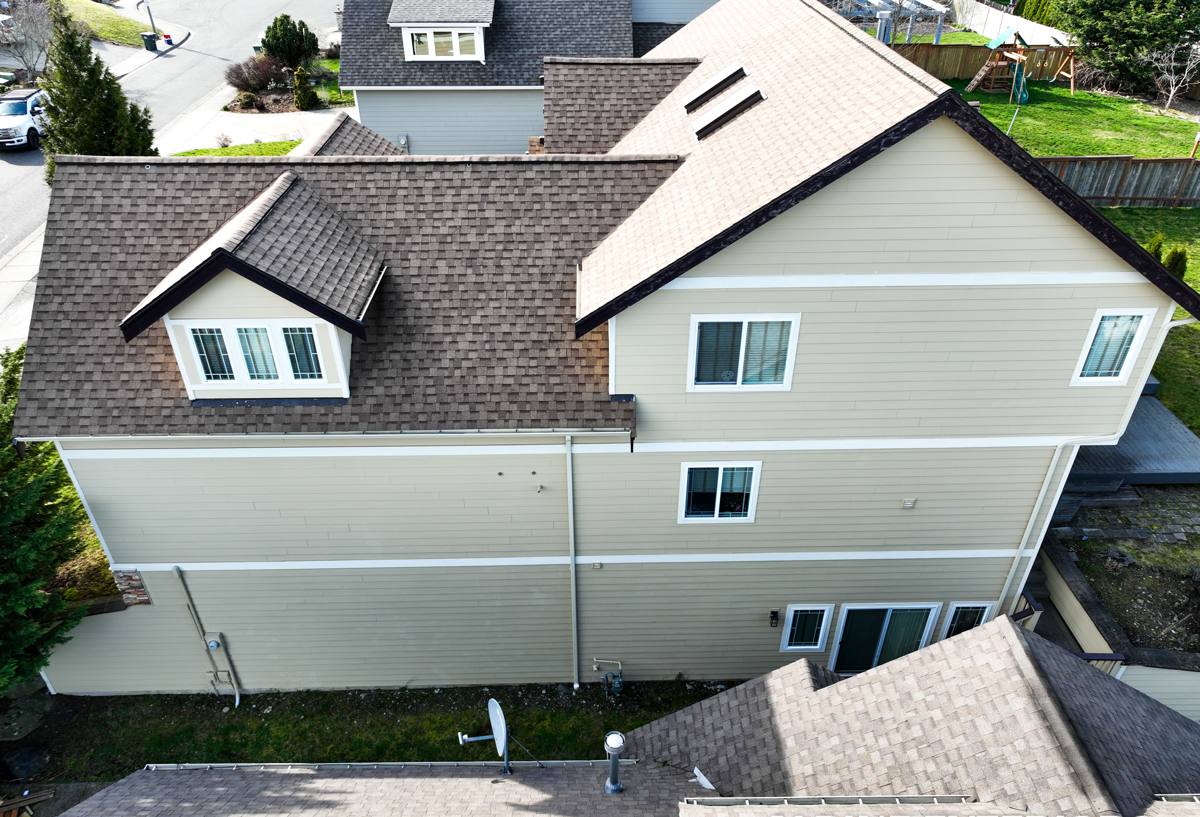
Common Roof Repair Calls We See in Lynden
Most of the repair calls we run in this area fall into a handful of categories. Recognizing the pattern helps homeowners know what they're looking at before it becomes a bigger problem.
- Moss-lifted shingles — moss growing under shingle tabs breaks the seal and lifts edges, letting wind-driven rain get underneath.
- Flashing failures — around chimneys, plumbing vents, skylights, and roof valleys, where metal flashing has rusted through, pulled loose, or was never sealed correctly to begin with.
- Storm damage — wind gusts that lift or crack shingles, or knock branches loose that puncture the roof surface.
- Granule loss and UV wear — older asphalt shingles that have thinned to the point where they're no longer shedding water properly, even without an obvious hole.
- Gutter and roof-edge rot — fascia boards and roof edges that stay wet too long from clogged gutters or poor drainage, leading to soft or rotted wood behind the metal.
- Skylight and penetration leaks — any place something passes through the roof plane is a higher-risk spot for water intrusion over time.
What a Correct Roof Repair Actually Involves
Diagnosing the Real Source
A roof leak almost never originates exactly where the stain appears on the ceiling. Water follows the path of least resistance along rafters, decking seams, and underlayment before it finds a gap to drip through. A repair that only addresses the visible drip point — without tracing the water back to its actual entry — tends to come back within a season or two. Doing it correctly means getting on the roof, checking the surrounding flashing, decking, and underlayment, and confirming where the water is actually getting in before any material gets replaced.
Matching Materials and Techniques
Repairs also need to match the existing roof system, not just patch over it. That means using compatible shingle types and weights, flashing metal that won't corrode against what's already there, and fastening patterns that meet code for wind exposure in this part of Washington. A mismatched patch — wrong shingle profile, wrong flashing metal, or sealant used in place of proper flashing — is often more obvious and more failure-prone than the original damage.
Our Repair Process, Start to Finish
- Inspection and estimate. We walk the roof (not just look from the ground), check attic space where accessible for moisture or staining, and give a written estimate before any work starts.
- Safe access and containment. We set up to protect gutters, landscaping, and siding from falling debris during the repair.
- Removal of damaged material. Shingles, flashing, or underlayment in the affected area come off down to sound decking.
- Decking check. Any soft or rotted decking gets replaced — this is a step that's easy to skip and is the most common source of repeat leaks when it's skipped.
- Underlayment and flashing. New underlayment and correctly lapped, sealed flashing go in around the repair area and any penetrations nearby.
- Matching material installed. Shingles or roofing material go back in, matched as closely as possible to the surrounding roof.
- Cleanup and walkthrough. We clear debris, check gutters for anything that fell in during the work, and walk the repair with the homeowner.
Repair vs. Replace: How We Help You Decide
Not every roof problem needs a full replacement, and not every leak should be patched indefinitely. We look at a few honest factors and tell you where your roof actually falls, rather than defaulting to the more expensive answer.
| Factor | Leans Toward Repair | Leans Toward Replacement |
|---|---|---|
| Roof age | Under 15 years, or newer material with life left | At or past the material's typical service life |
| Damage extent | Localized to one area, flashing, or a few shingles | Widespread granule loss, multiple failure points |
| Repair history | First or second repair in this location | Same area repaired repeatedly with no lasting fix |
| Decking condition | Sound decking found during inspection | Rot or soft spots across multiple sections |
| Budget and timeline | Need a durable fix now, replacement planned later | Ready to stop deferring and solve it long-term |
We'll always give a straight answer even if it means a smaller invoice today. A well-done repair on a roof with years of life left is the right call far more often than homeowners expect.
Materials We Use — and Why
For repair work, matching the existing roof is usually the priority. For sections being replaced or upgraded, we talk through the trade-offs honestly rather than pushing one product for every home.
| Material | Moisture Behavior | Maintenance | Typical Fit |
|---|---|---|---|
| Asphalt composition shingle | Reliable when properly ventilated and flashed | Periodic moss treatment and gutter care | Most common, cost-effective, wide color range |
| Metal roofing | Sheds water and moss buildup faster than shingles | Low, but seams and fasteners need periodic checks | Steeper investment, longer service life |
| Cedar shake | Can trap moisture if not maintained regularly | Higher — regular treatment needed in this climate | We're selective about where we recommend it, given the maintenance burden in a wet, moss-prone region like this |
We're not going to tell a homeowner a product is bad to steer a sale. Cedar shake, for example, can look great and perform well, but it demands a maintenance schedule that not every homeowner wants to keep up with in a climate this wet — that's a trade-off we lay out plainly, not a knock on the material itself.
Moss, Moisture, and Preventive Maintenance
A lot of repair calls are preventable with basic upkeep between our visits. This is the same checklist we'd give our own family in this area.
- Have moss growth treated or removed before it lifts shingle edges — don't wait for it to spread across the whole slope.
- Keep gutters clear so water isn't backing up against the roof edge and fascia during heavy rain.
- Trim back overhanging branches that shade the roof and keep it damp longer after rain.
- Check attic ventilation — poor airflow traps moisture underneath the roof deck and accelerates rot from the inside.
- Have flashing around chimneys, vents, and skylights inspected every couple of years, since these are the most common leak points.
- Address small leaks immediately — a slow drip during one storm season can mean rotted decking by the next.
Why a Local Semiahmoo-Area Crew Matters
Roofing crews who don't regularly work in Whatcom County can miss things that are obvious to a crew that does. Knowing how moss behaves on a roof through a full wet season, how driving rain off the coast tends to find gaps in older flashing, and which repair techniques actually hold up here versus in a drier climate — that's knowledge built from repeat jobs in this specific area, not a general playbook.
It also matters for accountability. A crew based near Semiahmoo and working Lynden regularly is easy to reach if a repair needs a follow-up look, and has a reputation in the area worth standing behind. We pull permits where required, follow current code for wind and moisture protection, and stand behind our repair work rather than disappearing after the invoice is paid.
Get an Honest Look at Your Roof
If you're dealing with a leak, moss buildup, storm damage, or just want an honest opinion on whether a repair or a replacement makes more sense for your Lynden home, we're glad to take a look. Reach out for a free, no-pressure estimate using the form below — we'll walk the roof, explain what we find in plain terms, and give you options instead of a sales pitch.