 Semiahmoo Siding
 Roof Repair Built for Cherry Point's Coastline
Cherry Point sits right up against the Strait of Georgia, and that location shapes everything about how a roof ages here. Homes in this stretch of Whatcom County take on a combination most inland neighborhoods never deal with: salt-laden air rolling off the water, wind-driven rain that hits roof slopes sideways instead of straight down, and long stretches of damp, shaded weather that give moss months to get established. A roof repair here isn't just patching a leak — it's addressing the specific ways this coastal environment breaks roofing systems down.
We work on homes throughout the Semiahmoo and Cherry Point area regularly, and the repair calls we get tend to follow a pattern tied directly to this climate. Understanding that pattern is the difference between a repair that lasts and one you're calling us back for in eighteen months.
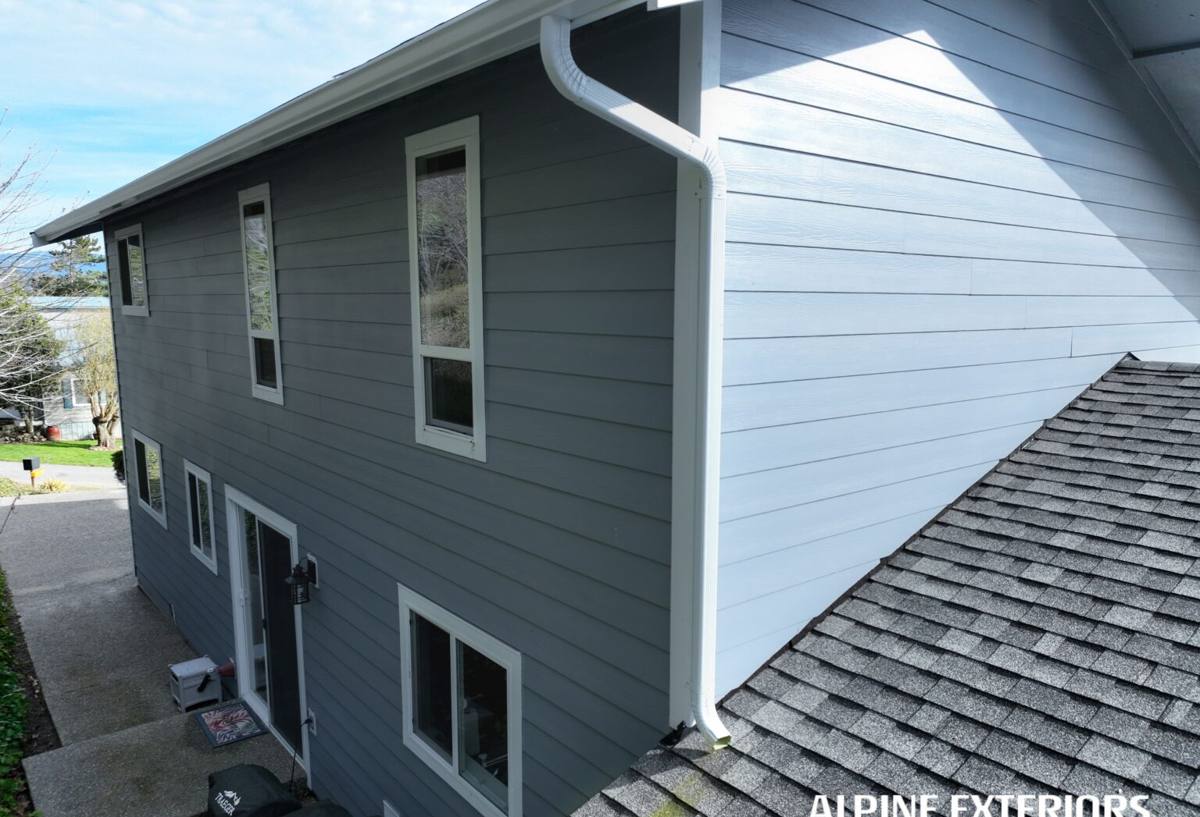
Why This Location Is Harder on a Roof
Salt Air and Metal Fatigue
Airborne salt accelerates corrosion on anything metal — flashing, fasteners, gutter hangers, and the metal components built into most roofing systems. Galvanized fasteners that would last decades further inland can start showing rust streaks and weakening in a fraction of that time this close to the water. When we're diagnosing a leak on a Cherry Point roof, corroded fasteners and pitted flashing are near the top of the checklist, not an afterthought.
Driving Rain and Wind Exposure
Open water exposure means wind-driven rain that gets pushed up and under roofing edges, valleys, and any place two roof planes meet. Standard installation tolerances that work fine in a sheltered inland lot can leave small gaps that are just fine ninety percent of the time — and then fail during the handful of storms a year when rain is coming in nearly horizontal. Repairs here need to account for wind-driven water, not just water flowing downhill.
Moss, Shade, and Moisture Retention
Whatcom County's damp season runs long, and roof sections that stay shaded — north-facing slopes, areas under overhanging trees, valleys that hold debris — give moss and algae a real head start. Moss isn't just cosmetic. It holds moisture against the roofing surface, works its way under shingle edges and shake butts, and can lift materials enough to let water in. A roof that looks intact from the ground can have real moisture damage happening underneath a moss mat.
Signs a Cherry Point Roof Needs Repair
Most roof problems out here show up gradually. Catching them at the repair stage — before they become a full section replacement — comes down to knowing what to look for.
- Moss or dark streaking concentrated on shaded or north-facing slopes
- Granule buildup in gutters or at downspout outlets, which signals shingle wear
- Rust staining below metal flashing, vents, or valleys
- Soft spots or slight sagging when walking a low-slope section
- Water stains on interior ceilings near exterior walls, chimneys, or skylights
- Curling, cracked, or missing shingles, especially on wind-exposed slopes
- Daylight visible through the roof deck from inside an unfinished attic
- Gaps or lifted caulking around flashing, vent boots, and roof penetrations
Any one of these on its own might be minor. Two or three together, especially in the same area of the roof, usually means active water intrusion that's been building for a while.
What a Correct Repair Actually Involves
A roof repair that holds up in this environment goes beyond swapping a shingle or smearing on sealant. We treat every repair call as a chance to check the surrounding area, not just the spot that's visibly failing.
Diagnosis Before Repair
Leaks rarely show up directly below their source — water travels along the underlayment or framing before it drips somewhere visible. We trace the actual entry point, which is often flashing, a valley, or a penetration well away from the interior stain, rather than patching the first thing that looks damaged.
Moss and Debris Removal Done Right
Moss needs to come off without damaging the roofing surface underneath — pressure washing a shingle roof, for example, can strip granules and shorten its life faster than the moss would have. We use methods appropriate to the material, and we address the underlying moisture and shade issue where we can, not just the moss itself.
Flashing and Fastener Upgrades
Given how quickly standard fasteners and thin flashing corrode this close to the water, repairs here are a natural point to upgrade to more corrosion-resistant materials in the repaired section, so the fix isn't undone by the same salt exposure that caused the original problem.
Sealing for Wind-Driven Rain
Valleys, hips, and penetrations get extra attention to wind-driven water specifically — proper underlayment lapping and sealant placement that accounts for rain hitting the roof at an angle, not just falling straight down.
Repair Considerations by Roofing Material
The right repair approach depends heavily on what's already on the roof. Here's how common materials in this area typically hold up and what repairs usually involve for each.
| Material | Common Coastal Issue | Typical Repair Focus |
|---|---|---|
| Asphalt composition shingle | Granule loss, moss lifting shingle edges, wind-lifted tabs | Spot shingle replacement, resealing tabs, moss removal |
| Standing seam / metal panel | Fastener corrosion, seam sealant breakdown | Fastener replacement, reseating panels, seam resealing |
| Cedar shake | Moss and moisture retention, splitting from repeated wet-dry cycles | Shake replacement, improving airflow, moss treatment |
| Flat / low-slope membrane | Ponding water, seam separation at penetrations | Seam resealing, drainage correction, flashing repair |
Whatever the material, the underlying goal is the same: stop water intrusion at its actual source and address the coastal factors — salt, wind-driven rain, moisture retention — that caused the failure in the first place.
Our Repair Process
- Inspection: We get on the roof (weather permitting) or use a close visual and interior check to identify every affected area, not just the one you called about.
- Written scope and honest estimate: You get a clear explanation of what's actually wrong, what needs to happen, and a straightforward price — broad ranges are normal at the estimate stage, since exact scope can shift once we're up close.
- Repair: We match materials as closely as possible to what's already on the roof, prioritize corrosion-resistant fasteners and flashing given the salt exposure, and seal with wind-driven rain in mind.
- Cleanup and check: Debris and old materials are cleared, and we walk you through what was done and what to watch for going forward.
Cost Factors for Roof Repair Near Cherry Point
Every roof is different, but the price of a repair here is generally driven by a consistent set of factors.
| Factor | Why It Matters |
|---|---|
| Roof pitch and access | Steeper or harder-to-reach slopes take longer and need more safety setup |
| Extent of moss or moisture damage | Repairs discovered to extend into the deck or underlayment cost more than a surface fix |
| Material availability | Matching older or discontinued shingle and shake colors can affect cost and timeline |
| Number of affected areas | Multiple valleys, penetrations, or slopes needing attention adds labor |
| Corrosion-resistant upgrades | Better fasteners and flashing cost more upfront but hold up longer against salt air |
We'd rather tell you upfront that a repair is going to run toward the higher end because of what we find, than surprise you mid-job. If a roof is past the point where repair makes sense, we'll say so directly instead of patching something that needs full replacement.
When Repair Isn't the Right Call
Not every roof problem is a repair candidate. If moss and moisture damage have spread across most of the roof, if the roofing material is at the end of its service life across the board, or if repeated repairs in the same area suggest a systemic problem rather than an isolated failure, we'll tell you that plainly. A repair on a roof that's fundamentally worn out is a short-term fix that costs more in the long run — our job is to give you an honest read on which situation you're actually in.
Why It Matters to Hire a Crew That Already Works Cherry Point
A roofer who mostly works inland jobs can still do competent general roof work, but they may not default to corrosion-resistant fasteners, may not think about wind-driven rain angles the way a coastal job demands, and may treat moss as purely cosmetic. Working regularly in the Semiahmoo and Cherry Point area means we're not guessing at how salt air, driving rain, and moss season affect a roof — we see the results of that combination on a routine basis and repair accordingly.
If you're dealing with a leak, visible moss, or you just want a straight answer on the condition of your roof, we're glad to take a look. Reach out for a free, no-pressure estimate using the form below.