 Semiahmoo Siding
 Why Point Roberts Roofs Take More Punishment Than Most
Point Roberts sits out on its own peninsula, with water on most sides and nothing but open air between the house and the Strait. That means every roof out there deals with a heavier dose of what the rest of Whatcom County gets: salt-laden wind, near-constant marine humidity, and rain that doesn't just fall straight down — it drives sideways into fascia, soffits, and any flashing detail that wasn't built to take it. Add in the shade and dampness that a lot of Semiahmoo-area lots have from mature trees, and you've got ideal conditions for moss, lichen, and slow material breakdown.
None of that is unique to one street or one house. It's the baseline for this stretch of coastline. A roofing system that would be perfectly fine forty miles inland in a drier microclimate can wear out early here simply because it wasn't specified for salt exposure and sustained moisture. That's the starting point for any real conversation about metal roofing in this area — not the style or the color, but whether the system and the installation details actually match the environment.
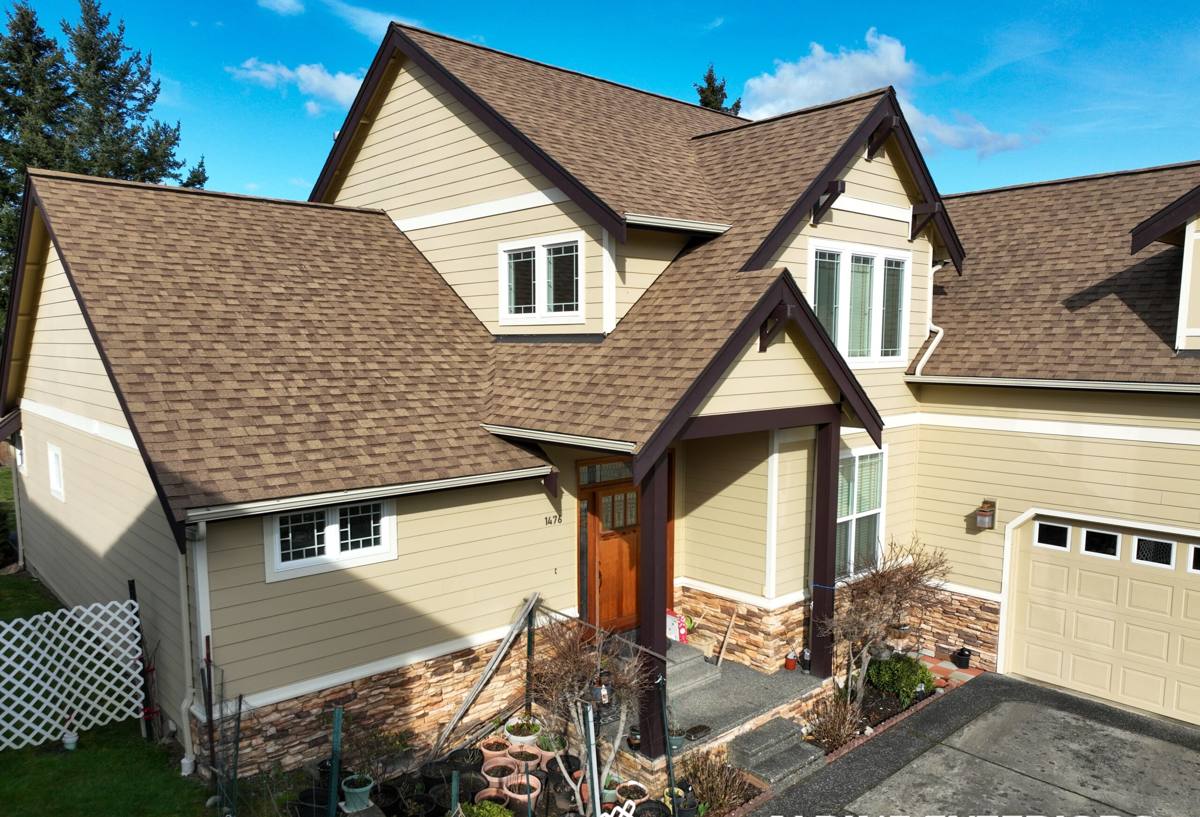
What Salt Air, Rain, and Moss Actually Do to a Roof
Salt Air
Airborne salt accelerates corrosion on fasteners, flashing, and any exposed metal edge. It also breaks down cheaper coatings faster than inland weathering would. This doesn't mean metal is a bad choice near the water — it means the specific alloy, coating, and fastener hardware matter more here than they would elsewhere.
Driving Rain
Wind-driven rain finds every gap, seam, and undersized overlap. On a roof that isn't detailed correctly at valleys, penetrations, and edges, that rain gets pushed uphill under the roofing material instead of running off it. Over a few seasons, that's how you get hidden deck rot and interior leaks that show up nowhere near where the water actually got in.
Moss and Organic Growth
Shaded, damp roofs grow moss whether the material underneath is metal, shingle, or shake. Moss itself doesn't eat through metal panels the way it can degrade asphalt granules, but it holds moisture against the surface, clogs valleys and gutters, and — on lower-quality coatings or fastener heads — can accelerate localized corrosion over time. A roof that sheds water quickly and doesn't trap debris in the first place is the real defense, not chemical treatments applied after the fact.
Why Metal Is a Strong Fit for This Climate
We don't push metal roofing on every job — it's not the right call for every budget or every home. But for a coastal, moss-prone, rain-heavy area like Point Roberts, it solves several problems at once:
- Steep, slick panel surfaces shed water fast and give moss and lichen far less to hold onto compared to a textured shingle surface
- Properly coated steel or aluminum resists the corrosion cycle that salt air accelerates, when the right alloy and finish are used
- Standing seam systems have far fewer exposed fastener penetrations for wind-driven rain to exploit
- A correctly installed metal roof typically outlasts two or more asphalt roof cycles, which matters when re-roofing on a peninsula means extra logistics every time
- Metal handles the wind uplift that comes with open, unobstructed water exposure better than lighter-weight roofing when properly fastened
The trade-off is upfront cost and installation sensitivity — metal roofing punishes a rushed or inexperienced install more than shingles do. Get the details wrong and you trade a moss problem for a leak problem.
Panel Systems: What We're Actually Comparing
"Metal roofing" isn't one product. The system and the panel type change how the roof performs in a salt-air, high-rain environment.
| System | How It's Fastened | Best For |
|---|---|---|
| Standing Seam | Concealed clips, no exposed fasteners on the field of the roof | Coastal exposure, long-term low maintenance, homes where driving rain is a real concern |
| Exposed Fastener Panel | Screws driven directly through the panel into the deck or purlins | Budget-conscious projects, outbuildings, shops — needs fastener inspection over time |
| Metal Shingle / Shake Profile | Interlocking panels styled to resemble shingles or shakes | Homeowners who want a traditional look with metal's durability |
For most Point Roberts homes right on or near the water, we lean toward standing seam. Fewer penetrations means fewer places for salt-driven corrosion or wind-driven rain to start a problem. Exposed fastener systems can still work well on secondary structures or lower-exposure sides of a property, as long as the fastener quality and gasket seals are right and someone is checking them periodically.
Steel vs. Aluminum in a Salt-Air Environment
Both work here when specified correctly, but they behave differently:
| Factor | Coated Steel (e.g. Galvalume) | Aluminum |
|---|---|---|
| Corrosion resistance | Very good with an intact coating; the coating is doing the protective work | Naturally corrosion-resistant, doesn't rely on a coating layer for base protection |
| Weight | Heavier | Lighter, easier on the structure |
| Cost | Generally lower | Generally higher |
| Denting resistance | Better resistance to impact | Softer, dents more easily |
We'll walk through which one makes sense for a given roof, given the home's exposure, budget, and structure — there's no single right answer for every property.
What a Correct Metal Roof Installation Actually Involves
Deck and Underlayment
The roof deck gets inspected before anything goes down — rot, soft spots, and inadequate ventilation get addressed first, not covered up. Over that, a high-temperature, self-adhering underlayment goes down at eaves, valleys, and penetrations at minimum, since these are the spots where wind-driven rain concentrates.
Flashing and Penetrations
This is where most metal roof failures actually start — not the panels themselves. Chimneys, vents, skylights, and wall transitions all need flashing details sized and lapped correctly for the direction rain and wind typically come from on that specific roof.
Fastener and Hardware Selection
In a salt-air environment, fastener material matters as much as the panel material. Mismatched metals against each other can set up galvanic corrosion over time, so hardware gets matched to the panel system, not grabbed off a generic shelf.
Ventilation
A sealed-up, poorly ventilated attic traps moisture underneath the roof deck regardless of what's on top of it. Ridge and intake ventilation gets checked and corrected as part of the job, not treated as optional.
Why a Crew That Already Works Point Roberts Matters
Point Roberts is logistically different from a typical job site. Getting crews, equipment, and materials there means routing through Canada, which affects scheduling, delivery timing, and how a project gets planned out compared to a job five miles inland in Semiahmoo or Blaine. A crew unfamiliar with that reality can end up with mid-project delays waiting on a panel order or a specialty flashing piece that wasn't planned for ahead of time.
There's also the exposure knowledge that only comes from working roofs in this specific microclimate repeatedly — knowing which sides of a Point Roberts property typically take the worst of the wind-driven rain, where moss tends to build up fastest given the tree cover and shade patterns common to the area, and how to sequence a project around the weather windows that actually show up here. That's not something you get from a general roofing background alone; it comes from doing the work locally, season after season.
Our Process, Start to Finish
- Roof assessment — We look at the existing roof, deck condition, ventilation, and the specific exposure of your property (wind direction, shade, tree cover, proximity to water).
- System recommendation — We'll walk you through panel type, material, and finish options based on what your roof actually needs, not a one-size answer.
- Written estimate — Clear scope, materials, and pricing before anything is scheduled.
- Material and logistics planning — Given Point Roberts' access situation, we plan delivery and crew scheduling in advance so the job doesn't stall mid-way.
- Installation — Deck repair as needed, underlayment, panels, flashing, and ventilation work, done in the sequence that actually keeps water out.
- Final walkthrough — We go over the finished roof with you before calling the job done.
Maintenance in a Marine Climate
A correctly installed metal roof is low-maintenance, not no-maintenance. In a salt-air, moss-prone area, a little periodic attention goes a long way:
- Clear debris and organic buildup out of valleys and gutters, especially under overhanging trees
- Rinse accumulated salt residue off the roof surface periodically if the home is close to the water
- Check sealant and flashing at penetrations (vents, chimneys, skylights) every year or two — sealant is the first thing to age, not the metal
- Trim back branches that keep the roof shaded and damp longer than it needs to be
- Have someone look at fastener condition on exposed-fastener systems periodically, since those are the components most affected by ongoing exposure
What Drives the Cost
Every metal roof estimate is specific to the home, but the main variables are consistent:
| Factor | Why It Matters |
|---|---|
| Panel system (standing seam vs. exposed fastener) | Standing seam costs more upfront due to labor and hardware but has fewer long-term maintenance points |
| Material (steel vs. aluminum) | Aluminum generally costs more but weighs less and skips coating-dependent corrosion protection |
| Roof complexity | Valleys, dormers, and multiple penetrations add labor and flashing work |
| Deck condition | Rot or inadequate ventilation found during tear-off adds repair scope |
| Access and logistics | Point Roberts' location factors into delivery and crew scheduling |
We'll give you a straightforward, itemized number once we've actually looked at your roof — not a guess over the phone.
If you're weighing a metal roof for a Point Roberts or Semiahmoo home, we're happy to take a look and walk you through what your specific roof needs. There's a form below — reach out for a free, no-pressure estimate and we'll go from there.