 Semiahmoo Siding
 Why Windows Wear Out Faster in Point Roberts
Point Roberts sits on its own small peninsula at the southern tip of the Semiahmoo/Boundary Bay area, surrounded by water on three sides. That geography is part of what makes the community special, but it's hard on window assemblies. Salt-laden air off the Strait of Georgia works on aluminum hardware, screen frames, and exposed fasteners year-round, not just during storms. Wind-driven rain off the water finds any weak point in a window's flashing or sealant, and because the peninsula catches weather from multiple directions, there's rarely a fully "sheltered" side of a house. Add in Whatcom County's long, wet moss season — roughly late fall through spring — and you get persistent moisture sitting against sills, tracks, and trim for months at a time.
None of this means windows fail overnight. It means they fail earlier than the manufacturer's spec sheet suggests, especially if the original installation didn't account for the coastal exposure. We see the same failure patterns repeatedly on Point Roberts homes: fogged double-pane glass from broken seals, swollen or soft sills, hardware that's seized or corroded, and drafts around frames that were caulked instead of properly flashed.
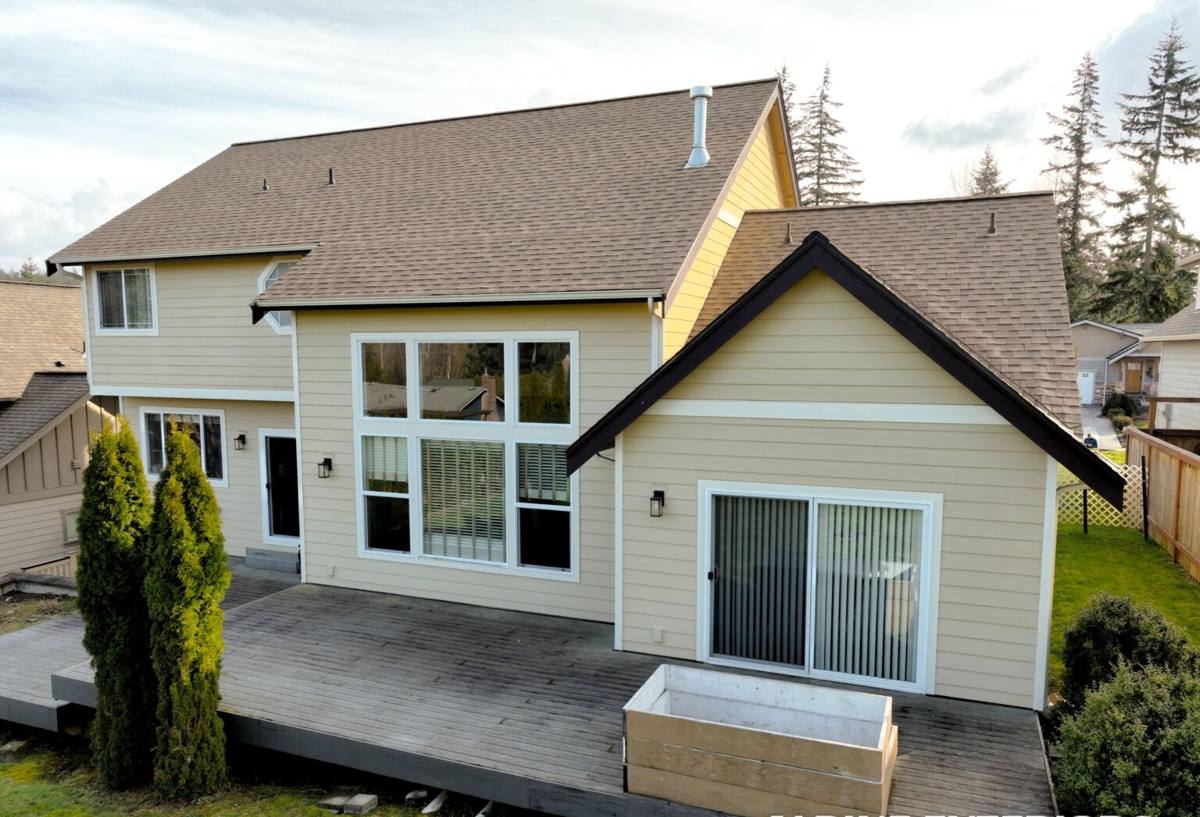
What "Energy-Efficient" Actually Means Here
Energy efficiency in a marine climate like this isn't primarily about keeping out extreme cold — Whatcom County winters are mild compared to inland Washington. It's about controlling moisture, wind infiltration, and the slow heat loss that comes from constant damp, breezy conditions. A window that's rated efficient for a dry climate isn't automatically the right choice here.
The specs that matter most for this area
- U-factor: measures heat loss through the whole window assembly, not just the glass. Lower is better for our mild-but-persistently-cool winters.
- Air infiltration rating: matters more here than in drier climates, because wind-driven rain will exploit the same gaps that let air through.
- Condensation resistance: a window that fogs or sweats on the interior in winter is telling you the frame or glazing isn't handling humidity well — a common complaint in coastal homes.
- Low-E glazing package: the right coating cuts summer heat gain and winter heat loss without darkening the room noticeably.
We size these choices to the exposure of each wall. A window on the water-facing side of a Point Roberts home has different demands than one tucked on a sheltered interior wall, even on the same house.
Frame Material: What Holds Up on This Peninsula
Frame material matters as much as glass package when salt air and constant moisture are in play. There's no single "best" material for every home — it depends on your budget, your home's exposure, and how much upkeep you want to do.
| Material | Salt air / moisture behavior | Maintenance | Typical trade-offs |
|---|---|---|---|
| Vinyl | Doesn't corrode; UV exposure over many years can affect color and rigidity | Low — occasional cleaning | Budget-friendly, good efficiency, limited color options |
| Fiberglass | Very stable in coastal moisture and temperature swings; minimal expansion/contraction | Low | Higher upfront cost, excellent long-term performance |
| Aluminum | Prone to corrosion and pitting in salt air unless marine-grade and well-coated | Moderate to high | We use it selectively and specify coastal-rated hardware |
| Wood / wood-clad | Attractive, but exposed wood is vulnerable to the region's constant damp and moss growth | High — regular sealing and inspection | Best suited to protected elevations, not full water exposure |
As a matter of professional standard, we steer homeowners away from unclad wood or standard-grade aluminum on the most exposed elevations of a Point Roberts home — not because those materials are bad products, but because this specific climate punishes their weak points faster than most manufacturers' warranties assume. Vinyl and fiberglass simply give a better efficiency-to-maintenance ratio for this exposure.
Signs Your Windows Are Costing You Money
Most homeowners don't think about their windows until something is visibly wrong, but energy loss usually shows up well before that. Walk your home and check for these:
- Visible fog, haze, or moisture trapped between panes — a sign the seal has failed and the insulating gas has escaped
- Cold drafts near the frame edges even when the window is fully latched
- Sills or lower frame corners that feel soft, swollen, or discolored
- Locks or cranks that stick, grind, or won't fully engage
- Visible moss, algae, or black staining building up on exterior sills or tracks
- Condensation forming on the interior glass regularly in cooler months
- A noticeable rise in heating costs without a clear other cause
- Paint or trim around the window failing faster than elsewhere on the house
How We Approach an Installation Here
A window is only as good as its installation, and in a high-moisture, salt-exposed area, installation details matter more than the window brand printed on the label. Our process is built around keeping water out and letting any moisture that does get in drain back out — not trap against the framing.
What a correct job includes
- Removal and inspection: we pull the old unit and check the rough opening and sheathing for hidden rot or moisture damage before anything new goes in — this is common on older Point Roberts homes and needs to be addressed, not covered up.
- Sill pan flashing: a sloped, waterproof pan under the window directs any water that gets past the frame back outside instead of into the wall cavity.
- Proper flashing sequencing: flashing tape and building wrap are layered so water always sheds downward and outward, integrated correctly with the house's existing siding and weather barrier.
- Coastal-appropriate sealants: not all caulks and sealants hold up the same way to salt spray and constant UV/moisture cycling — we use products rated for it.
- Shimming and squaring: a window that isn't set square will stress its seals prematurely, leading to early air and water infiltration regardless of how good the unit itself is.
- Interior and exterior trim-out: finished cleanly so there's no gap left for wind-driven rain to find.
When we're also handling siding work on the same wall, we integrate the window flashing with the siding's water-resistive barrier as one continuous system — that's where a lot of leaks originate on homes where windows and siding were done by different crews at different times, with no coordination between the two.
What It Costs — and What Drives the Price
Every Point Roberts home is different, so we don't quote sight-unseen, but here's what generally moves the number:
| Factor | Why it matters |
|---|---|
| Number and size of windows | Larger openings and whole-house replacements have better per-unit pricing than one-off swaps |
| Frame material | Vinyl is typically the most budget-friendly; fiberglass costs more upfront but needs less upkeep on exposed walls |
| Glazing package | Upgraded Low-E coatings and gas fills add cost but pay back in comfort and lower energy bills |
| Condition of the rough opening | Hidden rot or water damage found during removal adds repair time before the new window can go in |
| Exposure and elevation | Water-facing walls may need extra flashing detail and premium sealants |
| Access | Second-story or hard-to-reach openings take more labor time |
We'll always give you a straightforward, itemized number after a real walkthrough — not a per-window average pulled from a national chart that doesn't account for coastal exposure.
Why Local Experience Matters in Point Roberts Specifically
Point Roberts is geographically separated from the rest of Whatcom County — reaching it means crossing an international border. That's not a knock on the community, it's just a logistical reality that affects how contracting work gets done there. Crews unfamiliar with the area sometimes underbid the job because they don't plan for border crossing time, material staging, or the extra scheduling coordination it takes to work efficiently on the peninsula. That can mean rushed installs or return trips that get pushed back.
Working the Semiahmoo and Point Roberts area regularly means we plan material orders and crew scheduling around that reality up front, so the job runs on the timeline we quote. It also means we've seen how windows in this specific microclimate actually fail over time — not in a lab, but on real homes exposed to this exact mix of salt air, driving rain, and moss season — and we build the installation around preventing those specific failure points.
Keeping New Windows Performing Long-Term
A good installation buys you years of low-maintenance performance, but a little seasonal attention extends it further in this climate:
- Rinse salt residue off exterior frames and glass periodically, especially after windstorms off the water
- Clear moss and organic debris from sills and tracks before it holds moisture against the frame
- Check weep holes (the small drainage openings at the base of the frame) to make sure they're clear and draining
- Lubricate hardware — locks, cranks, hinges — on a rotating vinyl or fiberglass frame roughly once a year
- Re-inspect exterior caulking annually; sealants are a wear item and eventually need renewal, even good ones
If you're weighing whether it's time to replace your windows or you just want an honest read on what condition they're in, we're happy to take a look. The estimate is free, there's no pressure, and you'll get a straight answer about what your home actually needs — not an upsell.