 Semiahmoo Siding
 Why Decks Take a Beating in Point Roberts
Point Roberts sits at the tip of a peninsula exposed to the open water of the Strait of Georgia, which means homes here deal with a combination most inland Whatcom County properties don't: near-constant salt-laden air, wind-driven rain coming off the water, and a wet season that stretches for months. A deck built to a generic spec sheet, without that combination in mind, will show its age faster here than almost anywhere else in the region.
Salt air is corrosive. It works on exposed fasteners, joist hangers, and railing hardware year-round, not just during storms. Driving rain doesn't just fall straight down — it gets pushed sideways into end grain, under flashing, and into any gap in the ledger connection where the deck meets the house. And the long moss season that follows our wet winters means anything shaded, north-facing, or slow to dry becomes a growing surface for moss and algae, which trap moisture against the wood or decking long after the rain has stopped.
None of this means a deck can't last in Point Roberts. It means the build details — the ones nobody sees once the boards are down — matter more here than they do in a drier climate.
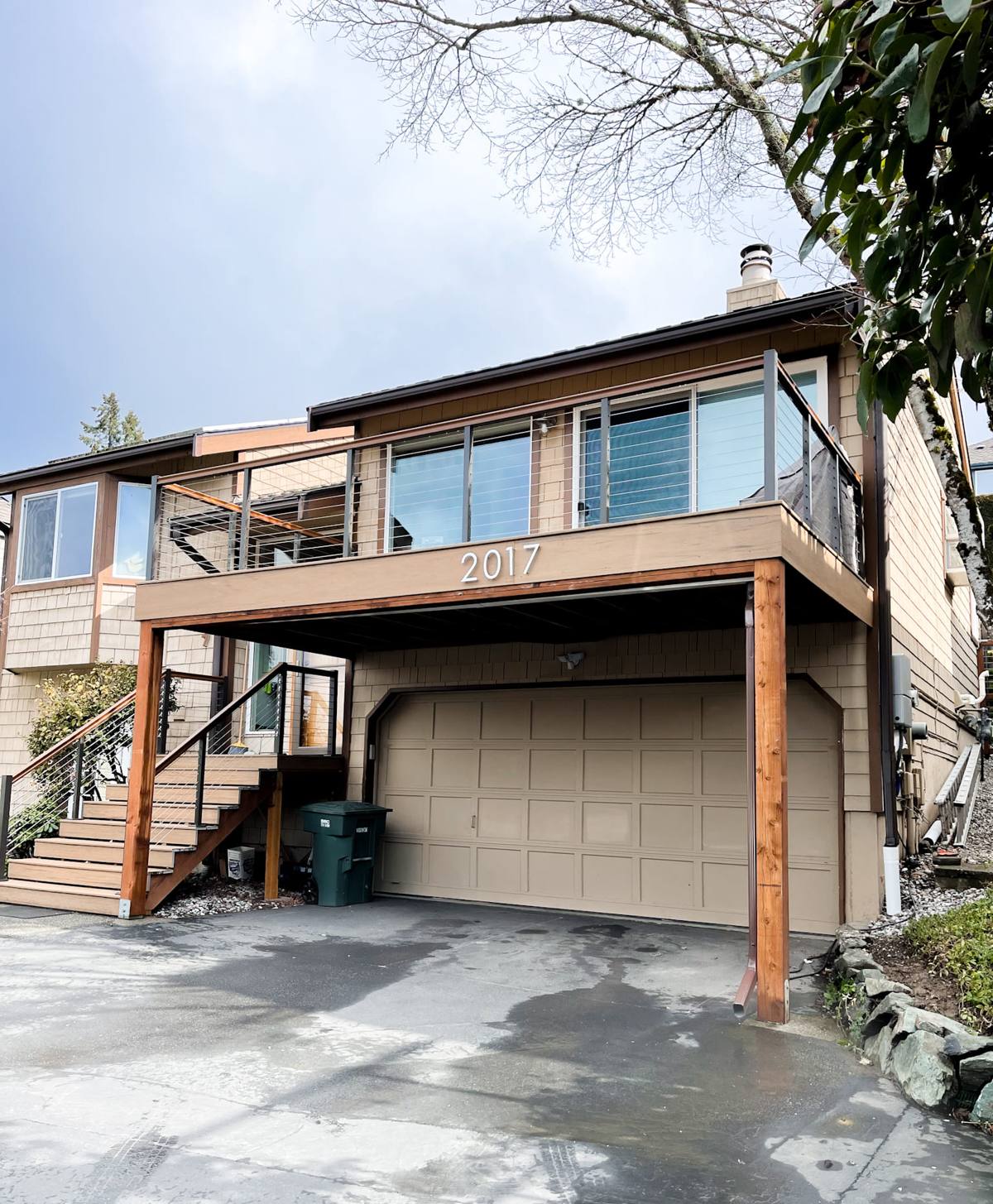
Signs Your Deck Has Reached the End of Its Useful Life
Not every problem deck needs full replacement, but there's a point where patching stops making sense. Watch for these signs:
- Soft, spongy, or springy spots in the decking or framing underfoot
- Rot or dark staining where the deck attaches to the house (the ledger board)
- Rust streaks bleeding from fastener heads or hardware
- Boards that have cupped, split, or pulled away from their fasteners
- Persistent moss or algae that returns within weeks of cleaning
- Noticeable bounce, sway, or movement when the deck is loaded with people or furniture
- Gaps or daylight visible at the flashing where the deck meets the siding
A single soft board can often be repaired. Rot at the ledger, sagging framing, or corroded structural hardware usually can't — those point to a problem with the whole system, and patching around them just delays a bigger failure.
What a Correct Deck Replacement Actually Involves
Foundation and Framing
Posts, footings, and beams need to be sized and spaced for the actual load and span of the deck, not just whatever was there before. In a wet climate, footing depth and drainage around posts matter as much as the size of the lumber — standing water at the base of a post is one of the fastest ways to shorten a deck's life.
Ledger Board and Flashing
This is the single most important — and most commonly rushed — part of any deck replacement. The ledger board bolts the deck to the house, and if the flashing behind and above it isn't done correctly, water works its way into the rim joist and wall framing over time. By the time it's visible from outside, there's often already hidden rot. A correct ledger detail uses proper flashing, spacing for airflow, and fasteners rated for exterior, moisture-exposed use.
Decking Material and Fastening
Whether you choose wood or a composite/PVC product, how it's fastened matters. Hidden fastener systems reduce standing water on the deck surface and eliminate the exposed screw heads that are usually the first thing to rust and stain a deck. Board spacing also needs to account for our climate — too tight and the deck won't drain or dry between rains; too loose and it looks unfinished and collects debris.
Railings and Stairs
Code requirements aside, railing and stair hardware take direct weather exposure and a lot of contact from hands and feet. Corrosion-resistant hardware here isn't optional — it's the difference between railings that are solid in ten years and ones that are wobbly in three.
Choosing Decking Material for a Point Roberts Property
There's no single right answer — it depends on your budget, how much upkeep you want to do, and how exposed the deck is to sun, shade, and salt air. Here's an honest comparison of the main options:
| Material | Moisture/Moss Resistance | Maintenance | Typical Lifespan | Relative Cost |
|---|---|---|---|---|
| Pressure-treated wood | Fair — needs sealing to perform well | Annual cleaning and periodic re-staining/sealing | 10–15 years | Lowest upfront |
| Cedar | Good natural resistance, but still needs sealing near the coast | Regular cleaning and refinishing to prevent graying and moss | 15–20 years | Moderate |
| Composite (capped) | Very good — resists moisture absorption and moss growth better than wood | Occasional washing; no staining or sealing | 25–30 years | Higher upfront |
| PVC | Excellent — essentially non-porous | Lowest maintenance of the group | 25–30+ years | Highest upfront |
Composite and PVC products cost more to install but ask less of the homeowner over the life of the deck — an honest trade-off, not a marketing claim. In a climate with this much rain and moss pressure, that lower-maintenance profile often pays for itself in saved weekends and avoided repairs. Wood is still a reasonable choice for homeowners who want that specific look and are committed to the upkeep it requires.
Our Deck Replacement Process
- On-site assessment — we look at the existing deck, the ledger connection, framing condition, and drainage around the site, not just the visible boards.
- Structural evaluation — footings, posts, and framing are checked against current load and code requirements for the size and use of the deck.
- Material and design selection — we walk through the material comparison above based on your budget, sun/shade exposure, and maintenance preference.
- Permitting — we handle the paperwork and coordination required for the project.
- Demolition and disposal — the old deck comes out, and we check the framing and ledger area underneath for hidden damage before rebuilding.
- Framing, ledger, and flashing — this is where the long-term durability of the deck is actually determined.
- Decking, railing, and stairs installed — with fasteners and hardware selected for coastal exposure.
- Final walkthrough — we go over the finished deck with you, including basic care and what to watch for over the seasons ahead.
Building in an Exclave: Local Logistics That Affect Your Project
Point Roberts is a U.S. exclave — land access runs through Canada, and that geography has real, practical effects on a construction project that homeowners elsewhere in Whatcom County never have to think about. Material deliveries, crew scheduling, and coordination all need to account for the border crossing, not as an afterthought but as part of how the job is planned from day one.
Contractors who don't regularly work in Point Roberts often underestimate this. Materials get ordered without accounting for crossing logistics, schedules slip, and jobs that should take a set number of days stretch out because nobody planned for the realities of getting people and lumber onto the peninsula reliably. A crew that already works this community builds that logistics planning into the estimate up front, so it doesn't turn into delays or surprise costs once the job has started.
Keeping a New Deck Ahead of the Moss Season
A well-built deck still needs some seasonal attention in this climate. The good news is that most of it is simple and doesn't take much time if you stay ahead of it rather than catching up after moss or rot has already set in.
- Keep gutters and downspouts directing water away from the deck, not onto it
- Clear leaves and debris from between boards before they trap moisture
- Wash the surface periodically to keep moss and algae from establishing, especially in shaded areas
- Avoid high-pressure washing directly on wood grain, which can strip fibers and open the surface to more moisture absorption
- Check railings, stair connections, and visible fasteners once a year for rust or looseness
- For wood decks, plan on re-sealing or re-staining on a regular cycle rather than waiting until it visibly grays
What to Ask Before Hiring a Deck Contractor Here
A deck replacement is a structural project attached to your house — it deserves the same scrutiny you'd give any contractor working on your home's envelope. Before signing anything, it's worth asking:
- Are you licensed, bonded, and insured to do this work in Washington?
- Will you handle the permitting, or is that left to me?
- Can I get the scope of work and materials in writing, including the specific decking and hardware being used?
- What's the warranty on the work, separate from the manufacturer's warranty on materials?
- How will you detail the ledger and flashing where the deck meets the house?
- What fastener and hardware grade are you using, given the salt air here?
- How do you plan for material delivery and scheduling given Point Roberts's access?
A contractor who answers these clearly, without hedging, is one who's done this kind of project before — ideally in this exact climate and community.
Why Local Experience in Point Roberts Matters
A deck is only as good as the details nobody sees once it's finished: the flashing behind the ledger, the fastener grade, the footing drainage. Those details need to be right for the actual conditions the deck will face — not a generic spec written for a drier, calmer climate. A crew that already works in Point Roberts has already worked through the access and scheduling logistics, already knows how salt air and moss season treat different materials and hardware, and builds accordingly from the first estimate rather than learning it partway through the job.
If your deck is showing its age, or you're planning ahead before the next wet season sets in, we're happy to take a look and talk through honest options for your property. Reach out for a free, no-pressure estimate using the form below.