 Semiahmoo Siding
 Why Peace Arch Windows Wear Out Differently
Homes near the Peace Arch border area sit close enough to the water that salt air, wind-driven rain, and long stretches of damp, shaded weather all work on a window at the same time. It's not one thing that fails a window here — it's the combination. Salt-laden air corrodes hardware and finishes faster than it would a few miles inland. Driving rain off the Strait finds every weak seal and pushes water sideways, not just down. And a moss season that can stretch for months keeps trim, sills, and cladding damp longer than most window products are designed to tolerate.
We work on homes throughout Semiahmoo and the surrounding Whatcom County area, and the Peace Arch neighborhood consistently shows the same failure pattern: windows that looked fine from the street but had already let moisture into the framing behind them. Replacing a window here isn't just a swap-and-caulk job. It's an opportunity to fix the water management around the opening so the next set of windows lasts as long as it should.
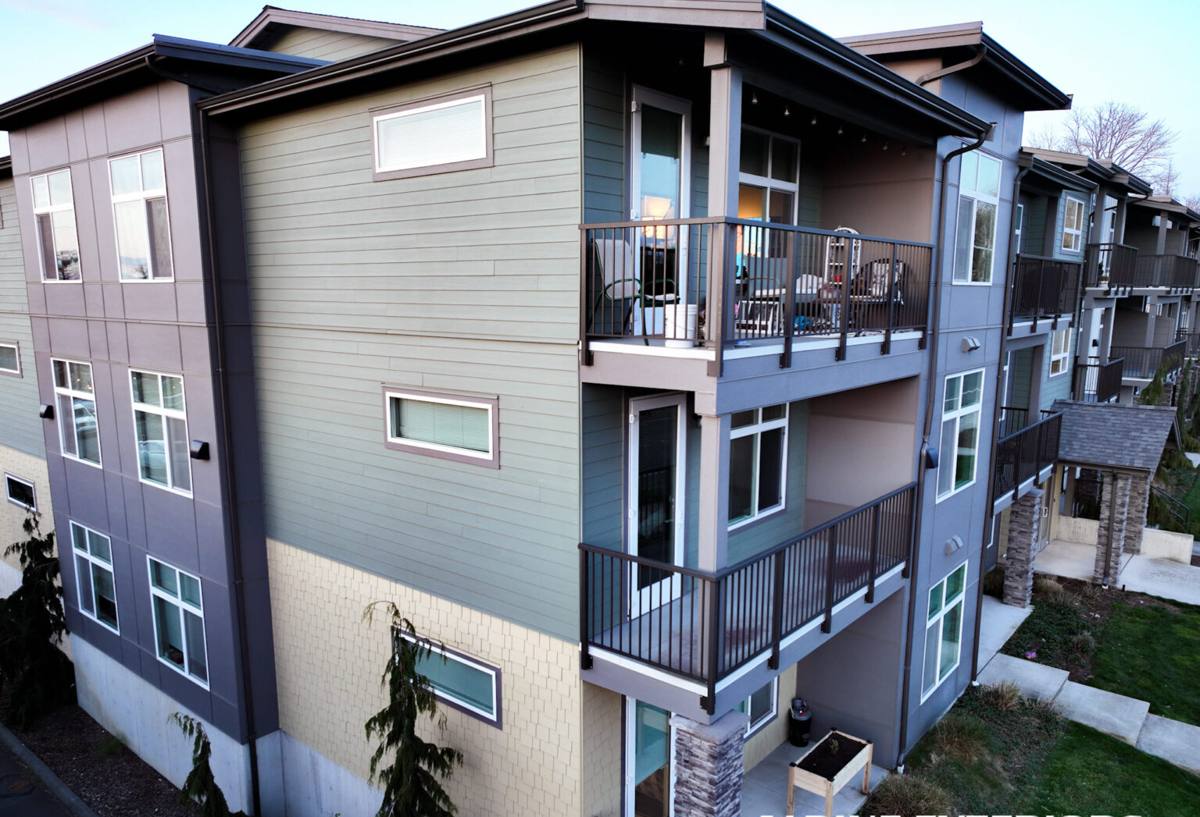
The Regional Climate Factors That Actually Matter
Salt Air and Hardware Corrosion
Salt in the air settles on everything, including window hardware, screen frames, and exposed fasteners. Cheaper hardware pits and seizes years before the glass or frame shows any wear. This is one of the first things we check on an older Peace Arch window — hardware that's stiff, corroded, or won't lock cleanly is often a better indicator of overall window health than the visible finish.
Driving Rain and Wind-Loaded Water
Rain that comes in sideways off open water doesn't behave like rain falling straight down. It gets pushed up under sills and into any gap in flashing or sealant that a calmer climate could get away with ignoring. A window that's watertight in a light drizzle can still leak during a windy winter storm if the flashing detail underneath it was never built for wind-loaded water in the first place.
Moss Season and Sustained Moisture
Long stretches of overcast, damp weather keep wood trim, sills, and shaded wall sections wet for days at a time. Moss and algae growth on nearby siding and roofing is a visible sign of that moisture load — and the same conditions that grow moss on a roof edge are slowly working on any wood window components or unsealed gaps nearby.
Signs Your Windows Are Losing the Battle
- Hardware that's stiff, corroded, or hard to lock
- Fogging or a permanent haze between the panes (a failed seal on double-pane glass)
- Soft or discolored trim and sills, especially on the side facing prevailing wind and rain
- Drafts you can feel near the frame even with the window fully latched
- Paint or finish that's bubbling, peeling, or chalking faster than the rest of the house
- Visible gaps in exterior caulking or sealant around the window perimeter
- Moss or dark staining building up on the sill or trim below the window
What a Correct Window Replacement Job Actually Involves
Removal and Inspection
Every job starts with pulling the old window and actually looking at what's behind it. This is the step that gets skipped by crews trying to move fast, and it's the one that matters most in this climate. Rot in the framing, moisture-damaged sheathing, or missing flashing won't fix itself just because a new window goes in on top of it.
Flashing and Water Management
This is the part of the job that decides whether the replacement lasts 5 years or 25. Proper flashing directs any water that gets past the window itself back out, away from the framing — it does not rely on caulk alone to keep the house dry. Given how much wind-driven rain this area sees, we treat flashing detail as non-negotiable, not an upsell.
Installation and Shimming
A window that's not shimmed and leveled correctly will operate poorly and stress its own seals over time, which shortens its life regardless of how good the product is. Square, plumb, and properly supported installation is what lets the manufacturer's warranty actually mean something.
Sealing and Exterior Finish
Interior and exterior sealant both matter, but the exterior bead is what stands between the house and salt-laden, wind-driven rain. We use sealants and finishing methods suited to a marine climate rather than whatever happens to be fastest to apply.
Choosing the Right Window for a Salt Air, High-Rain Climate
There's no single "best" window for every home, but some choices hold up better than others given what this area's weather does over time.
| Frame Material | How It Handles This Climate | Maintenance |
|---|---|---|
| Vinyl | Good moisture resistance, won't rot or corrode; performance depends heavily on installation quality | Low — occasional cleaning |
| Fiberglass | Very stable in temperature and moisture swings; holds up well to sustained damp conditions | Low |
| Wood / Wood-Clad | Can look excellent but the wood core is vulnerable in long damp seasons if cladding or seals fail | Higher — needs monitoring and upkeep |
| Aluminum | Durable but conducts cold and can be prone to condensation without thermal breaks | Moderate |
For most Peace Arch homes we lean toward vinyl or fiberglass frames for the balance of moisture resistance and low upkeep, but the right call depends on the home's style, budget, and how exposed a given wall is to prevailing wind and rain. We'll walk through the honest trade-offs for your specific house rather than pushing one product line.
Glass and Seal Details Worth Understanding
The frame gets most of the attention, but the glass unit itself does a lot of the work in this climate. Dual-pane glass with a quality low-E coating and a warm-edge spacer resists condensation better than older single-pane or basic dual-pane units, which matters when a house sits in damp air for months at a time. Triple-pane glass adds further insulation and sound dampening, which some homeowners near busier roads or open water find worthwhile, though it adds weight and cost. Whatever glass package you choose, the seal around the edge of the glass unit is the part that fails first in a marine climate — it's worth asking any contractor directly what warranty covers seal failure, since that's the most common long-term issue with replacement windows here.
Our Process for Peace Arch Homeowners
- On-site assessment — we look at current window condition, framing, and any signs of moisture damage before recommending anything
- Honest product recommendation — based on your home's exposure to wind and rain, not a one-size-fits-all package
- Written estimate — clear pricing with no surprise add-ons once work begins
- Careful removal and inspection — checking framing condition before installing anything new
- Proper flashing and installation — built for wind-driven rain, not just a dry-day standard
- Final sealing and walkthrough — confirming operation, fit, and finish before we consider the job done
What Affects the Cost of a Window Replacement Here
| Factor | Why It Affects Cost |
|---|---|
| Number and size of windows | More openings and larger units mean more material and labor |
| Frame material chosen | Vinyl, fiberglass, and wood-clad options carry different material costs |
| Condition of existing framing | Rot or water damage found during removal adds repair work before installation |
| Wall exposure | Walls facing prevailing wind and rain often need more careful flashing detail |
| Glass package | Dual-pane, upgraded low-E coatings, or triple-pane options change the price per unit |
We don't quote broad averages for a job before seeing the house — actual costs vary too much based on the factors above. What we can say honestly is that a correct installation, including proper flashing, generally costs more up front than a bare-minimum swap, but it's the difference that determines whether the job needs redoing in ten years or thirty.
Why Local Experience Matters for This Job
A crew that's worked on homes throughout Semiahmoo and the Peace Arch area already knows how this specific stretch of weather behaves — which walls tend to take the worst of the wind-driven rain, how fast moss and moisture build up on shaded trim, and which installation shortcuts show up as problems within a few winters. That's not something you can read off a spec sheet. It comes from having done the work here, seen what fails, and adjusted the process accordingly.
If your windows are showing their age, or you just want a straight answer about whether they're worth replacing yet, we're happy to take a look. The estimate is free, there's no pressure, and you'll get a clear explanation of what we find — use the form below to get started.