 Semiahmoo Siding
 Building New in the Peace Arch Area Means Building for the Water
If you're framing a new home in the Peace Arch area, you already know this isn't a generic building site. Homes here sit close to Semiahmoo Bay and the Salish Sea, exposed to marine air, wind-driven rain, and long stretches of gray, damp weather that don't let up for months. New-construction windows are one of the few building components that have to perform against all of that from day one, with no history of settling, no prior owner's fixes to inherit, and no second chances once the siding and trim go on around them.
That's the opportunity and the risk of new construction. Done right, the window openings in a new build can be sealed, flashed, and integrated with the water-resistive barrier better than almost any retrofit ever could be. Done wrong — even with a good window — you get the same moisture problems that plague older homes in this part of Whatcom County, just baked in from the start.
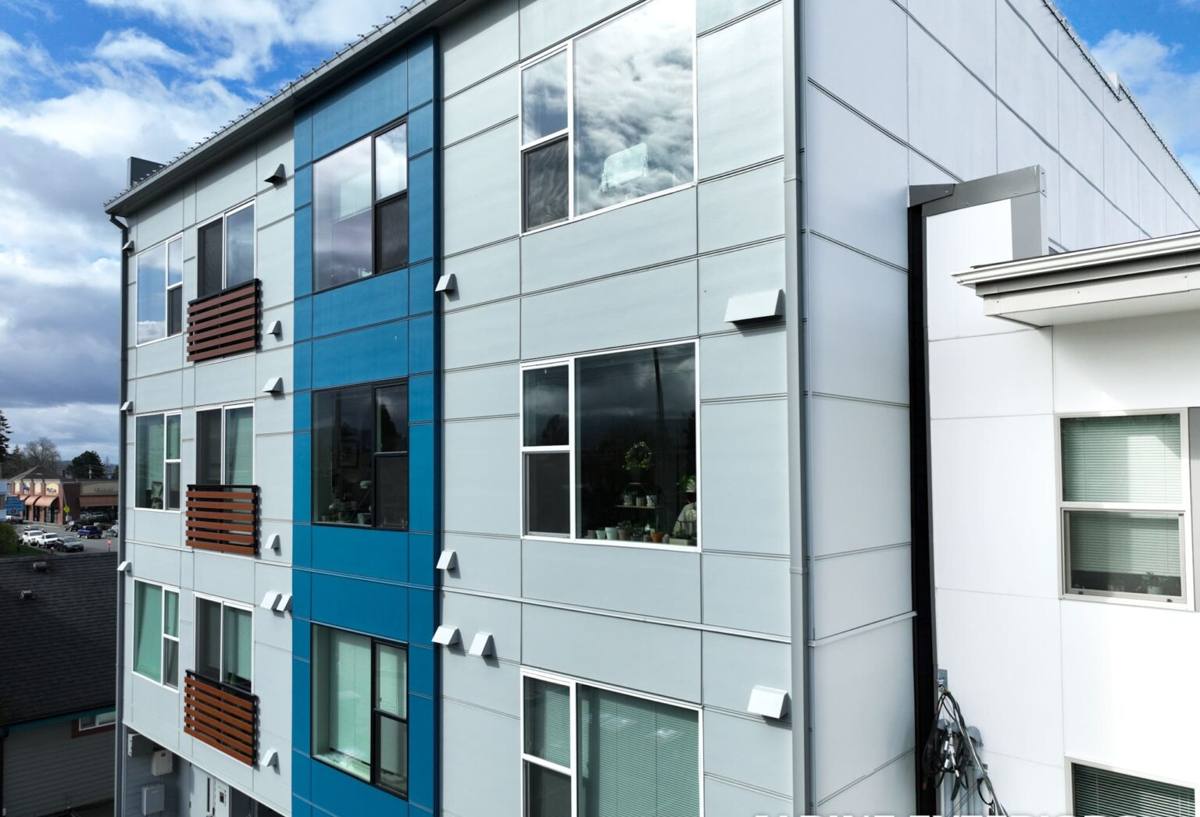
What Coastal Whatcom County Actually Does to a Window Opening
Salt Air
Airborne salt off the bay accelerates corrosion on anything metal that isn't properly rated for it — fasteners, hardware, flashing tape adhesives, and lower-grade aluminum components all age faster here than they would twenty or thirty miles inland. It's not dramatic, it's slow, and that's what makes it easy to overlook during construction.
Driving Rain
Wind off the water doesn't just drop rain straight down — it pushes it sideways and up under trim, sills, and any gap in the weather barrier. A window opening that would be fine in a sheltered inland lot can leak here if the flashing sequence isn't built to shed water outward at every layer, not just at the surface.
Moss and Prolonged Dampness
Long moss seasons mean extended periods where exterior surfaces near windows simply stay wet — on north-facing walls, under roof overhangs, and anywhere airflow is limited. Sills, trim, and cladding around the window opening need to be able to shed and dry, not just repel water once.
New Construction vs. Replacement: Why the Job Isn't the Same
A lot of window marketing lumps "replacement" and "new construction" together, but they're different jobs with different failure points.
- Replacement windows go into an existing, already-clad opening. The surrounding wall assembly is fixed, and the installer has to work with what's there.
- New-construction windows have a nailing flange and go in before the siding, over a wall that's still open — meaning the flashing, the weather-resistive barrier, and the window itself all get integrated as one continuous water-management system.
That means new construction gives you a real chance to build the envelope correctly, but it also means every shortcut taken during framing and rough-in becomes permanent the moment the siding closes over it. There's no "we'll deal with it later" in new construction — later is after the wall is finished.
Where New-Construction Window Jobs Actually Go Wrong
Almost every window leak we're called out to diagnose in older homes traces back to one of a handful of installation shortcuts — not the window itself failing. On a coastal site like this, those shortcuts cause problems faster.
Sill Pan and Back Dam
Every rough opening should get a sloped sill pan with a back dam, so any water that gets past the window drains back outside instead of pooling against the framing. Skipping this is the single most common cause of hidden rot around new-construction windows, and it's invisible once the trim goes on.
Flashing Sequence
Flashing tape and building paper or house wrap have to be layered like shingles — each piece lapping over the one below it — so water is always directed outward and down, never into a seam. On a wall exposed to driving rain, a reversed lap or a gap at a corner is exactly where water finds its way in.
Fastener and Hardware Corrosion Resistance
Standard fasteners and trim hardware corrode faster in salt-laden air. Corrosion-resistant fasteners and compatible flashing materials cost a little more up front and prevent staining, loosening, and premature failure later.
Sealant Compatibility
Not every sealant bonds well with every flashing tape or window frame material. Using mismatched products is a common reason perimeter seals fail years before they should, especially with the amount of expansion and contraction that comes from big temperature swings between damp winters and warm, dry summer stretches.
Choosing the Right Frame Material for a Peace Arch Build
There's no single "best" window frame — the right choice depends on exposure, budget, and how much maintenance you want to take on. Here's how the common options compare for a home exposed to salt air and heavy rain:
| Frame Material | Moisture/Salt Air Performance | Maintenance | Typical Cost Tier |
|---|---|---|---|
| Vinyl | Good — won't corrode or rot; UV-stable formulations hold up well | Low | Lower to mid |
| Fiberglass | Excellent — very stable in wet, salty, temperature-swinging conditions | Low | Mid to higher |
| Aluminum-clad wood | Good exterior protection, but wood core needs sound flashing to avoid interior moisture issues | Moderate | Higher |
| Bare wood | Weakest in this climate without diligent upkeep and repainting | High | Varies |
| Aluminum (uninsulated) | Prone to condensation and, over time, corrosion near salt air unless properly rated | Moderate | Lower to mid |
For most new builds in this area, we steer clients toward vinyl or fiberglass frames precisely because they don't give salt air or standing moisture anything to work on. If you want the look of wood on the interior with better exterior durability, a clad option can work — but it raises the importance of getting the flashing right, since any leak has a wood substrate to damage.
Glass and Glazing Choices
Glass matters as much as the frame. In this climate, we typically recommend:
- Dual-pane or triple-pane glazing with argon fill for better thermal performance during long damp winters
- Low-E coatings tuned for the Pacific Northwest — good solar heat retention without excessive summer glare
- Warm-edge spacers to reduce condensation risk at the glass edge, which is more noticeable in consistently humid conditions
- Impact-rated or laminated glass in exposed elevations if wind-driven debris is a concern for your specific lot
Meeting Code Without Cutting It Close
Whatcom County follows Washington State's energy and building codes, which set minimum requirements for window U-factor (insulating performance) and, in many cases, egress size and operation for bedrooms. On a new build, this isn't optional paperwork — it affects which products qualify and how the whole envelope's energy calculations pencil out. We build window specs around the code requirements for your specific project up front, rather than discovering a mismatch at inspection.
Our New-Construction Window Process
Whether we're working directly with your general contractor or you've brought us in as the window and siding trade for the build, our process stays the same:
- Plan review: We check window schedules against the elevations and framing plan before anything is ordered, catching sizing or swing-direction mismatches early.
- Rough opening verification: We confirm openings are square, level, and sized correctly before installation day — small framing errors are far cheaper to fix now than after cladding.
- Sill pan and flashing installation: Sloped sill pans, back dams, and a shingle-lapped flashing sequence tied into the weather-resistive barrier, matched to this site's rain exposure.
- Window setting and fastening: Units are set plumb, level, and square, shimmed correctly, and fastened with corrosion-resistant hardware sized for coastal exposure.
- Air sealing and insulation: Gaps around the frame are sealed and insulated properly — not overpacked, which can bow frames, and not skipped, which leaves drafts and condensation paths.
- Exterior trim and integration with siding: Flashing and trim details are finished so the window becomes part of a continuous water-shedding wall system, not a separate component siding gets built around.
- Final inspection and documentation: We walk every opening before siding closes it up, since this is the last point where problems are cheap to fix.
Checklist: What to Confirm Before Your Windows Go In
- Rough openings are framed square and to the correct dimensions for the ordered units
- Sill pans with a back dam are specified for every opening, not just the most exposed walls
- Flashing tape and house wrap or building paper are compatible products, installed shingle-style
- Fasteners and exterior hardware are rated for coastal/salt-air exposure
- Glazing package meets or exceeds Washington State energy code for your climate zone
- Egress-required openings meet size and operation requirements before drywall goes up
- Sealants used are compatible with both the flashing tape and the window frame material
- A clear plan exists for how the window flashing ties into the siding water-management system
Why It Matters That We Already Work This Area
A lot of window problems in coastal Whatcom County homes aren't caused by bad products — they're caused by installers applying an inland approach to a marine-exposed wall. Flashing sequences, sealant choices, and fastener specs that are perfectly fine in a drier, more sheltered location aren't automatically fine a few hundred feet from Semiahmoo Bay. Crews who work this area regularly build in the extra margin for salt air and driving rain as a matter of habit, not as an afterthought when something starts leaking three years later.
We also work directly with builders and general contractors, which matters on a new-construction schedule — window delivery timing, rough opening tolerances, and sequencing with siding and trim all need to be coordinated so the job doesn't stall or get rushed at the one stage where rushing causes long-term damage.
Get a Straight Answer on Your Window Plan
If you're framing a new home or addition in the Peace Arch area and want a second set of eyes on the window schedule, flashing plan, or frame material choice, we're happy to take a look. We'll give you an honest read on what your specific site and exposure call for — no pressure, no upsell — along with a free estimate for the work. The form below is the fastest way to get that conversation started.