 Semiahmoo Siding
 Decks in Peace Arch Take a Different Kind of Beating
Peace Arch sits close enough to Semiahmoo Bay and the international border that homes here deal with a climate most inland deck builders never plan for. Salt-laden air moves in off the water and settles on everything, driving rain comes in at an angle instead of straight down, and the moss season runs long — often eight months or more of damp, low-light conditions that give algae and moss every advantage. A deck built to a generic spec sheet will show its age fast here. One built for this specific stretch of Whatcom County coastline won't.
This page covers what a custom deck actually needs to hold up in Peace Arch, what a correct build looks like from the footings up, and how our process works for homeowners in this neighborhood specifically.
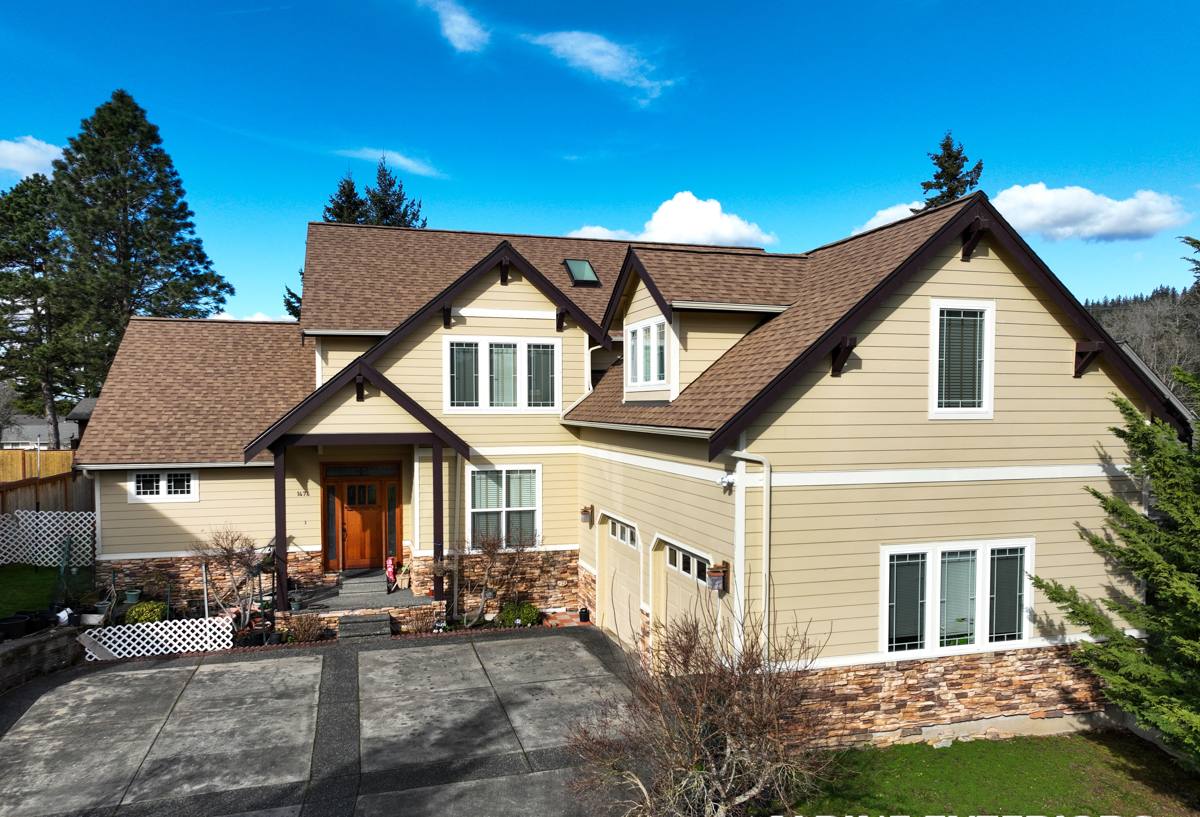
What Salt Air, Rain, and Moss Actually Do to a Deck
Each of these three factors attacks a deck differently, and a builder who only accounts for one of them leaves the other two to do their damage over time.
Salt Air
Airborne salt is corrosive to bare or poorly coated metal. Fasteners, joist hangers, and structural screws that aren't rated for coastal exposure can start rusting from the inside of the wood out — long before any surface rust is visible. By the time a homeowner sees staining or a loose board, the hardware underneath may already be compromised.
Driving Rain
Wind-driven rain doesn't just fall on a deck — it gets pushed sideways into ledger connections, under railings, and into any gap where end grain is exposed. Water that can't shed or drain quickly sits in joints and fastener holes, which is where rot actually starts.
Long Moss Season
Moss and algae need moisture, shade, and time — and Peace Arch's climate hands them all three for most of the year. Moss on a deck surface isn't just cosmetic; it holds moisture against the wood or composite surface and makes boards slick and dangerous underfoot, especially on stairs.
Choosing a Decking Material for This Neighborhood
There's no single "best" decking material — every option is a trade-off between upfront cost, maintenance, and how it holds up in salt air and constant damp. Here's how the common choices actually compare for a Peace Arch property.
| Material | Salt Air / Moisture Resistance | Maintenance | Typical Lifespan |
|---|---|---|---|
| Pressure-treated lumber | Good if properly sealed and re-coated; fasteners must be coastal-rated | Annual cleaning and re-sealing recommended | 15-20 years with upkeep |
| Western red cedar | Naturally rot- and insect-resistant, but needs finish maintenance in damp climates | Regular cleaning, periodic oil or sealer | 15-25 years with upkeep |
| Capped composite | Very good — resists moisture absorption and doesn't need sealing | Periodic washing to keep moss/algae from taking hold | 25-30+ years, manufacturer-dependent |
| PVC decking | Excellent — no wood fiber to absorb moisture | Lowest — occasional washing | 25-30+ years, manufacturer-dependent |
Wood decking isn't the wrong choice — plenty of Peace Arch homeowners want the look and are willing to keep up with sealing. Our job is to be honest about what each material asks of you afterward, not just what it costs going in.
Fasteners and Hardware Matter as Much as the Decking
We use stainless steel or coastal-rated coated fasteners and connectors on every deck we build here, regardless of what decking material sits on top. This is a place where cutting a corner on hardware doesn't save real money — a few dollars in fastener upgrades protects thousands of dollars in structure.
What a Correctly Built Deck Involves
A deck that holds up in this climate isn't about one clever trick — it's about getting a handful of ordinary details right, every time, instead of skipping the ones nobody sees once the boards are down.
- Footings set to the depth and bearing required by local code, not just "deep enough to look right"
- Ledger board properly flashed and separated from the house's rim board so water can't track behind the siding
- Joist tape or an equivalent moisture barrier on top of every joist before decking goes down
- Stainless or coastal-rated fasteners and structural connectors throughout, not just at visible points
- Consistent board gapping for drainage and airflow underneath
- Decking run in a layout that sheds wind-driven rain rather than channeling it toward the house
- Guardrails and stair connections built to code height and load requirements
- A finish or maintenance plan appropriate to the material chosen
Skip any one of these and the deck may still look fine for a year or two. The failures this climate causes are almost always underneath — at the ledger, the footings, or the fasteners — which is exactly why they're easy for a rushed builder to miss and expensive for a homeowner to discover later.
Ledger Flashing: The Detail That Protects the House, Not Just the Deck
Because we're a siding company as much as a deck builder, we pay particular attention to how a deck ties into the house itself. The ledger board connection is where a poorly built deck can quietly cause water damage to the siding, sheathing, and framing behind it — sometimes for years before it's visible from outside. Correct flashing at this joint, integrated with the existing siding rather than just caulked over it, is one of the most important things a deck builder does and one of the easiest things to get wrong.
Layout and Drainage: Designing for This Climate, Not Just This Yard
Beyond material and hardware choices, how a deck is laid out affects how well it handles driving rain. We look at which direction weather typically comes from on a given property, how the deck surface will shed water away from the house foundation, and whether low spots or tight corners will collect standing water or debris that holds moisture. None of this is exotic — it's standard deck-building practice — but it only works if it's actually applied to the specific lot, not copied from a generic plan.
Our Process for a Peace Arch Deck Project
- On-site assessment. We look at the existing structure (if there is one), the ledger connection point, drainage patterns, and sun/shade exposure that will affect moss growth.
- Material and design discussion. We walk through the honest trade-offs between wood and composite/PVC options for your specific goals and budget — no upsell, no exaggeration either direction.
- Permit and code review. We handle the permitting process with the local jurisdiction so footings, guardrails, and structural spans meet current code.
- Build. Framing, flashing, and fastening done to the standard above — not the minimum that would pass a quick inspection.
- Walkthrough. We go over basic care for whatever material you chose, including what to expect during moss season.
Maintenance: Staying Ahead of Moss Season
Every deck material in Peace Arch benefits from the same basic habit: don't let organic debris and moisture sit on the surface through the wet months. A few practical points:
- Sweep leaves and needles off the deck regularly in fall — trapped debris holds moisture against the surface
- Wash the deck surface at least once a year, ideally before moss season sets in, to remove early algae growth before it takes hold
- Check stair treads and shaded areas more often — they hold moisture longest and get slick first
- Keep gutters and downspouts near the deck clear so runoff isn't draining directly onto it
- Re-seal wood decking on the manufacturer's or installer's recommended schedule rather than waiting until it visibly needs it
Why It Matters to Hire a Crew That Already Works This Area
A deck builder who mostly works drier inland areas will still build a structurally sound deck — but they may not default to coastal-rated fasteners, extra ledger flashing, or a layout that accounts for driving rain, because those aren't things their usual jobs demand. A crew that regularly works Semiahmoo and the surrounding Whatcom County coastline builds those decisions in from the start, because we've seen what happens on the decks that skip them. That's not a marketing point — it's the practical difference between a deck that needs real repair work in eight years and one that just needs normal upkeep.
Get a Straight Answer for Your Property
Every lot in Peace Arch faces a slightly different mix of sun, shade, wind, and rain exposure, and the right deck build reflects that rather than a one-size answer. If you're planning a new deck or replacing one that's showing its age, we're happy to come take a look and give you a straightforward, no-pressure estimate — including an honest read on which materials make sense for your specific spot and budget. Use the form below to get started.