 Semiahmoo Siding
 Board & Batten Siding Built for the Peace Arch Area
Board and batten is one of the most requested siding styles we install around Peace Arch, and for good reason. The vertical lines read clean against both older Whatcom County homes and newer builds going up near the border, and the style holds up visually in a way that flat lap siding sometimes doesn't on taller wall sections or gable ends. But board and batten is also less forgiving than standard lap siding if it's installed wrong — the vertical boards and the battens covering each seam create more joints, more fastener penetrations, and more places for water to find its way behind the wall if the details aren't right. In a climate like this one, that margin for error matters more than it would somewhere dry.
This page is specifically about board and batten siding for homes in the Peace Arch area near Semiahmoo — what the local climate does to this style of siding over time, what a correct installation actually involves, and why we think a crew that already works this specific area is worth choosing over a contractor who's never dealt with what your walls face here.
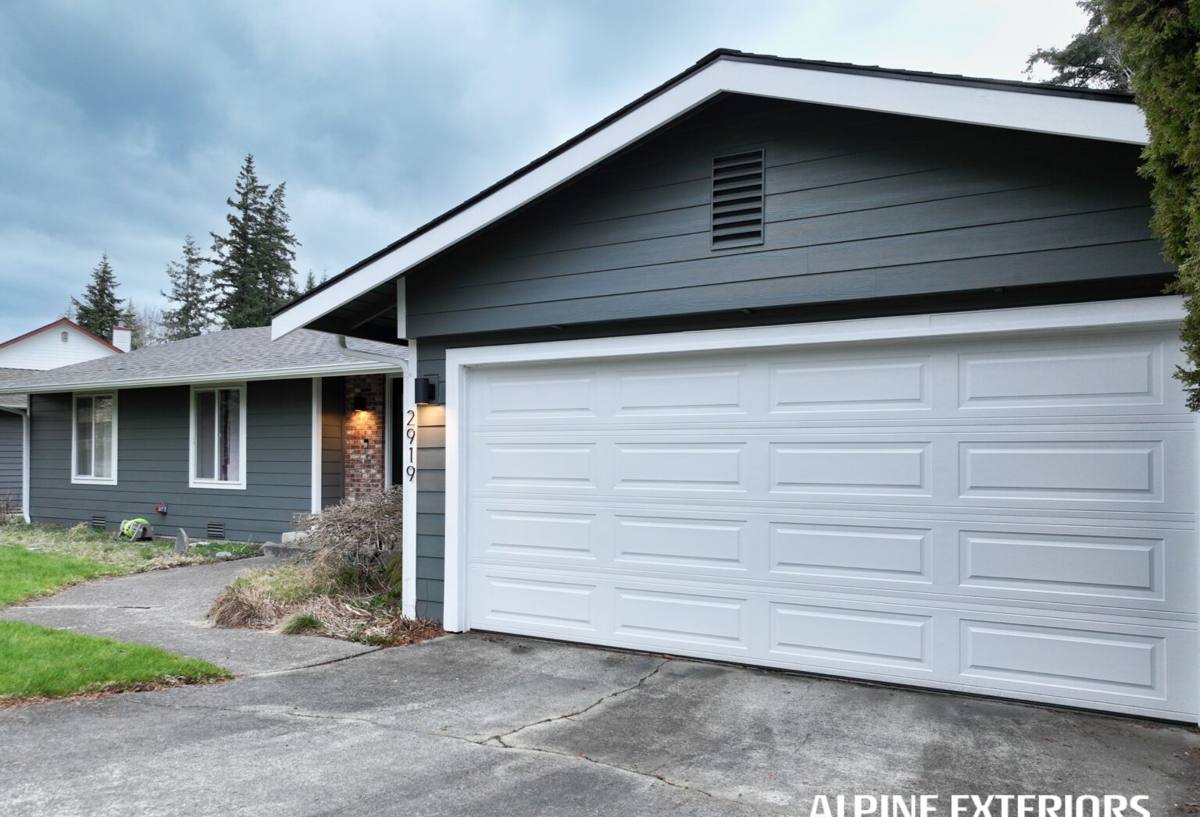
What Salt Air, Driving Rain, and Moss Season Do to Vertical Siding
Homes close to Semiahmoo Bay deal with a combination of conditions that inland Whatcom County properties don't see at the same intensity. Salt-laden air moving off the water accelerates corrosion on fasteners, flashing, and any metal trim components. Driving rain off the Strait pushes moisture sideways into wall assemblies during winter storms, rather than just falling straight down — that matters enormously for board and batten, because the vertical battens create horizontal ledges and seams that catch wind-driven water in a way lap siding's overlapping design doesn't.
Then there's moss. The Pacific Northwest's long, mild, wet stretch from fall through spring gives moss and algae months of ideal growing conditions, and board and batten's vertical grooves and shaded batten strips are exactly the kind of surface moss likes to colonize — especially on north- and east-facing walls that don't get much direct sun to dry out between storms. None of this means board and batten is a bad choice here. It means the installation has to account for these three things specifically, not just follow a generic install manual written for a drier climate.
Why This Isn't Just a "Coastal" Problem
A lot of siding guidance treats "coastal exposure" as one category, but Semiahmoo's position on the water combined with Whatcom County's rainfall totals is a specific combination — salt exposure plus sustained wet-season humidity, not the drier salt exposure you'd get further south. That combination is why we pay close attention to both fastener material and drainage behind the siding, not just the visible finish.
What a Correct Board and Batten Installation Involves
Board and batten looks simple from the street — wide boards, narrow battens over the seams — but the assembly behind it is what determines whether it lasts fifteen years or fifty in this climate. The core elements we won't skip:
- A drainage gap (rainscreen) behind the siding so any moisture that does get past the battens has somewhere to go and can dry out, instead of sitting against the wall sheathing.
- A continuous water-resistive barrier installed and lapped correctly before a single board goes up, with flashing integrated at every window, door, and roofline intersection.
- Corrosion-resistant fasteners rated for the exposure — this is non-negotiable near the bay, where standard fasteners can start showing rust streaks through the finish within a few years.
- Correct batten spacing and fastening pattern so the battens actually shed water off their edges rather than trapping it against the board beneath.
- Proper joint and butt-seam treatment at board ends, since a poorly sealed horizontal joint is one of the most common failure points on vertical siding.
- Factory-applied finish on the boards themselves, since field-painted cut edges and touch-ups are where moss and moisture problems tend to start first.
Skip any one of these and the siding can still look fine for a year or two — the problems that show up from driving rain and moss exposure are slow, and they usually show up behind the wall before they show up on the surface.
Why We Only Install James Hardie for This
We install James Hardie fiber cement exclusively, and board and batten is one of the clearest cases where that decision matters. We don't install vinyl board and batten, LP SmartSide, Cemplank, Allura, or primed wood battens, and it's worth explaining why in the context of this specific climate rather than in the abstract.
Vinyl board and batten profiles are lightweight and can visibly warp or bow on longer wall runs when they go through repeated wet-dry and temperature swings — and the vertical battens make any waviness more noticeable than it would be on horizontal lap. Wood-based and primed composite battens are the pieces most exposed to standing moisture and the most likely to need re-caulking, re-painting, or replacement as they age in a climate this wet. James Hardie's HZ5 product line is engineered specifically for this kind of climate — freeze-thaw cycling, sustained moisture, and marine exposure — and the ColorPlus factory finish means the color and protective coating are baked on before the boards ever leave the plant, not applied on site where weather and workmanship can vary. It's also non-combustible, which matters increasingly to insurers and homeowners regardless of coastal location.
None of this is a knock on every other product across the board — vinyl and engineered wood have their place. It's that for board and batten specifically, in a location dealing with salt air, wind-driven rain, and a long moss season, we've found the trade-offs on the alternatives aren't ones we're willing to put our name behind.
How the Products Compare for This Specific Application
| Factor | James Hardie Fiber Cement | Vinyl Board & Batten | Primed Wood / Composite |
|---|---|---|---|
| Salt air / corrosion resistance | High — non-metallic board, factory finish | Moderate — trim fasteners still exposed | Low — fasteners and raw edges vulnerable |
| Wind-driven rain performance | Strong when rainscreen-installed to spec | Depends heavily on panel locking and gaps | Weak at joints without diligent maintenance |
| Moss / algae resistance on shaded walls | Good — dense, factory-sealed surface | Fair — can trap moisture behind panels | Poor — porous surfaces hold moisture |
| Dimensional stability (warping/bowing) | Very stable | Can warp on long runs or in heat/cold swings | Prone to swelling and cupping over time |
| Finish maintenance | Factory ColorPlus, long repaint interval | No repainting, but fades/chalks over time | Regular repainting/recaulking required |
Our Process for a Peace Arch Board and Batten Job
Every board and batten install we do near Semiahmoo starts with an honest look at the specific wall — orientation, existing moisture damage, roofline drainage, and how exposed the site is to prevailing wind and rain. From there:
- On-site assessment — we check for existing rot, inadequate flashing, or moisture trapped behind the current siding before pricing anything.
- Removal and sheathing check — old siding comes off and we inspect the sheathing underneath rather than assuming it's sound.
- Water-resistive barrier and flashing — installed and integrated at every penetration before any siding goes up.
- Rainscreen furring — creates the drainage gap behind the boards, sized correctly for the exposure.
- Board and batten installation — Hardie boards and battens fastened per manufacturer spec with corrosion-resistant fasteners, correct spacing, and sealed joints.
- Final inspection and walkthrough — we check fastener lines, caulking, and trim details before calling the job done.
Why a Crew That Already Works Peace Arch Matters
Board and batten installation quality depends a lot on judgment calls that a manual can't fully cover — how much drainage gap a particular wall needs given its sun exposure, where moss is likely to build up first, how a specific roofline is going to direct water onto a wall below it. A crew that's already worked houses in this immediate area has seen how these homes actually perform through a wet Whatcom County winter, not just how they look on installation day. That local pattern recognition — which walls get hit hardest by driving rain, which orientations need extra attention for moss — is the kind of thing that only comes from doing the work here repeatedly, not from a general install checklist applied the same way everywhere.
It also means fewer surprises with permitting and local code expectations, since we're not learning the jurisdiction on your project.
Keeping Board and Batten Siding Performing Long-Term
A correct install is most of the battle, but a little homeowner attention extends the life of the siding significantly in this climate:
- Rinse shaded, north-facing walls periodically during the wet season to slow moss and algae buildup.
- Keep gutters clear so roof runoff isn't dumping extra water directly onto board and batten walls below.
- Trim back vegetation and tree cover that keeps a wall section shaded and damp longer than the rest of the house.
- Have caulked joints and trim checked every few years, even with a factory-finished product — sealant is the one component that ages faster than the board itself.
- Address any soft spots, staining, or bubbling in the finish early rather than waiting — moisture problems behind board and batten get more expensive the longer they sit.
If you're weighing board and batten for a home in the Peace Arch area, we're glad to take a look at your specific walls and give you a straight answer on what it would take to do it right. Reach out below for a free, no-pressure estimate.