 Semiahmoo Siding
 Metal Roofing Built for the Wiser Lake Climate
Wiser Lake sits inland in Whatcom County, a little removed from the direct salt spray you'd get right on Semiahmoo Bay or Drayton Harbor, but it still lives under the same marine-influenced weather pattern that defines this whole corner of Washington. That means long stretches of driving rain from fall through spring, humidity that never really lets up, and a moss and algae season that can run eight or nine months out of the year on a north-facing slope. A metal roof handles all of that better than almost any other material available, but only if it's specified and installed correctly for this specific climate. A lot of the metal roofing problems we get called out to fix locally weren't caused by the metal itself — they were caused by shortcuts in the details that matter most in wet country.
This page covers what a correct metal roofing job looks like for a Wiser Lake property, what to expect from our process, and why local experience with Whatcom County's weather patterns changes how a roof should be built here versus somewhere drier.
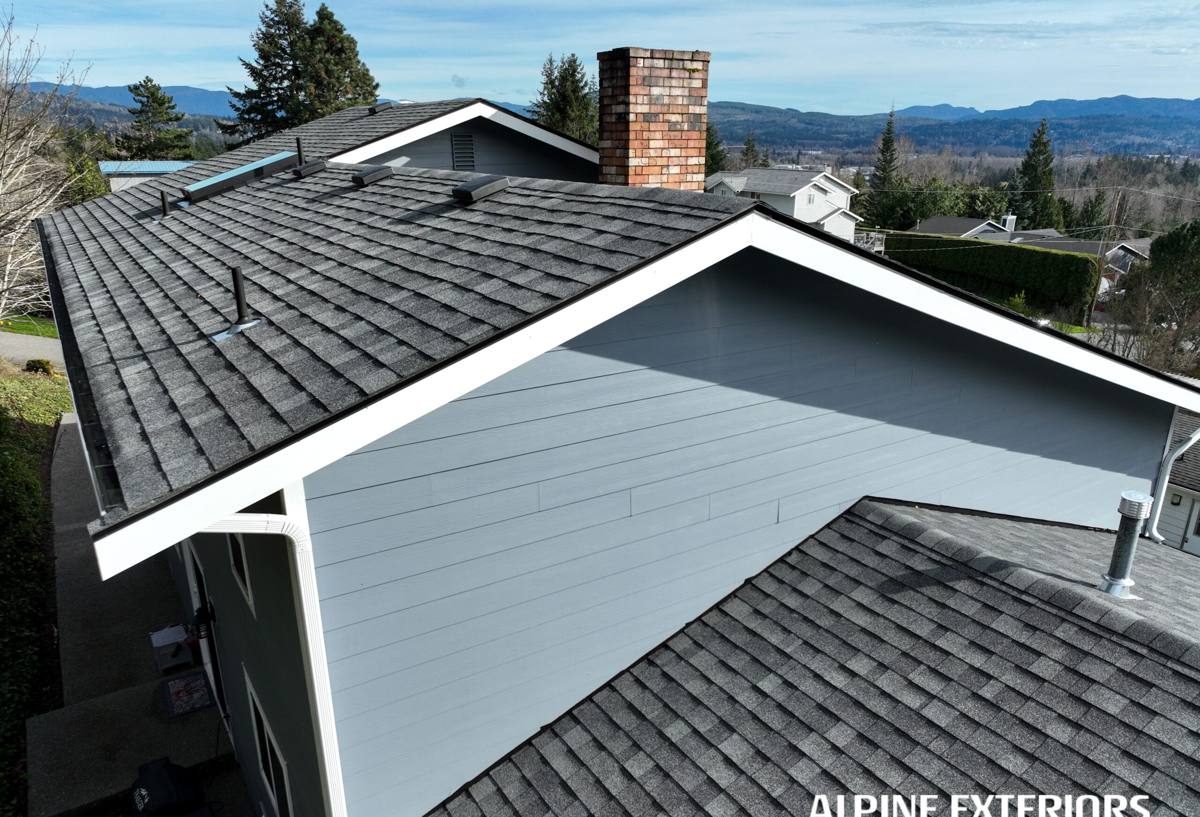
What Wiser Lake Homes Are Actually Up Against
Three things drive most of the wear we see on roofs in this part of the county:
- Sustained wet weather. It's not just total rainfall — it's the number of consecutive damp days. Any roof detail that relies on a surface drying out quickly between storms is a weak point here.
- Tree cover and shade. Wiser Lake's tree-lined lots and lake-adjacent vegetation keep roof surfaces shaded and damp longer than an open rooftop in town, which accelerates moss and lichen growth.
- Temperature swings. Whatcom County gets enough freeze-thaw cycling in winter that trapped moisture in an underlayment or decking system becomes a real problem over a few seasons, not just a cosmetic one.
None of this is unique to metal roofing, but metal responds differently to these conditions than composition shingles do, and it needs to be installed with that in mind.
What a Correct Metal Roof Installation Involves
Underlayment and Moisture Protection
Metal panels shed water fast, but they're not the primary moisture barrier — the underlayment underneath is doing a lot of the real work, especially at seams, valleys, and low-slope transitions. In a climate with this much sustained rain, we treat synthetic underlayment and self-adhered ice-and-water membrane at vulnerable areas (valleys, eaves, penetrations) as standard practice, not an upgrade. Skipping or skimping on this layer is one of the most common causes of slow, hidden leaks in metal roofs we've inspected in the area.
Fastening and Panel Movement
Metal roofing expands and contracts with temperature more than most other materials. Fastener spacing, clip systems (for standing seam), and panel overlap all need to account for that movement so the roof doesn't work itself loose or oil-can over time. This is a detail that's easy to get wrong on a rushed install and hard to spot from the ground — which is part of why hiring based on price alone is risky with this product.
Flashing Details
Chimneys, skylights, dormers, and roof-to-wall transitions are where the overwhelming majority of metal roof leaks originate — not the field panels themselves. Correct step flashing, counterflashing, and closure strips at ridges and eaves matter more in a high-rainfall climate like Whatcom County than they would somewhere dry, because there's simply more water testing every joint, every year.
Choosing a Metal System for a Wiser Lake Property
Not every metal roofing system is the right fit for every home. Lot shading, roof pitch, and how long you plan to stay in the home all factor into the right call.
| System | Best fit | Trade-offs in this climate |
|---|---|---|
| Standing seam | Steeper roofs, longer-term owners, homes with heavy tree cover | Concealed fasteners handle sustained wet weather best; higher upfront cost |
| Exposed-fastener panel | Outbuildings, shops, budget-conscious re-roofs | Lower cost, but fastener gaskets need periodic inspection since they're a maintenance point in a wet climate |
| Metal shingle/shake profile | Homes wanting a traditional look with metal's durability | More seams and laps than standing seam, so installation quality matters even more |
For most Wiser Lake homes with real tree cover and a long moss season, we lean toward standing seam or a well-detailed shingle profile over exposed-fastener systems on the main house, simply because the fewer through-penetrations in the field of the roof, the fewer places moisture has a chance to work its way in over a wet Whatcom County winter.
Moss, Algae, and the Long Wet Season
Moss doesn't damage bare metal the way it damages shingles or wood shakes, but it does create problems: it holds moisture against fasteners and seams, it clogs valleys and gutters, and on painted or coated panels it can dull the finish and trap grit that wears at the coating over years. Homes near the lake with shaded, north-facing slopes are especially prone to this because those surfaces rarely get direct sun to dry them out between storms.
The fix isn't aggressive chemical treatment or pressure washing, which can actually damage panel finishes and seals. It's a combination of correct slope and drainage design at install, keeping overhanging branches trimmed back where practical, and periodic gentle cleaning rather than letting growth build up untouched for years.
Our Process, Start to Finish
1. On-Site Assessment
We look at the existing roof structure, decking condition, ventilation, and any specific trouble spots — valleys, chimneys, low-slope sections — before recommending a system. We're not selling a one-size-fits-all product; a shaded lakefront lot and an open in-town lot get different recommendations.
2. Straightforward Written Estimate
You get a clear scope of work and pricing before anything is scheduled — what system, what underlayment, what flashing details, and why, so you know exactly what you're paying for.
3. Installation
We follow manufacturer specifications on fastening, clip spacing, and panel overlap, and we don't shortcut underlayment or flashing details to save time. In this climate, those details are the roof's actual defense against water — the panels are just the visible layer.
4. Final Walkthrough
Before we consider the job done, we walk the roof and the ground-level sightlines with you, confirm drainage is working the way it should, and go over basic care so you know what to expect from the roof in year one versus year ten.
Why Local Experience With This Weather Matters
A metal roof detailed correctly for a dry climate can still fail early in Whatcom County if it wasn't built for sustained rain and a long moss season. A crew that already works properties around Wiser Lake and the broader Semiahmoo area knows which valleys collect the most runoff, which roof orientations stay shaded and damp longest, and which flashing details tend to get tested hardest by our specific weather pattern — not a generic install checklist written for a different part of the country. That local pattern recognition is what keeps small issues from turning into repeat callbacks.
Maintenance Checklist for Metal Roofs in This Climate
- Clear gutters and valleys of needles and debris at least twice a year — more often under heavy tree cover
- Trim back overhanging branches to reduce shade and debris buildup on the roof surface
- Do a visual check after major wind or storm events for lifted panels, loose fasteners, or damaged flashing
- Watch for moss or algae buildup in shaded valleys and have it gently addressed before it spreads across panels
- Check sealant at penetrations (vents, chimneys, skylights) every few years — sealants age faster under constant wet-dry cycling
- Confirm attic or roof ventilation is working; trapped moisture from below causes as many problems as rain from above
What Affects Cost
Every roof is different, but a few factors consistently move the price on metal roofing jobs in this area: panel system chosen (exposed-fastener runs less than standing seam), roof complexity (number of valleys, penetrations, and dormers), whether the existing roof needs tear-off versus a compatible overlay, and decking condition once it's exposed. We'd rather walk your specific roof and give you real numbers than quote a broad range that doesn't mean much until we've seen the structure.
Ready to Talk About Your Roof?
If you're weighing metal roofing for a home near Wiser Lake, we're happy to come take a look, answer questions honestly, and put together a straightforward estimate — no pressure, no sales script. Use the form below to get started.