 Semiahmoo Siding
 Marietta's Exterior Climate: Salt Air, Driving Rain, and a Long Moss Season
Homes in the Marietta area near Semiahmoo sit in a tough spot for exterior materials. You've got salt-laden air coming off the water, wind-driven rain that hits siding sideways instead of just running down it, and a wet season that stretches long enough for moss and algae to get a real foothold on north-facing walls and anything shaded by trees. None of these things are dramatic on their own. What they do is grind away at siding slowly, over years, until a homeowner who assumed their siding was fine discovers rot, delamination, or paint failure they never saw coming.
Whatcom County's marine climate means siding here rarely gets a real break to dry out. Even in summer, overnight moisture and morning fog keep humidity elevated. That combination — salt exposure, sideways rain, and limited drying time — is exactly the profile that separates siding materials that hold up from ones that don't.
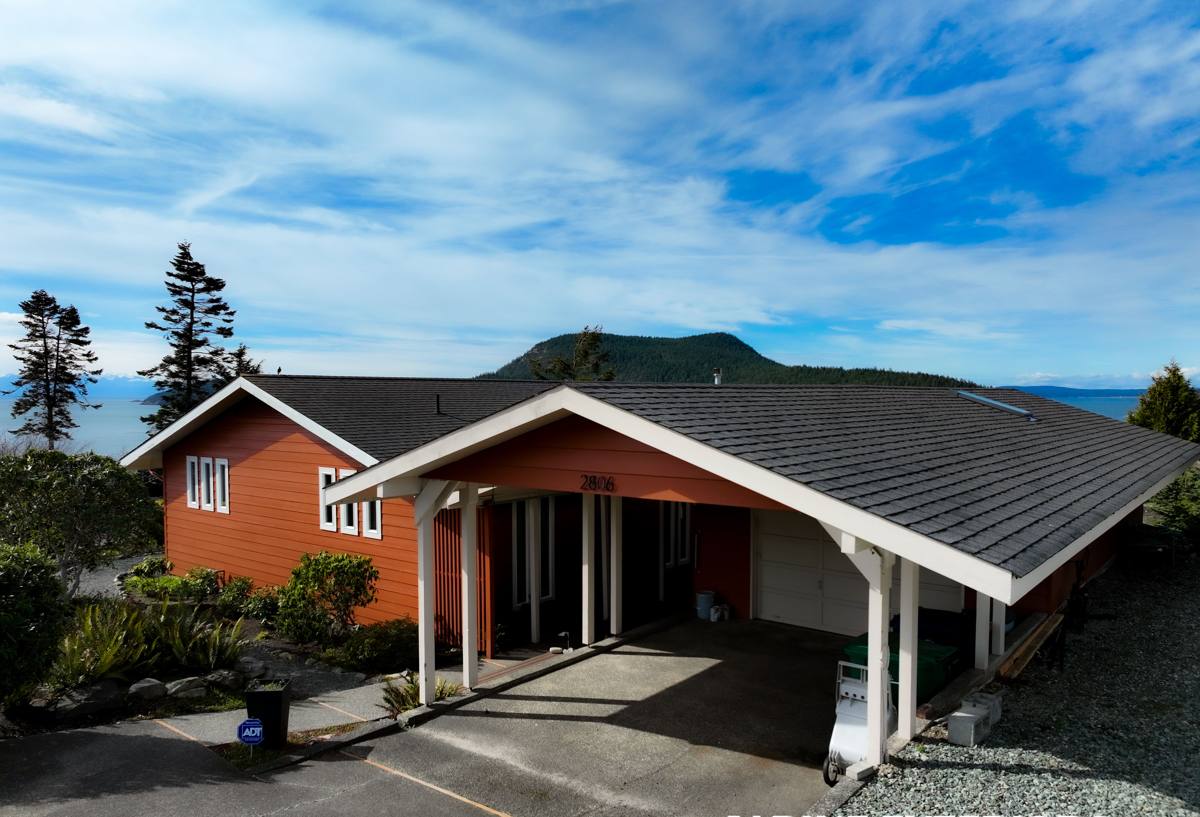
What Fiber Cement Siding Has to Get Right Here
Fiber cement is cement, sand, and cellulose fiber pressed and cured into a rigid plank. It doesn't rot, it isn't a food source for moss or mildew the way wood is, and it doesn't expand and contract with humidity the way wood-based products do. For a property near Semiahmoo, that's the short list of things that actually matter:
- Resistance to moisture absorption at the plank itself, not just the finish coat
- Dimensional stability so joints and caulk lines don't open up every winter
- A factory finish that doesn't rely on the homeowner repainting every few years
- No organic material for moss, algae, or mildew to latch onto and grow through
- Enough rigidity to stay flat against the wall in driving wind and rain
Fiber cement checks these boxes when it's manufactured to a real engineering standard and installed correctly. Not every fiber cement product on the market is engineered the same way, and installation quality matters just as much as the product itself — a well-made board installed with the wrong clearances or fasteners will still fail early in this climate.
Why We Only Install James Hardie
We install James Hardie fiber cement exclusively, not because other brands are unusable, but because Hardie's HardieZone system is engineered specifically for climate zones like ours, with formulations and installation specs matched to marine, high-moisture regions. Their ColorPlus factory finish is baked on under controlled conditions rather than field-applied, which matters a lot when a house is exposed to salt air and UV reflected off open water. We've standardized on one product line so we can guarantee we know its behavior, its warranty terms, and its correct installation details cold — instead of switching between brands and carrying knowledge gaps into any one job.
Where Fiber Cement Beats the Alternatives
Homeowners in the Marietta area are usually comparing fiber cement against vinyl, cedar, or engineered wood siding. Each has a place, but each also carries specific trade-offs that show up faster in a salt-air, high-rainfall environment than they would somewhere drier.
| Material | Behavior in Salt Air & Driving Rain | Moss/Algae Resistance | Long-Term Maintenance |
|---|---|---|---|
| James Hardie Fiber Cement | Stable, non-combustible, engineered for marine exposure | Non-organic surface resists growth | Occasional wash; factory finish holds color for years |
| Vinyl | Can warp or crack under UV and temperature swings; seams open over time | Prone to algae streaking, especially in shade | Low upfront maintenance, but limited repair options if damaged |
| Cedar | Absorbs moisture; needs consistent sealing to resist rot | Organic surface is a natural host for moss and mildew | Regular refinishing and inspection required |
| Engineered Wood (e.g. LP SmartSide) | Treated to resist moisture, but edge and cut-end sealing is critical | Better than raw wood, but still an organic substrate | Moderate — depends heavily on installation quality |
This isn't a knock on the other materials — plenty of homes wear vinyl or cedar successfully. It's why, for the specific conditions around Semiahmoo, we've made fiber cement the only product we put our name behind.
What a Correct Fiber Cement Installation Actually Involves
Fiber cement's reputation is only as good as the install underneath it. Most of the failures we see on older jobs in this region trace back to installation shortcuts, not the material itself.
Clearances and Flashing
Siding needs proper clearance from grade, roof lines, decks, and any horizontal surface where water can pool or splash back. Flashing at windows, doors, and every horizontal joint has to shed water outward, not trap it behind the plank. In a driving-rain climate, a flashing detail that's "close enough" eventually lets water behind the siding, and once that happens the assembly behind it — sheathing, house wrap, framing — is what actually rots.
Fastening
Fiber cement has specific fastener requirements: type, length, spacing, and how far from the edge of the board they're placed. Overdriven or underdriven nails compromise the board's ability to move slightly with temperature changes, which can lead to cracking at the fastener point over time.
Joints and Caulking
Butt joints, corners, and trim intersections are where most water intrusion starts. Correct installation uses proper joint treatment and compatible sealants rather than relying on caulk alone to do the job of a well-built joint.
Finish Integrity
With ColorPlus finished product, the goal is to keep the factory finish intact — meaning cut ends get sealed with the correct touch-up product, and the board isn't handled or stored in a way that damages the finish before it's even on the wall.
Our Process, Start to Finish
Assessment
We start by looking at what's actually happening behind the existing siding, not just what it looks like from the curb. That means checking for soft sheathing, existing moisture damage, and how the current siding is flashed at windows, corners, and the foundation line.
Tear-Off and Sheathing Check
Once the old siding is off, we inspect the sheathing and house wrap underneath. Any water damage found at this stage gets addressed before a single new board goes up — installing fiber cement over compromised sheathing just locks the problem in.
Weather Barrier and Install
We install or verify a proper weather-resistant barrier, then install the Hardie boards to spec: correct clearances, fastening, and flashing at every penetration and joint.
Finish and Walkthrough
Trim, caulking, and touch-up work get finished, and we walk the property with the homeowner so they know exactly what was done and what to expect going forward.
Why a Crew That Already Works Marietta Matters
Installation specs for fiber cement don't change town to town, but judgment calls do. Knowing how much clearance to leave near grade on a lot with poor drainage, how a specific wall orientation handles wind-driven rain, or how much moss pressure a shaded north wall is likely to see over a winter — that's the kind of thing a crew learns from working this specific stretch of Whatcom County repeatedly, not from a spec sheet. A crew that's already done jobs in this area isn't guessing at how the local climate will treat a given detail; they've already seen how it plays out.
Living With Fiber Cement Siding: What Homeowners Should Expect
Fiber cement is low-maintenance, not no-maintenance. In a salt-air, high-moss environment, a little seasonal attention goes a long way toward getting the full lifespan out of the product.
- Rinse the exterior once or twice a year to clear salt residue and organic buildup, especially on shaded or north-facing walls
- Keep gutters clear so water isn't overflowing directly onto siding runs
- Trim back vegetation and tree cover that keeps a wall section perpetually damp and shaded
- Check caulking at trim and joints periodically and have any cracked sealant addressed before winter
- Watch for any soft spots, staining, or paint issues near ground level, which can signal a drainage or clearance issue rather than a siding defect
None of this is heavy work, but skipping it entirely is how a well-installed siding job ages faster than it should.
What It Costs and What Drives the Price
Fiber cement siding costs more upfront than vinyl and is generally comparable to or less than a properly finished cedar installation over time, once repainting and repair are factored in. The final number on any given home depends on a handful of factors more than on the material price alone.
| Cost Factor | Why It Matters |
|---|---|
| Tear-off and disposal of existing siding | More labor-intensive removals (multiple layers, damaged sheathing) add time and cost |
| Sheathing or framing repair | Water damage found during tear-off has to be fixed before new siding goes on |
| Home shape and trim detail | Corners, dormers, and trim-heavy elevations take more labor than flat wall runs |
| Siding profile and accessories | Lap width, trim style, and accent details (board and batten, shingle-style sections) affect material and labor |
| Access and site conditions | Tight lots, elevation changes, and staging needs affect crew efficiency |
Because so much of the final price depends on what's actually found once the old siding comes off, an honest number only comes from an in-person look at the house, not a generic per-square-foot estimate.
If you're weighing siding options for a home in the Marietta area, we're glad to take a look and walk you through what your specific house needs — no pressure, no obligation. Request a free estimate below and we'll give you a straight answer.