 Semiahmoo Siding
 Why Marietta Decks Wear Out Faster Than the National Average
Decks in Marietta don't fail the way decks fail in drier parts of the country. Out here, the enemy isn't one bad storm — it's the slow, steady grind of a marine climate working on wood, fasteners, and footings twelve months a year. Salt-laden air off the water accelerates corrosion on anything metal. Long stretches of driving rain in fall and winter push moisture into every joint, seam, and end-cut that isn't properly sealed. And once the wet season settles in, a shaded or north-facing deck can grow a steady carpet of moss and algae that holds moisture against the boards far longer than the sun ever gets a chance to dry them out.
None of that means a deck in Marietta is doomed — it means it needs to be built and repaired with those specific conditions in mind. A repair that would hold up fine in a dry inland climate can fail here within a couple of seasons if it ignores drainage, fastener choice, or ventilation underneath the structure.
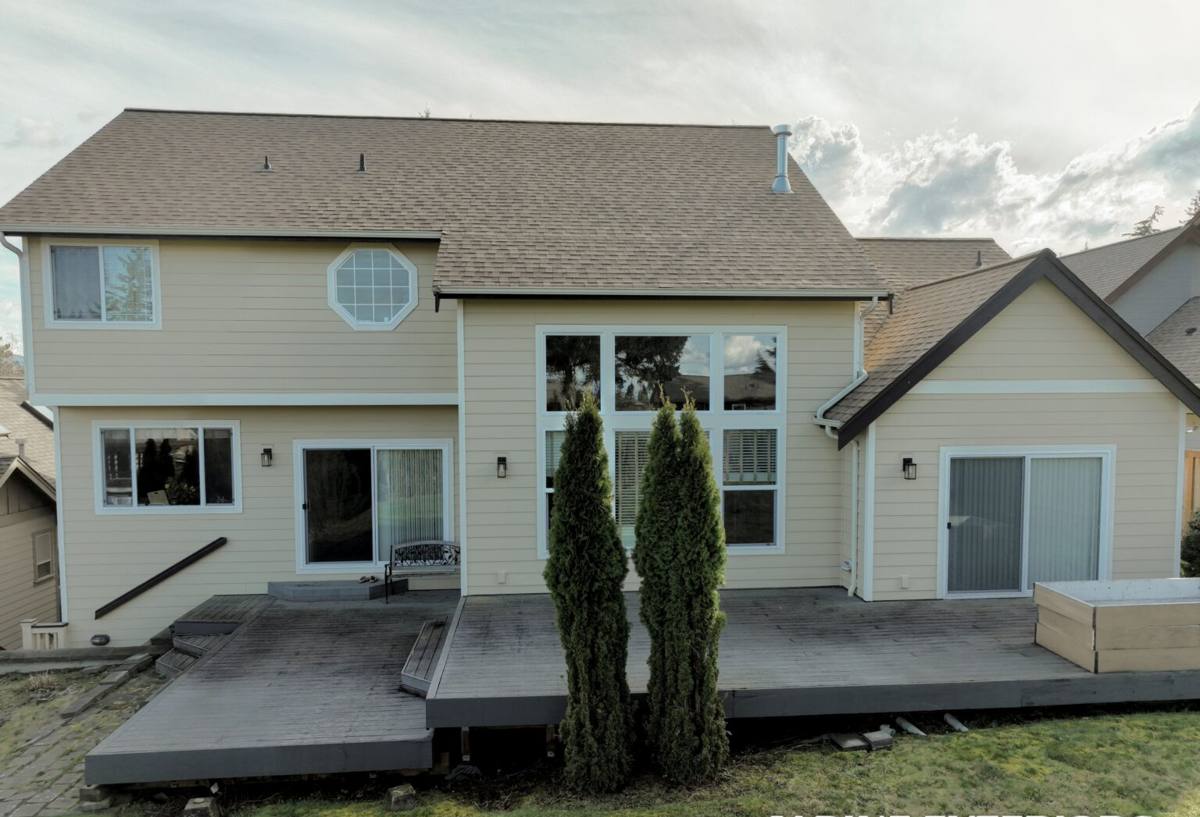
Signs a Marietta Deck Needs Repair Now, Not Later
Deck damage in this climate tends to start small and hidden — underneath boards, inside ledger connections, or at fastener heads — before it becomes visible from the top. Catching it early is almost always the difference between a repair and a full rebuild.
- Boards that feel spongy, springy, or noticeably softer underfoot than the boards around them
- Rust streaks bleeding out from screw or nail heads onto the decking surface
- Persistent green or black growth on boards that never seem to fully dry out, even in summer
- Gaps opening up between boards, or boards cupping (edges higher than the center)
- Railings or stair stringers that feel loose, wobbly, or have visible play when pushed
- Discoloration or soft spots where the deck meets the house — a common entry point for water
- Visible daylight or gaps at the ledger board where the deck attaches to the home's framing
- Fasteners that have backed out, snapped, or show heavy corrosion
If you're seeing any of these, it's worth having someone look at the structure underneath, not just the surface boards. Surface wear is often the least of it.
What an Honest Deck Repair Actually Involves
It Starts Underneath, Not on Top
A repair that only addresses what's visible from above is a cosmetic fix, not a real repair. Before we touch a single deck board, we check the framing underneath — joists, beams, posts, and footings — for rot, movement, or corrosion. Salt air is hardest on metal connectors and fasteners, so hardware inspection matters as much as wood inspection.
The Ledger Board Connection
The ledger board — where the deck attaches to the house — is the single most important structural connection on most decks, and it's also the most common source of hidden water damage. Flashing that's missing, improperly lapped, or simply worn out lets water track behind the siding and into the house framing itself. Any legitimate deck repair in this climate has to include a real look at that connection, not a guess based on what's visible from the yard.
Fasteners and Hardware
Standard galvanized fasteners can corrode faster than expected in a salt-air environment, especially within the first few hundred feet of open water. We favor stainless steel or climate-rated coated fasteners and structural hardware for repairs in this area — it costs a little more up front but it's the difference between a repair that lasts and one that needs redoing in a few years.
Decking Material Itself
Whether we're replacing individual boards or larger sections, the repair needs to match — or intentionally upgrade — the structural behavior of what's already there. Mixing incompatible materials (for example, attaching composite boards to framing that was only ever designed for solid wood spans) creates problems down the road, so we plan the repair around how the whole system works together, not just how it looks when we're done.
Repair or Replace? How We Help You Decide
Not every deck problem calls for a full rebuild, and not every deck is worth patching. The honest answer depends on what's happening underneath, how old the structure is, and how it was originally built. Here's how we generally walk through that decision with homeowners:
| Factor | Leans Toward Repair | Leans Toward Replacement |
|---|---|---|
| Framing condition | Solid, dry, no significant rot | Soft, spongy, or rotted joists/beams |
| Age of structure | Under 10-12 years, built to a reasonable standard | Original construction is decades old or undersized |
| Extent of damage | Isolated boards, railings, or connections | Widespread damage across multiple structural areas |
| Ledger/flashing condition | Intact or easily corrected | Failed flashing has caused hidden water damage to the house |
| Code/safety concerns | Structure meets current safety expectations | Railings, stairs, or connections don't meet basic safety standards |
In practice, most decks we're called out to in Marietta fall somewhere in between — solid bones with a handful of real problems that developed from moisture exposure over the years. That's the ideal scenario for a targeted repair rather than a full teardown.
Our Deck Repair Process
1. On-Site Inspection
We walk the entire deck, above and below, checking framing, ledger connections, footings, railings, and stairs. This is where we find the problems a homeowner usually can't see from the surface.
2. A Straight Answer, In Writing
You get a clear explanation of what's actually wrong, what it will take to fix it correctly, and what it would cost to go further if replacement makes more sense. No pressure toward the bigger job if the smaller one is the right call.
3. The Repair Itself
We address structural issues first — framing, connections, flashing — before moving to cosmetic and surface-level work. Repairs are done with fasteners and hardware suited to a coastal, salt-air environment, not whatever happens to be cheapest.
4. Final Walkthrough
We check railings, stairs, and fastener finish work before calling the job done, and explain anything you should keep an eye on going forward.
Moss, Algae, and Salt Air: The Long-Term Maintenance Reality
Whatcom County's wet season is long, and a deck that sits in shade — under trees, next to the house, or on a north-facing side — is going to grow moss and algae almost every year no matter how well it was built. That growth isn't just cosmetic. It holds moisture against the wood surface, slows drying, and creates the conditions for rot to start underneath a board that otherwise looks fine.
Salt air adds a second layer to this. It doesn't just affect wood — it accelerates corrosion on fasteners, hinges, railing brackets, and any exposed metal hardware. A deck repair in Marietta that ignores either of these two factors is a repair that's only solving half the problem.
Simple habits that extend the life of a repaired deck in this climate:
- Clear leaves and debris from between boards before the wet season sets in each fall
- Rinse off surface moss and algae buildup before it has a chance to establish and spread
- Keep gutters and downspouts near the deck clear so runoff isn't draining directly onto it
- Check railings and stair connections for looseness once a year, especially after winter storms
- Watch for rust bleed at fastener heads — an early sign hardware needs attention
Why a Crew That Already Works Marietta Matters
Deck repair isn't one-size-fits-all, and a crew that mostly works drier, inland climates doesn't always plan for what this coastline actually does to a structure over time. A crew that already works in Marietta and the broader Semiahmoo area knows which fastener grades hold up, which flashing details actually stop water at the ledger board, and which decking materials handle sustained moisture and salt exposure without turning into a maintenance headache.
That local familiarity also means a more accurate first estimate. We're not guessing at how this climate behaves — we're accounting for it from the first inspection, not discovering it halfway through the job.
What a Fair Deck Repair Estimate Should Include
Not every quote covers the same ground, and it's fair for a homeowner to ask what's actually included before agreeing to any work. A thorough estimate for deck repair should walk through:
- What was found underneath the deck, not just what's visible on the surface
- Whether the ledger board and flashing were inspected, and what condition they're in
- What fastener and hardware grade will be used, and why
- Whether the scope is a true repair or if replacement should be on the table
- A clear breakdown of labor and materials, not just a single lump-sum number
If an estimate skips the underside of the deck entirely, that's usually a sign the inspection wasn't thorough enough to catch the problems that matter most in this climate.
If your deck in Marietta is showing any of the signs above — or you'd just like an honest, no-pressure look at where it stands — we're happy to come take a look and walk you through what we find. Use the form below to request a free estimate.