 Semiahmoo Siding
 Why Window Replacement Looks Different in Lynden
Lynden sits inland from Semiahmoo Bay, in the farmland of Whatcom County, so homes here don't take the direct salt spray that houses right on the water do. But the same marine-driven weather system runs the whole county, and Lynden gets its full share of it: long stretches of driving rain, high humidity that never fully lets up in the cooler months, and a moss season that can run from fall through spring. Being set back in the river valley also means Lynden sees more fog and frost pooling on cold, still mornings than the immediate coast does — a different stress on windows than salt air, but a real one.
Windows take that weather personally. Wood swells and shrinks as moisture cycles through it. Seals around glass units work hardest when they're wet one week and near-freezing the next. Moss and algae hold dampness against sills and frames longer than plain rain would on its own. None of this is dramatic — it's slow, and it's the reason a window that's fine for a drier climate can start failing here years ahead of schedule.
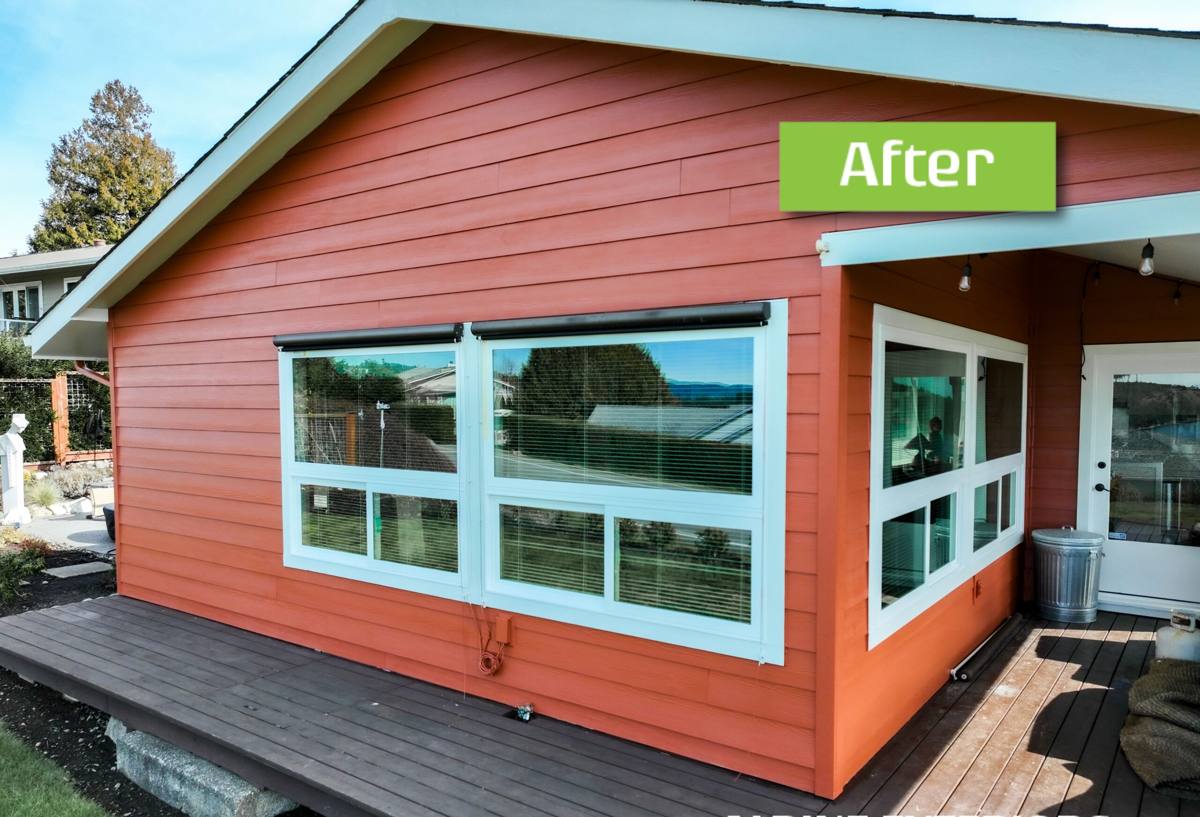
Signs a Lynden Home Needs Window Replacement
Most window failure doesn't announce itself with a cracked pane. It shows up as small annoyances that get worse over a couple of wet seasons. Worth checking for:
- Fogging or a hazy film between the panes of a double-pane window — the seal has failed and the gas fill is gone
- Sills or lower frame corners that feel soft, spongy, or discolored when pressed
- Windows that stick, bind, or won't latch fully — often swollen wood or a warped frame
- Noticeable drafts near the frame even with the window closed and locked
- Condensation forming on the inside of the glass regularly through winter
- Paint that keeps failing on the frame no matter how often it's touched up
- Original single-pane wood windows on an older farmhouse that have never been upgraded
Any one of these on its own might just need a repair. Several at once, especially on windows original to the house, usually means replacement is the more honest fix.
What a Correct Window Replacement Job Actually Involves
Swapping in a new window is the easy part to picture and the hardest part to get wrong safely. The work that actually protects the house happens around the window, not in it.
Flashing and drainage come first
A window opening has to shed water down and out, not into the wall cavity. That means integrating flashing tape or pan flashing at the sill so any water that finds its way behind the window drains back out over the siding below, not into the framing. On a house with rot or a failed weather-resistive barrier around the old opening, this is the point where problems get caught — and it's also the point where a rushed job skips the extra ten minutes it takes to do right.
Insulation and sealant, not just caulk
The gap between the new window frame and the rough opening needs low-expansion foam or backer rod and sealant sized for the gap — not caulk smeared over a wide air space, and not full-expansion spray foam that can bow a vinyl frame out of square. Exterior sealant has to be compatible with the siding material it's meeting, since a bead that fails in year two just reopens the same path for water.
Full-frame versus insert replacement
If the existing frame is sound and just holds an old, inefficient sash, an insert (or "pocket") replacement fits a new window inside the old frame — faster, less disruptive to siding and trim, and usually less expensive. If there's rot, the frame is out of square, or the opening needs to change size, a full-frame replacement pulls everything back to the rough opening and starts over. Choosing the wrong one either wastes money or buries a problem behind a nice-looking new window.
Choosing the Right Window for This Climate
Frame material matters more here than in a dry climate, because it determines how the window handles years of damp cycling. There's no single "best" choice — it depends on the house and the budget.
| Frame Material | How It Handles Moisture | Maintenance | Typical Lifespan |
|---|---|---|---|
| Vinyl | Won't rot; performs well in consistently damp conditions | Low — occasional cleaning | 20–30 years |
| Fiberglass | Very stable through temperature and moisture swings; minimal expansion/contraction | Low | 30-plus years |
| Wood (uncoated) | Handsome, but vulnerable to rot and swelling if paint or finish isn't kept up | High — regular repainting/sealing | Varies widely with upkeep |
| Wood, clad exterior (vinyl or aluminum-clad) | Exterior protected from weather; interior keeps a wood look | Moderate | 25–35 years |
Whatever the frame, ask about the glass package too. Low-E coatings and argon or krypton gas fills don't just help with heating bills — they reduce the temperature swing at the glass surface, which cuts down on interior condensation during Whatcom County's cold, damp mornings. For a house that already fights moss and moisture on the outside, less condensation fogging up the inside of the glass is a real, everyday difference.
Our Window Replacement Process
The process is the same whether it's two windows or a whole house, just scaled up:
- On-site assessment and measurement. We check the condition of each opening, not just the glass — sills, framing, existing flashing, and siding tie-in.
- Product selection. We walk through frame material, glass package, and grille or hardware options based on the house and the budget, without pushing an upsell that doesn't fit either.
- Scheduling around the weather. Openings are exposed to the elements while a window is out. We plan install days around forecasts, not just the calendar, especially during the wetter months.
- Removal and protection. Interior floors and furnishings are covered, and openings are protected the moment the old window comes out.
- Installation. New flashing, correct insulation, and the new window set level, plumb, and square — then sealed with materials matched to the siding.
- Finish work. Interior and exterior trim is reinstalled or replaced to match, and any siding disturbed during the work is repaired properly.
- Walkthrough and cleanup. Every window is opened, closed, and locked to confirm smooth operation before we call the job done.
Cost Factors for Window Replacement in Lynden
Every quote should be specific to the house, but the same factors move the price up or down on nearly every job:
| Factor | Why It Affects Cost |
|---|---|
| Number and size of windows | Larger openings and whole-house jobs have more material and labor per project, but often a better per-window rate |
| Frame material | Vinyl is the most budget-friendly; fiberglass and clad-wood cost more upfront |
| Full-frame vs. insert | Full-frame replacement takes longer and involves more materials than an insert into a sound existing frame |
| Glass package | Low-E coatings, gas fills, and impact- or sound-rated glass all add cost over standard double-pane |
| Existing damage | Rot repair or bringing an opening back to square adds time before the new window ever goes in |
| Accessibility | Second-story or hard-to-reach windows take longer and may need staging or lift equipment |
| Trim and siding tie-in | Matching existing trim profiles or repairing siding disturbed during removal adds finish labor |
Broadly, homeowners should expect a wide range from a simple single-window insert to a full-house, full-frame replacement with upgraded glass — enough of a spread that a specific number only means something once someone has actually looked at the openings.
Why Hiring a Crew That Already Works Lynden Matters
Lynden's housing stock is a mix — older farmhouses that have been added onto over the decades, ranch homes from past building booms, and newer construction on the edges of town. A crew that works this area regularly has already seen the quirks that come with each: out-of-square openings on an older farmhouse, siding profiles that need matching on a mid-century ranch, or a newer home where the original installer cut corners on flashing that only shows up years later.
Local experience also means realistic scheduling. Whatcom County's wet season isn't a surprise to a crew based here — jobs get planned around it instead of run into it. And a business that's known locally has a reputation tied to the work it leaves behind, which is a different kind of accountability than a crew passing through from out of the area.
Caring for New Windows Through the Wet Season
New windows still need a little seasonal attention in this climate to get their full lifespan:
- Keep weep holes at the base of the frame clear of dirt, moss, and leaf debris so water can drain out
- Check exterior sealant once a year, especially after the first winter, and touch up anywhere it's pulling away
- Wipe down moss or algae buildup on sills and frames with a soft brush rather than a pressure washer, which can force water past seals
- Exercise locks and hardware occasionally in winter so they don't stick from swelling or grit
- Inspect screens and re-seat them properly each spring — a loose screen is a common entry point for moisture and debris
If any of this sounds like your windows, or you're just ready to stop patching old ones, we're happy to take a look and put together a straightforward, no-pressure estimate — use the form below to get started.