 Semiahmoo Siding
 Building Decks That Actually Hold Up in Lynden
Lynden sits inland in the Nooksack River valley, but it doesn't escape the weather that defines this corner of Washington. The same marine climate that soaks the Whatcom County coastline — driving rain for months at a stretch, damp air off the Salish Sea, and a moss season that can run from October into May — reaches Lynden too. It just shows up differently here: less direct salt spray, more standing moisture, shaded framing, and moss and algae getting a foothold on anything that doesn't dry out fast enough.
A deck built without that reality in mind will look fine for a season or two and then start showing problems: soft spots near the house, green film on the boards, rust bleeding from fasteners, railings that wiggle. None of that is inevitable. It's almost always a result of shortcuts in framing, drainage, or material choice — the kind of shortcuts that don't show up on a walkthrough the day the job wraps, only a few winters later.
This page is about what a custom deck for a Lynden home actually needs, what our process looks like, and why a crew that already builds in this climate makes a real difference over time.
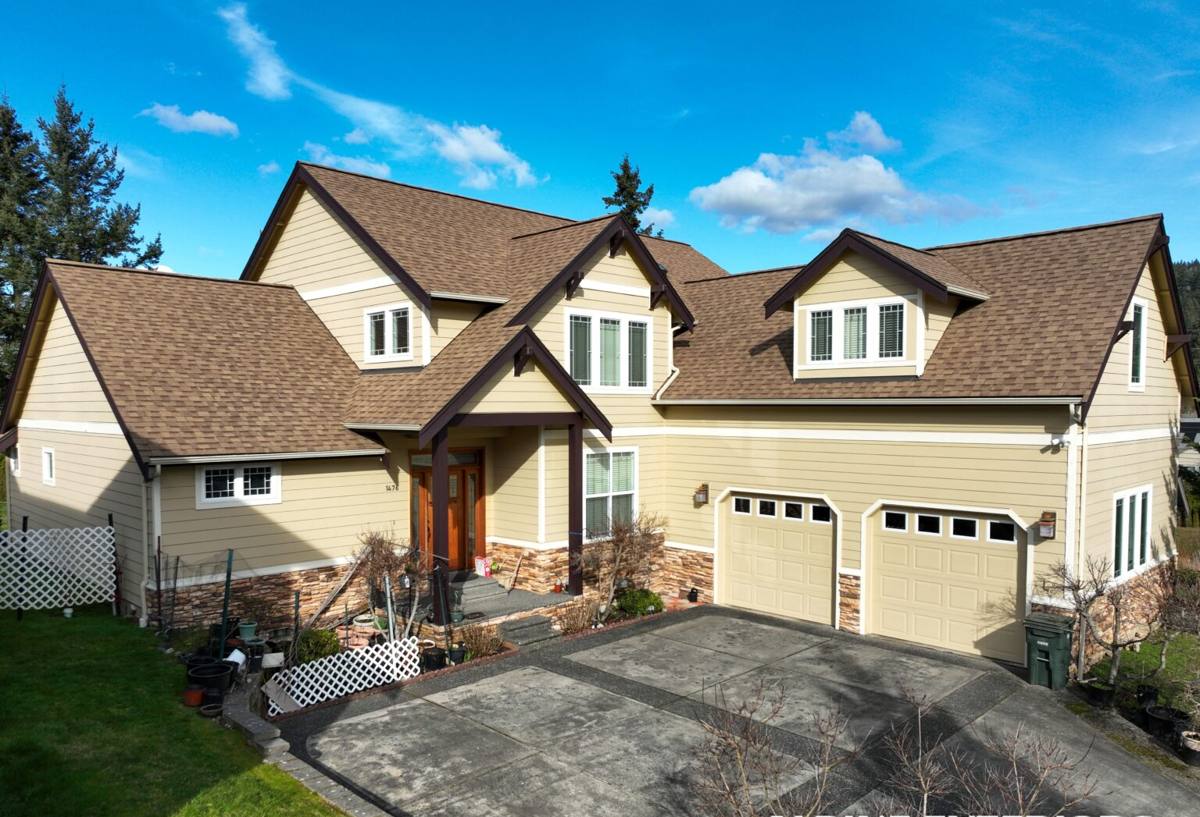
What Lynden's Climate Actually Does to a Deck
Rain and Standing Moisture
Whatcom County gets a lot of rain, but it's the slow, steady, weeks-at-a-time kind that causes the real damage — not the occasional downpour. Wood and even engineered decking need time to dry between soakings. When a deck is built tight to the house, under tree cover, or without enough airflow underneath, boards stay damp far longer than the manufacturer's warranty assumes, and that's where rot and mold get started.
Moss and Algae
Moss doesn't need much — shade, moisture, and a surface it can grip. Horizontal deck boards, especially anything with a wood-grain texture or a low-gap fastening pattern, are an easy target. Left alone, moss holds moisture against the board surface, which accelerates whatever rot or fading process is already happening underneath it.
Freeze-Thaw and Ground Movement
Whatcom County winters aren't brutal, but Lynden does see hard frosts and the occasional freeze. Footings that aren't poured to the correct depth or that sit in poorly drained soil can heave slightly over a few winters. It's a slow problem — you won't see it after one season — but it's the reason a deck starts to feel uneven or a post starts to lean after several years.
What a Correctly Built Deck Involves
A deck is a structure, not a surface. Everything visible — the boards, the railing, the stairs — depends on decisions made before any of it goes in.
Footings and Framing
Footings need to go below the local frost line and bear on solid, well-drained soil, not just enough concrete to pass a glance. Ledger boards — where the deck attaches to the house — need proper flashing so water is directed away from the house's wall assembly, not funneled behind the siding. This is one of the most common failure points we see on older decks: a ledger that was lag-bolted straight to the sheathing with no flashing at all, which eventually leads to rot in the rim joist and sometimes the wall framing behind it.
Joist Protection
Pressure-treated lumber resists rot, but the cut ends, fastener holes, and the tops of joists are still vulnerable. Joist tape — a self-adhering membrane run along the top of each joist — keeps water from sitting in the wood fibers where screws penetrate. It's a small material cost that pays for itself many times over in a climate like this.
Airflow Underneath
Low decks close to grade, or decks skirted in tight to the ground, need deliberate ventilation gaps. Without airflow, the space underneath becomes a moisture trap that shortens the life of the framing no matter how good the decking material is.
Choosing the Right Decking Material
There's no single right answer here — it depends on budget, how the deck will be used, and how much upkeep the homeowner actually wants to do. Here's how the common options compare for a Whatcom County climate specifically.
| Material | Upfront Cost | Moss & Moisture Resistance | Maintenance | Realistic Lifespan Here |
|---|---|---|---|---|
| Pressure-treated wood | Lowest | Fair — needs sealing to perform | Annual cleaning, re-sealing every 2-3 years | 15-20 years with upkeep |
| Cedar | Moderate | Good natural resistance, but surface still needs care | Regular cleaning and periodic finish | 15-20 years with upkeep |
| Capped composite | Higher | Very good — cap layer resists moisture and moss buildup | Periodic washing, no sealing or staining | 25-30+ years |
| PVC decking | Highest | Excellent — no wood fiber to hold moisture | Occasional washing | 30+ years |
Pressure-treated wood is still a legitimate choice for homeowners who don't mind the upkeep and want the lowest cost of entry — but it's the material most punished by skipped maintenance in this climate. Capped composite is where most of our Lynden clients land: it costs more up front than wood but largely removes moss and rot from the maintenance conversation. We don't push PVC or composite as a blanket recommendation, because a well-built, well-maintained wood deck is a perfectly good option for the right budget and the right homeowner — it just asks more of you over time.
Design Choices That Fight Moisture and Moss
Material is only part of the equation. How a deck is built and laid out matters just as much.
- Board spacing wide enough for water to shed quickly rather than pool in tight gaps
- Decking run in the direction that drains fastest given the deck's slope and layout
- Hidden fastener systems that don't create screw-head divots where water and debris collect
- Under-deck drainage systems on multi-level builds, so the lower level stays usable and the framing above stays dry
- Skirting with ventilation gaps instead of solid, sealed-in panels
- Keeping decking a few inches clear of adjacent siding and structures so airflow isn't blocked
None of these add much to the cost of a build. They're mostly about sequencing and layout decisions made before construction starts — which is exactly why they get skipped by crews trying to move fast through a job rather than build it right the first time.
Railings, Fasteners, and Hardware
Hardware failure is one of the most avoidable problems on a deck, and one of the most common. Standard steel screws and brackets will corrode in this climate, especially in a build where moisture sits against the fastener longer than it should. We use fasteners and structural hardware rated for treated lumber and exterior exposure — stainless steel or coated hardware built to resist the chemical reaction that happens between certain treated-wood chemicals and lower-grade steel. It costs more than hardware-store bulk screws. It also means you're not looking at rust streaks bleeding down your deck boards three years in.
Railings get the same attention. Wood railings need the same moisture management as the decking; metal or composite railing systems need corrosion-resistant hardware at every connection point, especially post bases, which take the brunt of standing water at deck level.
Our Process for a Lynden Deck Build
- Free on-site estimate. We walk the property, talk through how you'll use the deck, and look at grading, drainage, and how the deck ties into the house.
- Design and material selection. We go over layout, size, decking material, and railing options against your budget — with honest trade-offs, not upselling.
- Permitting. We handle the permit application and coordinate required inspections with the local building department.
- Site prep and footings. Footings are dug to proper depth and poured before any framing begins.
- Framing and flashing. Ledger flashing, joist protection, and structural framing go in first — this is the stage that determines how the deck ages.
- Decking, railings, and stairs. Visible finish work goes in last, once the structure underneath is sound.
- Final walkthrough. We go over the finished deck with you, including what maintenance it does and doesn't need.
Permits and Local Requirements
Deck construction in Whatcom County generally requires a building permit once the deck exceeds a certain height or size threshold, and inspections are typically required at the footing stage and again at final completion. Requirements can vary depending on your specific property, whether the deck is attached to the house, and local zoning, so we don't guess — we confirm what applies to your project with the local building department before work starts. Skipping permitting on a deck that requires one isn't a shortcut worth taking: it can create real problems at resale, and inspections exist specifically to catch the footing and ledger issues that cause the failures described above.
Maintenance: What a Lynden Deck Actually Needs
Maintenance requirements depend heavily on material choice, but every deck in this climate benefits from a basic seasonal routine.
- Sweep debris — leaves, needles, seed pods — off the deck regularly, especially in fall; trapped debris holds moisture against the boards and feeds moss
- Wash the deck surface at least once a year to remove moss spores and algae film before they take hold
- Check and clear gaps between boards so water keeps draining freely
- Inspect fasteners and railing connections annually for looseness or corrosion
- For wood decking, re-seal or re-stain on the schedule the product actually needs in a wet climate — usually every two to three years, not five
- Keep gutters and downspouts near the deck clear so roof runoff isn't dumping extra water onto or under the deck
If a deck is more than 12-15 years old and you're noticing soft boards, visible mold that won't wash off, wobbly railings, or gaps opening up around the ledger board, it's worth having it looked at before deciding between repair and full replacement.
Why Hire a Crew That Already Works in Lynden
A deck contractor who mostly works drier climates will build a deck that meets code and looks good on delivery day — and that's often where the local knowledge gap shows up, several winters later. Building for Whatcom County means treating drainage, flashing, joist protection, and fastener selection as core parts of the job, not upgrades. It also means knowing the local permitting process and inspection expectations well enough that it doesn't slow the project down.
We work throughout Whatcom County, including Lynden, and we build every deck assuming it has to survive this specific climate — not a generic one. That shows up in the framing choices, the material conversation we have with you up front, and the details that don't get shortcut when no one's watching.
If you're planning a new deck, replacing an aging one, or just want a straight answer on whether yours needs repair or replacement, we're glad to come take a look. Reach out for a free, no-pressure estimate using the form below.