 Semiahmoo Siding
 Roof Repair Built for Laurel's Weather, Not a Generic Playbook
Laurel sits close enough to the water at Semiahmoo that roofs here age differently than roofs ten miles inland. Salt-laden air off Semiahmoo Bay and Drayton Harbor works on exposed metal year-round, driving rain off the Strait pushes water sideways under anything with a weak seal, and a long, damp moss season keeps shaded slopes wet for months at a time. A roof repair crew that mainly works subdivisions in Bellingham or Ferndale isn't wrong about roofing in general — they just haven't spent enough time on Whatcom County's coastal edge to know which failure points show up first out here. We have, and this page is about what that actually means for a Laurel roof.
Roof repair, done right, is not "find the leak and caulk it." It's understanding why that spot failed before every other spot on the roof, fixing the actual cause, and leaving the surrounding materials in a condition where they won't be back on your list next winter.
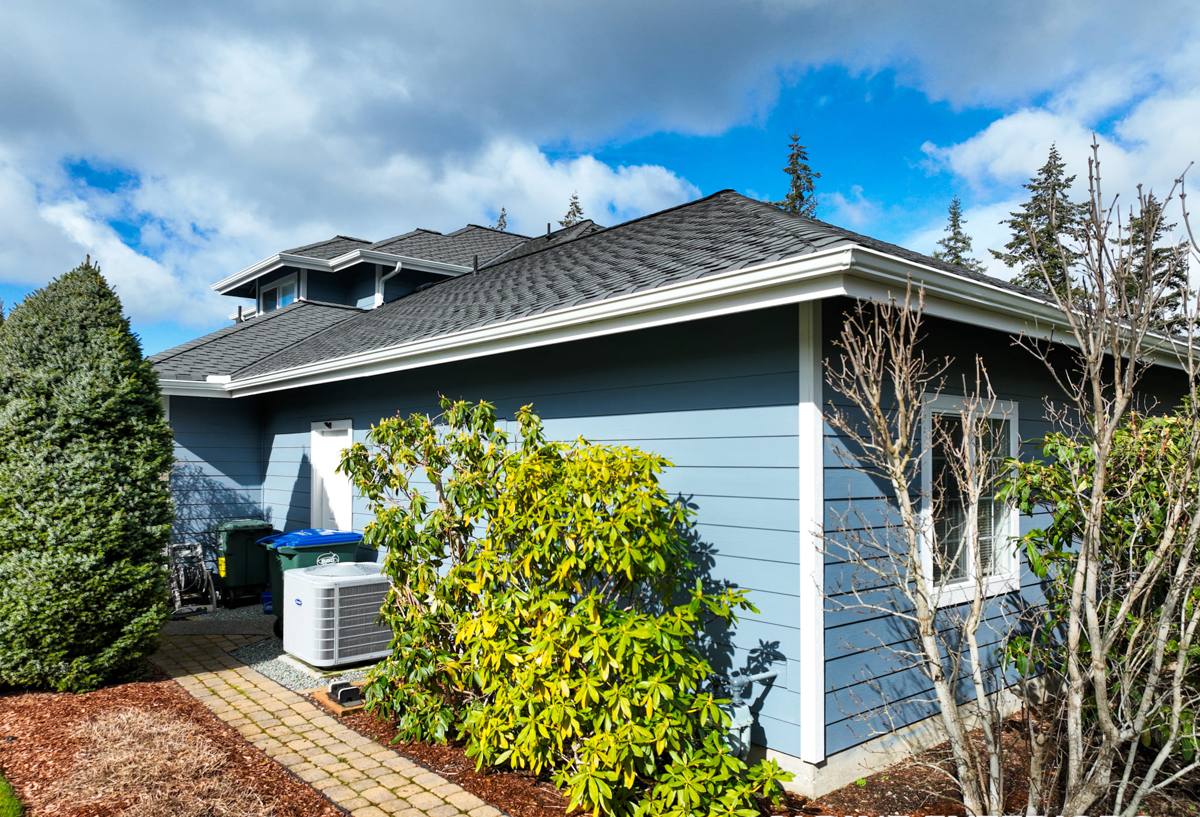
What Semiahmoo-Area Weather Does to a Roof
Salt Air and Corrosion
Homes within a mile or two of the water take airborne salt onto every exposed metal surface — flashing, fasteners, gutter hardware, vent caps, and exposed nail heads. Salt accelerates corrosion on standard galvanized fasteners and untreated steel flashing far faster than it would inland. On a Laurel roof, we look at metal condition as closely as we look at the shingles or membrane themselves, because a corroded fastener or a pitted flashing seam is very often the real cause of a "mystery" leak that shows up nowhere near where the water is actually getting in.
Driving Rain
Storms coming off the Strait of Georgia and the Strait of Juan de Fuca don't just fall on a roof — wind pushes rain sideways and up under laps, ridge caps, and poorly sealed penetrations. Repairs that would hold up fine in a calmer inland microclimate can fail here because the wind-driven component was never accounted for. Ridge lines, valleys, and anywhere two roof planes meet are the highest-risk zones in this kind of weather, and that's where we spend the most time inspecting.
Moss and Prolonged Moisture
Whatcom County's damp, mild winters and shaded, tree-lined lots around Semiahmoo are close to ideal moss-growing conditions. Moss doesn't just look bad — it holds moisture against the roofing surface for extended periods, lifts shingle edges as it grows, and traps organic debris that breaks down the granule surface underneath. A roof that looks intact from the ground can have real moisture damage building underneath a moss mat that's been sitting there since last fall.
Common Repair Calls We See in Laurel
- Corroded or lifted flashing around chimneys, skylights, and roof-to-wall transitions
- Moss-related shingle lift and granule loss on north- and shade-facing slopes
- Wind-driven leaks at ridge caps and valleys after Strait storms
- Rusted or failing fasteners on older metal roofing sections near the water
- Gutter and downspout backups that push water under the roof edge instead of off it
- Soft or stained decking discovered only after a slow, long-term leak is opened up
What a Correct Repair Actually Involves
A repair that's done right starts before anyone touches a shingle. Here's the sequence we follow and why each step matters:
1. Find the Real Source, Not Just the Symptom
Interior water stains are frequently several feet away from the actual entry point, because water travels along the underside of decking or down a rafter before it shows up on a ceiling. We trace the path, not just patch where the stain appears.
2. Check the Decking Underneath
Any area that's had sustained moisture — especially under moss mats or around old flashing — gets checked for soft or delaminated decking. Repairing the surface over compromised decking is a short-term fix that fails again within a season or two.
3. Match Materials Correctly
Patching with mismatched shingle types, incompatible metals, or the wrong fastener grade creates new problems — galvanic corrosion between dissimilar metals is a real risk in a salt-air environment. We match materials to what's already on the roof, or explain clearly why a different material is the better call for that specific spot.
4. Rebuild the Water Path, Not Just the Hole
Proper flashing laps, underlayment integration, and shingle sequencing all matter more than the patch itself. Water needs a continuous path off the roof; a repair that breaks that path in a new spot just moves the problem.
5. Clean Before We Close It Up
Moss, debris, and granule buildup get cleared from the repair area and the surrounding field before anything is resealed, so we're not sealing moisture or organic material into the roof system.
Corrosion-Resistant Materials We Favor Near the Water
For Laurel and other close-to-water Semiahmoo properties, we lean toward materials and hardware that hold up against salt exposure rather than standard inland-grade components. This isn't about upselling — it's about not being back at your house in eighteen months for the same fix.
| Component | Standard Grade | Salt-Air Upgrade We Recommend |
|---|---|---|
| Fasteners | Electro-galvanized | Hot-dip galvanized or stainless steel |
| Flashing | Mill-finish aluminum | Coated aluminum or stainless, properly isolated from dissimilar metals |
| Drip edge | Standard aluminum | Heavier-gauge, corrosion-coated aluminum |
| Gutter hardware | Standard steel | Stainless or aluminum hangers and screws |
Upgraded hardware costs more per piece, but on a repair job the total material cost difference is usually small — most of the job cost is labor, access, and correct installation, not the fasteners themselves.
How Our Process Works
- Inspection and honest assessment. We get on the roof, document what we find, and tell you plainly whether it's a repair or whether repair money would be better spent moving toward replacement.
- Written scope and estimate. You get a clear description of what's being fixed and why, not a vague line item.
- The repair itself. Decking checked, materials matched or upgraded where it matters, water path rebuilt properly, area cleaned.
- Walkthrough. We show you what was found and what was done before we consider the job finished.
Cost Factors for Roof Repair in This Area
Every roof is different, so we won't quote a number without seeing the roof, but the main things that move price on a Laurel-area repair job are consistent:
| Factor | Why It Matters |
|---|---|
| Extent of decking damage | Soft or rotted decking under the leak point adds material and labor beyond the surface patch |
| Roof pitch and access | Steeper slopes and difficult access near the water increase labor time and safety setup |
| Age and condition of surrounding roofing | Older shingle fields may not have a good color/material match, or may be near the end of useful life |
| Amount of moss/debris removal needed | Heavier moss coverage means more cleaning time before the actual repair can begin |
| Flashing scope | A repair that also requires re-flashing a chimney or valley costs more than a simple shingle patch |
Generally, small, well-defined repairs run in the low hundreds to low thousands of dollars; jobs involving decking replacement, extensive flashing work, or multiple problem areas run higher. We'll always tell you if what you're describing sounds like it's approaching replacement territory instead of repair.
Why a Crew That Already Works Laurel Matters
Roofing crews unfamiliar with this stretch of Whatcom County sometimes underestimate how much salt exposure and moss buildup accelerate wear here compared to more sheltered inland neighborhoods. A crew that's already worked roofs in Laurel and around Semiahmoo knows which slopes hold moss longest, which flashing details tend to fail first in wind-driven rain, and which fastener grade actually holds up this close to the water. That local pattern recognition shortens the diagnostic phase of every repair — we're not guessing at what usually goes wrong here, we've already seen it.
Simple Maintenance That Extends the Life of a Repair
A correct repair lasts longer when it's not fighting the same conditions that caused the original damage. A few habits make a real difference on a Semiahmoo-area roof:
- Keep gutters and downspouts clear, especially heading into fall storm season
- Have moss treated or removed before it spreads across a full slope, not after
- Trim back overhanging branches that keep shaded areas of the roof damp longer
- Have flashing and fastener condition checked every couple of years if you're close to the water
- Address small leaks promptly — decking damage compounds the longer moisture sits
When Repair Isn't the Right Call
Part of doing this job honestly is telling a homeowner when a repair is the wrong move. If a roof has widespread granule loss, multiple areas of decking rot, or is old enough that one repair is likely to be followed by another in a different spot next season, we'll say so directly and walk through replacement options instead of running up repair bills on a roof that's genuinely at the end of its service life.
If you're dealing with a leak, moss buildup, or storm damage on a Laurel-area roof, we're happy to take a look and give you a straight answer — no pressure, no upsell, just what the roof actually needs. Request a free estimate using the form below.