 Semiahmoo Siding
 Why Laurel Homes Need a Roof Built for This Climate
Laurel sits inland from Semiahmoo Bay but still lives inside the same marine weather system that shapes roofing decisions all along this stretch of Whatcom County. Homes here deal with a mix of salt-tinged air off the water, long stretches of steady rain, and shaded, tree-covered lots that keep roof surfaces damp far longer than homes in drier parts of the state. A roof that was designed for a different climate — or installed without those conditions in mind — tends to show problems early: granule loss, soft decking, streaking, and moss that eats away at shingle life. A correctly installed roof accounts for all three factors from the start, not as an afterthought.
Salt Air and Corrosion
Proximity to the bay means airborne salt travels further inland than most homeowners expect, especially on windy days. Salt-laden moisture accelerates corrosion on exposed metal — nails, flashing, vents, and fasteners — long before the shingles themselves wear out. Roofs installed with standard-grade fasteners or unprotected metal components often develop rust streaks and premature flashing failure well ahead of schedule.
Driving Rain and Wind-Driven Water
Whatcom County doesn't just get a lot of rain — it gets rain pushed sideways by wind coming off the water. That kind of driving rain finds weaknesses that a straight-down downpour never would: under-lapped shingles, gaps at valleys, and flashing that was cut short to save time. A roof built for Laurel needs extra attention at every seam, valley, and penetration, not just a watertight field of shingles.
A Long Moss Season
Between the rainfall, the humidity, and the tree cover common on Laurel lots, moss has a long growing season here — often close to year-round on north-facing slopes and shaded sections of roof. Moss holds moisture against the shingle surface, lifts tabs, and works its way under the roofing material over time. Roofs that don't account for this from day one end up with premature wear in exactly those shaded, damp zones first.
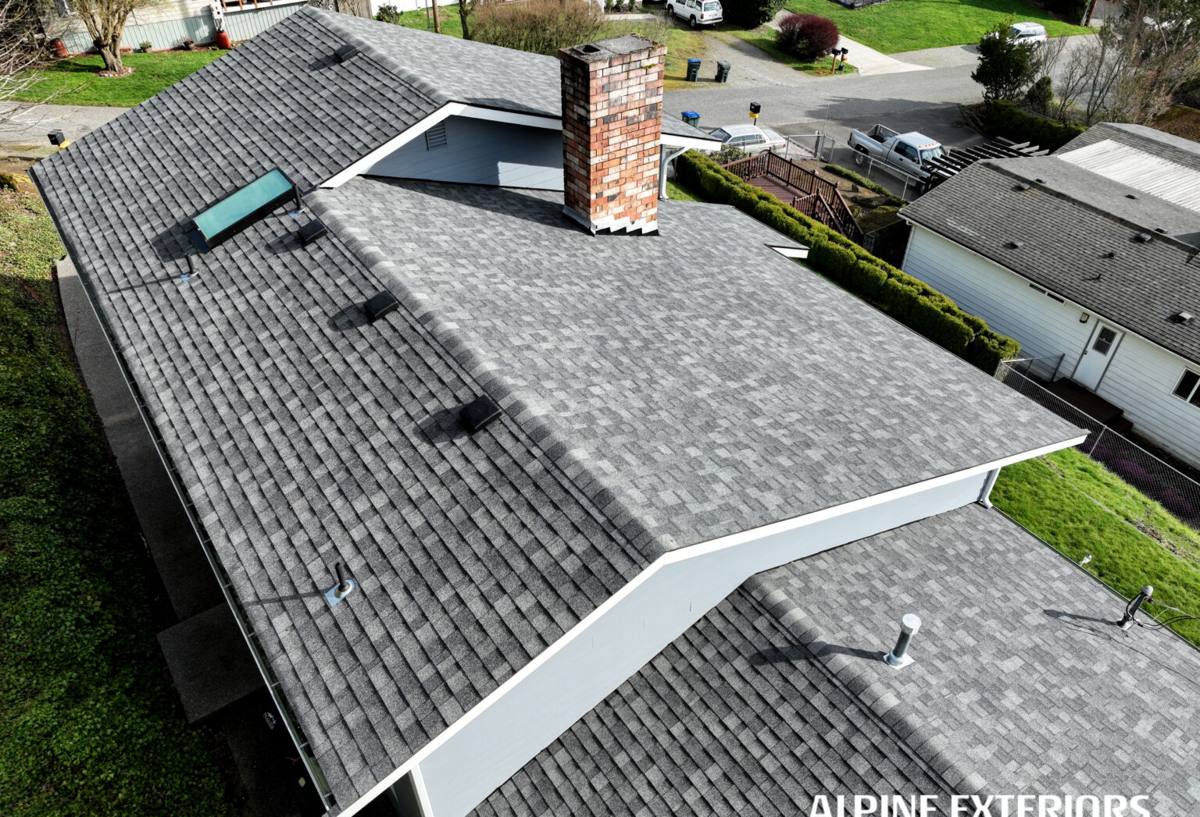
What a Correct New Roof Installation Actually Involves
A new roof is more than stripping off old shingles and nailing down new ones. In a climate like this, the details underneath the visible surface are what determine whether the roof lasts its full expected lifespan or starts leaking in year eight.
Tearing Off the Old Roof and Inspecting the Deck
A full tear-off lets us see the actual condition of the roof deck, not just guess at it. Soft, delaminated, or water-stained sheathing gets replaced before anything new goes down — installing new roofing over a compromised deck just hides a problem that will resurface, usually as a leak.
Underlayment and Moisture Barrier
Underlayment is the roof's backup plan, and in a wet climate it does real work, not just satisfying code minimums. We pay particular attention to eaves, valleys, and any low-slope transitions, where wind-driven rain and ice damming (on the colder days this area does get) are most likely to push water backward under the shingle edge.
Flashing, Valleys, and Edge Detail
Most roof leaks don't start in the open field of shingles — they start at flashing: around chimneys, skylights, sidewalls, and valleys. Properly formed and sealed flashing, cut and lapped correctly rather than caulked as a shortcut, is one of the biggest differences between a roof that holds up through decades of coastal storms and one that needs repairs within a few years.
Ventilation
Balanced intake and exhaust ventilation keeps the attic space at the right temperature and moisture level year-round. In a humid climate, poor ventilation traps moisture against the underside of the deck, which can rot sheathing from the inside even while the shingles above look fine.
Roofing Material Options for Laurel's Coastal Conditions
There's no single "best" roofing material for every home — it depends on the roof's slope, sun exposure, tree cover, and the homeowner's priorities around maintenance and budget. Here's how the common options actually perform under Laurel's specific mix of salt air, rain, and moss pressure.
| Material | Salt Air & Rain Performance | Moss Resistance | Typical Lifespan | Maintenance |
|---|---|---|---|---|
| Architectural asphalt shingle | Good, when installed with proper flashing and underlayment | Moderate — benefits from zinc/copper strips or algae-resistant granules | 25-30 years | Periodic moss and debris removal |
| Standing seam metal | Very good; sheds water fast and has no granules to lose | High — little for moss to grip on steep slopes | 40-50+ years | Low; occasional fastener and seam check |
| Synthetic composite shake/slate | Good; resists moisture absorption better than natural wood | Moderate to high depending on product | 30-50 years | Low to moderate |
| Cedar shake | Requires diligent maintenance in this climate | Low without regular treatment — holds moisture readily | 20-30 years with upkeep | High; regular cleaning and treatment needed |
Natural cedar shake can look great, but we're upfront with Laurel homeowners about the trade-off: it absorbs and holds moisture in exactly the conditions this area sees most, which means a heavier maintenance commitment to keep moss and rot at bay. For homeowners who want that look with less upkeep, a synthetic shake product is usually the more practical long-term choice. There's nothing wrong with cedar for homeowners willing to stay on top of its care — it's simply a bigger ongoing commitment here than in a drier climate.
Our New Roof Installation Process
- On-site inspection and estimate. We look at the existing roof, the deck condition where visible, ventilation, and any problem areas like valleys or chimney flashing, and put together a written estimate.
- Material selection. We walk through the trade-offs above based on your roof's exposure, slope, and how much maintenance you want to take on.
- Tear-off and deck inspection. Old roofing comes off completely, and any soft or damaged sheathing is identified and repaired before installation begins.
- Underlayment, flashing, and installation. Moisture barrier, flashing, and the roofing material go on in that order, with extra attention at valleys, penetrations, and eaves.
- Ventilation check. Intake and exhaust venting are confirmed to be balanced for the attic space.
- Final walkthrough and cleanup. We inspect the completed roof, clean the site of debris and nails, and go over care recommendations with you before we consider the job done.
Moss Prevention and Long-Term Roof Care in a Wet Climate
A new roof is the best time to build moss prevention in, rather than fighting it after the fact.
Zinc or Copper Control Strips
Installed near the ridge, these strips release trace metal ions with every rain that inhibit moss and algae growth on the slopes below. It's a simple, low-maintenance addition that pays off over years, especially on shaded roof faces.
Keeping Gutters and Valleys Clear
Debris in gutters and valleys holds water against roofing edges and gives moss a foothold. Regular clearing — especially heading into fall, when Whatcom County's leaf drop coincides with the start of the wet season — keeps water moving off the roof the way it's supposed to.
Managing Tree Canopy
Where practical, trimming back branches that overhang the roof reduces both moss pressure and the amount of debris that collects. It also lets more sun and airflow reach the roof surface, which slows regrowth between cleanings.
Signs Your Laurel Home Needs a New Roof, Not Another Repair
Not every roofing problem calls for full replacement, but certain signs indicate the roof has reached the point where patching is a temporary fix at best.
- Shingles that are curling, cracking, or losing granules across large sections rather than one isolated spot
- Daylight visible through the roof deck from inside the attic
- Soft or spongy spots when walking the roof, indicating deck damage underneath
- Recurring leaks in different locations after repairs, rather than one consistent trouble spot
- Heavy, persistent moss growth that keeps returning despite cleaning
- A roof approaching or past the expected lifespan of its material, especially if it's never had a tear-off replacement
- Visible sagging along the roofline
Permits, Timing, and Working Around Whatcom County Weather
New roof installations in this area typically require a permit through the applicable local jurisdiction, and we handle that process as part of the job rather than leaving it on the homeowner. On timing: the drier stretch from late spring through early fall is the easiest window for scheduling, since it allows for more predictable, uninterrupted work days. That said, roofing does get done here in the wetter months too — it just requires more careful scheduling around forecasts and proper tarping and sequencing to keep the home protected if weather moves in mid-project. We plan around the forecast rather than guessing.
What Affects the Cost of a New Roof Installation
Every roof is priced based on its own specifics, but the main variables are consistent from job to job.
| Factor | Why It Matters |
|---|---|
| Roof size and pitch | More surface area and steeper slopes both increase material and labor time |
| Material choice | Asphalt, metal, and synthetic products span a wide cost range, reflected in the table above |
| Number of existing layers | Tearing off multiple layers of old roofing adds labor and disposal cost |
| Deck condition | Rotted or soft sheathing found during tear-off needs replacement before installation continues |
| Flashing and ventilation upgrades | Bringing older flashing or ventilation up to current standards adds scope but reduces future leak risk |
| Site access | Steep lots, limited driveway access, or difficult roof access can affect labor time |
As a rough sense of scale, a straightforward asphalt shingle replacement on an average single-family home tends to land well below what a full metal roof of the same size would cost, with synthetic shake and slate products generally falling in between. Exact numbers depend entirely on the specifics above, which is why we walk the roof in person before giving a real figure rather than quoting off a phone call.
Why Hire a Crew That Already Works in Laurel
A roofing crew that regularly works in and around Laurel and the broader Semiahmoo area already knows which slopes tend to hold moss, which flashing details matter most against wind-driven rain, and how local permitting works — none of which has to be relearned on your project. That local familiarity translates into fewer surprises during tear-off, more accurate estimates up front, and a roof that's genuinely built for what this specific stretch of Whatcom County weather does to a house, not a generic install pulled from a different climate.
If you're weighing a new roof for your Laurel home, we're happy to take a look and walk you through what we find — no pressure, no obligation. Use the form below to request a free estimate.