 Semiahmoo Siding
 Why Laurel's Climate Is Hard on a Roof
Laurel sits close enough to the water that salt air is a daily fact of life, not an occasional nuisance. Add in the driving, wind-blown rain that comes off the Strait through the fall and winter, and a moss season that can run half the year in the shaded, damp corners of a roof, and you've got three separate stressors working on the same surface at the same time. Most roofing materials are engineered to handle one or two of these well. Very few handle all three without ongoing maintenance and eventual replacement on a shorter cycle than homeowners expect.
Salt-laden air accelerates corrosion on any exposed metal fastener, flashing seam, or gutter edge that isn't properly coated or isolated. Driving rain finds every gap in an underlayment or flashing detail that would be a non-issue in a drier climate, because in Whatcom County the wind doesn't let water fall straight down — it pushes it sideways, under laps and around penetrations. And moss doesn't just look bad; its root structure holds moisture against roofing material and, on the wrong substrate, works into seams and lifts edges over time.
None of this means metal roofing is a bad fit for Laurel — it's actually one of the better-suited materials for this exact combination of conditions, when it's specified and installed correctly. The issue is that "metal roof" covers a wide range of products and installation quality, and the difference between a roof that shrugs off thirty years of coastal weather and one that starts showing rust streaks and fastener failure in year eight comes down almost entirely to material choice and workmanship.
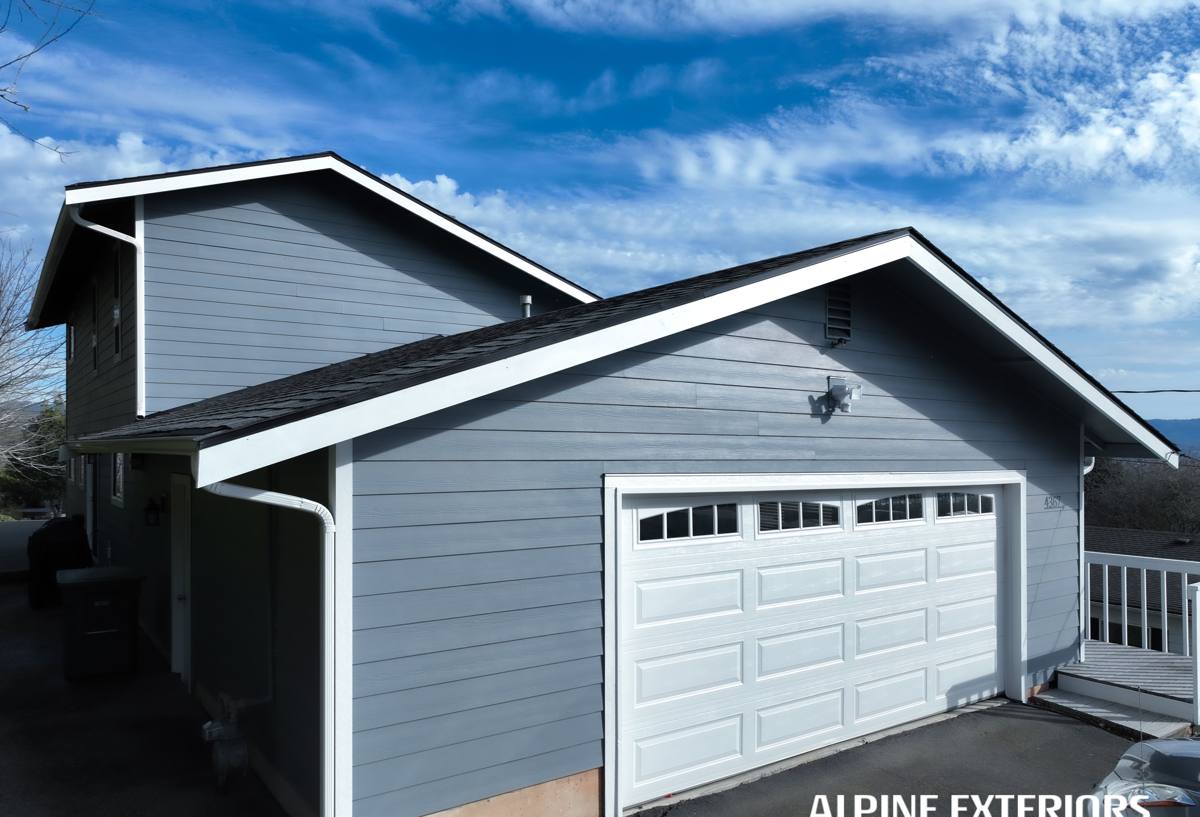
What Metal Roofing Needs to Get Right in This Climate
Corrosion Resistance at Every Component
The panel itself is usually the easy part — most reputable metal roofing systems use coatings designed for weather exposure. Where roofs actually fail near the water is at the details: exposed fasteners, cut edges, flashing joints, and dissimilar-metal contact points where galvanic corrosion can start. A correct installation treats every one of these as a weak point to be protected, not an afterthought.
Underlayment and a Real Water Management Plan
Because wind-driven rain in this area doesn't behave like a simple gravity flow, the underlayment and flashing system matter as much as the panels on top. A high-quality synthetic or self-adhered underlayment at eaves, valleys, and penetrations gives the roof a backup line of defense for the moments when wind pushes water somewhere it "shouldn't" be able to go.
Ventilation That Doesn't Trap Moisture
A metal roof installed over a poorly ventilated attic or roof deck can trap condensation underneath the panels, which causes problems from the inside that look identical to a leak from the outside. Getting intake and exhaust ventilation right isn't optional in a climate this damp — it's part of what makes the roof last.
Fastening and Panel Movement
Metal panels expand and contract with temperature swings, and fasteners that don't account for that movement work themselves loose over years, opening tiny gaps that salt air and rain exploit relentlessly. Panel systems and fastener spacing need to be matched to the roof's actual size, orientation, and pitch — not just installed to a generic spec.
Panel Systems We Install: How They Compare
Not every metal roofing profile is a good match for a coastal Whatcom County home. Here's how the main options stack up for a property like the ones we see around Laurel:
| Panel Type | Fasteners | Best Fit | Coastal Durability |
|---|---|---|---|
| Standing seam | Concealed, clip-fastened | Full re-roofs, homes with water/wind exposure | Highest — no exposed penetrations for salt or water to attack |
| Exposed-fastener panel | Screwed directly through the panel | Outbuildings, budget-conscious projects, lower-exposure roofs | Moderate — depends on gasket condition and re-torquing over time |
| Metal shingle/shake profile | Concealed or semi-concealed | Homes wanting a traditional look with metal's longevity | Good — more seams than standing seam, but still well-protected |
For homes with direct or near-direct exposure to salt air and prevailing wind, we lean toward standing seam because it has no exposed fasteners for corrosion or wind uplift to work against. Exposed-fastener panels are a legitimate option for detached garages, shops, or covered structures where budget matters more than 40-plus-year performance, but we're upfront that they carry a higher long-term maintenance burden this close to the water — gaskets under the fastener heads age, and re-torquing or replacing fasteners eventually becomes part of the roof's life cycle.
Where Roofs Actually Fail: The Details That Aren't the Panels
When we're called out to look at a failing metal roof in this area, it's rarely the field panels themselves that gave out first. It's almost always one of these:
- Flashing at chimneys, skylights, or wall-to-roof transitions that was undersized or sealant-dependent instead of properly lapped
- Valleys where two roof planes meet and wind-driven rain concentrates volume
- Fastener heads where the protective washer or gasket has degraded from UV and salt exposure
- Cut panel edges left unsealed, giving corrosion a starting point
- Ridge and hip caps that weren't ventilated correctly, trapping moisture underneath
- Ice and moss buildup in shaded north-facing sections that were never cleared, holding water against seams
This is why we treat the flashing and detail work as the real skill test on a metal roofing job — the panels are a commodity; the details are where the roof either lasts or doesn't.
Cost Factors on a Laurel Metal Roofing Project
Every roof is different, so we won't give you a number that means nothing until we've actually looked at your home. What we can tell you is what moves the price up or down:
| Factor | Impact on Cost |
|---|---|
| Panel type (exposed-fastener vs. standing seam) | Standing seam runs higher due to material and specialized labor |
| Roof pitch and accessibility | Steep or high roofs require more safety setup and labor time |
| Tear-off vs. install over existing roof | Full tear-off costs more upfront but avoids trapping moisture problems |
| Number of valleys, penetrations, and transitions | Each one adds flashing labor and material |
| Ventilation upgrades needed | Older Whatcom County homes often need intake/exhaust corrected as part of the job |
| Gutter and fascia condition | Salt-air corrosion often means these need attention alongside the roof |
Our Process, Start to Finish
- On-site assessment. We walk the roof (or use a lift/drone where access is limited), check the deck, existing ventilation, flashing condition, and moss/moisture patterns specific to your property.
- Honest scope and options. We explain what your roof actually needs versus what would be nice-to-have, and give you panel and budget options without pushing you toward the most expensive one by default.
- Written estimate. Clear line items — panel type, underlayment, flashing, ventilation work, tear-off if needed — so you know what you're paying for.
- Deck and moisture check before install. Any soft decking or trapped moisture from a prior roof gets addressed before a single panel goes down. Covering up a problem is not an option we take.
- Installation with coastal-grade detailing. Flashing, fastener protection, and ventilation done to the standard this climate actually requires, not the minimum code allows.
- Final walkthrough. We go over the finished roof with you, including what maintenance to expect and when.
Living With a Metal Roof Through Moss Season
A correctly installed metal roof in Laurel needs far less maintenance than composition shingle or wood shake, but "far less" isn't "none." Salt air and moss season both call for a bit of seasonal attention to protect your investment:
- Clear debris and moss growth from valleys and shaded north-facing slopes before it holds moisture against seams
- Rinse accumulated salt residue off the roof surface periodically, especially after long dry spells followed by rain
- Check gutters and downspouts each fall so water isn't backing up against roof edges during heavy rain
- Have flashing and fastener condition inspected every few years, not just when there's a visible leak
- Trim back overhanging branches that keep sections of roof shaded and damp longer than the rest
We're glad to walk you through a maintenance schedule specific to your home's exposure and roof design when we do your installation.
Why It Matters That We Already Work in Laurel
Roofing crews who mostly work inland don't run into salt-air corrosion, driving coastal rain, or heavy moss growth as a routine part of their week — so those conditions don't shape how they detail flashing or spec fasteners. A crew that regularly works Laurel and the surrounding Whatcom County coastline has already seen which details hold up here and which ones fail early, and builds that into every roof from the start rather than learning it from callbacks.
We're also simply easier to reach when you need us — for a scheduled maintenance check, a storm-damage inspection, or a question a few years down the line about a roof we installed. That local presence is worth something on a material that's meant to last decades.
Get a Straight Answer About Your Roof
If you're weighing a metal roof for a Laurel home, we'll come take a real look — your pitch, your exposure, your existing ventilation — and give you options and a written estimate with no pressure to decide on the spot. Use the form below to request your free estimate.