 Semiahmoo Siding
 Building a Deck That Actually Holds Up in Laurel
Laurel sits inland from the water but still gets the full weather package that defines this corner of Whatcom County: salt-tinged air drifting off the Strait, long stretches of driving rain through fall and winter, and shaded, damp yards that stay wet long after the rain stops. A deck built here needs more than good-looking boards on top. It needs a structure underneath that's designed to shed water, resist corrosion, and keep breathing air so wood and hardware don't spend six months a year sitting wet.
We build and repair decks for homes in Laurel and the surrounding area, and the patterns repeat: decks that failed early almost always failed at the same few points — the ledger connection to the house, undersized or poorly coated fasteners, joists with nowhere for water to drain, and decking laid tight with no thought given to moss and algae. Get those details right and a deck in this climate can last decades. Get them wrong and you're looking at soft spots, rust streaks, and slick boards within a few years.
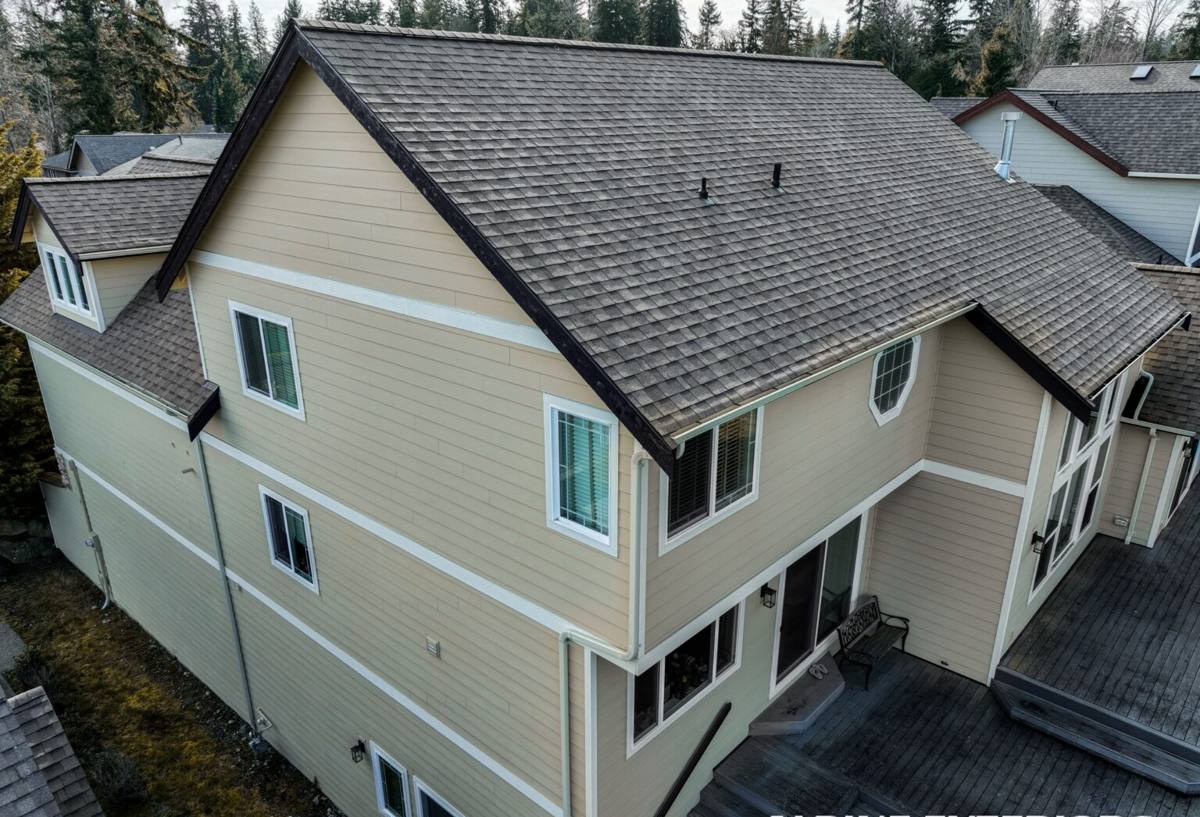
What Laurel's Setting Means for a Deck Build
Laurel is a mix of wooded lots and open rural parcels, and that matters more for deck longevity than most homeowners expect. Tree cover keeps decks shaded and damp for longer stretches after a storm, which is exactly the condition moss, algae, and wood rot need to take hold. Proximity to the water means airborne salt reaches further inland than people assume, accelerating corrosion on anything less than a properly rated fastener or hardware set.
Site conditions we account for
- Grade and drainage under and around the deck footprint, so water isn't pooling against posts or footings
- Sun exposure and tree canopy, which determines how fast a deck surface dries after rain and how much moss pressure to design against
- Wind exposure, which affects railing and guardrail bracing on more open lots
- Existing structure age and condition, if we're replacing or rebuilding on an older footprint
None of this is guesswork — it's a walk of the site before we ever talk materials, because the right deck for a shaded, damp lot in Laurel isn't always the right deck for an open, sun-exposed one a half mile away.
Framing and Foundation: Where Decks Actually Fail
The part of a deck nobody sees is the part that determines whether it's still solid in fifteen years. In a climate with this much sustained moisture, three framing details matter more than anything else.
Footings sized for the ground, not the minimum
Footings need to be sized and set to local frost depth and soil conditions, not just poured to the smallest size that will pass inspection. Undersized or shallow footings are a common source of deck movement and settling over time, especially where drainage is poor.
Ledger flashing done properly, every time
The ledger board — where the deck attaches to the house — is the single most common failure point on any deck in a wet climate. Without proper flashing that directs water away from the house band and wall assembly behind it, moisture works its way in behind the ledger and rots the framing from the inside, often invisibly, for years before it shows. We flash every ledger connection correctly and never skip this step to save time.
Fasteners and hardware rated for coastal air
Standard galvanized fasteners corrode faster in salt-influenced air than most people expect, leading to rust streaking, weakened connections, and stained decking around every screw head. We use stainless steel or coastal-rated hardware on connections that matter — structural fasteners, joist hangers, and any hardware exposed to the weather — rather than the minimum-grade materials that save a little money up front and cost more in repairs later.
Airflow and drainage in the frame
Joists and beams need gaps and spacing that let air move and water drain, not just fasten together tight. Joist tape over the tops of framing members adds another layer of protection where decking is fastened directly into wood that would otherwise trap moisture at every screw hole.
Choosing Decking Material for a Damp, Shaded Climate
There's no single "best" decking material — there's the right material for how a specific deck sits, how much sun and shade it gets, and how much upkeep the homeowner actually wants to do. In Laurel, where shade and moisture are common, that trade-off matters more than it does in drier, sunnier parts of the state.
| Material | How it handles this climate | Maintenance | General cost range |
|---|---|---|---|
| Pressure-treated wood | Affordable and strong, but needs consistent sealing to resist moisture and moss in shaded spots | Annual cleaning, periodic sealing/staining | Lowest upfront cost |
| Cedar | Naturally rot- and insect-resistant, ages well outdoors, but still needs care in wet, shaded areas | Regular cleaning and refinishing to maintain appearance | Mid-range |
| Composite decking | Resists moisture, rot, and moss buildup far better than wood; consistent performance in shade | Periodic washing, no staining or sealing | Higher upfront cost |
| PVC/capped polymer | Fully synthetic, best moisture and algae resistance of the group | Lowest ongoing maintenance | Highest upfront cost |
For heavily shaded, tree-covered lots that hold moisture longer, we often steer homeowners toward composite or capped polymer decking simply because it holds up to sustained dampness with far less upkeep. For sunnier, more open sites, a well-maintained cedar or treated wood deck can perform just as well and costs less to install. We'll walk your specific site with you and give you a straight comparison rather than pushing one product line.
Railings, Stairs, and Getting the Code Right
Guardrails, stair geometry, and baluster spacing are governed by building code, and Whatcom County requires permits and inspections for most new and rebuilt decks. This isn't paperwork for its own sake — guardrail height and spacing requirements exist because deck falls are a real injury risk, and stair rise/run consistency is what keeps stairs safe to use without thinking about it.
We pull permits, build to current code, and coordinate inspections as part of the job rather than treating it as an extra step. On an older deck, this is also where we often find the biggest gaps — railings that were never brought up to current spacing requirements, or stairs built without consistent rise, which are the kind of issues that don't show up until someone gets hurt.
Moss, Algae, and the Long Wet Season
Whatcom County's moss season runs long, and a shaded deck in Laurel can stay damp enough to grow moss and algae for much of the year if it isn't built and maintained with that in mind. A few design choices make a real difference:
- Proper board spacing so water drains through instead of pooling on the surface
- Decking material chosen with the site's actual sun and shade pattern in mind, not a one-size-fits-all default
- Clear space underneath the deck so airflow can help it dry out between rains
- Gutters or drainage directed away from the deck footprint, not onto it
A simple maintenance checklist for Laurel homeowners
- Sweep debris and standing leaves off the deck surface regularly through fall
- Wash the surface at least once a year to clear early moss and algae growth before it takes hold
- Check and clear the gaps between boards so they aren't clogged with debris that traps moisture
- Inspect the ledger flashing and house connection yearly for staining or soft wood
- Reseal or restain wood decking on the schedule the product actually needs — don't stretch it to save time
Our Deck Building Process
We keep the process straightforward and make sure you know what's happening at each stage:
- Site walk and design conversation — we look at sun, shade, drainage, and how you actually want to use the space
- Material and layout recommendation — an honest comparison of options for your specific site, not a single default pitch
- Permitting — we handle the Whatcom County permit and inspection process
- Framing and foundation work — footings, ledger flashing, and structural framing done to hold up in this climate
- Decking, railings, and stairs — installed to code with attention to drainage and long-term maintenance
- Final walkthrough — we go over care and maintenance so the deck performs the way it's supposed to for years
Why a Crew That Already Works Laurel Matters
A deck built for a dry, sunny climate isn't automatically wrong here — but a crew that hasn't spent time building in Whatcom County's mix of salt air, sustained rain, and shaded, moss-prone lots is more likely to miss the details that actually matter locally: which fasteners hold up, which materials fight moss without constant upkeep, and where local frost depth and drainage conditions call for footings built stronger than the bare minimum. We've built decks across this kind of terrain and weather long enough to know where problems start, and we design and build to avoid them from the first footing.
If you're planning a new deck or need an honest look at one that's showing its age, we're happy to walk the site with you and talk through what it actually needs. Reach out for a free, no-pressure estimate using the form below.