 Semiahmoo Siding
 Why Wiser Lake Homes Wear Out Siding Faster Than People Expect
Wiser Lake sits inland from Semiahmoo and Drayton Harbor, but it doesn't escape the marine-influenced weather that defines this part of Whatcom County. Moist air moves in off the Salish Sea and settles over the lake basin, tree cover holds humidity close to exterior walls, and long stretches of the year bring low-angle rain that drives sideways into siding rather than falling straight down. Add a moss season that can run from early fall through late spring, and you have a climate that punishes any siding product with weak seams, absorbent cores, or a finish that can't hold up to sustained dampness.
Homeowners around Wiser Lake often notice the same pattern: siding that looked fine for the first several years starts showing swelling at the bottom edges, dark streaking under eaves and behind landscaping, and soft spots near ground contact or window trim. That's not bad luck — it's what happens when a siding product not engineered for this kind of sustained moisture exposure meets this particular climate.
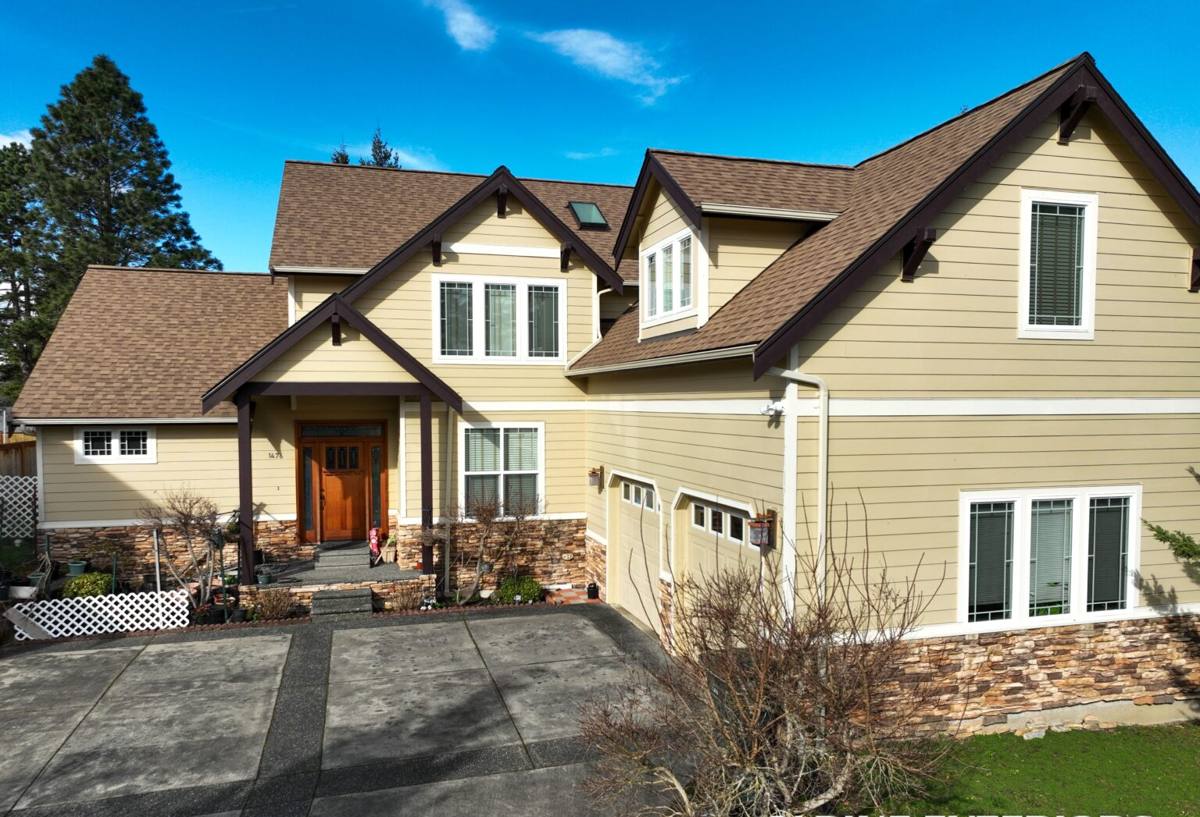
What James Hardie Brings to a Lake-Area Property
James Hardie fiber cement siding is made from cement, sand, and cellulose fibers, pressed and cured into a dense board that doesn't absorb water the way wood-based or wood-fiber products do. It's non-combustible, holds paint and factory finish far longer than wood substrates, and doesn't provide the food source that moss, mold, and rot organisms need to establish themselves the way organic materials do.
The HZ5 Climate Engineering
James Hardie engineers its products by climate zone, and the Pacific Northwest falls under the HZ5 designation — built specifically for regions with sustained rain, humidity, and freeze-thaw cycling. HZ5 panels are formulated to resist moisture-related damage in exactly the conditions Wiser Lake sees most of the year, rather than being a general-purpose product adapted after the fact.
ColorPlus Factory Finish
Most Hardie installs we do use ColorPlus Technology — a factory-applied, baked-on finish that's more consistent and more weather-resistant than field-applied paint. In a climate where a house might not get a fully dry week for months at a time, a finish that was cured under controlled conditions before it ever reached the site holds up better than paint applied on-site in marginal drying weather.
How Moss, Moisture, and Damp Air Actually Attack Siding
It helps to understand the mechanism, not just the symptom. Moss and algae need three things to take hold on a wall: a food source, sustained moisture, and a surface texture that holds water rather than shedding it. Wood-based siding products supply the food source directly. Any siding installed with tight or non-existent capillary gaps traps moisture against the wall long enough for growth to start. And a rough or porous surface finish gives spores something to grip.
Fiber cement removes the food source. A correct installation — with proper drainage gaps, flashing, and clearances — removes the sustained moisture. And a factory finish gives algae and moss spores less to hold onto. None of that makes a house moss-proof; moss will still grow on gutters, roofs, decks, and anything else exposed to Whatcom County's damp air. But it takes the siding itself out of the equation as a moisture reservoir, which is where most of the real damage happens over time.
What a Correct James Hardie Installation Actually Involves
The product only performs as engineered if the installation matches Hardie's published specifications. This is where a lot of siding jobs — on any brand — fall short, and it's the difference between siding that lasts and siding that fails early despite being a good product on paper.
- Weather-resistant barrier: A continuous, correctly lapped house wrap or building paper behind the siding, with no gaps at seams or penetrations.
- Proper fastening: Corrosion-resistant fasteners, driven to Hardie's specified depth and spacing — not overdriven, which cracks the board's edge and creates an entry point for water.
- Clearances: Minimum gaps between siding and roofing, decks, patios, and grade, so the board isn't sitting in standing water or constant splash-back.
- Flashing at every penetration: Windows, doors, hose bibs, light fixtures, and vents all need flashing details that shed water away from the wall assembly, not just caulk covering a gap.
- Joint treatment: Butt joints and seams sealed or flashed per Hardie's specification, not just butted tight and caulked.
- Painting seams if field-cut: Any factory edge cut on-site needs to be sealed with touch-up product before installation, so the exposed cement core isn't left absorbing water.
Skip any one of these and you can end up with a wall assembly that traps moisture behind Hardie board just as effectively as behind a lesser product — the siding itself won't be the weak point, but poor workmanship around it will be.
Our Process for a Wiser Lake Siding Project
- On-site assessment. We look at existing siding condition, moisture staining, trim and flashing details, and any problem areas — north-facing walls, shaded sections near trees, and low-clearance spots tend to need extra attention here.
- Scope and product selection. We walk through profile options (lap, shingle, panel), color, and trim to match the home and the site conditions, and provide a written scope.
- Tear-off and sheathing check. Old siding comes off and we inspect the sheathing underneath for rot or moisture damage before anything new goes up — this is often where hidden problems from the old siding show up.
- Weather barrier and flashing. House wrap, flashing at every penetration, and drainage details go in before a single piece of Hardie touches the wall.
- Installation to Hardie spec. Fastening, spacing, clearances, and joint treatment follow James Hardie's published installation guidelines, not shortcuts.
- Final walk-through. We review the finished job with the homeowner and cover basic care going forward.
Choosing the Right Hardie Profile for a Wiser Lake Home
James Hardie makes several siding profiles, and the right one depends on the home's style, the site's exposure, and how much of the wall assembly is shaded or damp for long stretches of the year.
| Profile | Best fit | Note for this climate |
|---|---|---|
| HardiePlank lap siding | Most home styles, traditional and modern | Widely used here; pick a wider exposure on heavily shaded walls to reduce visible lap lines when damp |
| HardieShingle | Craftsman and cottage-style homes | More surface texture and seams, so correct gapping and flashing matter even more in wet conditions |
| HardiePanel | Modern builds, accent walls, gable ends | Vertical panel joints need careful batten and flashing detail to shed driving rain properly |
| HardieTrim | Window, corner, and fascia trim | Pairs with any profile; keeps trim from being the weak link if the rest of the wall is fiber cement |
What Affects the Cost of a Hardie Project Here
We don't post fixed prices because every home and site is different, but the main cost drivers on a Wiser Lake project are consistent enough to explain upfront.
| Factor | Why it matters |
|---|---|
| Existing wall condition | Rot or moisture damage found under old siding adds sheathing repair before new siding can go on |
| Home size and wall complexity | More corners, dormers, and roof lines mean more cutting, flashing, and labor time |
| Profile and finish selection | Shingle and panel profiles generally take more labor time than straight lap siding |
| Site access | Tree cover, slope, and lake-adjacent lot layouts common around Wiser Lake can affect staging and scaffolding |
| Trim and detail work | Extensive trim, window casing, or accent details add material and install time |
Why a Crew That Already Works Wiser Lake Matters
Siding installation is one of those trades where the manufacturer's instructions are the same everywhere, but the judgment calls that matter — how much clearance to leave near a shaded lake-adjacent wall, where moisture tends to collect on a specific home's exposure, how to sequence work around Whatcom County's rain patterns — come from having actually worked this area. A crew that's installed Hardie on homes around Wiser Lake and greater Whatcom County has already seen how local siting, tree cover, and weather patterns play out on a finished wall a few years later, not just on installation day.
That local experience also shows up in scheduling and sequencing. Knowing when the region typically gets a workable dry stretch, and planning tear-off and weather barrier installation around it, reduces the chance of sheathing sitting exposed during a rain event — a real risk on a job scheduled without accounting for this area's weather.
Keeping James Hardie Siding Performing Long-Term
Hardie siding installed to spec is low-maintenance, not no-maintenance. A little routine attention keeps it performing the way it's engineered to.
- Rinse siding with a garden hose once or twice a year to clear pollen, dust, and early moss or algae growth before it establishes.
- Keep gutters clean and functioning — overflow running down a wall is one of the most common causes of localized moss and staining.
- Trim back tree branches and shrubs that hold moisture against the siding or block sun and airflow.
- Check caulking at trim, windows, and joints annually and touch it up before gaps let water behind the board.
- Watch for any soft spots, cracking, or paint failure and address it early — a small repair now is far cheaper than a larger one later.
If you're weighing a siding project for a home in or near Wiser Lake, we're happy to take a look and walk you through what your specific home needs — no pressure, no obligation. Fill out the form below for a free estimate.