 Semiahmoo Siding
 Sumas Sits in a Tougher Spot Than It Looks
Sumas doesn't get the postcard version of Pacific Northwest weather. Tucked against the Canadian border at the low end of the Nooksack and Sumas River valleys, this town catches the same marine-driven storm systems that roll off the Salish Sea and push inland through Whatcom County, then holds onto the moisture longer than higher, more exposed ground does. The valley floor stays shaded and damp well after the rest of the county has dried out, and that combination of driving rain, cool temperatures, and long stretches without direct sun is exactly the environment moss, mildew, and slow water damage need to take hold on a house.
Homeowners who move here from drier climates are often surprised at how fast siding shows wear. It's rarely one dramatic storm that causes the damage. It's the accumulation — rain that never quite lets a wall assembly dry out between storms, moss that establishes itself in shaded north-facing corners and keeps organic moisture pressed against the surface, and freeze-thaw cycles in the colder months that punish anything already compromised by trapped water. Siding chosen for a milder or drier climate, or installed without real attention to drainage and flashing, tends to fail here years before it should.
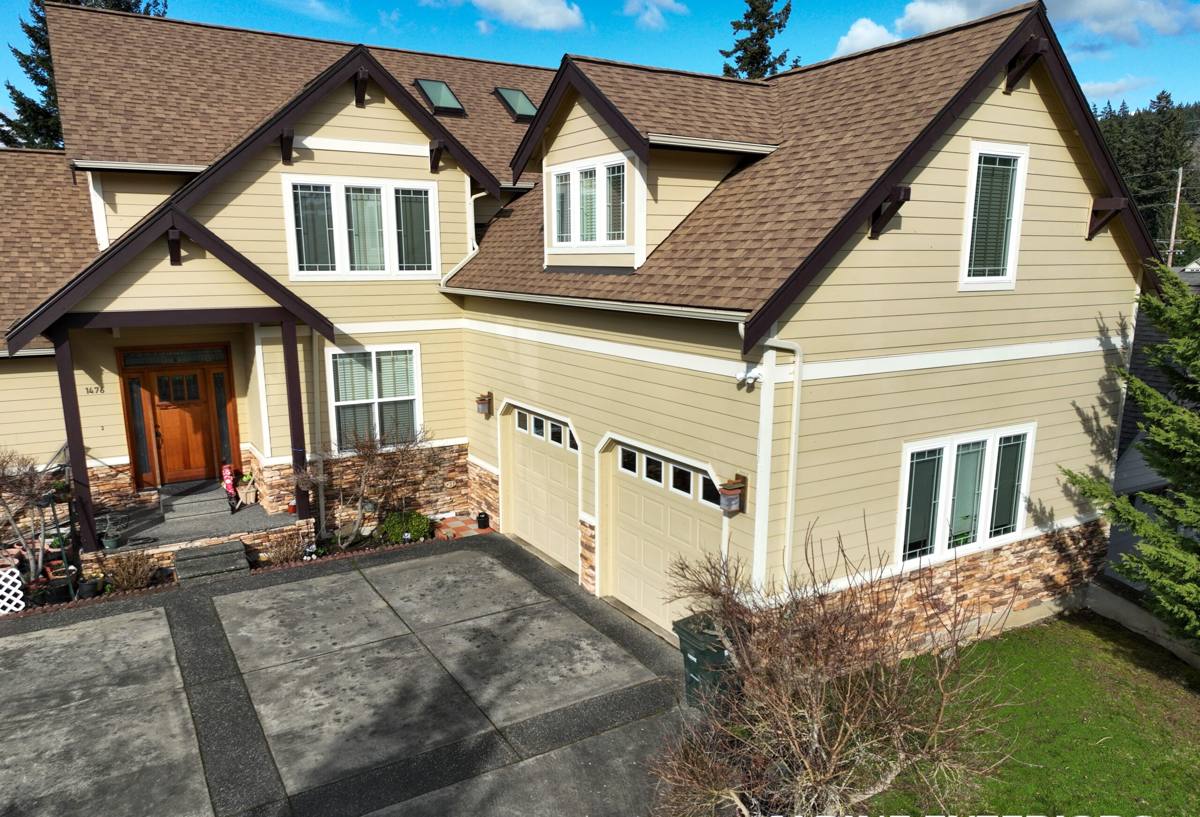
What Whatcom County's Climate Actually Does to a Wall
Driving Rain and Wind-Driven Moisture
Storms coming through this part of Whatcom County aren't always gentle, straight-down rain. Wind pushes water sideways into lap joints, around windows, and behind poorly sealed trim. Siding systems that rely on caulk and paint alone to keep water out, rather than a proper drainage plane behind the cladding, eventually let moisture in — and once it's behind the siding, it has nowhere good to go.
Moss and Prolonged Dampness
Sumas's tree cover, valley shade, and cool damp air give moss a long growing season compared to more open, sun-exposed parts of the county. Moss doesn't just sit on top of siding — it holds water against the surface, keeps that section of wall wetter longer than the rest of the house, and accelerates whatever material is underneath it, whether that's paint failure, substrate softening, or fastener corrosion.
Freeze-Thaw at the Margins
Whatcom County isn't the coldest corner of Washington, but Sumas does see real freezes, especially on clear winter nights when cold air settles in the valley. Any siding material that has already absorbed moisture from the rainy months is far more vulnerable when that water freezes and expands. This is where a lot of lower-grade siding products show their age first — at butt joints, cut ends, and anywhere water had a chance to get in before winter.
Why We Install Only James Hardie Fiber Cement
We made a deliberate decision as a company to install one siding system: James Hardie fiber cement. We don't offer vinyl, LP SmartSide, Cemplank, Allura, primed spruce, or cedar as alternatives, and that's worth explaining rather than just stating.
Vinyl is inexpensive and low-maintenance in the sense that it doesn't need paint, but it's a thin plastic product that can crack in a hard freeze, warp under heat, and simply doesn't hold up structurally the way fiber cement does over decades of PNW weather cycling. Engineered wood products like LP SmartSide perform well when kept dry, but wood-based siding is inherently more vulnerable to the exact conditions Sumas produces — sustained dampness and moss — because any breach in the factory coating exposes wood fiber to moisture. Primed spruce and cedar are real wood, which means real wood problems: they need ongoing painting, staining, and caulking to keep water out, and in a climate where things rarely dry out fast, that maintenance schedule gets demanding fast. Other fiber cement brands like Cemplank and Allura are legitimate competitors to Hardie on paper, but we standardized on one manufacturer so our crews master one set of installation specs, one flashing and fastening standard, and one warranty structure — rather than splitting expertise across several product lines.
James Hardie is non-combustible, engineered specifically for regional climate zones, backed by a factory-applied ColorPlus finish that resists fading without needing to be painted on a homeowner's schedule, and comes with a strong transferable warranty when installed to the manufacturer's specification. That last part — installed to spec — is doing a lot of work in that sentence, and it's the next thing worth understanding.
The Hardie Product Lines That Make Sense for Sumas
James Hardie's HardieZone system is engineered for specific climate categories rather than a single one-size-fits-all formulation. Whatcom County's damp, freeze-capable climate calls for the zone formulation built to resist moisture intrusion and hold up through winter cold snaps, not the version engineered for warm, no-freeze regions. For most Sumas homes, that translates to a combination of:
- HardiePlank lap siding — the most common choice for traditional home profiles, available in several exposure widths and textures.
- HardiePanel vertical siding — used for board-and-batten looks or accent sections, common on garages, gables, and shed-style additions.
- HardieTrim — matched trim boards around windows, corners, and fascia so the whole system, not just the field siding, is fiber cement.
- ColorPlus factory finish — a baked-on finish that's more consistent and more durable against UV and moisture than field-applied paint, which matters in a climate where paint doesn't get much of a chance to fully cure between rain events.
Color selection matters here too. Darker, low-sheen finishes hide the early stages of moss and organic staining less effectively than some lighter tones with a slight sheen, so we talk through color as a practical decision, not just an aesthetic one, when a home sits in a shaded or damp part of the property.
What a Correct Installation Actually Involves
Fiber cement siding is only as good as the assembly behind it. The board itself resists moisture well, but the way it's installed determines whether water that reaches the wall ever gets a chance to cause damage. This is the part of the job that's invisible once the siding is up — and it's exactly where corners get cut on rushed installs.
| Detail | Correct Approach | Common Shortcut |
|---|---|---|
| Drainage plane | Weather-resistive barrier plus a rainscreen gap so any moisture that gets behind the siding can drain and dry | Siding fastened tight to the sheathing with no ventilation gap |
| Flashing at windows/doors | Integrated flashing that directs water out and away, lapped correctly with the barrier | Relying on caulk alone around openings |
| Fastener placement | Hardie-specified nailing pattern and fastener type for the exposure and substrate | Generic fastener spacing that risks board splitting or loosening |
| Clearances | Proper gap between siding and grade, roofline, and decks per manufacturer spec | Siding installed too close to grade or hardscape, wicking moisture |
| Cut ends | Sealed with manufacturer-approved sealant before installation | Raw cut ends left exposed to weather |
Every one of those "correct approach" details is also what James Hardie's transferable warranty is contingent on. An installation that skips the drainage plane or gets flashing wrong can void warranty coverage even though the siding boards themselves are undamaged — the failure traces back to the install, not the product.
Our Process, Start to Finish
1. On-Site Assessment
We look at the existing wall assembly, not just the visible siding — what's underneath matters as much as what's on top, especially on older Sumas homes where moisture may have already found its way in.
2. Scope and Product Selection
We walk through HardiePlank profiles, textures, and ColorPlus color options based on the home's exposure, shading, and your preferences, and put together a written scope before any work starts.
3. Removal and Prep
Old siding comes off, and we address whatever we find underneath — damaged sheathing, missing or failed weather-resistive barrier, or flashing that needs to be redone — before anything new goes up.
4. Installation to Manufacturer Spec
Drainage plane, flashing, fastening, and clearances are all installed per James Hardie's published specifications, which is what keeps the transferable warranty intact.
5. Final Walkthrough
We go through the finished job with you, not around it, so you know what was done and why.
What Drives Cost on a Sumas Siding Job
We don't quote pricing until we've actually seen the house — anything else is a guess — but these are the factors that move a project up or down in scope and cost.
| Factor | Why It Matters |
|---|---|
| Home size and wall complexity | More square footage, more corners, and more cutouts around windows and dormers all add labor time |
| Condition of the existing wall assembly | Hidden moisture damage or missing barrier found during removal adds repair scope before new siding can go on |
| Siding profile and texture | Some HardiePlank textures and narrower exposures take more time to install than others |
| Trim scope | Full HardieTrim replacement around every opening costs more than reusing sound existing trim |
| Access and site conditions | Tight lot lines, slopes, or landscaping close to the house can add setup and staging time |
Living With Fiber Cement Siding in a Moss-Prone Climate
Fiber cement doesn't need the maintenance schedule that wood siding does, but "low-maintenance" isn't "no-maintenance" anywhere in Whatcom County, and especially not in a valley town like Sumas. A little seasonal attention keeps the ColorPlus finish looking right and keeps moss from ever becoming a moisture problem.
- Rinse siding down at least once a year, more often on shaded or north-facing walls, to keep organic growth from establishing
- Trim back vegetation and tree limbs that keep sections of the wall in constant shade and slow drying
- Check caulking around trim and openings annually — caulk is a maintenance item even on a correctly installed system
- Clear gutters and downspouts before the fall rains so overflow isn't running down the siding face
- Look at grade and mulch beds near the foundation to make sure soil or bark hasn't crept up over the siding's bottom clearance
- Address moss the moment you see it starting, rather than waiting for it to spread
Why It Matters That We Already Work in Sumas
A crew that's installed siding across this valley knows which walls on a typical Sumas lot stay shaded longest, how far storm-driven rain actually reaches under an eave, and what the ground looks like after a wet winter. That's not something you get from a general contractor working from a regional average — it comes from doing the work here, repeatedly, and paying attention to how houses in this specific climate actually age. Combined with installing one product system to one consistent standard, that local familiarity is what keeps a siding job from becoming a problem five years down the road instead of a solution for the next thirty.
If you're weighing siding replacement or repair on a Sumas home, we're happy to come take a look, walk the exterior with you, and put together a straightforward, no-pressure estimate — just fill out the form below.