 Semiahmoo Siding
 Laurel's Marine Climate Puts Specific Demands on Siding
Homes in the Laurel area, tucked in close to Semiahmoo and Drayton Harbor in Whatcom County, sit right where marine weather meets the wall of a house. That's a different exposure than siding sees a few miles inland. Between salt-laden air, wind-driven rain, and a moss season that stretches most of the year in this part of Washington, siding here has to do more than look good on install day — it has to hold up to conditions that actively work against most exterior materials.
Salt Air and Onshore Moisture
Proximity to Semiahmoo Bay and the Strait of Georgia means a steady drift of salt-carrying air across Laurel roofs and walls. Salt is hygroscopic — it pulls moisture out of the air and holds it against whatever surface it lands on. On siding, that means more time spent damp, faster breakdown of paint films, and accelerated corrosion of any exposed metal fasteners or trim. Materials that are marginal in a dry climate get exposed quickly here.
Driving Rain Off the Strait
Northwest storms coming off the water don't just drop rain straight down — they push it sideways into wall assemblies, especially on the west- and south-facing elevations of Laurel homes. Wind-driven rain finds every gap, unsealed joint, and under-lapped panel. A siding system that isn't detailed correctly for this kind of exposure won't fail on day one; it fails quietly, behind the cladding, over a few winters.
A Moss and Mildew Season That Doesn't Really End
Whatcom County's long, mild, wet stretch from fall through spring keeps siding surfaces damp for extended periods, which is exactly what moss, algae, and mildew need to take hold. On shaded north walls and under roof overhangs in Laurel, that growing season runs even longer. Siding that absorbs moisture or has organic material in its makeup gives moss something to root into; siding that doesn't gives it nothing to hold onto.
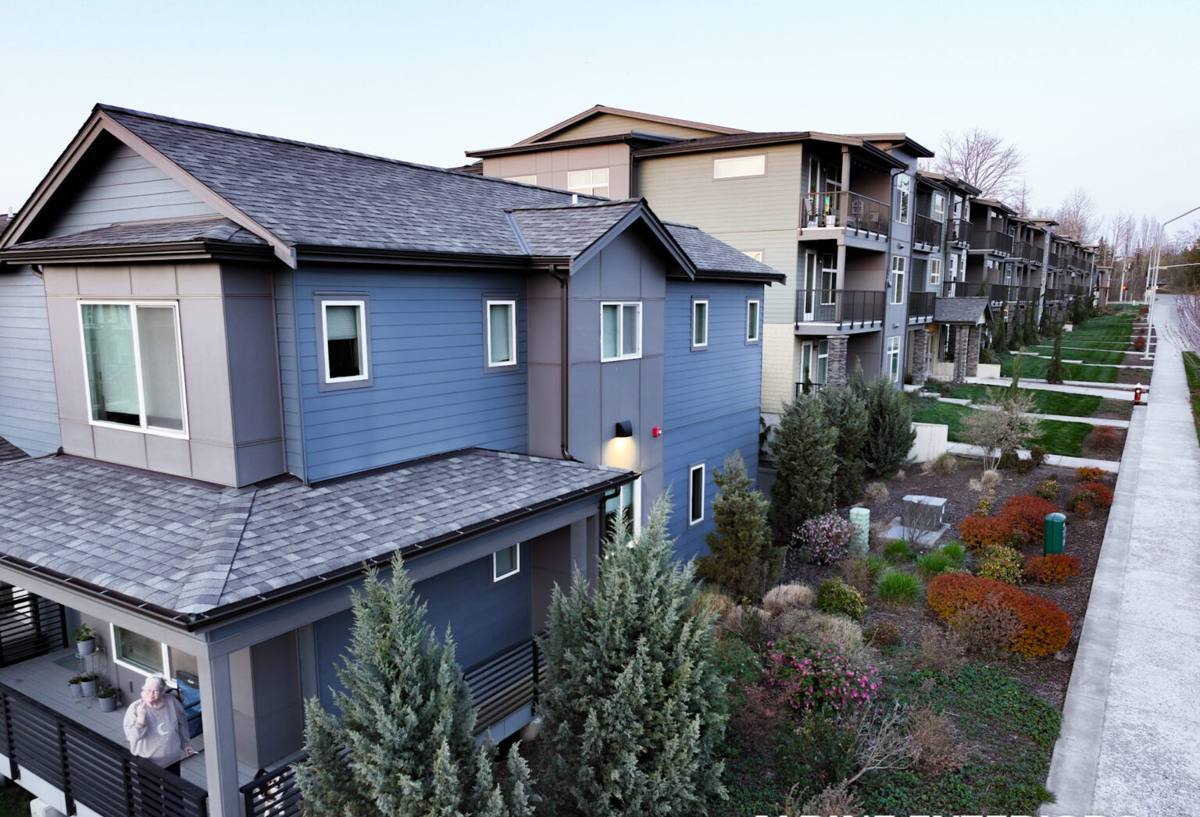
Why We Build Laurel Homes With Fiber Cement, Not Wood or Vinyl
We install James Hardie fiber cement siding exclusively — not as a sales preference, but because of how it performs against the exact conditions Laurel deals with. Fiber cement is engineered from cement, sand, and cellulose fibers, which makes it dimensionally stable in a way wood-based products and vinyl aren't. It doesn't swell when it takes on moisture, it doesn't rot, and it's non-combustible.
What Fiber Cement Actually Resists
The relevant properties for this location are straightforward: it won't absorb and hold water the way engineered wood siding can, it doesn't warp or soften from repeated wet-dry cycling, and its factory-applied ColorPlus finish holds color and resists fading and chalking far longer than field-applied paint on wood trim. None of that makes it maintenance-free, but it removes the failure points that salt air and driving rain exploit fastest.
| Factor | James Hardie Fiber Cement | Vinyl Siding | Primed Wood / LP-Type Products |
|---|---|---|---|
| Salt air / moisture exposure | Cement-based, does not rot or corrode | Doesn't rot, but can warp and become brittle over time | Vulnerable to moisture wicking and rot at joints and edges |
| Wind-driven rain resistance | Excellent when flashed and gapped to spec | Prone to water intrusion behind panels in high wind | Edge and seam sensitivity increases with moisture cycling |
| Moss and algae resistance | Non-organic surface, nothing for growth to root into | Resists growth but chalks and discolors over time | Organic wood-fiber content can feed moss and fungal growth |
| Fire resistance | Non-combustible | Combustible, can melt or deform near heat | Combustible |
| Repainting interval | Factory ColorPlus finish, typically 15+ years before repaint | Never repainted, but color/gloss degrades and can't be restored easily | Field-painted, usually needs repainting every 5-8 years in this climate |
What a Correct Fiber Cement Installation Actually Involves
Fiber cement siding is only as good as the installation behind it. James Hardie engineers its products around specific clearances, fastening patterns, and flashing details, and skipping any of them is exactly how a good material ends up with a bad outcome in a wet climate like this one.
Details That Separate a Correct Install From a Problem Install
- Minimum clearance from grade, roofing, decks, and horizontal surfaces so splash-back and standing water can't wick into the bottom edge of the siding
- Proper drainage plane and weather-resistive barrier behind the siding, not just tight-fitting panels
- Correctly lapped and sealed flashing at every window, door, and penetration — the most common place we find wind-driven rain getting in on older homes
- Fastener spacing, type, and corrosion resistance matched to the HardieZone requirements for this region, since undersized or wrong-material fasteners are a common source of streaking and early failure
- Butt joints treated correctly — caulked and painted, or flashed, per manufacturer detail, rather than left as a raw gap
- Panels installed with the manufacturer-specified gap where required, not force-fit tight, which lets the material handle normal expansion without cracking caulk lines
Every one of those details is inspectable, and every one of them is easy to shortcut if a crew is moving fast or isn't familiar with Hardie's published installation instructions. We build to those instructions because that's what keeps the manufacturer's warranty valid and what actually keeps water out of the wall.
Our Process for a Laurel Fiber Cement Siding Project
Assessment and Moisture Check
We start by walking the exterior and checking the condition of the existing siding, trim, and sheathing where accessible — particularly on north and west walls, which take the brunt of Laurel's moss growth and driving rain. If there's evidence of trapped moisture behind the current siding, we flag it before any new material goes up.
Prep and Removal
Old siding comes off, the weather-resistive barrier and flashing are inspected and repaired or replaced as needed, and any damaged sheathing is addressed. This is the stage where problems that have been hidden for years actually get found and fixed, rather than sided over.
Installation to Spec
Hardie panels, lap, or shingle siding go up following the manufacturer's HardieZone instructions for this climate zone — correct clearances, fastener pattern, flashing at every penetration, and properly treated joints. We don't deviate from spec to save time.
Final Inspection and Cleanup
We walk the finished job checking caulk lines, trim, and flashing details before we consider it done, and the site is cleaned up so there's no debris or old material left behind.
Why Hiring a Crew That Already Works This Area Matters
A siding crew that regularly works Semiahmoo and the surrounding Whatcom County communities already knows which walls in a given orientation take the worst weather, how long moss actually takes to establish on a shaded elevation here, and what flashing details tend to fail first on homes exposed to onshore wind. That's not something a crew coming from a drier or more sheltered region picks up on the first job. It shows up in small decisions — where extra flashing attention goes, how joints get sealed, which details get double-checked — that add up to a siding job that's actually built for Laurel's weather instead of a generic install dropped into it.
Keeping Laurel Siding Looking Right Year-Round
Fiber cement is low-maintenance compared to wood, but "low-maintenance" isn't "no-maintenance," especially in a climate that keeps surfaces damp for months at a time. A few consistent habits go a long way:
- Rinse siding annually, focusing on north-facing and shaded walls where moss and algae take hold first
- Keep gutters clear so overflow isn't running down the siding face during heavy rain
- Trim back vegetation and tree cover that keeps walls shaded and slow to dry
- Check caulk lines at trim, joints, and penetrations periodically and re-caulk if it's cracked or pulling away
- Address any bare or damaged spots promptly so moisture can't get behind the panel
- Have flashing and trim points looked at every few years, since that's where wind-driven rain problems typically start
What Affects Cost for a Laurel Fiber Cement Project
Every home is different, but the same handful of factors drive cost on most Laurel projects. We give straight, itemized estimates rather than vague ballpark numbers, but this is generally what moves the price:
| Cost Factor | Why It Matters |
|---|---|
| Condition of existing sheathing and framing | Hidden moisture damage found during tear-off adds repair scope before new siding can go up |
| Home size and wall complexity | More corners, dormers, and trim detail means more labor and material cutting |
| Siding profile and finish chosen | Lap, shingle, and panel styles, plus color and texture options, carry different material costs |
| Removal and disposal of old siding | Full tear-off of old wood or vinyl adds labor versus a bare-wall or new-construction install |
| Trim, flashing, and accessory work | Full replacement of window and door trim to match new siding affects scope and cost |
Why We Install Only James Hardie
We don't install vinyl, LP SmartSide, primed spruce, cedar, or other fiber cement brands. That's a deliberate standard, not a limitation. James Hardie's HZ product lines are engineered for climate zones like this one, the ColorPlus factory finish holds up longer than field-applied paint, and the product is non-combustible — a real advantage during Washington's increasingly active wildfire seasons. Combined with a strong transferable warranty and a track record we can stand behind when it's installed correctly, it's the material we're willing to put our name on for homes exposed to Laurel's salt air, rain, and moss.
If you're weighing a siding replacement or repair in the Laurel area, we're happy to take a look and put together a free, no-pressure estimate — no obligation, just a straight assessment of what your home actually needs.