 Semiahmoo Siding
 Why Roofs Wear Differently in Drayton Harbor
A new roof installed a few miles inland doesn't face the same conditions as one going up near the water in Drayton Harbor. Homes here sit close to Semiahmoo Bay, exposed to salt-laden air, wind-driven rain, and long stretches of overcast, damp weather that are typical of Whatcom County's marine climate. None of that is unusual for this part of Washington, but it does mean a roof built to a generic spec often underperforms here, sometimes by years, compared to one detailed specifically for coastal conditions.
Salt Air and Metal Fatigue
Salt in the air accelerates corrosion on anything metal — nails, flashing, drip edge, valley metal, and roof vents. A roof that uses standard fasteners or bargain flashing may hold up fine in a drier, inland neighborhood but start showing rust streaks, pinholing, or loosened fasteners within a handful of years near the harbor. This is one of the most common causes of early leaks we see on homes close to the water, and it's almost always preventable with the right materials at installation.
Moss, Shade, and Trapped Moisture
Whatcom County's wet season runs long, and many Drayton Harbor lots have mature tree cover that keeps parts of the roof shaded and slow to dry. That combination — moisture plus shade — is exactly what moss needs to take hold. Moss isn't just cosmetic. As it spreads, it lifts shingle edges, holds water against the roof deck, and works its way under flashing, which shortens the life of even a well-built roof if the installation didn't account for drainage and airflow from the start.
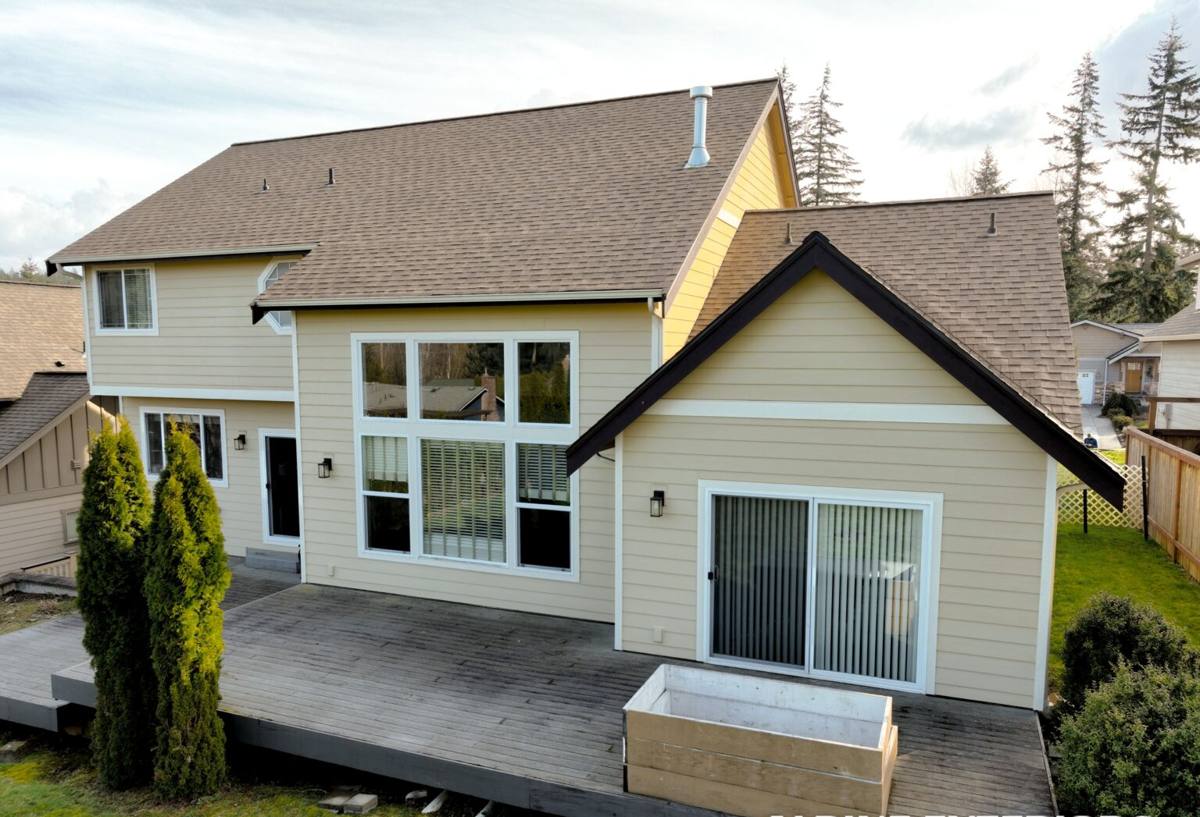
Signs Your Roof May Already Be Past Repair
Homeowners often call us for a repair and learn the roof is better replaced. These are the signs worth taking seriously, especially on homes over 20 years old or close to the shoreline:
- Granule loss showing up in gutters or at downspouts, leaving shingles looking patchy or bare
- Curling, cupping, or cracked shingles, especially on south- and west-facing slopes
- Soft or spongy spots when walking the roof, which usually means the deck underneath has taken on water
- Daylight visible through the attic roof boards, or damp insulation after a storm
- Rust staining around vents, flashing, or fasteners
- Moss or algae covering more than a small patch, particularly in shaded valleys
- Repeated leaks in the same spot despite prior patching
Any one of these on its own might be repairable. Several together, or a roof already past 18–20 years old, usually means a full replacement is the more honest recommendation, and it's what we'll tell you plainly during an inspection rather than stringing out repairs that won't hold.
What a Correct New Roof Installation Actually Involves
"New roof" covers a lot of ground, and the difference between a roof that lasts and one that fails early almost never comes down to the shingle brand alone. It comes down to what happens underneath and around it.
Tear-Off and Deck Inspection
We remove the old roofing down to the deck rather than layering over it. That lets us actually see the plywood or sheathing underneath, replace any boards that are soft, delaminated, or water-stained, and confirm the deck is solid before anything new goes down. Skipping this step is one of the most common shortcuts in the trade, and it's also how hidden rot gets sealed under a brand-new roof.
Underlayment and Water-Shedding Details
In a climate with as much driving rain as this one, the underlayment matters almost as much as the shingle itself. We use synthetic or ice-and-water-shield underlayment at vulnerable points — eaves, valleys, and around penetrations — to give the roof a second line of defense if wind-driven rain ever gets past the top layer. This is standard on our installs specifically because of the weather this area sees, not an upsell.
Ventilation
A roof that can't breathe traps moisture in the attic, which shows up as condensation, mold, and premature shingle failure from underneath — often before the shingles themselves show any wear on top. We check intake at the soffits and exhaust at the ridge or roof vents and correct the balance where it's off, which is common on older homes that were re-roofed once or twice without anyone revisiting the ventilation.
Flashing and Fasteners
Given the salt exposure near the harbor, we use corrosion-resistant flashing and fasteners rather than the standard-grade hardware that's fine further inland. Chimneys, skylights, sidewalls, and valleys are where the vast majority of roof leaks start, and it's almost always a flashing detail, not the field shingles, that's at fault.
Choosing Materials for a Marine Climate
There's no single "best" roofing material for every home — it depends on your budget, roofline, and how much upkeep you want to take on. Here's how the common options compare for a home exposed to salt air, rain, and moss:
| Material | Moss & Moisture Resistance | Salt Air Durability | Typical Lifespan | Maintenance |
|---|---|---|---|---|
| Architectural asphalt shingle | Good with proper ventilation and periodic cleaning | Good, especially with algae-resistant granules | 25–30 years | Low to moderate |
| Standing seam metal | Excellent — sheds water and resists moss growth | Very good with coated, marine-rated fasteners | 40–50+ years | Low |
| Cedar shake | Fair — attractive but holds moisture without diligent upkeep | Fair; needs regular treatment near salt air | 20–30 years with maintenance | High |
| Composite / synthetic shingle | Good — engineered to resist moisture absorption | Good | 30–50 years | Low |
For most Drayton Harbor homes we recommend a quality architectural asphalt shingle rated for algae and moss resistance, or standing seam metal for homeowners who want the lowest long-term maintenance and don't mind the higher upfront cost. We install what fits your home and budget honestly — we're not going to steer you toward the highest-margin product, and we'll walk through the real trade-offs of each option, including ones we don't typically recommend for this climate and why.
Our Installation Process
Every roof is different, but the sequence stays consistent because it's what produces a roof that holds up here:
- On-site inspection and honest assessment of whether repair or replacement makes sense
- Written estimate covering materials, scope, and timeline, with no vague allowances
- Material selection, matched to your roofline, budget, and exposure to weather and shade
- Permitting, where required by the local jurisdiction
- Tear-off, deck inspection, and any necessary sheathing repair
- Underlayment, flashing, and ventilation correction
- Shingle or roofing material installation to manufacturer spec
- Final walkthrough and cleanup, including a magnetic sweep for stray nails
We don't skip steps to hit a lower number on a bid. If a deck board needs replacing or the ventilation is off, we'll show you before covering it up, not after.
Why a Crew That Already Works Drayton Harbor Matters
A roofing crew that mainly works drier, inland areas may not think twice about standard fasteners or skip the extra underlayment at eaves and valleys, because it's never bitten them before. Working in and around Semiahmoo and the harbor day in and day out means we've already seen where salt air corrodes hardware first, which slopes hold moss longest given the tree cover and shade patterns common on local lots, and which flashing details actually fail in a Whatcom County winter. That's not a marketing point — it changes real decisions on your roof, from the fasteners we use to where we add extra water protection.
Keeping a New Roof Performing After Installation
A correctly installed roof still benefits from basic upkeep, especially in a climate this wet:
- Clear gutters and downspouts each fall so water isn't backing up under the roof edge
- Trim back overhanging branches to cut down on shade and debris buildup that feeds moss
- Have moss treated early rather than letting it spread across a full slope
- Schedule a walk-through inspection every couple of years, especially after a hard winter storm
- Address any small leak or soft spot right away rather than waiting for it to spread
None of this is intensive, but skipping it is how a well-installed roof loses years off its life.
What Affects the Cost of a New Roof Here
Pricing depends on more than square footage. The main factors we account for on a Drayton Harbor estimate are roof pitch and complexity, the number of valleys and penetrations (chimneys, skylights, vents), whether the deck needs repair once we open it up, the material you choose, and how much of the underlayment and flashing upgrade the exposure warrants. We'll walk through each of these on your estimate so the number makes sense, rather than handing you a flat per-square rate that doesn't reflect your actual roof.
If your roof is showing wear, has been patched more than once, or you just want a straight answer on whether repair or replacement makes sense, we're happy to take a look. Use the form below to request a free, no-pressure estimate — we'll walk the roof, explain what we find, and give you options rather than a single push toward the most expensive one.