 Semiahmoo Siding
 Windows Built for the Drayton Harbor Waterfront
Drayton Harbor sits right where Semiahmoo's shoreline meets open water, and that location shapes everything about how a window performs here. Homes along the harbor take on salt-laden air, wind-driven rain off the water, and a wet season that stretches on for months. A window that's perfectly fine forty miles inland can fail early here — not because it was a bad window, but because it was never built or installed for this exposure. Custom windows for a Drayton Harbor home means matching frame material, glazing, and installation detail to the actual conditions the house faces, not just picking something out of a catalog.
We work on homes throughout Semiahmoo and Whatcom County, and the harbor-facing properties get their own set of considerations every time. Salt air accelerates corrosion on hardware and fasteners. Driving rain finds gaps that would never leak in calmer weather. And the long moss season that settles over this part of Washington keeps trim, sills, and cladding damp for extended stretches, which means anything porous or poorly sealed around a window opening stays wet longer than it should.
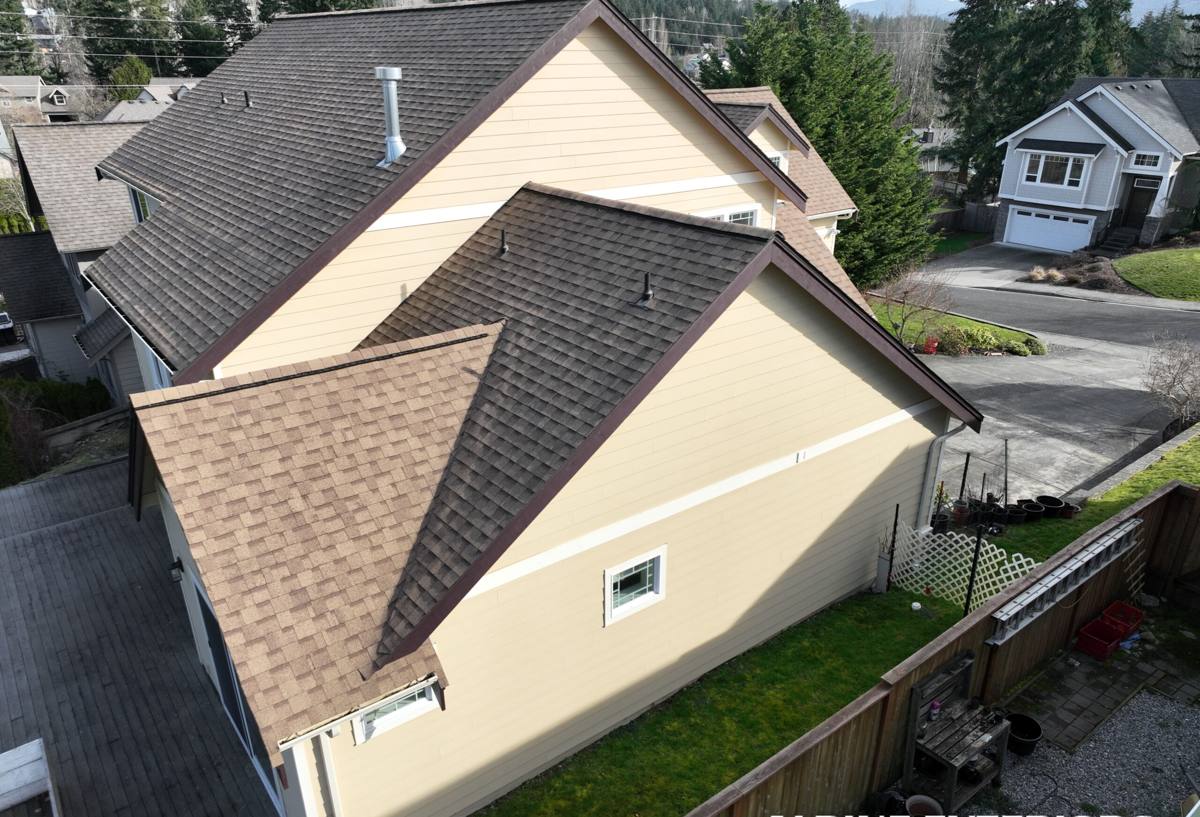
What Salt Air and Driving Rain Actually Do to Windows
It's worth being specific about the failure points, because "salt air is bad for windows" doesn't tell a homeowner what to actually watch for or ask about.
Hardware and Fasteners
Cranks, locks, hinges, and exposed screws are the first things to show wear near the water. Cheaper or mismatched hardware corrodes, seizes, or stains the surrounding frame. On a harbor-facing install, hardware selection matters as much as the window unit itself.
Sealant and Flashing Gaps
Wind-driven rain doesn't fall straight down — it gets pushed sideways into any gap in the flashing or sealant around a window opening. A window that's watertight in still weather can still leak here if the flashing detail underneath wasn't done correctly. This is an installation issue more often than a product issue.
Moisture That Doesn't Dry Out
Whatcom County's moss season means long stretches of damp, low-sun weather. Wood trim and sills that stay wet for weeks at a time are where rot starts, especially if the finish has worn thin or a seal has failed. Moisture that has nowhere to drain or dry becomes the slow, hidden problem — the kind that shows up as soft trim two or three years later, not right away.
Frame Materials: What Actually Holds Up Here
There's no single "best" window frame material for every home — it depends on the home's style, budget, and how exposed it is. But for harbor-facing properties, some trade-offs matter more than they would elsewhere.
| Frame Material | How It Handles Salt Air & Moisture | Maintenance |
|---|---|---|
| Vinyl | Doesn't corrode or rot; handles damp exposure well | Low — occasional cleaning |
| Fiberglass | Very stable in temperature swings and moisture; strong option near the water | Low |
| Aluminum-clad wood | Good exterior protection if cladding and seals are done right; interior wood still needs care | Moderate |
| Solid wood | Needs consistent finish maintenance to resist the long wet season | Higher — regular refinishing near the harbor |
We'll walk through these trade-offs honestly for your specific home rather than pushing one material across the board. A lot of it comes down to how much upkeep you want to commit to versus how much you'd rather the window handle on its own.
Glazing and Glass Choices That Matter on the Harbor
Custom windows aren't just about the frame — the glass package affects comfort, condensation, and energy use, especially in a marine climate like this one.
- Dual or triple pane with a quality seal: Keeps humidity and salt-laden moisture from working into the seal over time, which is where a lot of "fogged window" complaints come from.
- Low-E coatings: Help manage heat loss during Whatcom County's long cool, wet stretches without adding much cost.
- Argon or krypton gas fill: Improves insulation performance, worth considering on north- or water-facing exposures that see more wind.
- Warm-edge spacers: Reduce condensation at the glass edge, which matters in a climate where indoor-outdoor temperature and humidity gaps are common for much of the year.
What a Correct Custom Window Installation Involves
The window unit itself is maybe half the job. The other half — the part that determines whether it still performs in five or ten years — is the installation detail around the opening.
1. Opening Inspection
Before anything goes in, we check the existing opening for hidden moisture damage, soft framing, or old flashing that's already failed. On harbor homes, this step catches problems that a quick swap-and-install approach would just seal back in.
2. Flashing and Weather Barrier
Proper flashing directs water down and away from the opening, layered correctly with the house wrap or weather barrier so nothing channels water back toward the framing. This is the single most important step for stopping wind-driven rain intrusion.
3. Sealing Sequence
Sealant goes in specific locations, not everywhere — over-sealing can trap moisture just as easily as under-sealing lets it in. We use sealants rated for exterior, marine-adjacent exposure rather than general-purpose caulk.
4. Fastening and Shimming
Windows need to be shimmed square and fastened per the manufacturer's spec. A slightly out-of-square install stresses the frame and seals prematurely — a bigger deal on a house that's already taking wind load off the water.
5. Interior and Exterior Trim-Out
Trim materials and finishes get chosen with the moss season in mind — sealed, back-primed where appropriate, and detailed so water sheds instead of collecting at joints.
Signs a Drayton Harbor Home Needs Custom Windows Now
- Drafts or cold spots near the window frame, especially during wind off the water
- Visible fogging or moisture between panes — a sign the seal has failed
- Soft, discolored, or swelling trim and sills
- Hardware that's stiff, corroded, or won't lock cleanly anymore
- Green or black growth building up on frames or sills faster than it used to
- Windows that are original to an older home and were never upgraded for this exposure
Why "Custom" Matters More Here Than Elsewhere
Stock window sizing and generic installation specs are built around average conditions. A Drayton Harbor home isn't average — it's dealing with salt exposure, sustained wind-driven rain, and a moss season that keeps everything damp longer than most of the region. Custom windows means the sizing fits the actual opening (not a slightly-off stock size padded with extra shims and sealant), the frame material is chosen for this exposure, and the installation detail accounts for how water and wind actually behave on a harbor-facing wall. It's the difference between a window that looks right on install day and one that's still performing correctly in year eight.
Our Process for Drayton Harbor Custom Window Projects
- On-site assessment: We look at your current windows, the exposure your home actually faces, and any existing moisture or hardware issues.
- Material and glazing recommendation: Based on your home's style, budget, and how much maintenance you want to take on, we recommend frame and glass options — with honest trade-offs, not a sales pitch.
- Precise measurement: Custom sizing means the opening is measured correctly the first time, avoiding the gaps and shim-heavy installs that come from forcing a near-fit stock unit.
- Correct installation: Flashing, sealing, and fastening done in the right sequence for a marine-exposed opening.
- Final walkthrough: We check operation, seals, and trim-out with you before calling the job done.
Why Hire a Crew That Already Works Drayton Harbor
A crew that installs windows across Whatcom County but doesn't specifically account for harbor exposure will often use the same flashing and sealing approach they'd use on an inland home. That approach can look fine at handoff and still fail within a few wet seasons. Working this specific stretch of Semiahmoo regularly means we've seen which details actually hold up against salt air and driving rain here, and which shortcuts show up as callbacks two or three years later. That local pattern recognition is worth more than a generic installation checklist.
What Custom Windows Typically Involve, Cost-Wise
Pricing depends heavily on frame material, glazing package, number of openings, and whether any hidden framing repair turns up once the old windows come out. Rather than quote a number that won't match your home, we walk every project through an honest, itemized estimate so you know what's driving the cost and where you have room to adjust.
If you're noticing drafts, fogged glass, or worn-out trim around your windows, or you're planning a broader update for a Drayton Harbor home, we're glad to take a look. Request a free, no-pressure estimate using the form below — we'll assess your home's actual exposure and give you a straight answer on what it needs.