 Semiahmoo Siding
 Roofing in Drayton Harbor Isn't the Same Job as Roofing Inland
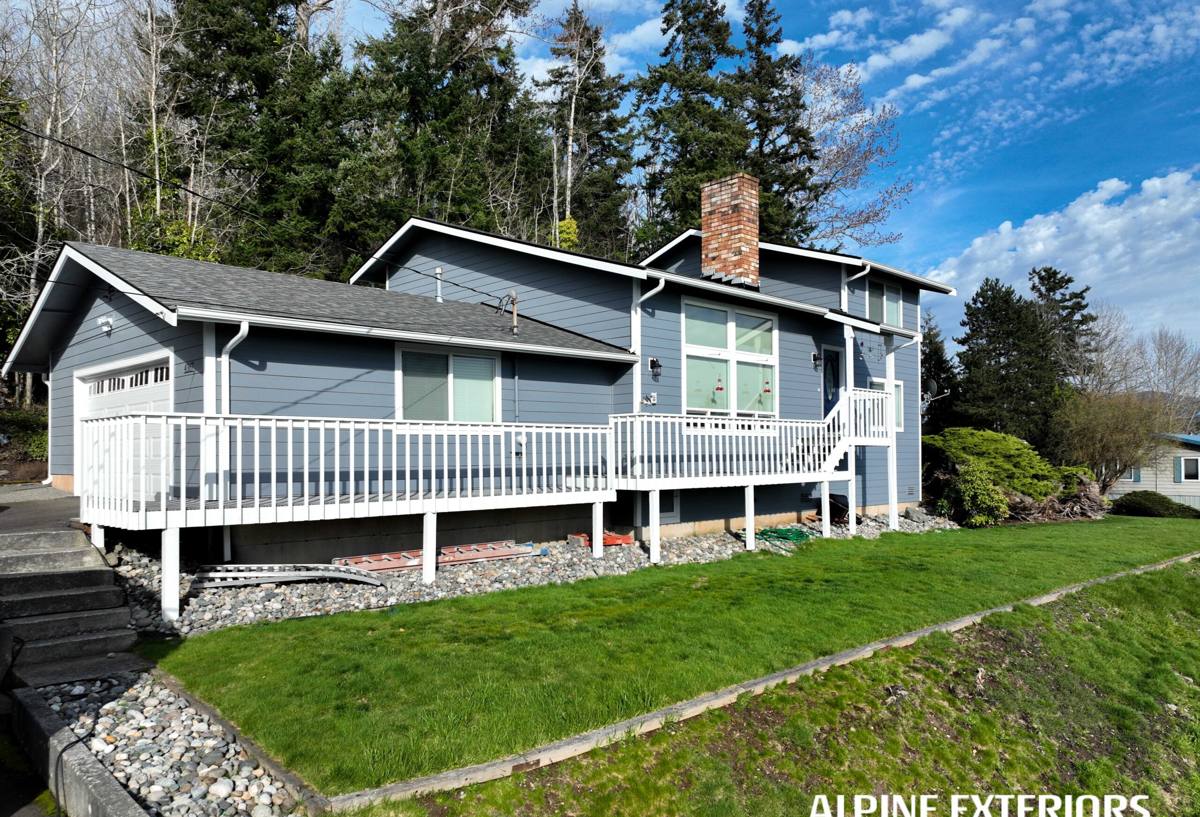
Drayton Harbor sits right where the marine air off Semiahmoo Bay meets everything a Pacific Northwest winter can throw at a roof. That combination — salt-laden air, wind-driven rain that comes in sideways off the water, and long stretches of shade and dampness that never quite dry out — wears on an asphalt shingle roof differently than a roof a few miles inland in Blaine or Ferndale. Fasteners corrode faster near the water. Moss and algae take hold sooner and spread harder in the shaded, north-facing sections of a roof that stay wet longest. Flashing details that would be fine on a drier lot become the first place a leak starts here.
None of that means Drayton Harbor homes need exotic materials. It means the installation has to account for the specific way this climate attacks a roof, not just follow a generic spec sheet. That's the difference between a shingle roof that looks right for a season and one that actually holds up through a decade of Whatcom County winters.
What Salt Air, Rain, and Moss Actually Do to a Shingle Roof
Salt Air and Corrosion
Airborne salt accelerates corrosion on anything metal — nail heads, flashing, vent stacks, gutter hardware. Standard electro-galvanized fasteners can start showing rust streaks well before the shingles themselves are due for replacement. Once a fastener corrodes, it loses grip, and a shingle that lifts even slightly becomes an entry point for wind-driven rain.
Driving Rain
Rain that falls straight down is easy for any roof to shed. Rain that's being pushed sideways by wind off the bay behaves differently — it can work its way up under a shingle tab, along a valley, or around a poorly lapped piece of flashing. Roofs here need every water-management detail done correctly, not just "close enough," because the margin for error is smaller.
Moss and Algae
Shade, moisture, and mild temperatures are exactly what moss wants. Left alone, moss holds water against the shingle surface, lifts tabs as it grows, and shortens the roof's life. Algae shows up as dark streaking, which is mostly cosmetic but is also a sign of moisture sitting on the roof longer than it should.
What a Correctly Installed Roof Needs in This Climate
Underlayment and Water Management
A synthetic underlayment with good tear strength, properly lapped and fastened, is the real backup layer under the shingles — it's what protects the deck if wind ever gets under a tab. In valleys, at eaves, and around any roof penetration, self-adhering waterproof underlayment gives an extra line of defense in the spots where wind-driven rain is most likely to find a way in.
Ventilation
A roof that can't breathe traps moisture in the attic, which shows up as condensation, premature deck rot, and shingles that fail from underneath rather than from weather exposure on top. Balanced intake and exhaust ventilation matters as much on a Drayton Harbor roof as anywhere — arguably more, given how much moisture is already in the air here most of the year.
Flashing and Valleys
Chimneys, skylights, dormers, and valleys are where the majority of shingle roof leaks actually start — not in the open field of shingles. Flashing needs to be the right material, properly lapped with the underlayment and shingles (not just caulked over), and sized to handle the volume of water a heavy Pacific Northwest storm actually produces.
Choosing the Right Shingle for a Marine Climate
Not every asphalt shingle is built the same, and the differences matter more here than in a drier climate. We look at wind rating, algae resistance, and how the shingle's design sheds water at the tab, not just color and price.
| Shingle Type | Typical Wind Rating | Expected Lifespan | Best Suited For |
|---|---|---|---|
| 3-Tab (economy) | 60–70 mph | 15–20 years | Budget-driven projects, secondary structures |
| Architectural / Dimensional | 110–130 mph | 25–30 years | Most Drayton Harbor homes — better wind and water performance |
| Impact-Resistant / Premium | 130+ mph | 30+ years | Exposed sites, higher-wind lots near the water |
For most homes in this area, an architectural shingle with a built-in algae-resistant (AR) rating — copper or zinc granules mixed into the surface — is the practical middle ground. It costs more than a basic 3-tab up front but resists staining and holds its wind rating better, which matters more here than in a sheltered inland lot.
Moss, Algae, and the Maintenance Reality
Even a well-installed roof in this climate needs some ongoing attention. We're upfront about that rather than pretending a shingle roof here is maintenance-free.
- Keep gutters and valleys clear so water isn't sitting against the shingle edges
- Trim back overhanging branches to reduce shade and let the roof surface dry between rains
- Have moss growth removed with proper technique — scraping or pressure-washing the wrong way strips granules and shortens shingle life
- Consider zinc or copper strips near the ridge on shaded sections, which slowly inhibit new moss growth as rain washes over them
- Schedule a visual roof check after major windstorms, since lifted or missing shingles are easy to miss from the ground
None of this needs to happen constantly, but skipping it entirely is how a roof that should last 25 years starts failing at 15.
Our Process for a Drayton Harbor Roof Installation
The steps aren't unusual, but how carefully each one is done is what determines whether the roof performs in this specific climate.
- Inspection and estimate — we look at the existing roof, decking condition, ventilation, and any trouble spots like valleys or chimney flashing before quoting anything.
- Tear-off — old shingles and underlayment come off completely so we can actually see the deck, not just cover a problem up.
- Deck repair — any soft, rotted, or delaminated sheathing gets replaced before a single new shingle goes down.
- Underlayment and flashing — synthetic underlayment across the field, self-adhering membrane at vulnerable points, new flashing where the old flashing is worn, corroded, or undersized.
- Shingle installation — installed to manufacturer spec for nailing pattern and exposure, which is what the wind-rating warranty actually depends on.
- Ventilation check — intake and exhaust confirmed or corrected as part of the job, not treated as an afterthought.
- Cleanup and walk-through — site cleared of debris and nails, and we walk the finished roof with you so you know what was done and why.
Repair or Replace? How We Make That Call
Not every roofing problem in Drayton Harbor means a full replacement. We look at the age of the roof, the extent of the damage, and whether the deck underneath is still sound before recommending anything.
- Isolated missing or torn shingles after a storm, with a roof under 15 years old — usually a repair
- Granule loss concentrated in one area with the rest of the roof intact — often a repair or partial re-roof
- Widespread curling, cracking, or brittle shingles across the whole roof — replacement is typically the more honest recommendation
- Soft spots or visible sagging in the deck — replacement, since a new shingle over a failing deck won't hold
- Recurring leaks at the same spot despite prior patching — usually a sign the underlying flashing or underlayment needs to be redone properly, not patched again
We'll tell you honestly which category a roof falls into rather than defaulting to the bigger job.
Why a Crew That Already Works Drayton Harbor Matters
A roofing crew that regularly works this specific stretch of Whatcom County knows which details actually matter here — where wind tends to concentrate on a lot near the water, how much moss pressure a north-facing roof is realistically going to see, and what flashing and fastener choices hold up against salt air over years, not just at installation. That's knowledge you build by working the area repeatedly, not from a spec sheet.
It also means practical things: knowing local permitting requirements, scheduling around this region's weather windows instead of fighting them, and being reachable afterward if a question comes up — not a crew that did one job in the neighborhood and moved on.
Getting the Most Out of Your Roof Once It's Installed
A correctly installed asphalt shingle roof in this climate should give you decades of service, but a little seasonal attention protects that investment. Check for debris buildup after fall storms, keep an eye on moss growth going into the wetter months, and have any storm damage looked at promptly rather than waiting — a small lifted shingle is a five-minute fix; the water damage it causes if ignored through a winter is not.
If you're weighing a repair, a full replacement, or just want an honest read on where your current roof stands, we're happy to take a look and give you a straightforward estimate — no pressure, no upsell, just what the roof actually needs.