 Semiahmoo Siding
 Why Decks Fail Faster in Blaine
Blaine sits close enough to the water that salt air is part of daily life, and it doesn't just affect siding and metal fixtures — it works on decks too. Salt-laden moisture settles into wood grain, corrodes fasteners from the inside out, and speeds up the breakdown of finishes that would otherwise last years longer a few miles inland. Add Whatcom County's long stretch of driving rain and the shaded, damp winters that keep moss going for months at a time, and you've got a climate that's genuinely hard on outdoor structures.
A deck that looks fine from a distance can be hiding real problems underneath: soft ledger boards, corroded joist hangers, or a substructure that's been trapping moisture against the house for years. In our experience working on homes in this area, deck failure almost always starts below the surface — the decking itself is often the last thing to go.
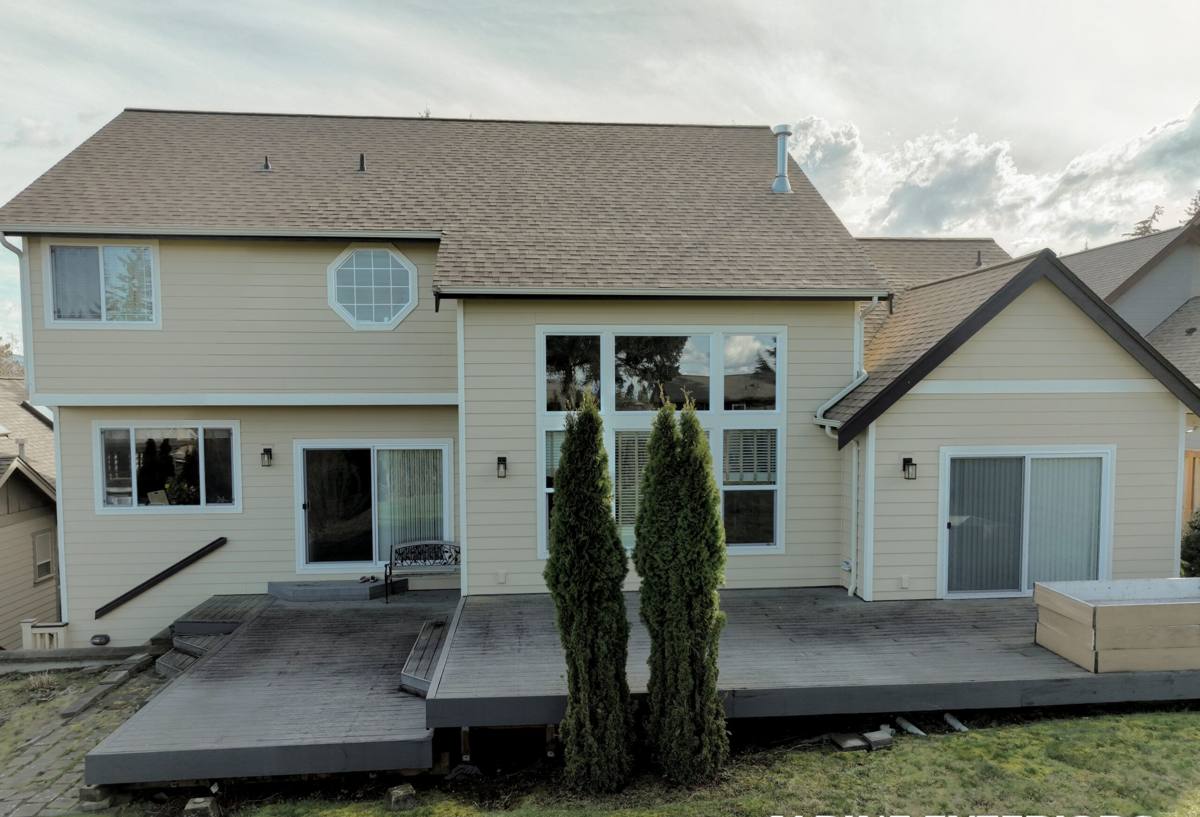
What Blaine's Climate Actually Does to a Deck
Salt Air and Fasteners
Standard galvanized fasteners and hardware corrode noticeably faster this close to Semiahmoo Bay and the Strait of Georgia. Once a fastener starts to rust, it loses holding strength long before it looks bad enough to notice from above. That's how a structurally weak deck can still look presentable.
Driving Rain and Water Intrusion
Rain here doesn't just fall straight down — wind off the water pushes it sideways, into ledger connections, stair stringers, and any gap where flashing was skipped or done poorly. Water that gets behind a ledger board and can't escape is one of the most common causes of structural rot we see on older decks in this area.
Moss, Shade, and Slow Drying
Many Blaine properties have mature trees or sit close to neighboring structures, which means parts of the deck stay shaded and damp well after a storm has passed. Moss and algae take hold in exactly those spots, and beyond being slippery underfoot, they hold moisture against the wood surface far longer than an open, sunny deck would ever experience.
Signs Your Deck Needs Replacing, Not Just Repairing
- Soft, spongy spots in the decking or around stair treads
- Visible gaps, splitting, or cupping in boards that weren't there a year or two ago
- Rust streaks below fastener heads or hardware connections
- A ledger board that feels damp or shows discoloration where it meets the house
- Railings or posts that flex or wiggle more than they used to
- Persistent moss or algae that comes back within weeks of cleaning
- Joists or beams you can reach that feel soft when probed with a screwdriver
One or two of these on their own might mean a repair is enough. Several at once, especially anything involving the ledger or main structural framing, usually means it's time to talk about full replacement rather than patching around the problem.
What a Correct Deck Replacement Involves Here
A deck replacement done right in this climate isn't just pulling up old boards and screwing down new ones. The parts that determine how long it lasts are mostly the parts you don't see once it's finished.
Ledger Board and Flashing
The connection where the deck meets the house is the single most important detail on the whole structure. Proper flashing — installed so water sheds away from the house rather than behind the ledger — is non-negotiable on a rain-heavy site like Blaine. This is also the spot we find failing most often on decks that were built or repaired without it done correctly the first time.
Fasteners and Hardware
For a coastal-influenced area, we use corrosion-resistant fasteners and structural hardware rated for the exposure, not general-purpose galvanized parts that look fine in the box but degrade faster once they're in service near salt air.
Framing and Ventilation
Joists and beams get sized and spaced to code, but just as important is making sure air can move underneath the deck. A structure that traps still, damp air against the framing is setting itself up for the same rot problems all over again, just on a delay.
Decking Material
Whether you go with a quality wood, composite, or PVC decking product depends on your budget, maintenance appetite, and how much shade and moisture that specific spot in the yard gets. We'll walk you through the honest trade-offs for your site rather than pushing one product across the board.
Decking Material Comparison for This Climate
| Material | Moisture Behavior | Maintenance | Best Fit |
|---|---|---|---|
| Pressure-treated wood | Needs sealing on a regular schedule to resist moss and moisture in shaded, damp spots | Highest — periodic cleaning, sealing, and board replacement over time | Budget-conscious owners willing to keep up a maintenance routine |
| Cedar | Naturally more rot-resistant than treated pine, but still needs finish upkeep near salt air | Moderate to high | Owners who want a natural wood look and don't mind the upkeep |
| Composite | Resists rot and moisture absorption well; can still get slick with moss film in heavy shade | Low — occasional cleaning | Homeowners who want long-term, low-hassle performance |
| PVC / capped polymer | Fully resists moisture absorption and rot | Lowest | Shaded or heavily rain-exposed sites where wood struggles most |
There's no universally "right" choice here — it comes down to how much sun and shade your specific deck gets, how close it is to the water, and how much upkeep you actually want to do each year.
Our Deck Replacement Process
- On-site assessment — we check the ledger connection, framing, and any hardware we can access, not just the surface decking, to find out what's actually driving the problem.
- Honest scope — we tell you plainly whether you need a full replacement or whether targeted repair actually solves it. We don't upsell a full tear-out when it isn't warranted.
- Removal and structural check — once the old decking is off, we inspect the substructure directly rather than guessing from above.
- Flashing and ledger correction — this gets fixed properly before anything else goes back on, since it's the detail most likely to cause a repeat failure.
- Framing and fastener install — corrosion-resistant hardware, correct spacing, and attention to airflow underneath.
- Decking installation — installed per manufacturer spacing and fastening specs, which matters for both appearance and long-term performance.
- Final walkthrough — we go over the finished deck with you and explain any maintenance specific to the material you chose.
Why Hire a Crew That Already Works Blaine
Deck framing and flashing details that work fine in a drier, inland climate can fall short here. A crew that already builds and repairs decks around Semiahmoo and Blaine knows to flash the ledger for driving rain, size fastener choices for salt-air exposure, and think about airflow underneath the structure from the start — not as an afterthought after a problem shows up. That local experience is the difference between a deck that needs attention again in a few years and one that holds up through Whatcom County winters.
We also know which parts of a property tend to hold moss and shade longest, which matters when we're talking through material choice and where drainage needs extra attention.
Cost Factors to Expect
| Factor | Why It Matters |
|---|---|
| Deck size and layout | Square footage and complexity (multiple levels, stairs, angles) drive labor and material cost directly |
| Decking material chosen | Composite and PVC cost more upfront than wood but reduce long-term maintenance spend |
| Substructure condition | Rotted framing or a compromised ledger adds repair scope beyond the visible decking |
| Railing and stair details | Custom railing styles and stair configurations add both material and labor time |
| Site access | Decks over grade, near slopes, or with limited equipment access can affect labor time |
Rather than quote a number without seeing the deck, we'll walk the site with you and give you a clear, itemized estimate so you know exactly what you're paying for and why.
Maintaining Your New Deck in This Climate
- Sweep off standing debris and leaves regularly, especially in shaded corners where moisture lingers
- Rinse off salt residue and grime a few times a year, particularly after storms
- Check and re-seal wood decking on the schedule the manufacturer recommends — don't stretch it out
- Keep an eye on the ledger connection area for any discoloration or gaps forming over time
- Trim back vegetation that keeps sections of the deck in constant shade
If your deck is showing signs of wear, or you just want an honest read on whether it needs repair or full replacement, we're happy to take a look. Fill out the form below for a free, no-pressure estimate — we'll tell you straight what we find.