 Semiahmoo Siding
 Why Blaine Windows Take a Different Kind of Beating
Blaine sits right on Semiahmoo Bay, close enough to salt water that the air itself works on your window frames and hardware every single day. That's a different challenge than what a contractor sees inland. Salt-laden air accelerates corrosion on hardware, hinges, and metal flashing components, and it can dull or pit certain finishes over time. Add Whatcom County's wind-driven winter rain — coming in sideways off the water more often than most homeowners realize — and you have a climate that punishes any window installed with shortcuts on flashing or sealant.
Then there's moss season, which around here isn't a season so much as most of the year. Constant moisture and shade on the north and west sides of Blaine homes keep moss and algae active for months at a stretch. That growth holds water against trim and sills, and if a window wasn't properly flashed and sealed when it went in, that's exactly where rot starts — quietly, behind the trim, long before you'd see it from inside.
None of this means windows in Blaine need to be exotic or oversized to handle the job. It means the installation details — flashing sequence, sealant choice, drainage path — matter more here than they would in a drier inland town, and cutting corners on those details shows up faster on the coast than almost anywhere else in the county.
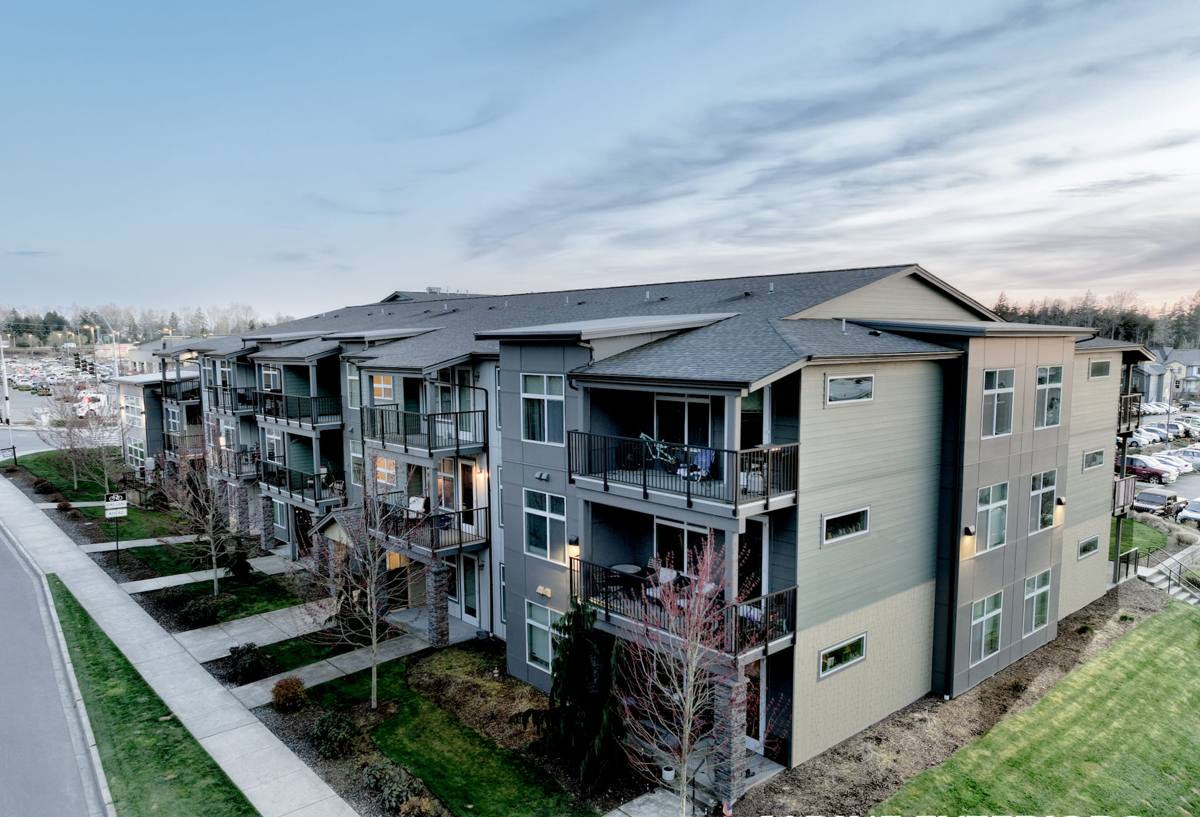
What a Correct Window Installation Actually Involves
A window replacement or new install is more than setting a unit in a rough opening and running a bead of caulk around the outside. Done right, it's a system: the window itself, the flashing that directs water away from the wall assembly, the sealants that block air and bulk water intrusion, and the way all of that ties into the siding and weather-resistive barrier already on the house.
The parts homeowners rarely see
- Sill pan flashing that catches any water that gets past the window and directs it back outside, not into the wall cavity
- Proper shingle-lap sequencing of flashing tape so water always sheds downward and outward, never trapped behind a layer
- Backer rod and the correct exterior sealant at the window-to-siding joint, sized and installed to actually move with the building rather than crack loose
- Insulation and air sealing around the rough opening interior side, which affects both comfort and condensation risk
- Correct fastening pattern so the window performs to its rated wind load — genuinely relevant this close to open water
Skip any one of these steps and the window can look perfect for a year or two before a problem shows up as a soft spot in the wall, a musty smell, or peeling interior paint near the sill. By then the fix is bigger than a window job.
Frame Material Options for a Coastal Blaine Home
There's no single "best" window material — the right call depends on your budget, your home's exposure to wind and salt spray, and how much upkeep you're willing to do. Here's how the common options actually compare for a Semiahmoo-area house.
| Frame Material | Coastal / Salt Air Behavior | Maintenance | Typical Cost Position |
|---|---|---|---|
| Vinyl | Won't corrode; performs well in salt air; can fade or become brittle with decades of UV over time | Low — occasional cleaning | Most affordable |
| Fiberglass | Excellent stability in temperature swings and moisture; strong resistance to warping | Low | Mid to upper |
| Aluminum | Durable but more prone to condensation and corrosion near salt water unless thermally broken and properly coated | Moderate | Mid |
| Wood / Wood-clad | Handsome, but exterior wood needs a well-maintained clad or paint system to hold up against constant coastal moisture | Higher — regular inspection and upkeep | Upper |
For most Blaine homes we work on, vinyl or fiberglass end up being the practical choice — both stand up to salt air without the ongoing maintenance that wood or bare aluminum require this close to the water. We'll walk through your specific home and exposure before recommending one over another; a shaded, wind-sheltered wall can tolerate more than a wall that takes the full brunt of weather off the bay.
Glass and Performance Considerations
Double-pane, low-E glass with argon fill is standard for this climate and handles the region's mild-but-damp winters well. What matters more locally is the seal quality between the panes — a failed seal shows up as fogging or condensation trapped between the glass, and that failure happens faster in humid coastal air than in a dry climate. We only install units from manufacturers with a solid track record on seal durability and a warranty structure that actually backs it up.
Signs Your Blaine Home's Windows Need Attention
Windows rarely fail all at once. Here's what to watch for, especially on walls that face the water or stay shaded most of the day:
- Visible fogging or moisture trapped between panes of double-glazed glass
- Soft, spongy, or discolored wood trim around the window exterior
- Drafts you can feel by hand along the frame edges on a windy day
- Windows that are difficult to open, close, or latch — a sign the frame has shifted or swollen
- Visible moss, algae, or persistent green staining on the sill or surrounding trim
- Peeling paint or bubbling drywall on the interior wall near a window
- A noticeable jump in heating costs without another clear explanation
Any one of these on its own isn't necessarily an emergency, but a couple together — especially soft trim plus interior staining — usually means water has already found a way in and it's worth having someone take a real look before it spreads.
How We Approach a Window Job in Blaine
1. Assessment
We look at the existing window, the flashing and siding around it, and the wall assembly behind it — not just the glass. On a coastal property, we're specifically checking for any existing moisture damage before we ever talk numbers, because that changes the scope of the job.
2. Careful removal
Old windows come out without tearing more siding or trim than necessary, and we inspect the rough opening and sheathing underneath for rot or damage that needs to be addressed before a new window goes in — this is where problems from years of moss and moisture often surface.
3. Flashing and drainage first
Before the new window ever goes in the opening, we build the water management system: sill pan, properly lapped flashing tape, and a clear drainage path tied into the existing weather-resistive barrier. This step is the difference between a window that lasts and one that doesn't.
4. Install, seal, insulate
The window is set level and square, fastened to its rated wind load, insulated around the interior perimeter, and sealed on the exterior with sealant chosen for coastal exposure and long-term flexibility.
5. Final check and cleanup
We test operation, check for square and smooth function, and make sure the surrounding siding and trim are finished cleanly — no gaps, no exposed fasteners, nothing left for moss to grab onto.
Why Hiring a Crew Already Working in Blaine Matters
A window installer who mostly works inland doesn't build daily habits around salt air corrosion, wind load at open-water exposure, or the way moss and constant damp shade change a maintenance timeline. Working Blaine and the broader Semiahmoo area regularly means knowing which walls on which lot orientations take the worst weather, understanding Whatcom County permitting and code expectations for the area, and having already seen what goes wrong when a window here was installed without the coastal details in mind.
Because we do siding work throughout this area too, we also think about how the window integrates with the rest of the exterior — flashing that matches up with the siding's drainage plane, trim that gets properly primed and sealed, and a finished look that doesn't leave a weak point where two different trades' work meets. That's a common failure point when window and siding work are handled by separate crews who never coordinate.
What Affects the Cost of a Window Project
| Factor | Why It Matters |
|---|---|
| Number and size of windows | Straightforward driver of material and labor cost |
| Frame material chosen | Vinyl is typically most affordable; fiberglass and wood-clad cost more upfront |
| Condition of the existing opening | Rot or water damage found during removal adds repair scope before the new window goes in |
| Wall exposure | Walls facing open water or prevailing wind may call for higher wind-load-rated units |
| Trim and siding integration | Matching existing trim profiles or repairing surrounding siding adds time |
We won't quote a number without seeing the actual openings — anyone who does is guessing, and on a coastal property that guess is more likely to be wrong once the old window comes out and the wall behind it is visible.
A Straightforward Next Step
If your Blaine home has windows that are fogging, drafting, sticking, or just showing their age against the salt air and rain this stretch of Whatcom County deals with, we're glad to come take a look. The estimate is free, there's no pressure, and you'll get a straight answer about what your windows actually need — whether that's a full replacement or something smaller.