 Semiahmoo Siding
 Why Siding Fails Faster in Custer
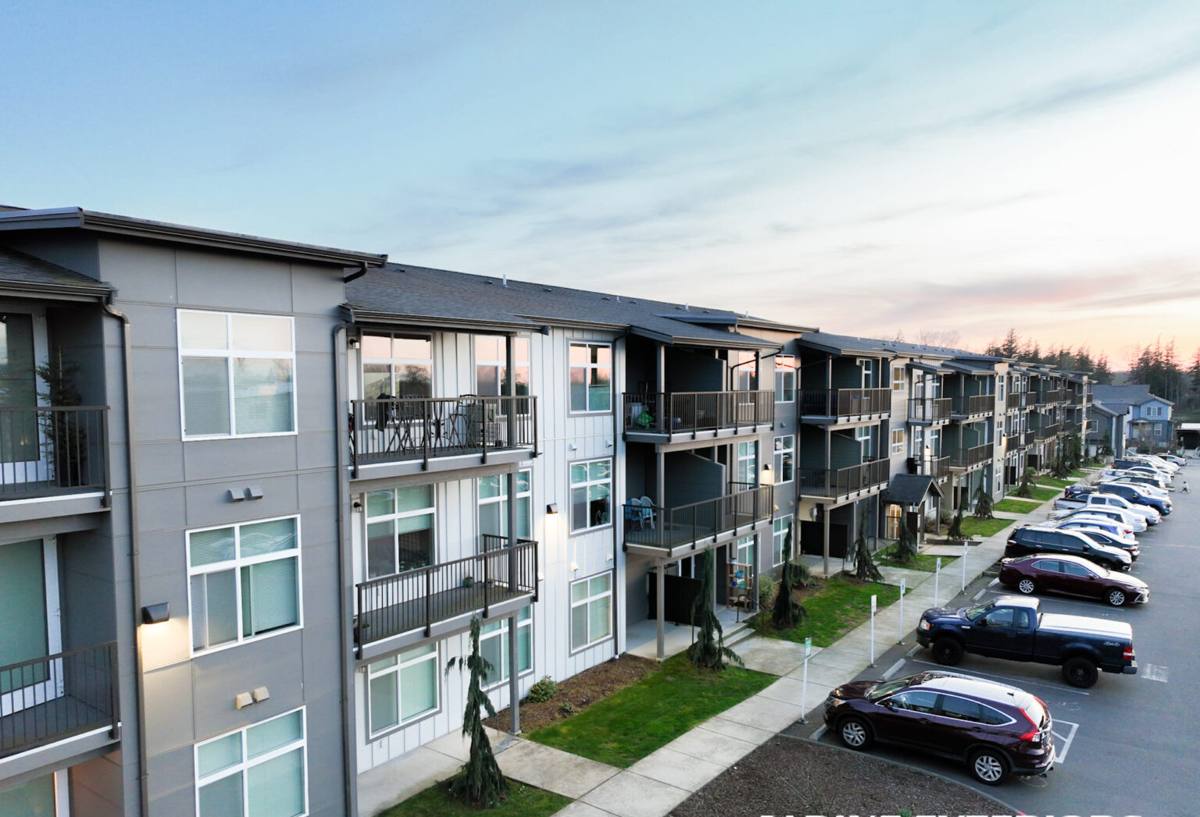
Custer sits close enough to the Semiahmoo waterfront and the Salish Sea that homes here deal with a version of "coastal weather" even though the neighborhood itself feels more rural than beachfront. That combination — salt-laden marine air, long stretches of driving rain off the water, and a wet season that can stretch from October well into spring — is hard on exterior siding no matter what it's made of. Add in the tree cover common to Whatcom County lots, and you get shade, moisture, and airflow problems that combine to grow moss and algae faster than siding in a drier, sunnier part of the state.
None of that means siding is doomed to fail. It means siding in this area needs to be installed and repaired with those specific stresses in mind. A repair that would hold up fine in eastern Washington can fail within a couple of seasons here if it doesn't account for how much moisture this climate actually pushes at a wall.
What Salt Air, Rain, and Moss Actually Do to Siding
Salt Air
Airborne salt doesn't just sit on the surface — it works into seams, fastener heads, and any spot where a coating has thinned or chipped. On metal fasteners and trim, that means accelerated corrosion. On painted wood and some engineered products, it accelerates finish breakdown, which opens the door to moisture intrusion underneath.
Driving Rain
Wind-driven rain doesn't fall straight down — it gets pushed sideways into laps, corners, and butt joints. Siding systems rely on overlaps and flashing details to shed that water. When those details are done wrong, or when caulk and sealant at joints ages out, water finds its way behind the siding instead of running off it. That's when you start getting rot in the sheathing behind the siding, which is a bigger and more expensive problem than the siding itself.
Moss and Algae
Shaded, damp walls — especially north-facing walls or ones tucked under trees — grow moss and algae readily in this climate. Beyond looking bad, moss holds moisture against the siding surface far longer than open air would, which extends the amount of time any given panel spends wet. For wood-based or wood-composite products, that's a direct path to softening and rot. For fiber cement, it's mostly cosmetic if the coating is sound, but a compromised coating changes that.
Signs Your Siding Actually Needs Repair
Not every stain or crack means a full repair job, but several signs are worth taking seriously before they turn into sheathing damage:
- Soft or spongy spots when you press on a panel, especially near the bottom courses or around windows
- Visible gaps at butt joints, corners, or where siding meets trim, window, or door frames
- Peeling, bubbling, or chalking paint/finish, particularly on south- and west-facing walls that take the most weather
- Persistent dark streaking or thick moss growth that keeps coming back after cleaning
- Warping, cupping, or visible separation between boards or panels
- Water stains or musty smells on interior walls that back up to exterior siding
- Fastener heads that are rusted, popped, or backing out
Any one of these can be a localized fix. Several at once, especially combined with soft sheathing underneath, usually points to a bigger repair scope than it first appears.
What a Correct Repair Actually Involves
A siding repair that's done right is not just pulling off a damaged board and nailing up a replacement. The steps that actually matter:
- Find the water source, not just the symptom. Damaged siding is usually a downstream effect of a flashing gap, a caulking failure, or a grading/drainage issue nearby. Replacing the siding without fixing the entry point means the same failure happens again.
- Check what's behind the siding. Any area with visible rot or soft material gets opened up to inspect the house wrap and sheathing. If the sheathing is compromised, that gets addressed before new siding goes back on — patching over rotten sheathing just buries the problem.
- Match materials and reveal correctly. Mismatched profiles, thicknesses, or reveal spacing are one of the most common signs of a rushed patch job. A repair should be close to invisible once it's painted or finished.
- Reinstall flashing and water-resistive barrier properly. This is the step that gets skipped most often on quick patch jobs, and it's the step that determines whether the repair lasts five years or fifteen.
- Re-seal and re-caulk to spec. Sealant is a wear item, not a permanent fix — but it has to be applied at the right joints, not everywhere, and with a product rated for the material.
Repair vs. Replacement: How to Tell Which You Need
| Situation | Repair Usually Works | Replacement Is the Better Call |
|---|---|---|
| Damage location | Isolated to one wall, corner, or a handful of boards | Spread across multiple walls or the whole exterior |
| Sheathing condition | Solid, dry, no soft spots found | Soft, rotted, or damaged over a wide area |
| Siding material | Sound material near end of a serviceable finish | Original material is failing systemically (chronic moisture issues, discontinued product, chalking finish) |
| Age of siding | Well within expected service life | Already past the age where repeated repairs make financial sense |
| Underlying cause | One identifiable, fixable water entry point | Multiple or unclear entry points suggesting a system-wide installation problem |
Most Custer homes we look at fall into the "repair" column when the issue is caught early — a damaged section near a downspout, a gap at a window return, a few boards that took the brunt of driving rain on an exposed corner. Waiting until moss and soft sheathing have spread across a wall pushes the job toward full replacement of that wall or elevation.
Why We Repair With — and Recommend — James Hardie Fiber Cement
We install James Hardie fiber cement exclusively. We don't install vinyl, LP SmartSide, Cemplank, Allura, or primed wood siding, and that standard applies to repair work too — when we're patching into an existing wall or replacing a damaged section, we're either matching existing Hardie product or, where the homeowner is open to it, using the repair as an opportunity to transition a problem area to Hardie.
The reason is straightforward: fiber cement doesn't rot, doesn't feed moss the way organic materials can, and holds up to salt air and driven rain far better than wood-based products because it isn't a food source for the moisture-loving organisms that thrive in this climate. James Hardie's ColorPlus factory finish is baked on and warrantied against peeling and cracking in a way field-applied paint on wood siding never can be. And Hardie's HZ5 product line specifically is engineered for the kind of freeze-thaw and moisture-cycling climate you get in this part of Washington.
That's not to say every other product is a bad choice in every situation — vinyl is inexpensive and low-maintenance, wood has a look some homeowners genuinely prefer, and engineered wood products have improved over the years. But when we're the ones doing the repair and standing behind it, we use the material we trust to actually hold up here, and that's fiber cement.
Our Repair Process
When we come out to look at siding damage in Custer, the process is the same whether it's a small patch or a multi-wall repair:
- On-site inspection — we look at the damaged area, probe for soft sheathing, and trace the likely water path rather than just looking at the visible symptom
- Honest scope assessment — we tell you plainly whether it's a repair or whether the damage extends far enough that replacement is the more sensible call
- Written estimate — clear on what's being replaced, what's being resealed, and why
- Sheathing and flashing correction — any rot gets cut out and replaced, flashing gets reinstalled to shed water correctly, not just patched over
- Matched Hardie material installed to manufacturer spec — correct fastening, clearances, and joint treatment
- Final sealant and finish work — so the repaired section blends in rather than standing out
Why a Crew That Already Works Custer Matters
Siding repair is one of those jobs where local experience actually changes the outcome, not just the convenience. A crew that regularly works this stretch of Whatcom County has already seen which wall orientations take the worst of the driving rain, which lot conditions grow moss fastest, and how salt air behaves differently a few miles inland from the water versus right on Semiahmoo Bay. That translates into knowing where to look for hidden damage before it's pointed out, and knowing which repair details actually hold up through a wet Pacific Northwest winter instead of failing again in two years.
It also means faster response and a crew that isn't guessing at permitting or local building department expectations for exterior work in Whatcom County. For a homeowner, that's the difference between a repair that gets diagnosed correctly the first time and one that gets revisited two or three times before someone finds the real cause.
Keeping Repaired Siding in Good Shape Afterward
A good repair job starts a fresh clock, but a few habits keep it running longer in this climate:
- Rinse off moss and algae buildup annually, especially on shaded or north-facing walls, using a soft wash approach rather than aggressive pressure washing
- Keep gutters clear so overflow isn't running down the wall face during heavy rain events
- Trim back vegetation and tree limbs that keep a wall section shaded and damp longer than the rest of the house
- Walk the exterior once a year, especially after storms, and look for the same warning signs listed earlier
- Recaulk high-exposure joints on the schedule recommended for the material — sealant is maintenance, not a one-time fix
If you're seeing soft spots, gaps, persistent moss, or peeling finish on your siding, it's worth having it looked at before the next wet season adds to the damage. We're happy to come take a look and give you a straightforward, no-pressure assessment of what's actually going on and what it would take to fix it right — along with a free estimate.