 Semiahmoo Siding
 Why Custer Homes Are Hard on Windows
Custer sits close enough to the water that salt air is a daily fact of life, not an occasional nuisance. Add Whatcom County's long wet season, driving rain that comes in sideways off Semiahmoo Bay, and months of low winter sun that never quite dries anything out, and you've got a climate that finds every weak point in a window installation. Frames swell and shrink with moisture cycles, seals get tested by wind-driven rain instead of just gravity, and anything with exposed metal fasteners or bare wood starts showing corrosion or rot years before it would in a drier inland town.
We've replaced enough windows in this area to know the failure patterns aren't random. They show up in predictable places: bottom corners of sills, the top of window heads under poor flashing, and any spot where the original installer relied on caulk alone instead of proper flashing and drainage. A custom window job here isn't just about picking a style you like — it's about picking a window and installation method that can shed water and shrug off salt air for the next 20-plus years.
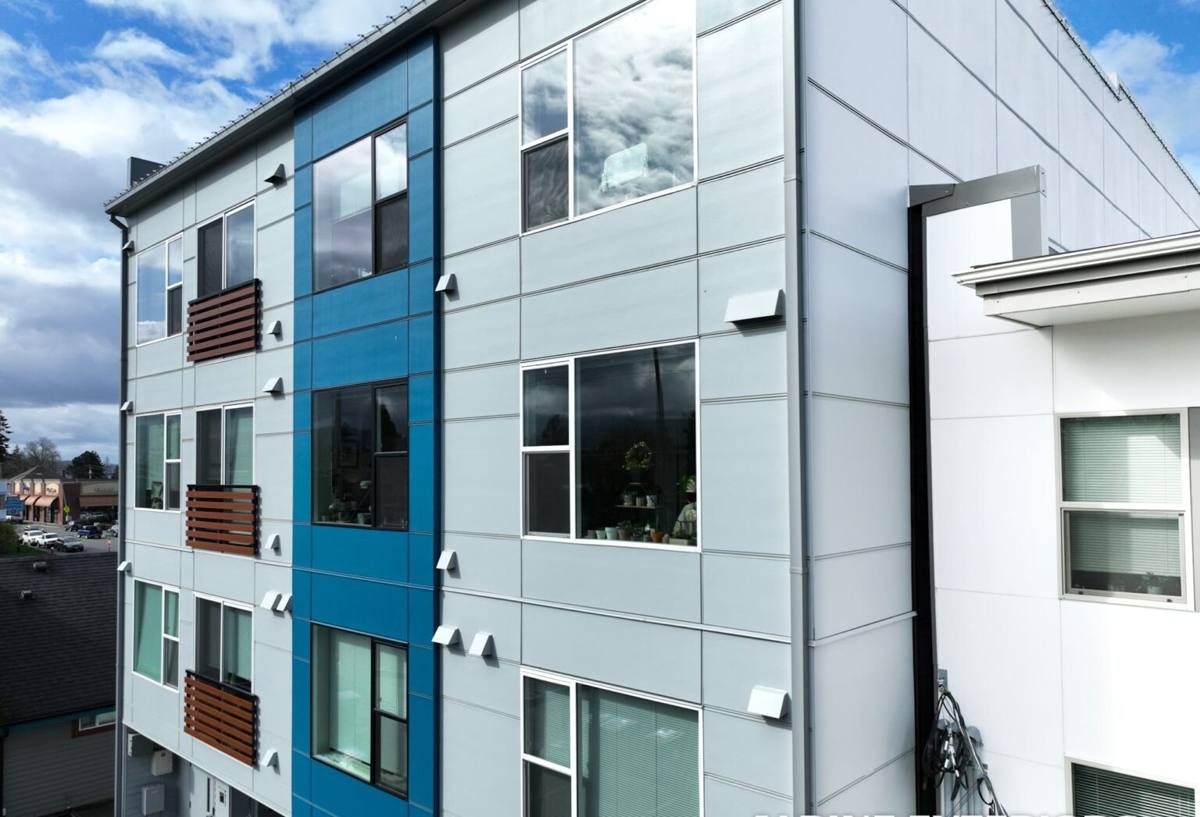
What "Custom" Actually Means for a Coastal Whatcom County Home
Custom windows aren't necessarily fancier or more expensive — the term just means the window is built to fit your specific rough opening, style, and performance needs rather than pulled off a shelf in a stock size. For Custer homes, custom usually means matching an odd or older opening size, upgrading glazing for wind and moisture performance, or coordinating window trim and flashing details with a siding replacement or repair project happening at the same time.
Common Reasons Custer Homeowners Go Custom
- Replacing single-pane or aluminum-frame windows original to an older home with modern, better-sealed units
- Matching a non-standard opening after removing rot-damaged framing
- Upgrading to impact-resistant or laminated glass for storm exposure near the water
- Coordinating window replacement with a siding project so flashing and water management are handled as one system, not two separate jobs
- Improving energy performance on a house that runs cold and damp all winter
The Climate Factors That Should Drive Your Window Choice
Three things matter more here than in most parts of the country: salt-air corrosion resistance, water management at the frame-to-wall junction, and moisture tolerance of the frame material itself. Moss and algae growth on the exterior isn't a window problem directly, but it's a symptom of the same conditions — constant dampness — that also stress window seals and sills. A window that looks fine from the street can still have a compromised seal letting moisture track behind the trim.
Salt Air
Salt-laden air accelerates corrosion on exposed metal hardware, screws, and some aluminum components. It's not usually a reason to avoid a whole window category, but it is a reason to pay attention to hardware finish and fastener quality, and to avoid designs that trap salt residue against bare metal.
Driving Rain
Rain that hits a wall at an angle, rather than falling straight down, tests flashing details that a fair-weather install can get away with skipping. This is the single biggest factor in whether a window leaks in year three versus never.
Extended Damp Season
Long stretches of high humidity and low sun mean anything that traps moisture — bad flashing laps, caulk used as a substitute for flashing, or a frame material that absorbs water — has more time to do damage before things dry out again.
Comparing Frame Materials for a Coastal Climate
There's no single "best" window material for every house — it depends on your budget, your home's style, and how much upkeep you're willing to do. Here's how the common options hold up specifically against Custer's conditions:
| Frame Material | Moisture & Salt Air Performance | Maintenance | Typical Trade-Off |
|---|---|---|---|
| Vinyl | Good — won't rot or corrode; seams need quality welding | Low | Fewer color/finish options than wood or fiberglass |
| Fiberglass | Very good — dimensionally stable through wet/dry cycles | Low | Higher upfront cost than vinyl |
| Aluminum | Fair — durable but conducts cold and can show salt-related surface corrosion over time without a quality finish | Moderate | Thermal performance lags other materials unless thermally broken |
| Wood / Wood-Clad | Requires diligent maintenance — exposed wood is vulnerable to this climate's constant moisture | High | Best appearance for period-correct homes, but highest upkeep burden here |
Our standard is to steer most Custer homeowners toward vinyl or fiberglass unless the home's style specifically calls for a wood or clad look — not because wood windows are bad products, but because the maintenance schedule needed to keep exposed wood sound in this much rain is a real, ongoing cost that a lot of homeowners don't want to sign up for. If you love a wood-frame look, wood-clad options with a durable exterior cladding get you closer to that appearance with less exposure risk.
What a Correct Installation Actually Involves
The window itself is only part of the job. Most of the leaks and rot we get called out to fix started at the installation, not the product. A correct install in this climate follows a specific sequence, and skipping steps is where problems start.
- Remove the old window and inspect the rough opening for hidden water damage, soft framing, or old caulk-only "flashing" that needs to be cut out.
- Repair or replace any damaged framing or sheathing before anything new goes in — installing a new window over rotten framing just hides the problem.
- Install a sloped sill pan so any water that gets past the window has somewhere to go besides your wall cavity.
- Apply flashing in the correct shingle-lap order — sill, jambs, then head — so water is directed outward at every layer, the same principle used on the roof.
- Set the window level, plumb, and square, then fasten per the manufacturer's specs so the warranty stays valid.
- Seal and insulate the gap between the frame and rough opening with the right materials — not just spray foam alone, which can bow thin frames if overused.
- Tie the water-resistive barrier and flashing into the surrounding siding so the whole wall sheds water as one system.
- Finish trim and touch up siding so the transition looks intentional, not patched.
Our Process, Start to Finish
We keep this straightforward because window jobs go wrong when steps get rushed or skipped, not because the process itself is complicated.
1. On-Site Assessment
We look at the existing windows, the condition of the framing and siding around them, and how water currently moves across that part of the house. This tells us whether it's a straightforward swap or whether there's hidden repair work to plan for.
2. Measuring and Product Selection
We measure each opening individually — older Custer homes rarely have perfectly uniform openings — and walk through frame material, glazing, and style options based on your budget and the specific exposure that window faces (a window that takes direct driving rain off the water gets a different recommendation than one tucked under an eave on the leeward side).
3. Scheduling Around Weather
We work around the wet season rather than pretending it doesn't exist. Openings are only exposed for as long as necessary, and we don't leave a rough opening open overnight if rain is forecast.
4. Installation
Following the sequence above — sill pan, flashing, fastening, sealing, siding tie-in — with attention paid to matching your existing trim and siding lines so the finished look is clean.
5. Final Walkthrough
We check operation, seals, and exterior finish with you before calling the job done, and explain anything you should keep an eye on going forward.
What Drives Cost on a Custom Window Job
We won't quote a number without seeing the house, but these are the factors that actually move the price, so you know what you're paying for:
| Factor | Why It Matters |
|---|---|
| Frame material | Vinyl, fiberglass, aluminum, and wood-clad all carry different material costs |
| Glazing package | Double vs. triple pane, low-E coatings, and impact-resistant glass add cost but also performance |
| Opening condition | Rot or framing repair discovered during removal adds labor that a straightforward swap doesn't need |
| Number and size of openings | Larger or unusually shaped windows require more custom fabrication |
| Coordination with siding | Doing windows and siding together often costs less overall than two separate mobilizations |
| Access and site conditions | Second-story or hard-to-reach openings take more time and equipment |
Signs It's Time to Replace, Not Repair
- Visible fogging or moisture between panes of double-glazed units — the seal has failed
- Soft or discolored trim and sill wood around the frame
- Drafts you can feel even with the window closed and locked
- Windows that are difficult to open, close, or lock properly
- Visible gaps between the frame and siding, or caulk that's cracked and pulling away
- A noticeable spike in heating costs with no other explanation
Why a Crew That Already Works in Custer Matters
Window installation isn't exotic work, but doing it well in this specific climate rewards local experience. A crew that's replaced windows throughout Whatcom County and around Semiahmoo has already seen how the driving rain patterns off the water affect flashing choices, which frame materials actually hold up over a full wet season here, and how local siding types typically tie into window trim. That's the difference between a generic installation and one built for where it's actually going.
There's also a practical side: a local crew can respond quickly if something needs a warranty check or adjustment, and we're not learning your neighborhood's quirks — moss season, salt exposure, prevailing wind direction — for the first time on your job.
Maintaining Your Windows After Installation
Good installation gets you most of the way to long-term performance, but a little seasonal attention extends the life of any window in this climate:
- Clear debris and moss buildup from sills and tracks before it holds moisture against the frame
- Rinse salt residue off exterior frames and hardware periodically, especially after storms
- Check exterior caulk lines each fall and touch up any that have cracked or separated
- Operate every window at least a few times a season so weatherstripping and hardware don't seize up
- Watch for condensation between panes as an early sign of seal failure
If your Custer home has windows showing their age — or you're planning a siding project and want windows handled as part of the same water-management system — we're happy to take a look and give you a straightforward, no-pressure estimate using the form below.