 Semiahmoo Siding
 Cherry Point Roofs Get Hit From Every Direction
Cherry Point sits out on the water side of Whatcom County, which means the roofs here deal with a combination of stressors that inland homes never see in the same intensity. Wind off the Strait comes in hard and often sideways, driving rain up under shingle tabs instead of just down on top of them. Add in salt-laden air that slowly works on exposed metal, and a moss season that runs longer here than almost anywhere else in the county, and you've got a roof that ages differently than one fifty miles inland.
Storm damage in this area rarely looks like a single dramatic event. More often it's a wind gust that lifts a run of shingles just enough to break the seal, followed by weeks of quiet water intrusion before anyone notices a stain on a ceiling. By the time it's visible inside, the damage outside has usually been sitting for a while.
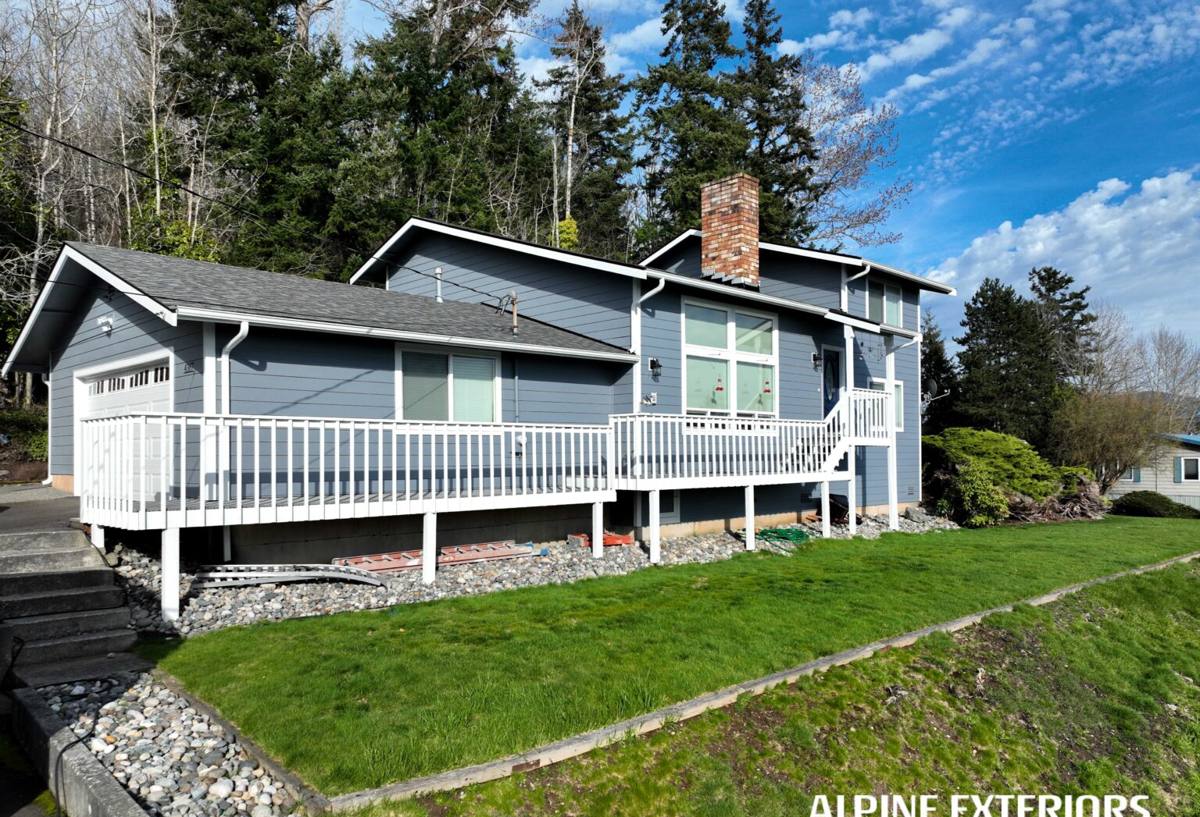
What Storm Damage Actually Looks Like Here
When we get called out after a wind event or a heavy rain stretch, we're usually looking for a handful of specific failure points, not just "missing shingles." The most common issues we find on Cherry Point roofs after weather events include:
- Shingle tabs lifted or creased where wind got underneath and broke the adhesive seal
- Flashing pulled loose or bent around chimneys, vents, and roof-to-wall transitions
- Granule loss from wind-driven rain and debris, leaving bare asphalt exposed to UV and moisture
- Fasteners backed out or corroded where salt air has worked on exposed metal over time
- Moss mats holding water against the roof deck in shaded or north-facing sections
- Gutter and edge damage from wind-thrown branches or debris carried off the water
None of these are dramatic on their own, but they compound. A lifted shingle lets water in. Water sitting under a moss mat keeps that area wet longer than the rest of the roof. Wet decking eventually softens. It's a slow chain, and storm damage repair is really about catching the chain early rather than waiting for the visible failure.
Why Salt Air Changes the Math
Standard fasteners and flashing that hold up fine forty minutes inland can show corrosion within a few seasons this close to the water. That doesn't mean every roof needs marine-grade everything, but it does mean the repair materials matter more here than they would elsewhere. When we're doing a storm repair on a Cherry Point roof, we default to corrosion-resistant fasteners and flashing rated for coastal exposure, because replacing the same section twice in five years costs more than doing it right the first time.
The Cost of Waiting on a Repair
We understand the instinct to wait and see after a storm, especially if there's no obvious leak yet. But a few things happen on a delayed timeline that are worth knowing before you decide to hold off:
| Timeframe After Damage | What's Typically Happening | Repair Complexity |
|---|---|---|
| Same week | Isolated shingle or flashing damage, deck likely still dry | Low — targeted patch repair |
| 2-6 weeks | Underlayment saturated in the damaged area, possible minor deck softening | Moderate — section replacement, deck inspection |
| 1-3 months | Deck rot spreading, insulation and interior finishes affected | High — deck repair, drywall/insulation work involved |
| One moss season or more | Moisture trapped under moss mats, granule loss accelerating, wider area compromised | Highest — often a full section tear-off rather than a patch |
The point of this isn't to scare anyone into a rush job. It's to explain why we always recommend at least a quick assessment after any significant wind or rain event, even if nothing looks obviously wrong from the ground.
How We Handle a Storm Repair Call
1. Assessment First, Not a Sales Pitch
We walk the roof and check the attic or accessible ceiling areas from inside, not just what's visible from the driveway. Storm damage often hides in valleys, behind chimneys, and along the north-facing slopes where moss and shade keep things wet longest.
2. Temporary Protection When Needed
If there's an active leak or exposed decking, we get it covered and weathertight the same visit, before we ever talk about the permanent fix. A tarp or emergency patch buys time without leaving your home exposed to the next round of weather.
3. Matching the Repair to the Damage
Not every storm-damaged roof needs full replacement, and we won't tell you it does. A clean section repair — matching shingle type, color, and exposure as closely as possible — is often the right call when the rest of the roof is sound. We'll tell you plainly when a repair makes sense versus when the roof's age or condition means a patch is just delaying a bigger job.
4. Flashing and Underlayment, Not Just Shingles
A proper storm repair replaces the underlayment and flashing in the damaged area, not just the visible shingles on top. Skipping this step is the single most common shortcut that leads to a repeat leak in the same spot within a year or two.
5. Cleanup and a Straight Answer on What We Found
We clear debris, and we tell you exactly what we found — including anything unrelated to the storm that's worth keeping an eye on, like aging flashing elsewhere or moss buildup starting in another section.
Moss Season Makes Everything Worse
Whatcom County's wet, mild winters give moss a long window to establish itself, and Cherry Point's moisture and shade patterns can make it worse than many neighborhoods. Moss doesn't just look bad — it holds water against the roof surface far longer than the roof would otherwise stay wet, and it can work into shingle edges and lift them slightly, which is exactly the kind of small gap that wind-driven storm rain exploits.
A simple seasonal checklist can head off a lot of storm damage before it starts:
- Clear moss growth from roof surfaces before it mats and holds moisture
- Keep gutters and downspouts clear so storm rain has somewhere to go
- Trim back branches that overhang the roof — they drop debris and hold moisture against the surface
- Check flashing around chimneys and vents once a year for lifted edges or corrosion
- Look at the attic after a heavy storm for damp insulation or daylight where there shouldn't be any
- Address small issues (a lifted shingle, a loose flashing edge) before the next storm system arrives, not after
Repair vs. Replacement: An Honest Comparison
Homeowners often ask us to just tell them which option is "better." The honest answer depends on the roof's age, how widespread the damage is, and how much of the underlying deck and flashing system is still sound.
| Factor | Section Repair | Full Replacement |
|---|---|---|
| Best for | Isolated storm damage on a roof under 15-20 years old | Roofs already near end of life or with widespread damage |
| Cost range | Generally a few hundred to a few thousand dollars depending on scope | A larger investment, but resets the clock on the whole roof |
| Material matching | Close match possible, some weathering difference likely visible | No matching concerns — uniform new material |
| Long-term risk | Adjacent aging areas may need attention later | Lowest near-term risk, but highest upfront cost |
If your roof is relatively young and the storm damage is contained to one area, a repair is almost always the right first move. If the storm damage is the third or fourth issue we've found on an aging roof, we'll say so directly rather than patching something that needs a bigger conversation.
Insurance and Documentation
If the damage is significant enough that you're considering a claim, a few habits make the process smoother. Take photos of visible exterior damage and any interior signs (stains, drips) as soon as it's safe to do so. Keep any documentation we provide from our assessment, including what we found and what we recommend. We're happy to provide a written scope of the damage and repair for insurance purposes — we just won't inflate an estimate or describe damage that isn't there, and we'd encourage you to be wary of any contractor who offers to do otherwise.
Why a Crew That Already Works Cherry Point Matters
A roof repair crew that mainly works dry, inland neighborhoods doesn't necessarily think about salt-air fastener corrosion or how long moss holds moisture on a shaded, water-facing slope. Those aren't exotic problems, but they're specific to this stretch of Whatcom County, and building a repair without accounting for them means a shorter lifespan on the fix. Working in and around Cherry Point regularly means we're already familiar with how storms tend to move through here, which sides of a roof take the worst of the wind-driven rain, and what "normal" wear looks like on a coastal roof versus what's actually storm damage that needs attention now.
Get a Straight Assessment Before the Next Storm
If a recent windstorm or heavy rain has you wondering about a shingle that looks off, a stain that showed up on the ceiling, or just want a second opinion before moss season sets in, we're glad to take a look. We'll give you a clear, no-pressure estimate on what's actually needed — nothing more, nothing less — and you can decide from there. Reach out using the form below for a free storm damage assessment.