 Semiahmoo Siding
 Why Cherry Point Roofs Take More Punishment Than People Expect
Cherry Point sits right where the marine environment of the Salish Sea meets the everyday weather of Whatcom County, and that combination is harder on a roof than most homeowners realize until they're dealing with the results. You've got salt-laden air moving off the water, long stretches of driving rain through fall and winter, and shaded, damp conditions that let moss and moisture-loving growth take hold on roofs that never get much direct sun. Asphalt shingles were never designed to shrug off that particular mix for decades at a time. Metal roofing, installed correctly, was.
We're not saying metal is the only roof that works out here — plenty of well-maintained shingle roofs do fine. But for homeowners who want a roofing system that's genuinely matched to Cherry Point conditions, and who'd rather not think about moss treatments or granule loss every couple of years, metal is worth a serious look. This page walks through what that actually means in practice: what the climate demands, what a correct installation involves, and how we approach the job.
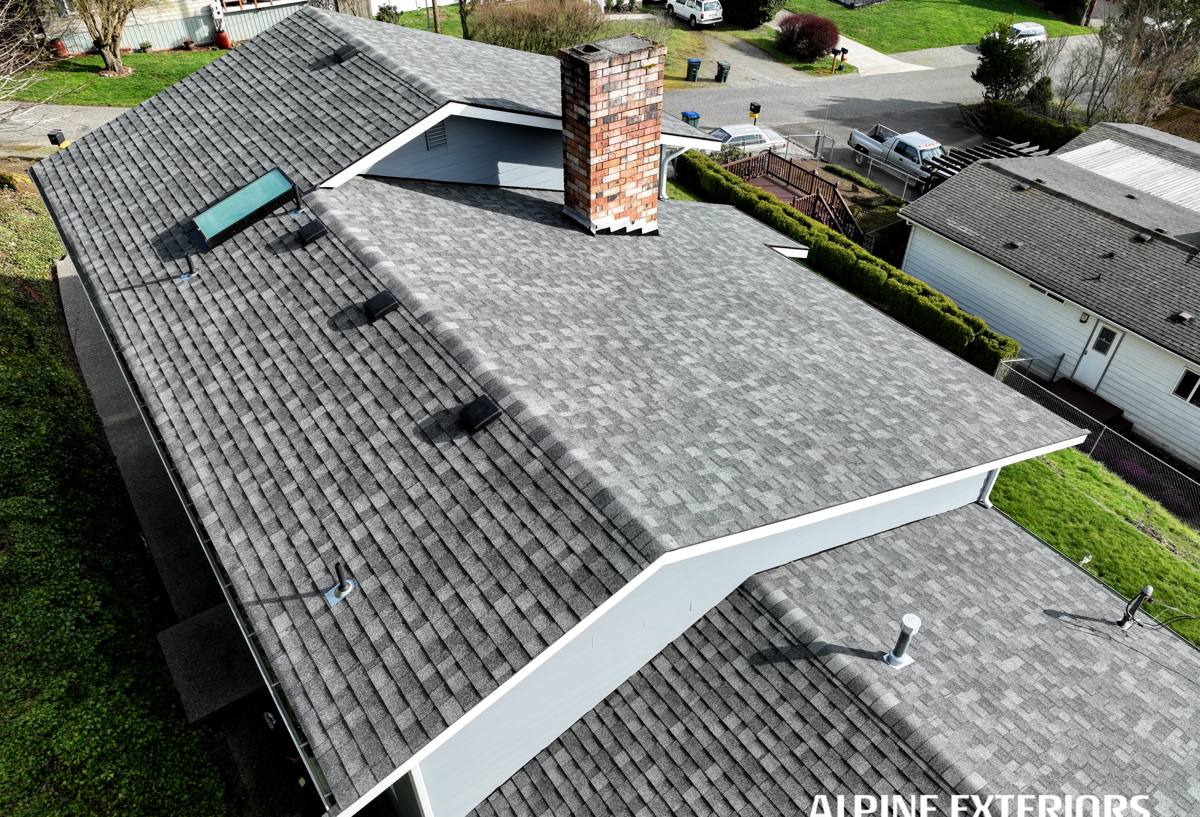
What Salt Air, Driving Rain, and Moss Season Actually Do to a Roof
Salt Air and Corrosion
Airborne salt from the water doesn't just affect homes right on the shoreline — it travels with the wind and settles on roofing, flashing, and fasteners across the broader Cherry Point area. Bare or poorly coated metal, low-grade fasteners, and exposed cut edges are where salt exposure shows up first, usually as rust streaking or pitting at the weakest points in the system. This is why fastener and coating quality matter more here than they would somewhere inland.
Driving Rain and Wind-Driven Water
Whatcom County storms don't always come straight down. Wind-driven rain pushes water sideways and upward under laps, around penetrations, and into any gap that a fair-weather roof detail might get away with elsewhere. Every seam, valley, and flashing point on a Cherry Point roof has to be built assuming water will be pushed at it from an angle, not just dropped on it from above.
Extended Moss Season
Cool, damp, and shaded conditions for much of the year mean moss and algae have a long runway to establish themselves, especially on north-facing slopes and anywhere tree cover keeps a roof from drying out between rains. On shingle roofs, moss roots work into the granule layer and lift material over time. Metal roofing gives moss almost nothing to grip, which is one of the more underrated advantages of switching, though it doesn't make a metal roof immune — buildup in valleys and against trim still needs to be kept clear.
What a Correct Metal Roofing Job Involves
A metal roof is only as good as the details underneath it. Panels that look right from the ground can still fail early if the underlayment, fastening, and flashing aren't matched to marine, high-moisture conditions. On every Cherry Point project we account for:
- A high-temp, self-adhering underlayment at eaves, valleys, and penetrations — not just felt paper — to guard against wind-driven rain and ice-adjacent conditions in colder snaps
- Corrosion-resistant fasteners matched to the panel material, not generic hardware-store screws that will rust faster than the roof around them
- Properly lapped and sealed seams sized for sustained wind-driven rain, not just average rainfall
- Flashing details at every chimney, vent, skylight, and wall intersection — the majority of roof leaks start at a penetration, not in the field of the panel
- Adequate attic or roof-deck ventilation, since trapped moisture under a metal roof causes its own problems regardless of how good the panels are
- Panel and coating selection suited to salt exposure, including attention to cut edges, which are the first place bare steel starts to corrode
Skip any one of these and the roof may still look fine for a year or two — the failures with metal roofing tend to show up at the details, slowly, rather than as a dramatic leak on day one.
Comparing Metal Roofing Options for This Climate
Not every metal roofing product performs the same way in a salt-air, high-moisture environment. Here's how the common options stack up for a Cherry Point home specifically.
| Type | Best For | Climate Trade-Offs |
|---|---|---|
| Standing Seam | Homeowners wanting maximum weathertightness and longevity | Concealed fasteners reduce corrosion entry points; higher upfront cost but lowest long-term maintenance in this climate |
| Exposed Fastener Panel | Budget-conscious projects, outbuildings, simpler rooflines | Lower cost, but exposed fasteners are the first thing salt air attacks — expect periodic fastener inspection and eventual replacement |
| Stone-Coated Steel | Homeowners who want a traditional shingle or shake look with metal's durability | Good moss and impact resistance; coating integrity at cut edges needs careful installation to prevent edge corrosion |
| Standard Galvanized/Galvalume | Utility and agricultural structures | Cost-effective but least suited to sustained salt exposure without a quality factory coating |
For most Cherry Point homes we steer conversations toward standing seam or a quality-coated panel system, simply because the maintenance burden of exposed fasteners in a salt-air environment adds up faster than people expect. That said, the right choice depends on your roof's exposure, budget, and how long you plan to be in the home — we'll walk through the honest trade-offs for your specific situation rather than pushing one product.
Our Installation Process
1. On-Site Assessment
We start by walking the roof and attic, not just the exterior. That means checking deck condition, existing ventilation, flashing points, and how exposed the roof is to prevailing wind and salt air off the water. This tells us what underlayment, fastening, and panel spec actually make sense for your home rather than defaulting to a generic package.
2. Tear-Off and Deck Prep
Old roofing comes off down to the deck so we can inspect for rot, moisture damage, or soft spots — common on older Cherry Point homes that have seen decades of damp conditions. Any deck repairs happen before a single panel goes down; installing over a compromised deck just hides a problem instead of fixing it.
3. Underlayment and Flashing
This is where most of the long-term performance of the roof is decided. We install self-adhering, high-temp underlayment at vulnerable areas and build out flashing at every penetration and transition before panels are installed, matched to the wind-driven rain conditions typical of this area.
4. Panel Installation
Panels are installed with corrosion-resistant fasteners at manufacturer-specified spacing, with seams and laps sized for sustained rain exposure rather than fair-weather minimums. We pay particular attention to valleys, ridges, and eave lines, since these are where wind-driven water concentrates.
5. Final Walkthrough and Cleanup
We inspect every seam and flashing point, clear the site of debris and fasteners, and walk the finished roof with you so you know what to expect and how to spot anything that needs attention down the road.
What Metal Roofing Costs to Factor In
Exact pricing depends on your roof's size, pitch, existing condition, and product choice, but these are the main factors that move the number for a Cherry Point project:
| Factor | Why It Matters Here |
|---|---|
| Panel type | Standing seam runs higher upfront than exposed-fastener panel, but costs less in maintenance over time in salt air |
| Deck condition | Rot or moisture damage found during tear-off adds repair cost but prevents a much bigger problem later |
| Roof complexity | More valleys, penetrations, and transitions mean more flashing work, which is where labor time concentrates |
| Underlayment spec | Upgrading to self-adhering high-temp underlayment at vulnerable areas costs more than basic felt but pays off in wind-driven rain |
| Ventilation upgrades | Older homes sometimes need attic ventilation improvements to prevent moisture problems under the new roof |
We provide itemized, written estimates so you can see exactly what you're paying for and why — including where we'd recommend spending more and where a simpler option is genuinely fine for your home.
Keeping a Metal Roof Performing in This Climate
Metal roofing is low-maintenance compared to shingles, but "low-maintenance" isn't "no-maintenance," especially with Cherry Point's moss season and salt exposure. A few habits go a long way:
- Clear valleys and gutters of debris at least twice a year, since trapped organic material holds moisture against the panel
- Watch for moss or algae buildup in shaded, north-facing sections and against trim or flashing, even though open panel areas resist it well
- Have fasteners on exposed-fastener systems checked periodically, since these are the first point of corrosion in salt air
- Trim back overhanging branches that keep sections of roof shaded and damp longer than necessary
- Schedule a flashing and seam inspection every few years, particularly after major windstorms
Why It Matters That We Already Work in Cherry Point
Roofing decisions that work fine in a drier, inland climate can be the wrong call this close to the water. A crew that hasn't worked much in coastal Whatcom County conditions may under-spec fastener corrosion resistance, skip the extra flashing detail a shingle-climate job wouldn't need, or simply not think about moss buildup as a long-term maintenance issue. We work throughout the Semiahmoo and Cherry Point area regularly, so these aren't theoretical considerations — they're the default we build every quote and installation around. That local familiarity also means we can talk through real trade-offs with you, honestly, instead of a one-size-fits-all pitch.
If you're weighing a metal roof for a Cherry Point home, we're glad to walk the roof with you, talk through what your specific exposure and budget call for, and put together a straightforward, no-pressure estimate — just fill out the form below to get started.