 Semiahmoo Siding
 Cherry Point's Climate Is Hard on Siding — Here's What Actually Holds Up
Cherry Point sits on the Whatcom County coastline, and that location comes with a specific set of problems for the outside of a house. Homes here take on salt-laden air off the water, long stretches of driving rain through the fall and winter, and a moss and algae season that can run most of the year in shaded or north-facing exposures. None of that is unusual for this part of Washington, but it does mean siding choices that work fine forty miles inland can fail early here. We install fiber cement siding specifically because it's engineered to take that combination of exposure without the maintenance headaches or premature breakdown we've seen from other materials in coastal Whatcom County settings.
This page is about one service, in one place: James Hardie fiber cement siding installed correctly on Cherry Point homes. Not a general siding overview — the specific decisions, detailing, and product choices that matter for a house sitting this close to salt water and shade-heavy tree cover.
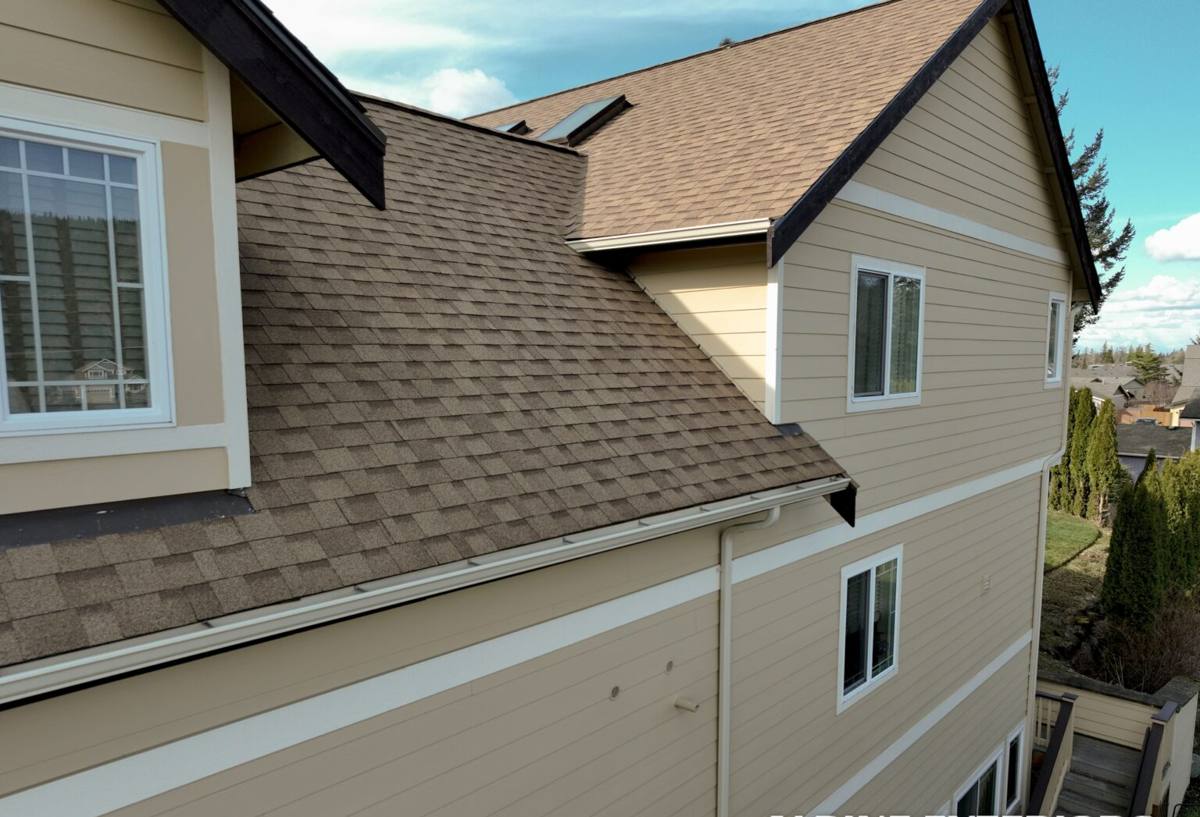
What Salt Air, Rain, and Moss Actually Do to a Home's Exterior
It helps to understand the failure modes before talking about the fix.
Salt Air
Airborne salt doesn't just affect metal fasteners and flashing — it accelerates the breakdown of paint films and caulking on almost any siding material, and it settles into porous or improperly sealed surfaces where it holds moisture against the wall. Over years, that speeds up coating failure, especially on south and west elevations that also take the most sun.
Driving Rain
Cherry Point's storms don't come straight down — wind-driven rain off the water pushes water sideways into laps, seams, and penetrations (windows, hose bibs, light fixtures). Siding that isn't installed with a proper drainage plane and correctly lapped flashing will eventually let that water behind the cladding, where it doesn't dry out easily.
Moss and Algae
Shaded, north-facing, and tree-covered walls in this climate stay damp for long stretches, which is exactly what moss and algae need to take hold. On siding with a weak factory finish or a field-applied paint job, that growth isn't just cosmetic — it holds moisture against the surface and shortens the coating's life.
Individually, any one of these is manageable. Combined, and repeated year after year, they're what separates siding that looks good at year two but struggles by year twelve from siding that still looks right at year thirty.
Why We Install Only James Hardie Fiber Cement Here
We standardized on James Hardie fiber cement siding for every home we side, including Cherry Point, and we don't install vinyl, LP SmartSide, Cemplank, Allura, or bare wood siding. That's not a marketing position — it's a decision based on how each of those materials actually performs under salt air, sustained moisture, and moss pressure over the long haul.
Fiber cement is a cement, sand, and cellulose fiber composite. It doesn't rot, it isn't a food source for moss or algae the way wood-based products can be, and it holds its shape in wet-dry cycling far better than vinyl, which softens, warps, or becomes brittle at temperature extremes and can visibly ripple after enough exposure. James Hardie's ColorPlus factory-applied finish is baked on under controlled conditions, which gives it better adhesion and UV resistance than most field-applied paint — a real advantage on a coastal wall that's going to spend more days per year damp than a lot of the country. Hardie also builds its siding in different formulations by climate zone (its "HZ" system), and the Pacific Northwest formulation is engineered around exactly the wet, temperate conditions Cherry Point sits in.
None of that means other products are junk — every siding material is a set of trade-offs. It means that for a coastal Whatcom County home, we think fiber cement's moisture tolerance, non-combustibility, and finish durability are the right trade-offs to put our name behind.
What a Correct Fiber Cement Job Involves in This Climate
The product is only half the equation. In a high-moisture, salt-air environment, installation detailing is what determines whether siding performs for 30+ years or starts showing problems in five.
Drainage Plane and Rainscreen Gap
Fiber cement siding needs a water-resistive barrier behind it and, in most cases, a rainscreen gap that lets any incidental moisture drain and the wall assembly breathe. On a home taking regular wind-driven rain off the water, skipping or shortcutting this step is one of the most common ways siding jobs fail early — not because the boards themselves failed, but because water got trapped behind them.
Fastening and Clearances
James Hardie specifies fastener type, spacing, and penetration depth, along with minimum clearances from grade, roof lines, decks, and other transitions. Those clearances exist specifically to keep the bottom edge of the siding from sitting in standing water or constant splash-back — a detail that matters more here than in a drier climate.
Flashing and Joint Sealing
Every window, door, and penetration is a place water can get behind the siding. Correct step flashing, head flashing, and properly sequenced house wrap integration are what keep driving rain out at those weak points. Butt joints and trim intersections get factory- or field-applied sealant rated for the exposure, not just caulked over and painted.
Cut Edges and Field Cuts
Any field-cut edge of a Hardie board needs to be sealed with touch-up paint or the appropriate sealant before installation, especially on cuts that will face the weather. An unsealed cut edge is a point where moisture can wick into the board over time.
Done right, these details are invisible once the job is finished — which is exactly the point. They're also the details that get skipped on rushed or underbid jobs, and they're the ones you can't easily inspect once the siding is up.
Choosing the Right Hardie Product for a Coastal Exposure
James Hardie makes several plank profiles, panel formats, and trim options, and the right mix depends on the home's style and which elevations take the worst exposure. The table below covers the main factors we weigh on a Cherry Point project.
| Factor | Why It Matters Here |
|---|---|
| Plank exposure width | Wider reveals show fewer laps per wall, which means fewer horizontal water-shedding points to detail correctly |
| ColorPlus vs. field-painted | Factory finish holds up better under sustained UV and salt exposure than most site-applied paint, and reduces future repainting |
| Color and elevation | Darker colors on south/west walls take more UV and heat cycling; shaded north walls need finishes that resist moss and algae staining |
| Trim and soffit detailing | Proper trim profiles direct water away from joints instead of channeling it toward them |
| Panel vs. lap siding | Panel systems can suit certain architectural styles but change how joints and drainage are detailed — worth discussing per home |
We walk through these choices with the homeowner rather than defaulting to one product across every job — a shaded, tree-lined lot and an open, wind-exposed lot near the water call for different priorities even on the same street.
Our Process for Cherry Point Projects
- On-site assessment. We look at current siding condition, moisture damage, exposure by elevation, and what's driving the need for replacement.
- Product and color selection. We walk through Hardie plank, panel, and trim options suited to the home and its specific exposure.
- Written estimate. Clear scope, product specifications, and pricing — no vague allowances.
- Prep and moisture check. Removal of old siding, inspection of sheathing for hidden rot or water damage before anything new goes up.
- Water-resistive barrier and rainscreen installation. The unglamorous layer that does most of the long-term work.
- Siding, flashing, and trim installation to manufacturer specification and local code.
- Final walkthrough with the homeowner before we consider the job done.
What Fiber Cement Siding Costs in Cherry Point
Pricing depends on home size, current siding condition, how much prep and repair the sheathing needs, and which Hardie products and trim details are specified. A few honest factors that move the number:
| Cost Factor | Impact |
|---|---|
| Hidden sheathing damage under old siding | Adds repair scope before new siding can go on — common on homes with a history of trapped moisture |
| Full tear-off vs. re-side over existing wall | Tear-off costs more up front but allows proper barrier and rainscreen installation |
| Home height and roofline complexity | Multi-story walls, steep pitches, and dormers add labor and access cost |
| ColorPlus vs. primed-for-paint boards | Factory finish carries a premium but reduces long-term repainting cost |
| Trim and detail complexity | Extensive trim, corner boards, and architectural detail add material and labor time |
We don't publish a flat per-square-foot number because the honest answer depends on what's actually on the wall right now — that's what the on-site assessment is for.
Living With Fiber Cement Siding in a Salt-Air, Moss-Prone Climate
Fiber cement is low-maintenance compared to wood or vinyl, but "low-maintenance" isn't "no-maintenance" in this climate. A simple annual routine keeps it performing:
- Rinse the siding annually, especially shaded and north-facing walls where moss and algae are more likely to establish
- Keep gutters clear so overflow doesn't run down the wall face and concentrate moisture in one area
- Trim back vegetation and tree cover that keeps a wall section damp and shaded longer than the rest of the house
- Inspect caulking at trim joints, windows, and penetrations every year or two and re-seal as needed
- Touch up any chips or scrapes near the foundation or grade line promptly, since that's the area most exposed to splash-back and standing moisture
None of this is heavy labor — it's the kind of routine upkeep that keeps a well-installed job performing for decades instead of masking a problem that started behind the wall.
Why It Matters That We Already Work in Cherry Point
A crew that already works this stretch of the Whatcom County coastline has already seen how salt exposure, prevailing wind direction, and moss growth patterns play out on real homes here — not in a training manual, but on jobs down the road. That translates into practical judgment calls: which elevations need extra attention to drainage detailing, which color and finish choices hold up best against the local moss season, and where hidden moisture problems tend to show up first when we pull old siding off. Hiring locally also means faster response if something needs a look after the job is done, rather than chasing down a crew that worked the area once and moved on.
If you're planning to reside a home in Cherry Point, we'd rather walk your property, look at your specific exposure, and give you a straight answer than sell you a generic pitch. Reach out for a free, no-pressure estimate — the form below gets you started.